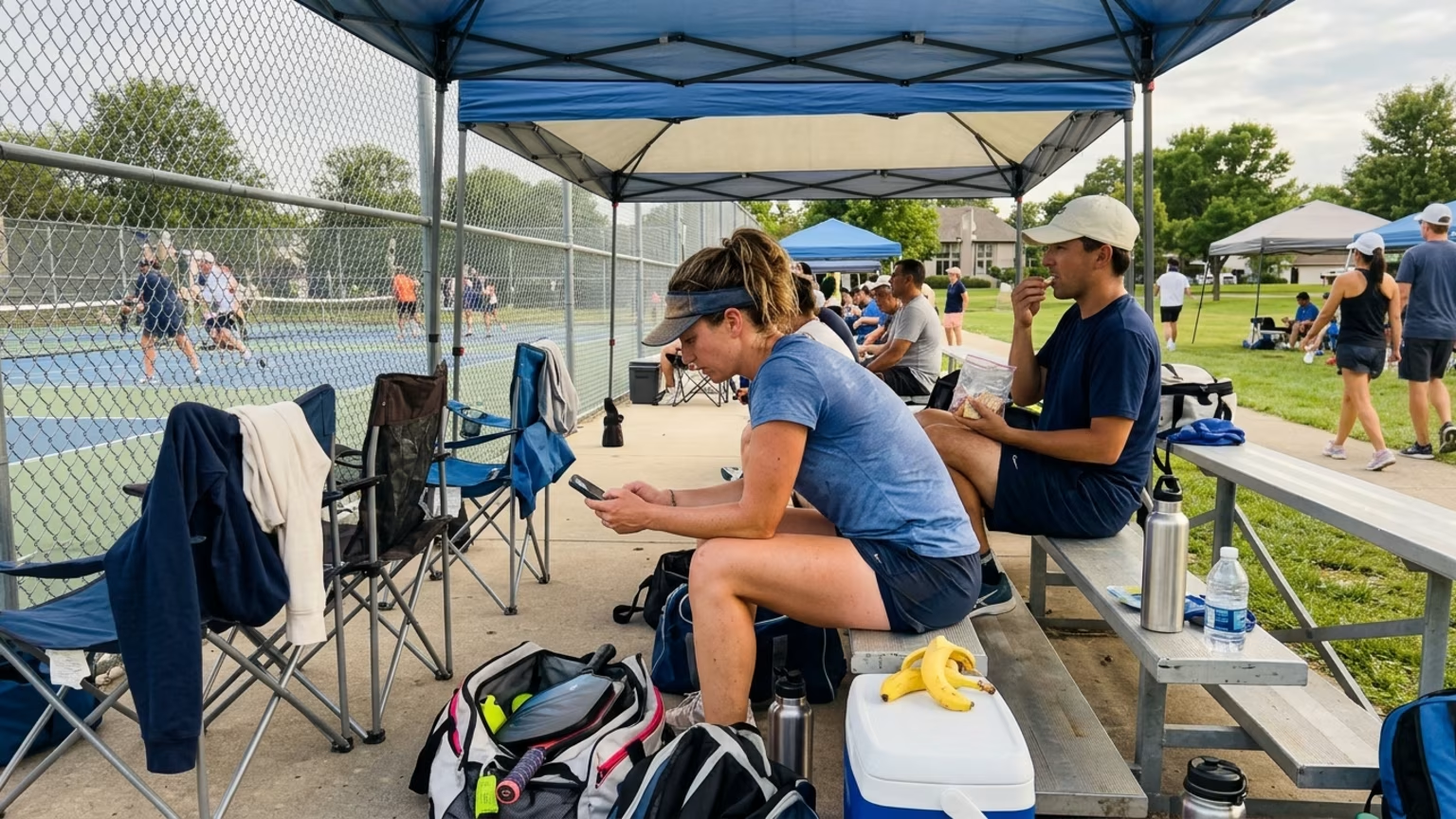

Plan tournament breaks around the actual match gap, familiar food, fluids, gradual warm-ups and hot conditions.




How should I plan the hours between tournament matches? Use the actual match gap to plan rest, familiar food and fluids, then build gradually back toward play.
Find out how much time you actually have before deciding what the break should look like. A short turnaround calls for a different approach from a long wait.
A pickleball between-match recovery guide offers a useful organizing principle: preserve readiness for the next match rather than chase complete recovery. Its approach covers checking the gap, replacing fluid and fuel, staying loose and re-warming before play.
These suggestions come from pickleball and tennis editorial guidance, not clinical trials establishing one routine for every player or sport. They are practical planning ideas rather than proof of better performance or long-term health outcomes.
The guide's framework translates into these priorities:
Before the event, that means checking the format and expected schedule. Pack familiar foods and fluids alongside spare clothing and personal essentials. Our guide to packing and managing a full day at the courts provides a broader planning framework.
The point is not to fill every spare minute. It is to account for the next match without turning the waiting period into another training session.
Match food to the time available and your established tolerance. A break starting is not a reason to force a large meal or drink.
The pickleball recovery guide gives these food examples:
The useful distinction is between a short turnaround and a genuinely longer break. The clock helps organize the choice, while familiarity and comfort remain part of it.
The Dink's tournament-day guidance also favors small portions of familiar food and steady fluids over trying a new routine on competition day. That supports a straightforward packing decision: bring options you already know rather than making the tournament a food experiment.
For hydration, the pickleball recovery guide rejects a universal bottle count. Temperature and humidity matter alongside match length. Body size and individual sweat rate also affect needs.
Its practical advice is to begin drinking after play and sip across the break. It also suggests considering electrolytes when the day is long or hot or involves substantial sweating. None of that requires finishing a fixed amount simply because the next match is approaching.
Food and fluid planning should therefore stay connected to the actual day. A planned meal may no longer fit a shortened gap. A longer wait may allow something more substantial than the snack originally packed for a quick turnaround.
For personal nutrition or hydration decisions involving health concerns, a qualified health professional is the appropriate source of advice.
The sources support a gradual return to movement before the next match rather than assuming the previous match's preparation covers the whole day. The purpose is readiness, not another conditioning session.
A tennis preparation article describes 10 to 15 minutes as a practical warm-up starting point. It allows for more time depending on the player and conditions.
The sequence matters more than treating that duration as a deadline. The article describes beginning with easy movement before progressing to controlled movement and gentle hitting. Pace then increases rather than starting immediately at full serving speed.
For tournament planning, the practical implication is to leave space for that progression within the match gap. Rest and preparation both belong in the schedule.
The Dink proposes a 10-minute tournament routine that combines walking and shade with fluids, a small snack when appropriate and a progressive return to movement. Its movement examples include shuffles and split steps alongside shadow swings.
That gives pickleball players a concrete picture of re-warming without turning the break into extra exercise. The pickleball recovery guide similarly recommends light movement between matches and a gradual build-up before returning to court.
For padel, the useful editorial takeaway is the shared planning principle: allow a transition from rest toward play. That does not require adopting either publication's exact clock or copying a tennis serving sequence.
The emphasis stays on familiar preparation and a progressive return toward the movements and pace of the next match. The plan should serve the available break rather than dictate it.
Across the day, easy movement and rest can sit alongside each other. During a longer wait, the recovery guide suggests avoiding complete stillness if it leaves you stiff. Its advice also cautions against unnecessary exertion in heat.
For organizing those choices, Evercourts offers planning resources for match breaks and training blocks.
Make reducing unnecessary heat exposure part of the break. The pickleball recovery guide recommends shade or a cooler area when available. It also suggests changing saturated clothing when practical and avoiding unnecessary exercise while waiting.
Keep fluids available across the break rather than treating drinking as a task to complete immediately before returning to court. A warm-up still belongs in the plan, but the waiting period does not need to become extra conditioning.
The guide identifies persistent dizziness, confusion or faintness as reasons to stop play and seek event medical support. Those symptoms are not a pacing problem to work around or something to push through.
A manageable tournament day is about staying ready for the next match, not following a perfect routine. A useful step today is to write down a familiar food option and a simple re-warm-up plan that can adapt to the next match gap.
Follow Evercourts for practical insights on tennis, pickleball and padel performance, movement, recovery and healthy ageing. Stay connected for new articles, research-led guidance and ideas to help you play well and keep playing for years.


Learn how to turn, track and recover for pickleball lobs with a gentle partner drill, plus what fall research says about balance and footwork.

Tennis match data explain why conditioning involves repeated bursts and recovery. Apply the pattern without treating research averages as personal targets.

A flexible pickleball warm-up progressing from easy movement to controlled lunges, side steps, shadow swings and dinking, with readiness-based adjustments.
Read practical guidance for better movement, smarter preparation and a game that keeps working for you.
explore the Blog
