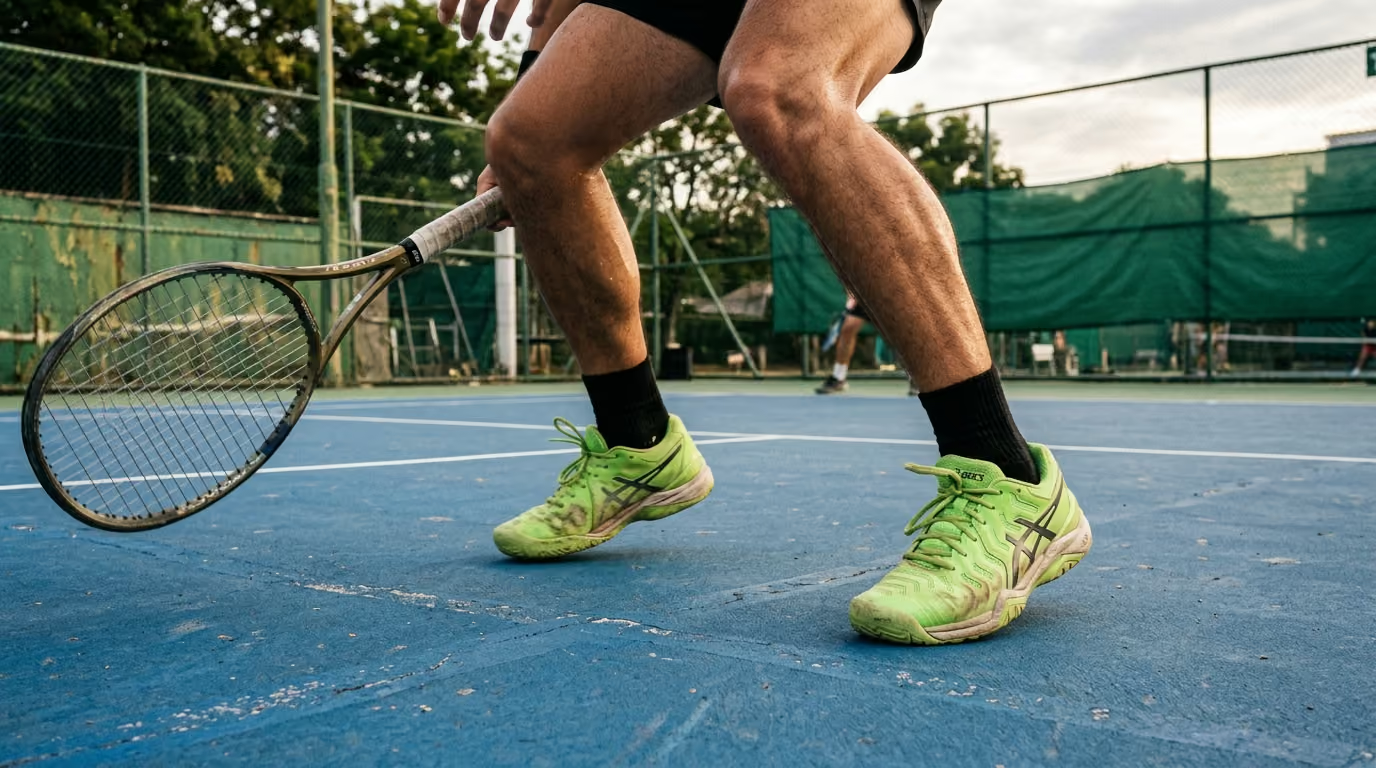
While many assume recovery is an afterthought, effective physical recovery for court sports is a planning problem solved before stepping onto the court.




Many players spend hours researching the newest racket strings or court shoes. Yet they treat their physical recovery as an afterthought. They assume that drinking a generic sports drink or sitting in a cold bath for ten minutes will erase the fatigue of a three-set match.
This reactive approach is where most court athletes fail. Real physical recovery is a planning problem that must be solved before you step onto the court. This guide outlines a comprehensive planning system to protect your performance across different match and training structures.
To recover effectively from court sports, you must match your recovery actions directly to the time remaining before your next physical demand. For short turnarounds under four hours, prioritize rapid carbohydrate replenishment, sodium-rich fluids, and physical cooling. When you have more than 24 hours of rest, focus on total daily nutrition, balanced protein distribution, and high-quality sleep.
Court sports demand unique physical qualities. Tennis, pickleball, and padel require rapid acceleration, sudden braking, and constant rotational power. These movements create multi-faceted fatigue that cannot be solved by a single recovery method.
To plan recovery properly, we must separate the process into four distinct biological objectives. First, we have fuel restoration. This process involves replenishing muscle glycogen stores that are depleted during long rallies.
Second, we must address fluid and electrolyte restoration. Sweating during matches removes water and essential minerals like sodium. Third, neuromuscular and mechanical recovery repairs muscle soreness and structural tissue stiffness.
Fourth, central and psychological recovery restores sleep quality, motivation, and mental focus. These objectives overlap but are not interchangeable. For example, cold-water immersion may reduce muscle soreness, but it cannot replace carbohydrate, fluid, or sleep.
I remember finishing a tough two hour padel match on a cold Tuesday night and waking up the next morning feeling like my lower back was locked in concrete. For a long time, I just accepted this as the price of playing hard in my forties. But once I started spending just ten minutes on targeted hip mobility before heading to the club, the stiffness almost completely vanished. It taught me that we do not have to accept pain as a default state of aging.
Our team has spent years reviewing sports science to understand these dynamics. The International Olympic Committee (IOC) consensus statements confirm that recovery is about restoring your capacity to tolerate the next workload. We cannot treat recovery as a generic checklist. It is a highly individual calculation based on your next match schedule. You can access more evidence-based strategies in our library of recovery science resources.
To build a practical recovery routine, use this structured four-step decision model. This framework ensures you focus your time and energy on the interventions that yield the highest physical return.
First, identify the exact time window before your next high-intensity session. This classification determines how aggressively you must manage your nutrition and hydration.
Next, evaluate the physical demands of the session you just completed. A sixty-minute coaching lesson is very different from a three-set tournament match. Track the duration of your play, your internal intensity using a simple session rating of perceived exertion, and environmental heat.
Also consider the mechanical impact of your movements. High eccentric braking forces, such as stopping quickly on a hard court, cause microscopic muscle damage. This damage requires different recovery inputs than a low-impact cardiovascular workout.
Determine which factor is most likely to hurt your next performance. Ask yourself if you are limited by muscle soreness, low energy, dehydration, or poor sleep.
If your muscles are sore but your energy is high, a light mobility session is more useful than eating extra carbohydrates. If you are dehydrated, drinking plain water without sodium will not solve the problem. Identifying the limiting resource prevents you from wasting time on unnecessary recovery modalities.
Organize your recovery efforts into three hierarchical levels. Always satisfy the lower tiers before moving to the next level.
To optimize your recovery templates, you must apply the correct nutritional numbers. General advice to drink more water or eat a banana is not sufficient for highly competitive court athletes.
For play lasting over sixty minutes, sports nutrition guidelines recommend consuming thirty to sixty grams of carbohydrate per hour. This is often easiest to absorb via a six to eight percent carbohydrate-electrolyte drink.
When your next match is less than four hours away, your refueling must become more aggressive. The International Society of Sports Nutrition (ISSN) recommends consuming 1.2 grams of carbohydrate per kilogram of body weight per hour. Alternatively, you can consume 0.8 grams of carbohydrate per kilogram of body weight alongside 0.2 to 0.4 grams of protein per kilogram of body weight.
Let's look at the math for an 80-kilogram player with a short rest window. This player needs approximately 96 grams of simple carbohydrates each hour between matches. You can achieve this with a combination of a sports drink, a ripe banana, and some white rice or a recovery shake.
If you have 24 hours or more before your next match, immediate refueling is less critical. Your priority shifts to meeting your total daily carbohydrate needs through normal meals.
Protein does not need to be consumed in a manic rush immediately after the final point. Instead, focus on total daily protein intake and consistent spacing. Research supports consuming 1.4 to 2.0 grams of protein per kilogram of body weight daily.
Spacing this intake into doses of twenty to forty grams every three to four hours is highly effective. This steady supply supports muscle protein synthesis and structural repair throughout the day. It also helps preserve muscle tissue during high-volume training blocks, which is vital for healthy aging and athletic longevity.
The American College of Sports Medicine (ACSM) notes that losing more than two percent of your body mass through sweat can compromise coordination and physical performance. To prevent this, you must understand your individual sweat rate.
To calculate your sweat rate, weigh yourself without clothes before a hard one-hour practice session. Avoid drinking water during this test if possible, or track the exact volume you consume. Weigh yourself again immediately after the session. If you lost one kilogram of body mass, your sweat rate is approximately one liter per hour.
For rapid rehydration after significant sweat loss, drink 1.5 liters of fluid for every kilogram of body mass lost. This fluid should include sodium to help your body retain the water. We recommend including 0.5 to 0.7 grams of sodium per liter of water during and after heavy court sessions. This prevents you from diluting your blood sodium levels, which can cause cramping and fatigue.
These five templates are designed to be copied, customized, and printed for your court bag. They address the most common competitive and training scenarios.
Use this template when you have at least 24 hours before your next session. Your primary objective is to restore baseline hydration, muscle glycogen, and sleep quality without adding physical strain.
Immediately Post-Match (0 to 30 Minutes)
Two Hours Post-Match
Evening Routine
The Next Morning
This template is designed for tournament days where you play two matches within four to six hours. The priority is rapid refueling, rehydration, and physical cooling.
First Thirty Minutes Between Matches
One to Two Hours Post-Match
Three Hours Post-Match
One Hour Before the Second Match
When competing over three consecutive days, fatigue accumulates progressively. Your recovery strategy must start before the first ball is hit.
Pre-Tournament Preparation (3 Days Before)
During the Tournament (Post-Match Friday and Saturday)
The Next Morning (Saturday and Sunday)
Managing a multi-month league requires balancing weekly training volume with match-day performance. This is where structured microcycles are highly effective.
Match Day (Saturday)
Sunday (Match Day +1)
Monday (Match Day +2)
Tuesday and Wednesday (Match Day +3 and +4)
Thursday (Match Day +5)
Friday (Match Day -1)
During a structured training block, some fatigue is necessary to stimulate physical adaptation. However, you must prevent this fatigue from turning into nonfunctional overreaching.
Loading Logic
Monitoring Protocol
The physical demands of court sports are not identical. Your recovery plan should reflect the specific movement patterns of your chosen sport. If you want to refine your routine further, utilize our sensible injury prevention strategies.
Tennis features long, unpredictable matches that can stretch over three hours. This demands high cardiovascular endurance and significant glycogen preservation. The repeated lateral sliding and explosive lunging place massive stress on the groin, hips, and lower back.
Tennis recovery templates should prioritize immediate carbohydrate restoration to replenish depleted glycogen. They should also focus on hip mobility and lower back decompression to counter the impact of hard court play.
Pickleball requires rapid hand-eye coordination and constant, deep knee flexion. Players spend a significant amount of time in a low, squatted posture at the kitchen line. This posture places high eccentric stress on the quadriceps and patellar tendons.
Recovery templates for pickleball should focus on knee joint mobility and calf flexibility. Lower back decompression is also vital, as pickleball players spend hours bent over to hit low ball bounces. If you play this sport regularly, you can read our pickleball articles for more targeted movement advice.
Padel features frequent overhead smash shots, rapid changes of direction off the glass, and hard deceleration. This creates high eccentric stress on the Achilles tendons, calf muscles, and shoulder rotator cuff.
Padel recovery plans should prioritize ankle mobility and shoulder rotator cuff care to prevent chronic overload. Incorporating gentle shoulder mobility and thoracic extension exercises after matches is highly beneficial. For more insights on this specific court layout, refer to our padel articles.
Many court players fall victim to common recovery myths. Understanding these pitfalls will save you time and preserve your physical health.
One common mistake is believing that the post-workout nutritional window is only thirty minutes long. Many players panic if they cannot drink a protein shake immediately after matching.
In reality, meeting your total daily protein needs and distributing protein evenly throughout the day is much more important. The urgency of immediate nutrition only rises when you have a second match within four hours.
Another error is relying too heavily on passive recovery gadgets. Foam rollers, massage guns, and compression sleeves can make your muscles feel better temporarily.
However, they cannot replace the foundational benefits of proper nutrition, hydration, and sleep. If you are sleeping six hours a night and skipping meals, a massage gun will not prevent chronic fatigue.
Using cold-water immersion too frequently during training blocks is another common mistake. While ice baths reduce muscle soreness, research shows they can blunt long-term muscle growth and strength adaptations.
Cold-water immersion is excellent during a tournament weekend when immediate performance is your only goal. However, during a training block, it is better to let your body adapt naturally to the training stress without freezing the muscles.
Replacing large volumes of sweat with plain water can lead to hyponatremia, a dangerous dilution of blood sodium levels. This condition causes headaches, confusion, muscle weakness, and cramping.
Always include sodium in your recovery fluids when you have experienced heavy sweat loss. This simple addition helps your body retain fluid and protects your electrolyte balance.
Proper recovery planning directly affects the health of your joints, tendons, and muscles. When you manage your physical load and nutrition systematically, you give your connective tissues the resources they need to rebuild.
Consistent protein distribution and hydration keep your tendons resilient. This reduces the risk of chronic overuse conditions like tennis elbow or patellar tendinopathy. It also preserves your joint range of motion, allowing you to move smoothly on the court week after week.
While these templates are designed to help you manage normal physical fatigue, they are not a substitute for medical care. You should consult a physical therapist or medical professional if you experience any of the following warning signs.
By treating physical recovery with the same respect as your court tactics, you can protect your performance and enjoy your favorite racquet sports for years to come.
Follow Evercourts for practical insights on tennis, pickleball and padel performance, movement, recovery and healthy ageing. Stay connected for new articles, research-led guidance and ideas to help you play well and keep playing for years.


Read practical guidance for better movement, smarter preparation and a game that keeps working for you.
explore the Blog