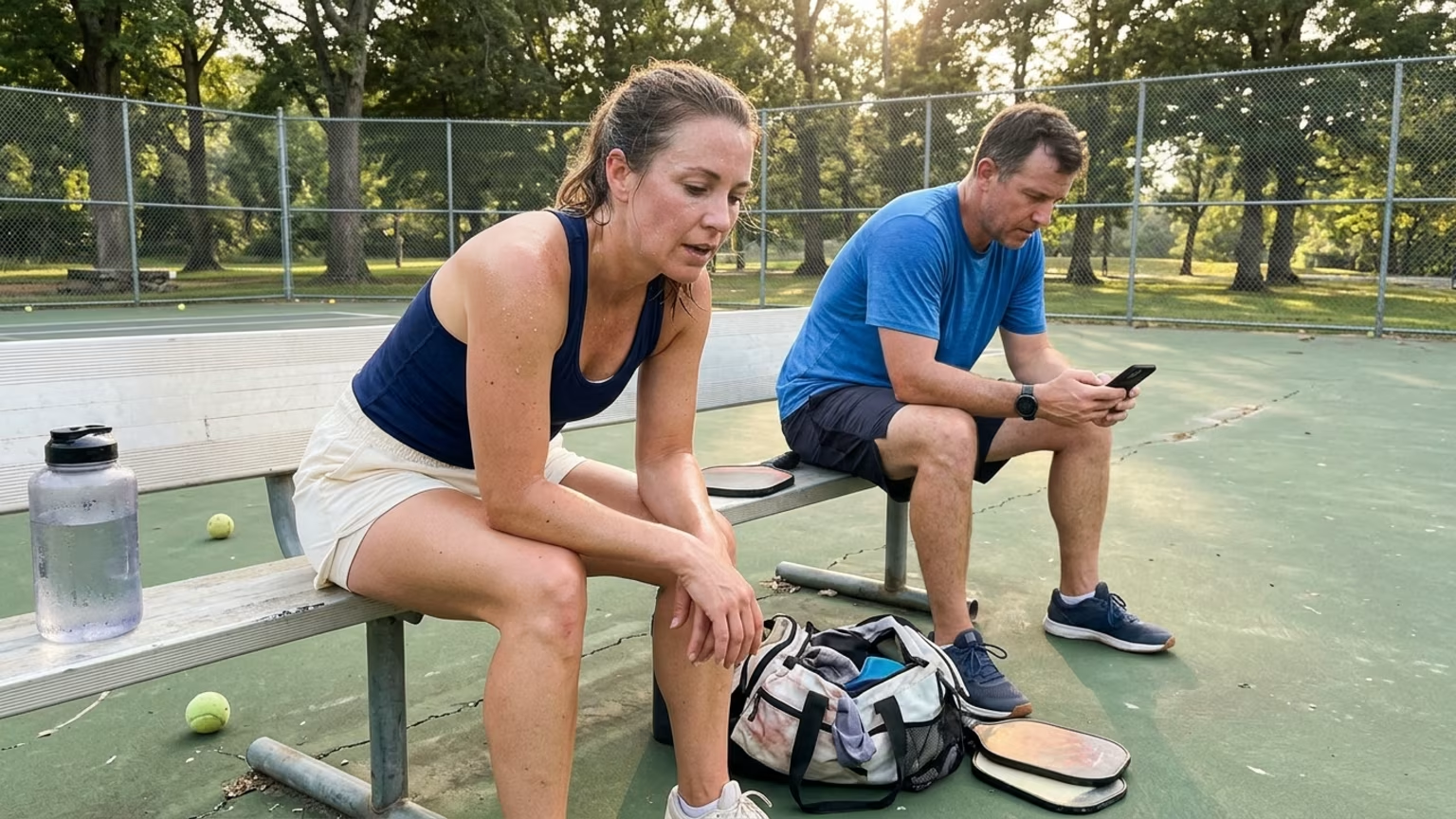

Track court time, effort and next-day response to plan your week, with tennis and padel data and practical context for pickleball.




In a 12-player study of simulated 60-minute games, singles tennis produced higher heart rate and perceived effort than doubles tennis or padel, according to a published research summary.
For workload planning, treat the calendar as a starting point rather than a complete record. The useful question is not just how long you played. It is what you did during that time and how you responded afterward.
A tennis injury article recommends recording actual activity and duration alongside perceived effort and symptoms. Its advice is to document the session completed rather than the session originally planned. That distinction keeps an ambitious booking from becoming an inaccurate account of your workload.
The body is dealing with the movements inside those minutes. The article identifies singles, lessons with repeated serving and competitive practice as particularly demanding sessions to separate. It also cautions that doubles can include sudden lunges, overheads and quick reactions.
That is why a session description deserves space beside its duration. “Doubles” identifies the format but leaves out how demanding the play felt. “Practice” leaves out whether the session involved repeated serving or a modified drill.
Before fitting matches around the rest of your week, make those distinctions visible. The aim is to understand the work you completed before deciding what belongs next.
The specialist summary describes the 2023 comparison introduced above. Across simulated 60-minute games involving 12 players, singles tennis produced higher heart rate and perceived effort as well as greater physical load than doubles tennis or padel. Padel had more effective playing time.
Those findings deserve to stay separate. In that comparison, the format with more effective playing time was not the format with the highest heart rate or perceived effort. Active playing time alone would therefore have given an incomplete account of the differences between formats.
The same summary describes a separate 2025 comparison involving eight national-level men. During 40-minute padel and tennis-doubles matches, the reported mean heart rates were:
The summary also reports more distance covered, higher speeds and more sprints in tennis doubles than in padel within that sample. Those movement findings add context to the heart-rate averages. They describe another part of what the players did rather than simply how long the matches lasted.
For your own record, the practical interpretation is to keep the activity description alongside any measurements. A heart-rate average and a note about perceived effort answer different questions. Neither should erase the details of the session itself.
Keep the evidence in proportion: these were small comparisons using fixed-duration games, with results reported through a specialist summary. They do not establish a universal workload ranking or weekly quota for adult players. The supplied comparisons also contain no pickleball measurements.
Keep singles and doubles as separate activity labels. The comparative research placed singles higher on several measures under its tested conditions. The tennis injury guidance adds an important practical point: doubles still involves sudden movements.
Do not automatically pencil doubles into the week as recovery. Describe what the session involved before deciding where it belongs alongside strength work and planned recovery. The distinction is between the work actually completed and the easier session you may have intended.
Keep effective playing time separate from how hard the session felt. The padel findings show why those details belong beside each other: more effective playing time did not mean the highest reported heart rate.
For planning purposes, record the padel session you completed instead of assigning the sport a preset intensity. The useful entry describes your activity and response rather than translating a published match average into a personal target.
For pickleball, apply the same observation habit rather than borrowing a heart-rate value from another sport. This is a practical extension of the tennis logging approach.
Include singles or doubles in the activity description. Add actual court time and perceived effort before noting the next-day response. The aim is to build a record of your own play rather than label pickleball itself as light or demanding.
Across all three sports, format is useful context. It is the beginning of the session description rather than the final verdict on its demands.
Make one planning habit the takeaway: review a brief session record before scheduling your next demanding court session. Following the tennis injury article’s recording advice, give that note these fields:
Use this as part of reviewing sessions and movement between matches. The purpose is to bring the completed activity and the response afterward into the same planning decision. A demanding session should remain visible when you look ahead rather than disappear into a weekly total of court hours.
The tennis injury article suggests shorter practices or modified drills as possible ways to manage workload. It also advises separating particularly demanding sessions. Your record gives those options context when discussing the next week with a coach or clinician.
If soreness repeatedly worsens, movement deteriorates or recovery carries into the next session, the article advises reducing load and seeking advice about the cause. Recurring symptoms deserve discussion with a qualified clinician rather than repeated scheduling experiments.
Before repeating a demanding session, review what you actually did and how you responded the next day. Let that record inform the next booking.
Follow Evercourts for practical insights on tennis, pickleball and padel performance, movement, recovery and healthy ageing. Stay connected for new articles, research-led guidance and ideas to help you play well and keep playing for years.


Learn how to turn, track and recover for pickleball lobs with a gentle partner drill, plus what fall research says about balance and footwork.

Tennis match data explain why conditioning involves repeated bursts and recovery. Apply the pattern without treating research averages as personal targets.

A flexible pickleball warm-up progressing from easy movement to controlled lunges, side steps, shadow swings and dinking, with readiness-based adjustments.
Read practical guidance for better movement, smarter preparation and a game that keeps working for you.
explore the Blog
