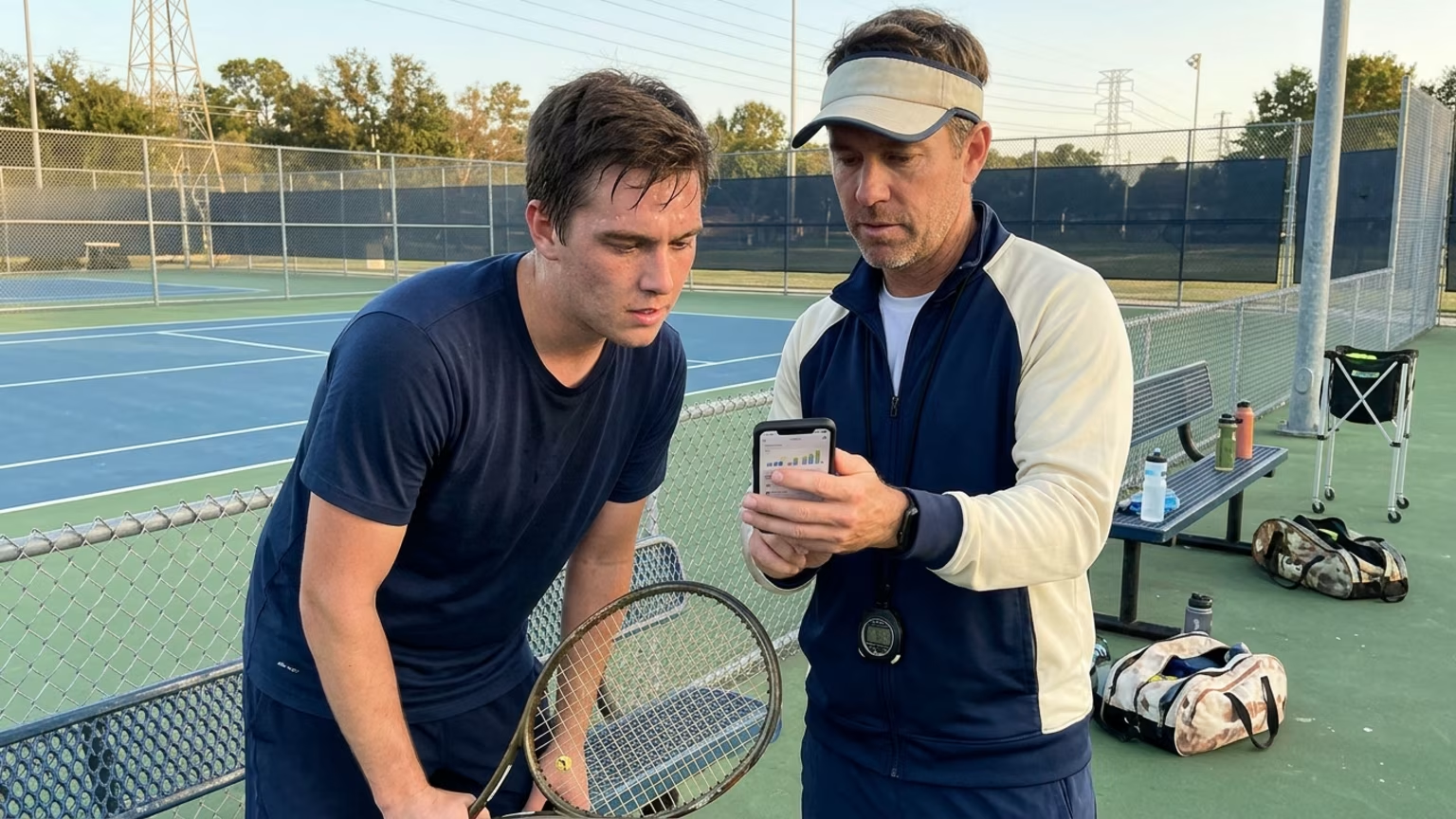

Track soreness, fatigue and movement between racquet-sport matches, with practical guidance on reviewing plans and seeking qualified advice.




How do I know whether to play, ease off or seek advice between matches? Track effort, symptoms and movement across sessions to inform your next plan, and seek qualified advice when symptoms persist or worsen or change how you move.
Soreness alone is not enough to diagnose an injury. The useful question is whether your symptoms and movement are changing, not whether you can attach a label to an ache.
A practical tennis monitoring worksheet and an in-season tennis training article support recording how a session felt alongside what you did. Together, they offer a useful starting point for observing patterns rather than judging readiness from one feeling.
For Evercourts, the practical distinction is between observation and interpretation. “My movement felt different” records an observation; deciding what caused that change is a separate question. A useful note does not need a medical label.
Keep the evidence in perspective. These tennis practitioner resources do not establish logging as a diagnostic tool, an injury forecast or a proven way to prevent injury. Applying their observations to pickleball and padel is practical interpretation rather than a tested protocol for those sports. The Baptist Health symptom guidance discussed below is general sports advice rather than a racquet-sport-specific assessment.
Record enough to understand the session without turning the log into another training task. The tennis resources support noting session duration, perceived effort and movement quality alongside symptoms.
A practical entry can cover:
Keep observation separate from explanation. A note about changed movement is useful without guessing which structure is involved or deciding that fatigue must be the cause. Consistent wording makes entries easier to compare.
The worksheet also calculates session load as duration in minutes multiplied by global session rating of perceived exertion, or RPE. It describes the result as an internal-load estimate, not a measurement of mechanical work or energy expenditure. That distinction matters when interpreting a total: the number describes one aspect of the session rather than everything that happened to your body.
There is no need to make the calculation the centre of the record. The practical purpose is to place effort beside symptoms and movement so that a demanding session does not disappear behind a simple “played today” entry.
If you already keep a brief post-match review, these observations can sit alongside it. The aim is a readable record that helps you compare experiences rather than a detailed report you rarely revisit.
Treat the written schedule as a plan to review rather than an obligation to complete. The in-season tennis article notes that a demanding match may leave a player more fatigued than a planned gym session. That is a coaching perspective worth considering when the actual match differed from what the schedule anticipated.
The monitoring worksheet offers four planning options: proceed, modify, substitute and recover. These labels provide a practical vocabulary for discussing the next session. They do not require every tired day to lead to the same decision.
In plain language, the options mean considering whether to retain the plan, adjust it or replace it. Recovery can also become the priority. Persistent symptoms or concerning changes belong in a conversation with a qualified professional rather than being resolved by choosing a label.
Keep match and strength-training entries distinguishable. The tennis guidance specifically raises the possibility that match fatigue may exceed what was expected from a gym session. Reviewing what actually happened is more useful than assuming the planned workout must remain unchanged.
Identify pickleball sessions clearly if you also play other sports. Use the same observation categories: duration, effort and movement quality alongside symptoms. A reassuring entry from another activity should not outweigh a change you noticed during pickleball.
Keep padel entries identifiable too. Review what you noticed during that session rather than importing a conclusion from a recent tennis or pickleball session. The practical question remains whether your current plan reflects your recorded experience.
These distinctions concern how to organise observations, not different medical thresholds for each sport. Evercourts also covers adjusting training when you feel run down as a broader planning topic. Personal decisions about persistent symptoms need qualified assessment.
A clinician quoted by Baptist Health advises stopping when pain worsens, becomes sharper or changes normal movement. Compensating to get through play is also a reason to stop.
The article identifies these warning signs:
Seek qualified assessment for concerning symptoms rather than using another session to test them. The tennis monitoring worksheet also advises professional evaluation for persistent symptoms or concerning health changes. Your notes can describe what happened, but the personal assessment belongs with a qualified clinician.
The goal is to keep enjoying your sport through informed decisions, not to treat every ache as a setback. Today's practical takeaway is a brief entry for your latest session covering duration, effort and movement quality alongside any symptoms.
Follow Evercourts for practical insights on tennis, pickleball and padel performance, movement, recovery and healthy ageing. Stay connected for new articles, research-led guidance and ideas to help you play well and keep playing for years.


A research-led look at tennis training load, with a simple log for court time, effort and symptoms to support a considered return after a break.

Compare racquet, paddle and court-shoe upgrades by fit, feel, surface and budget, with practical demo checks and a clear buying priority.

Understand calf and ankle demands in racquet sports, what injury research shows, and how gradual preparation can be scaled to current ability.
Read practical guidance for better movement, smarter preparation and a game that keeps working for you.
explore the Blog
