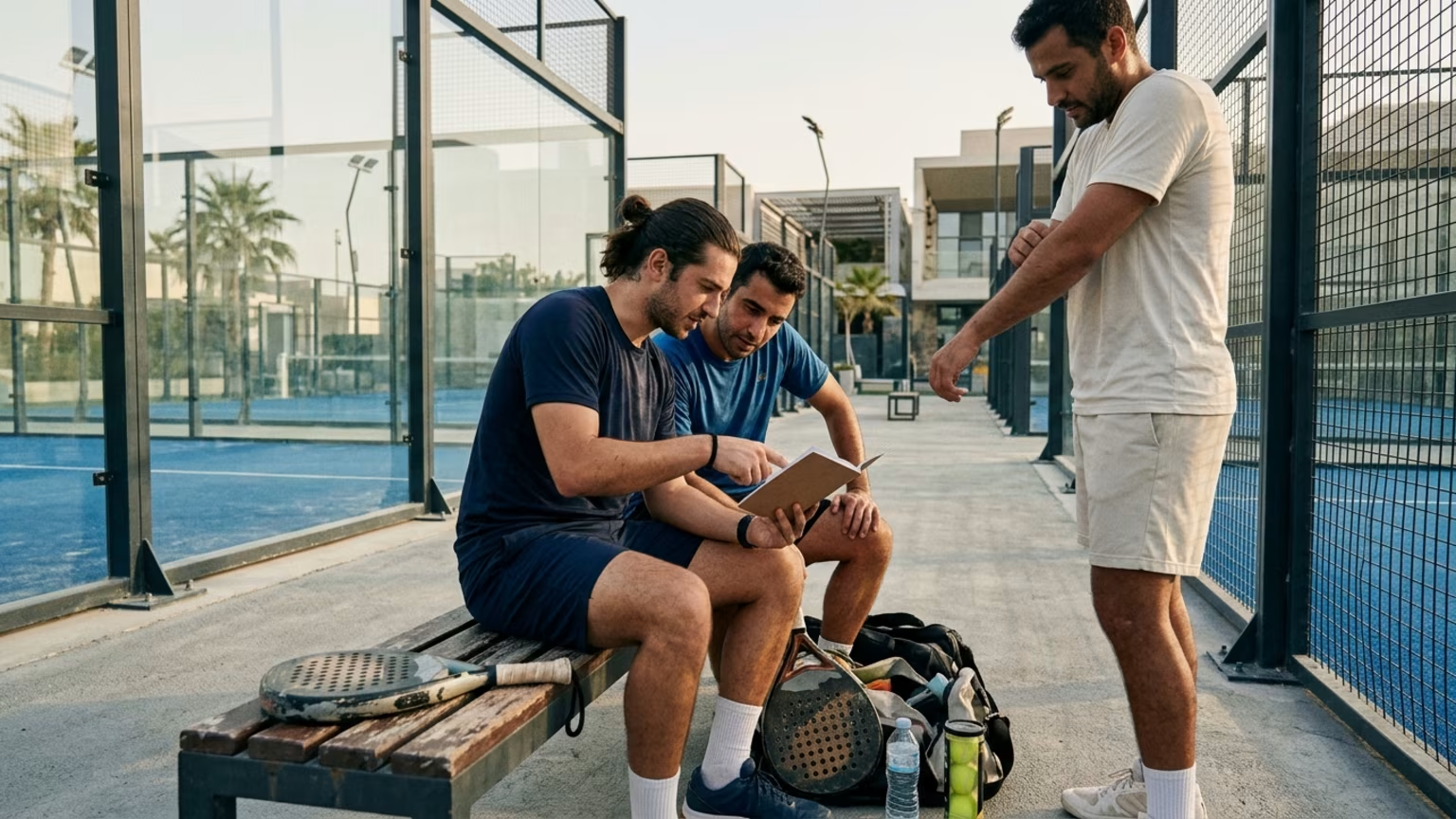

Qatar Living’s Doha guide covers booking, rental gear and first-session preparation as the FIP World Cup offers a backdrop for trying padel.




On November 1, 2026, Qatar Living published “Your First Padel Match in Qatar: What to Know Before You Play” for visitors and other first-time players arriving during the FIP World Cup Qatar 2026.
Qatar Living’s guide links watching national-team padel with trying the sport locally. Its central message is practical: settle the booking and equipment arrangements before arriving. The checklist also covers footwear and what to bring for the conditions.
According to the International Padel Federation, the World Cup is scheduled for November 2-7 at the Khalifa International Tennis and Squash Complex in Doha. The competition comprises 16 men’s and 16 women’s national teams.
The local guide describes options in Doha and Lusail across indoor clubs and outdoor facilities as well as hotels. For a visitor planning both activities, the distinction is useful: the tournament provides the event backdrop while the guide supplies the questions to ask about a first session.
National teams are there to compete. A first-time recreational player has a different objective: arrange a suitable session and get familiar with the game. Qatar Living suggests starting with three friends for doubles, then using controlled rallies and clear partner communication.
The practical interpretation is to borrow the interest generated by the World Cup without borrowing its intensity. A weekend league player from another racquet sport can approach this as an introduction rather than a test of existing ability. The useful benchmark is a manageable first experience, not a tournament-style performance.
Qatar Living advises checking the court’s location and surface alongside its suitability for beginners. Establish whether it is indoors or outdoors and confirm the session length. Those details describe the session you are actually booking, not just a free space on a calendar.
Ask whether rackets and balls are included or charged separately. Confirm a rental racket rather than assuming one will be available when you arrive. A booking confirmation and an equipment arrangement are separate things to check.
Qatar Living lists Playtomic, venue websites or apps, phone and WhatsApp as possible booking routes. Use the method the chosen facility actually offers. Check the same practical details whichever route is used.
For related gear decisions, Evercourts’ guide to choosing kit around fit and surface provides another reference. The priority for this visit is straightforward: know what the venue supplies and what you need to bring. Buying a complete setup does not need to become the story of a first outing.
The guide recommends court shoes with good grip plus water and a towel. For outdoor daytime play, it also recommends sun protection. Keep that list connected to the court setting confirmed during booking.
These are prompts for preparing a bag, not a reason to turn a trial session into a shopping exercise. For a visitor, the useful question is whether the essentials are accounted for before leaving for the venue.
Qatar Living suggests warming up with short rallies and using controlled shots. It also encourages players to communicate with their partner and allow time to learn how the walls affect play. That gives the opening part of the session a clear purpose: becoming familiar with padel.
The guide allows for pauses or a shorter set. For adult recreational players, that is the important contrast with elite competition. There is no need to make a first social game resemble the pace or duration of the matches being watched.
For more context on that unfamiliar part of the court, Evercourts’ guide to reading rebounds from the glass is a relevant companion. Keep the immediate aim modest: controlled rallies and time to understand what happens after the ball reaches a wall.
Qatar Living’s suggestion to watch the World Cup offers a visual introduction to doubles positioning and partner coordination. Treat it as observation rather than evidence that watching professionals will improve your performance.
A useful editorial focus is how partners organise themselves together. That is a more suitable point of interest for a new doubles pair than trying to reproduce tournament intensity. The guide’s advice to communicate gives the recreational session its own practical focus.
Qatar Living cites its August 2026 court guide for an estimated Doha rental range of QAR 150-300 per hour. It gives QAR 37.50-75 per person when four players split the court cost, before equipment fees.
The guide also says venues may offer 60-, 90- or 120-minute bookings. These are booking options to check rather than a recommendation to choose a particular duration. Confirm the slot that is available at the facility you select.
This is local service guidance, not an independent survey of every venue. Qatar Living says prices vary by location and time as well as court type. Its cost estimate and booking options should therefore be checked directly with the chosen facility.
The practical step is to rely on the amount displayed when booking and ask about any separate equipment charges. If the court cost is being shared, make sure the group is discussing the complete booking rather than treating the per-person estimate as a fixed admission price.
Over the next season, the development worth watching is whether tournament-linked guides keep giving newcomers the details needed to arrange their own court time. Clear equipment terms and current booking information are more useful to a visiting player than a broad invitation to try the sport.
For Evercourts, the editorial standard is practical relevance. A first-match guide should help readers connect an inspiring event with a session suited to their experience. That means keeping the distinction between elite competition and recreational participation visible.
Doha’s checklist supplies a grounded starting point: confirm the court and equipment, bring the basics and begin with controlled play. The next season should build on that approach by keeping first-session advice specific and venue details current, rather than asking newcomers to measure themselves against national teams.
Follow Evercourts for practical insights on tennis, pickleball and padel performance, movement, recovery and healthy ageing. Stay connected for new articles, research-led guidance and ideas to help you play well and keep playing for years.


Learn how to turn, track and recover for pickleball lobs with a gentle partner drill, plus what fall research says about balance and footwork.

Tennis match data explain why conditioning involves repeated bursts and recovery. Apply the pattern without treating research averages as personal targets.

A flexible pickleball warm-up progressing from easy movement to controlled lunges, side steps, shadow swings and dinking, with readiness-based adjustments.
Read practical guidance for better movement, smarter preparation and a game that keeps working for you.
explore the Blog
