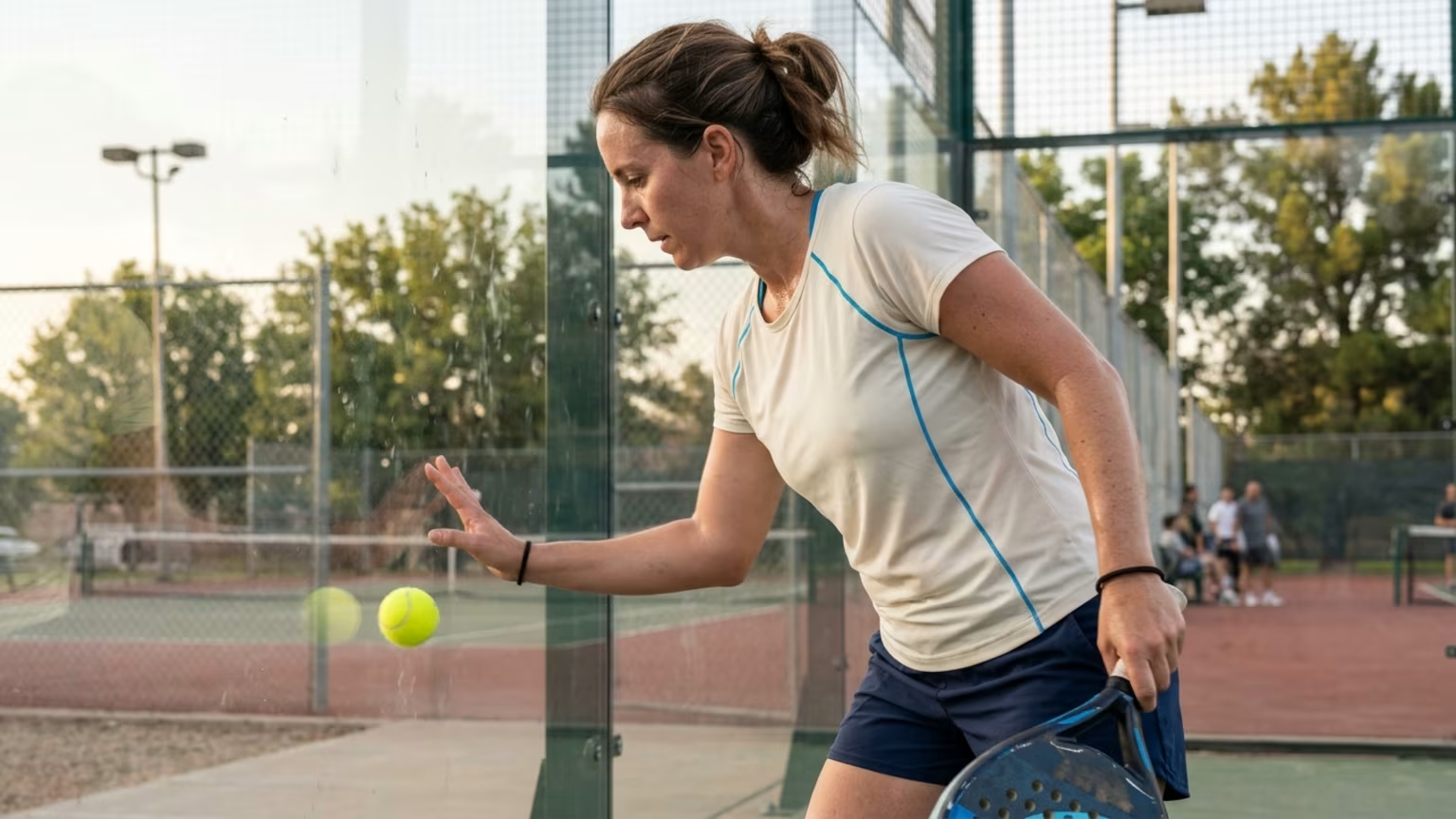

Learn how reading the padel glass improves court positioning and preserves physical energy. Understand bounce rules, partner communication, and rebound mechanics.




Playing off the glass in padel is the physical act of letting a deep shot bounce on the floor and rebound off the back wall before returning it. This core mechanic defines the entire rhythm of the sport. New players frequently struggle with the concept of letting the ball pass them. They instinctively treat the back wall as a boundary rather than a tactical tool.
Understanding how to use this space separates frantic court coverage from controlled positioning. A proper read allows you to absorb pace and reset the rally. The glass is designed to keep the ball in play longer. Players must rewire their instincts to trust the rebound instead of intercepting every shot.
This dynamic shift in thinking is essential for long-term improvement. The glass creates unique angles and spin variations that do not exist in traditional tennis. Learning to read these variations requires patience and deliberate practice. Once you grasp the basic geometry, the entire court opens up.
Tennis, pickleball, and padel specifically challenge the lower body through repeated explosive efforts and rapid changes of direction. These sports require players to accelerate quickly and brake with immense force. When you refuse to let a deep ball reach the glass, you force your body into awkward defensive lunges. Rushing to strike every fast shot taxes your lower back and hip joints heavily.
Our team has learned this lesson through direct physical feedback on the court. When I first started playing pickleball, I noticed how many people skipped warming up entirely. They would jump straight out of their cars and right up to the kitchen line. I tried doing that and immediately pulled a calf muscle. Pickleball requires just as much explosive lateral movement as tennis, just in a tighter space.
Since then, I always spend five minutes doing dynamic lunges and ankle rolls. It changes everything about how confident I feel pushing off the baseline. That injury taught me a broader lesson about managing physical demands across all racquet sports. If you rely purely on raw reflexes to intercept every ball, your joints absorb the penalty.
In padel, failing to read the glass creates the exact same physical overload. Players who constantly backpedal and lunge are fighting the physics of the court. Letting the ball travel is the tactical equivalent of a proper physical warmup. It reduces abrupt mechanical stress and preserves your legs for the late stages of a match.
The rules of the game dictate a strict sequence for legal wall play. On your side, an opponent’s shot can be played after it bounces on the floor and then rebounds from the glass. You must return it before a second floor bounce occurs. Conversely, your shot must land on the opponents’ court before touching their wall or fence.
This bounce sequence is the foundation of defensive strategy. PadelFormat’s beginner guide recommends letting a deep ball reach the back glass when doing so gives you more time. The guide advises players to give a deep ball space, turn with it, and make contact in front. Starting with predictable feeds and learning one clean back-glass return is essential before attempting complicated wall play.
Sportspsychology.org reported that the International Padel Federation estimated 35 million players worldwide and roughly 77,300 courts in 2025. With this massive global growth, mastering fundamental court positioning is crucial for new participants. PadelFormat recommends that partners defend near the back with room for the glass. Teams should move forward and back together as a cohesive unit.
You should avoid having one player rush the net while the other stays behind. Split positioning can open the middle and diagonals to easy attacks. When neither partner has a clear call, the guide recommends choosing the middle. You should communicate early with verbal cues to claim or leave the ball.
Practicing the back-glass return builds fundamental muscle memory. You must learn to track the ball as it travels past you and anticipate its forward trajectory. The rebound angle depends entirely on the speed and depth of the incoming shot. Giving yourself enough physical room ensures you are never jammed during your swing.
Understanding how to use the wall helps adult players maintain their physical capabilities and stay active for years. Efficient movement patterns directly reduce the cumulative wear and tear on major joints. When you let the ball do the work, you conserve vital physical energy. This measured approach supports athletic longevity far better than relying on raw speed.
Players who master the glass rebound can dictate the pace of the match. They avoid the frantic scrambling that often leads to acute muscle strains. By turning with the ball smoothly, you keep your body in a balanced and powerful posture. This mechanical efficiency is a cornerstone of healthy recovery planning.
Selecting the right equipment also plays a role in sustainable movement. We advise players to invest time in choosing supportive court gear that accommodates lateral stability. Proper footwear grips the artificial turf safely and reduces slipping during those crucial split-steps. Every element of your preparation should aim to reduce unnecessary friction.
Consistency always beats sheer intensity on the padel court. Setting a reliable pre-match routine prepares the body for the unique demands of the sport. Coupling that preparation with smart tactical movement creates a sustainable playing style. You can enjoy competitive matches well into adulthood without feeling physically drained.
Even with flawless tactical execution, racquet sports place significant physical demands on the human body. It is important to distinguish between normal post-match muscle fatigue and genuine injury. Lingering joint pain that persists for several days is a clear signal to consult a qualified physiotherapist. You should never ignore sharp pain that occurs during routine court movements.
If explosive steps or lateral lunges consistently trigger hip or knee discomfort, seek professional healthcare guidance. Persistent stiffness that does not improve with basic rest warrants a proper clinical evaluation. A physical therapist can identify underlying movement dysfunctions before they become chronic issues. They can provide targeted strategies to keep you safely engaged in your sport.
Listening to your body is the most critical aspect of long-term participation. We encourage all players to review our practical injury prevention guide to understand common red flags. Addressing minor physical complaints early prevents them from sidelining you for entire seasons.
True court mastery is knowing when to push hard and when to seek help. A proactive approach to physical health ensures you can keep reading the glass and returning serves for decades. The game should be a source of continuous enjoyment.
Follow Evercourts for practical insights on tennis, pickleball and padel performance, movement, recovery and healthy ageing. Stay connected for new articles, research-led guidance and ideas to help you play well and keep playing for years.


An evidence check on sports supplements like tart cherry juice. Learn why racquet sports players should prioritize core nutrition over functional foods.
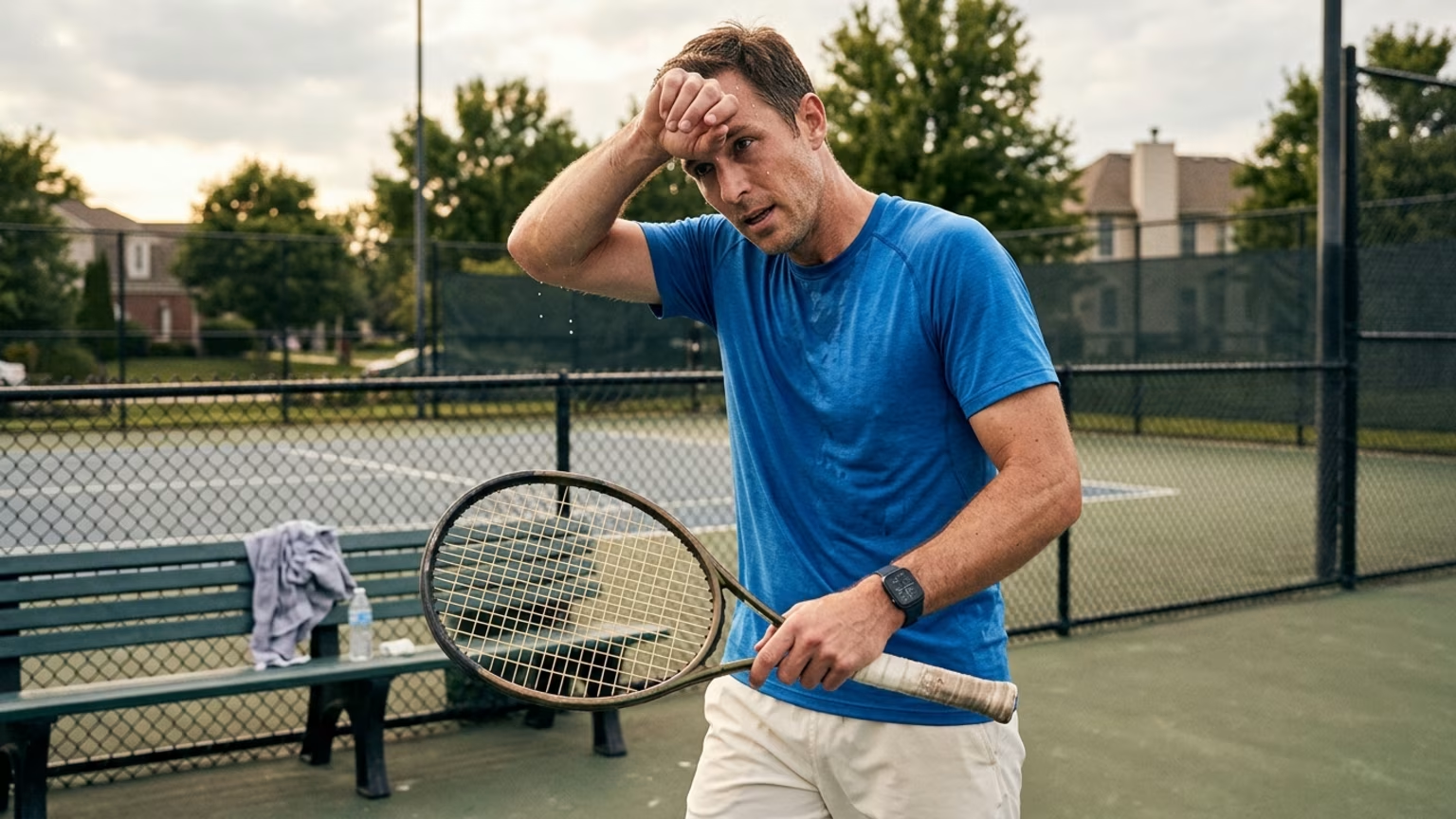
In late 2026, Oura analyzed wearable data to see how recreational tennis impacts heart health and recovery. Learn what this means for your athletic longevity.
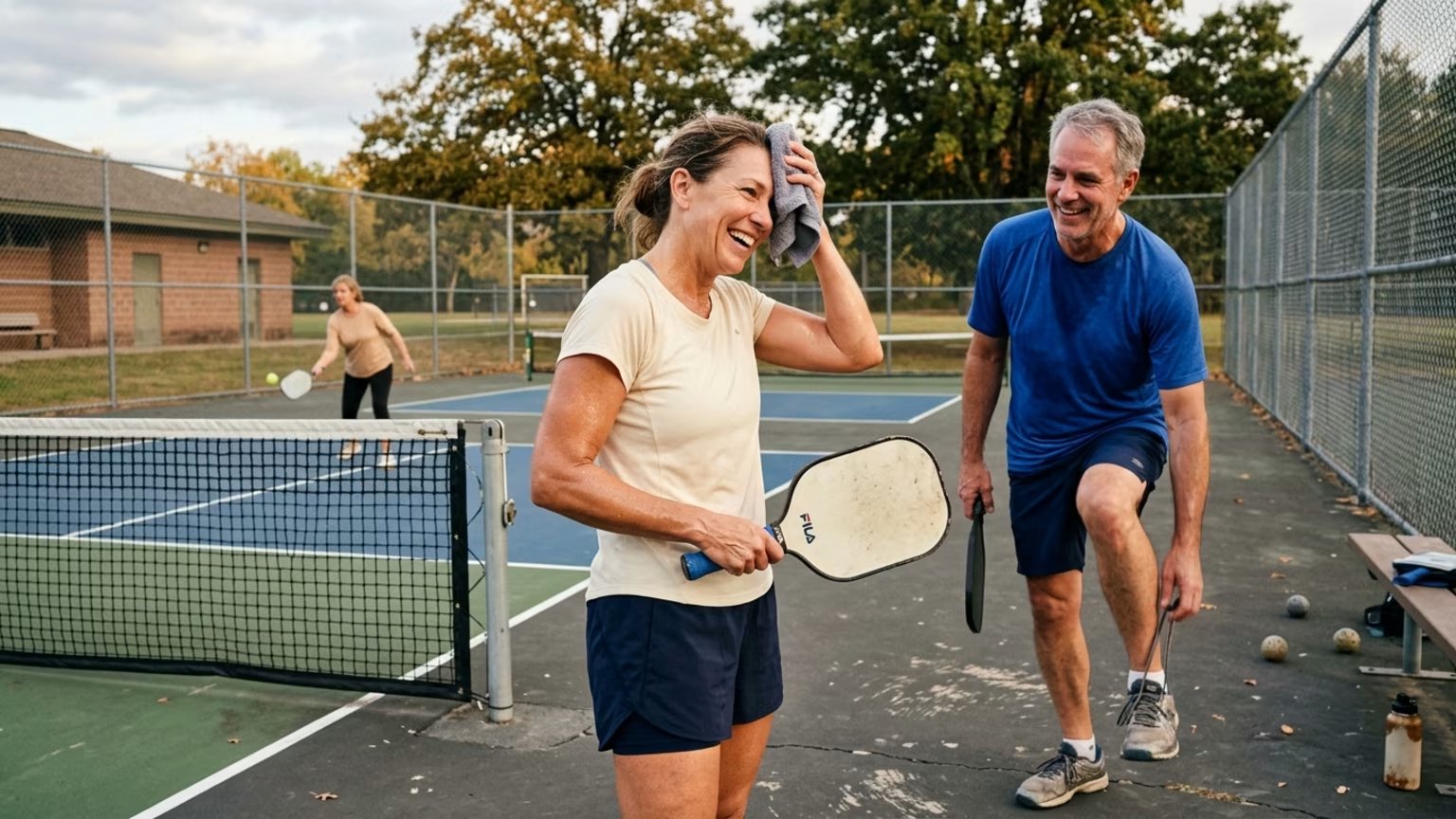
Recent guidelines emphasize gradual progression, dynamic warm-ups, and scheduled recovery to help adult racquet sports players maintain athletic longevity.
Read practical guidance for better movement, smarter preparation and a game that keeps working for you.
explore the Blog
