
Emma Raducanu’s reported gym and court activity offers encouragement, but her comeback timing remains open. Here is the practical lesson for club players.




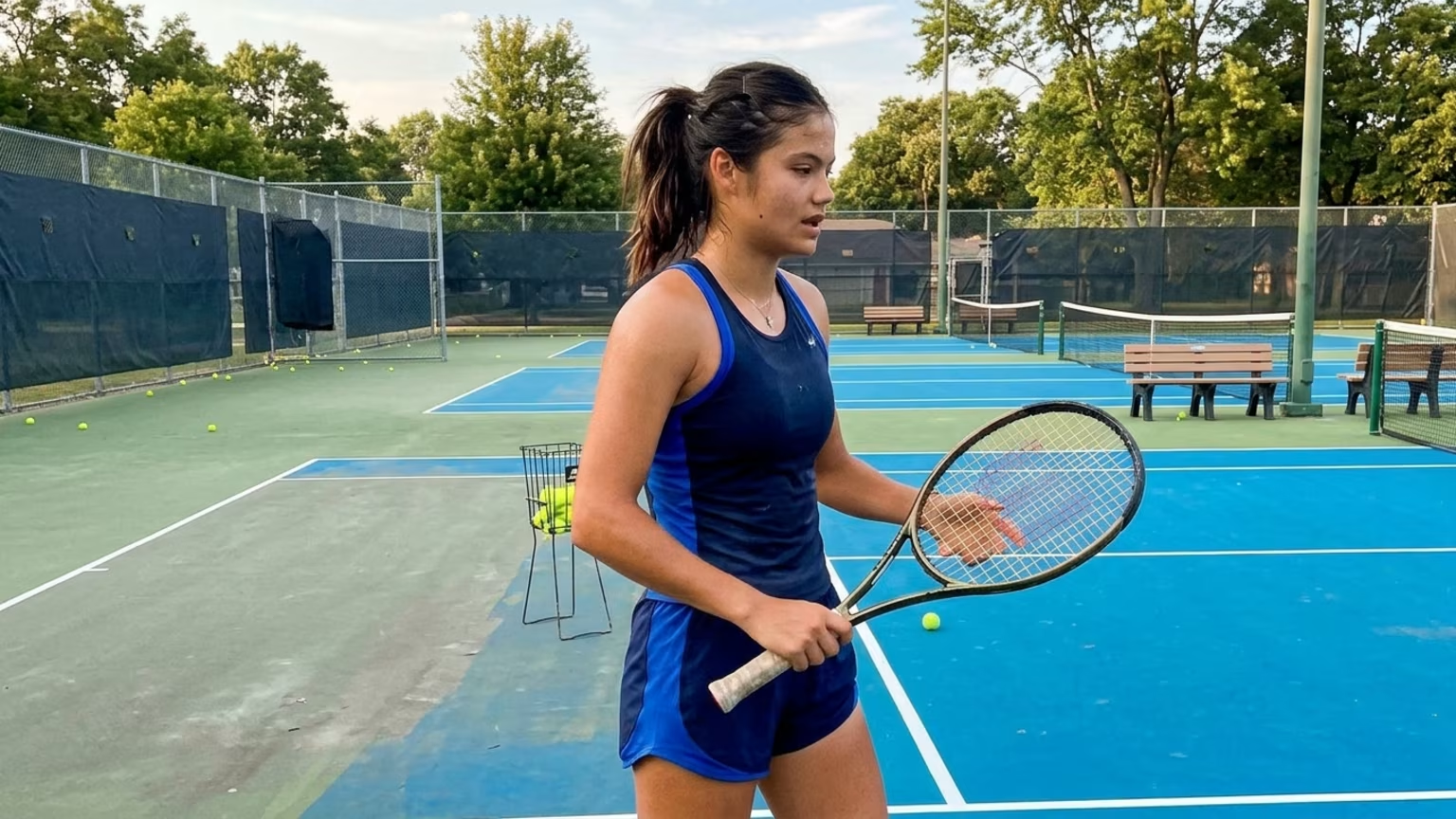
On November 6, 2026, The Scottish Sun reported that Emma Raducanu was doing light gym work and limited court activity after time in a protective boot.
The Scottish Sun’s report described a shift from boot use to light training, including jumping and some court work. A related report also described exercise-bike work and practice serves. These are encouraging details in a recovery story rather than an announcement of a competitive return.
The related report says she would have to wait until January 2027 to play again. That is a newspaper timeline, not an official return announcement. Neither report provides a clinician-authored rehabilitation plan, imaging results or confirmation of clearance for full practice or competition. The footage therefore supports a description of activity rather than a clinical judgment about healing.
At professional level, the natural question is when a player will compete again. Raducanu’s update gives that discussion a visible reference point: she has been shown doing gym and court work. The sporting interest lies in where that activity eventually leads. It does not need to become a prediction about her next tournament.
For an adult recreational player, the more useful question is different: what does this story contribute to your own return decision? Evercourts’s view is that it offers perspective rather than a programme. Another player’s exercise choices are not instructions for your next session. Personal decisions about returning after injury belong with a qualified clinician familiar with your situation.
That distinction is central to keeping elite comeback stories in perspective. A professional update is written for an audience following a career. A recreational return has to answer a more personal question about the activity someone wants to resume. Those are different editorial and practical purposes.
Read each part of the update literally. Exercise-bike work is a report of exercise-bike work. Practice serves are a report of practice serves. Neither description needs to be expanded into a claim about everything else Raducanu is doing on court.
The same discipline applies when considering your own plans. Rather than borrowing the broad phrase “back playing,” describe the activity you hope to discuss with your clinician. That might be returning to a particular practice session or entering a league fixture. Naming the goal keeps the conversation focused without assuming that every form of participation is interchangeable.
The sport matters to that conversation too. A tennis player should ask about the tennis activity they want to resume. A pickleball or padel player should name their own intended session rather than translate a tennis professional’s footage into a substitute plan. This is about making the question specific, not assigning a different rehabilitation sequence to each sport.
There is also no need to turn the reported activities into a checklist. The sequence described in the coverage belongs to this account of Raducanu’s recovery. Copying its exercise selection would turn a news report into something it was not written to provide.
A useful response to the update is to take clearer questions into a conversation with the clinician overseeing your recovery. For example:
These are discussion prompts rather than a self-directed return protocol. They do not prescribe jumping, serving or any particular conditioning exercise. Their purpose is to connect the player’s goal with an individual decision instead of letting a social-media clip make that decision by implication.
It is reasonable to find Raducanu’s update encouraging. Seeing a player active again can make a recovery story feel less defined by absence. The practical boundary is simply to keep that encouragement separate from choosing your own exercises or setting your own comeback date.
For Evercourts, the broader priority is building a lasting place for racquet sports in your life. That means judging a comeback by its relevance to the player involved rather than by how closely it resembles a professional headline. The next appearance on court is part of that picture, not the whole editorial story.
As the 2027 season approaches, the next meaningful development in Raducanu’s story would be a confirmed announcement about fuller practice or competition. Further training footage may add detail. Reporting should keep those updates distinct from an actual tournament commitment.
For recreational players following the story, the useful habit is to identify exactly what each update announces. A training appearance and a competition announcement answer different questions. Keeping those categories clear makes the coverage more informative without stripping away its optimism.
Over the next season, the standard worth watching is whether comeback coverage becomes more precise about those milestones. Raducanu’s reported activity is a positive development in the story. The stronger test will be how clearly future updates connect training progress with a confirmed return to competition.
Follow Evercourts for practical insights on tennis, pickleball and padel performance, movement, recovery and healthy ageing. Stay connected for new articles, research-led guidance and ideas to help you play well and keep playing for years.


Learn how to turn, track and recover for pickleball lobs with a gentle partner drill, plus what fall research says about balance and footwork.

Tennis match data explain why conditioning involves repeated bursts and recovery. Apply the pattern without treating research averages as personal targets.

A flexible pickleball warm-up progressing from easy movement to controlled lunges, side steps, shadow swings and dinking, with readiness-based adjustments.
Read practical guidance for better movement, smarter preparation and a game that keeps working for you.
explore the Blog
