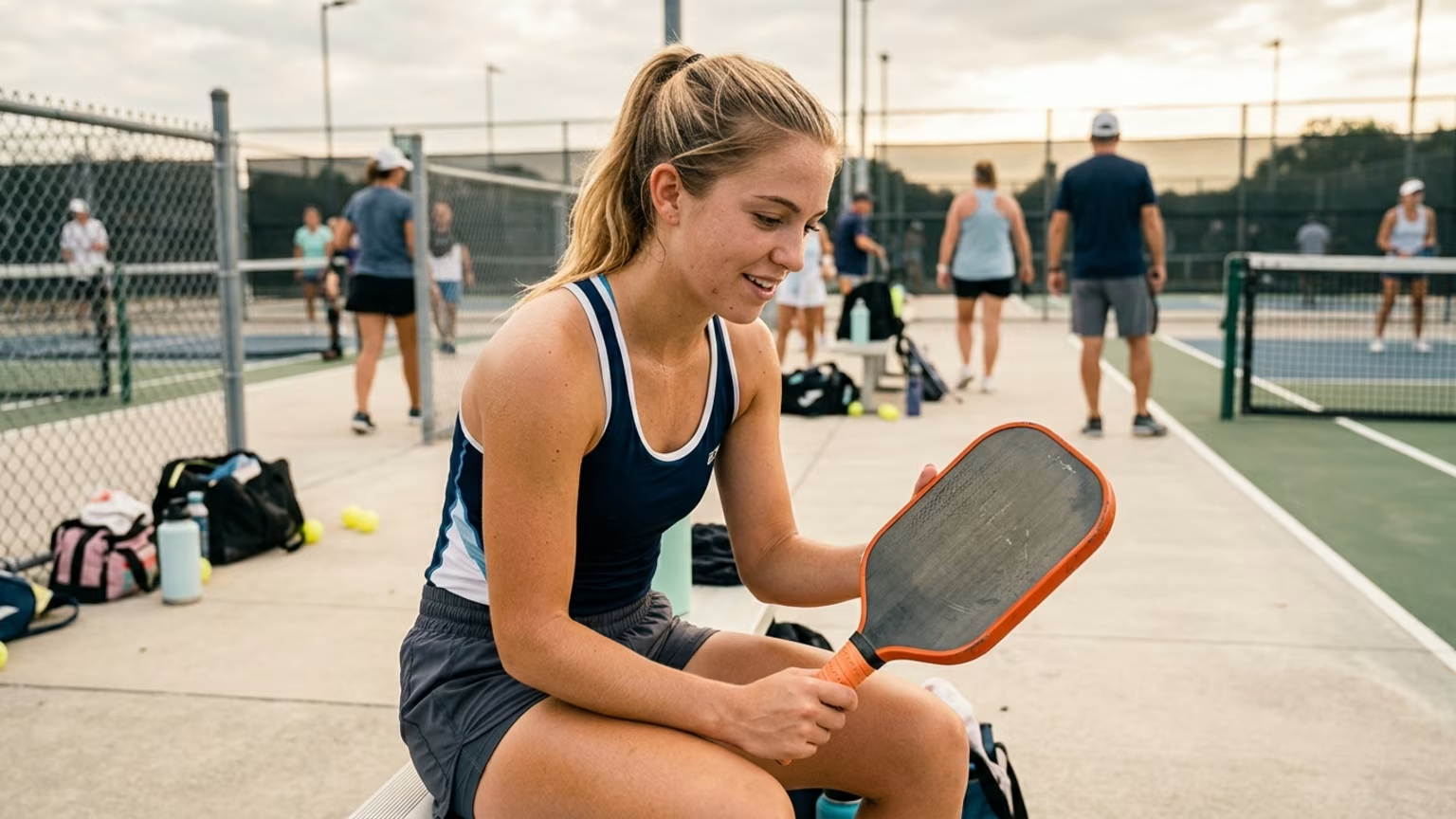

Pickleball.com reports Anna Leigh Waters teased an unreleased Franklin paddle. Here is what this mystery equipment means for adult recreational players.




On September 9, 2026, Pickleball.com reported that Anna Leigh Waters had been seen using an unreleased Franklin paddle. The equipment featured an all-black face and a prominent white question mark at its center. This sighting introduced a new piece of hardware to the professional circuit without any accompanying technical specifications. The paddle first appeared publicly when Waters held it during the Major League Pickleball Finals trophy presentation.
Following its initial appearance, the mystery paddle was featured in a photograph connected with Waters's second Times Square billboard. Waters then continued using the question-mark paddle during the Veolia Pickleball National Championships. This sustained usage across major events indicated that the equipment was a functional competition tool rather than a single promotional prop. Furthermore, Franklin-sponsored professionals Parris Todd and Sofia Sewing were also seen using or teasing the same design during the tournament.
Despite these high-profile public appearances, no release date, retail price, final name, or official specifications had been announced when Pickleball.com published its report. The lack of concrete details left fans and analysts guessing about the paddle's internal construction. Waters did offer a single cryptic comment regarding the equipment, stating that the secret of the new design "rhymes with chrome." Pickleball.com interpreted this specific phrasing as a possible hint toward a foam core construction.
That interpretation currently remains speculative because neither Waters nor Franklin had publicly confirmed the paddle's internal materials. The repeated use of the same cosmetic design by multiple sponsored athletes points toward a wider product launch rather than a one-off custom build. However, the available reporting leaves it unclear if this is a new Waters signature model or a broader Franklin equipment platform. The mystery continues to hold the attention of the professional pickleball community.
For the adult recreational player, seeing new equipment in the hands of elite professionals requires careful interpretation. The appearance of a paddle in professional competition does not prove that it will improve a recreational player's power, control, spin, or comfort. Professional players operate in highly specialized contexts with unique performance demands. Their equipment choices often reflect complex sponsorship agreements, extensive prototype testing programs, and personalized customization rather than universally optimal designs.
Recreational players should exercise patience and wait for measurable specifications before considering an equipment change. When evaluating new models, it is crucial to look for documented details on thickness, static weight, swing weight, and balance. Additional factors like face material, core construction, and grip dimensions are equally important. A comfortable grip and manageable swing weight are critical factors for adults focused on maintaining long-term playability.
It is always wise to prioritize these practical elements over a professional endorsement or a sleek cosmetic design. Even if the new Franklin paddle does feature a foam core, that single material choice does not guarantee a specific result. A foam component alone does not tell a player whether the paddle will deliver more power, greater control, a softer feel, or improved durability. The smartest approach is to maintain a critical eye toward marketing language and focus on how a paddle actually interacts with your specific swing mechanics.
Many players assume that deciding when to upgrade your pickleball paddle will automatically resolve poor shots or lingering physical discomfort. While equipment matters, it cannot replace proper physical preparation and reliable movement mechanics. In our experience at Evercourts, relying on your body's readiness is essential. As one of our team members notes:
"When I first started playing pickleball, I noticed how many people skipped warming up entirely. They would jump straight out of their cars and right up to the kitchen line. I tried doing that and immediately pulled a calf muscle. Pickleball requires just as much explosive lateral movement as tennis, just in a tighter space. Since then, I always spend five minutes doing dynamic lunges and ankle rolls. It changes everything about how confident I feel pushing off the baseline."
Relying on physical readiness provides a far better foundation for performance than simply buying unproven gear based on a professional sighting. Before replacing a working paddle, players should always schedule a proper demo session. Borrowing a paddle from a trusted player can reveal whether the feel is genuinely different during competitive play. Pay close attention to how the equipment performs in resets, counters, drives, and challenging defensive exchanges. If the paddle does not actively improve your confidence in those specific situations, it is likely not worth the financial investment.
The mystery surrounding this Franklin paddle illustrates a broader marketing pattern in professional racquet sports. Manufacturers generate interest by placing unreleased products into high-profile competitions before publishing complete technical details. This strategy effectively builds curiosity among fans and amateur competitors alike. However, Pickleball.com notes that frequent equipment launches can make it difficult for players to distinguish meaningful performance changes from standard marketing language.
Over the coming months, players should watch for Franklin to release the final retail model and its official documentation. The most useful follow-up evidence will be measurements and long-term reviews from credible independent equipment testers. Recreational players should compare these future findings against their current setup before making a purchase. Until those concrete facts arrive, the question-mark paddle remains an intriguing prototype rather than a necessary upgrade for the everyday competitor.
Adult athletes focused on athletic longevity should maintain a clear, pragmatic perspective on new gear trends. The best equipment is always the paddle that allows you to play comfortably and confidently week after week. By choosing court gear to support your movement, you protect your joints and improve your consistency on the court. Keep your focus on proven fundamentals as this current wave of pickleball equipment developments continues to unfold.
Follow Evercourts for practical insights on tennis, pickleball and padel performance, movement, recovery and healthy ageing. Stay connected for new articles, research-led guidance and ideas to help you play well and keep playing for years.


Former Pescara captain Andrea Camplone collapsed during a padel match on September 13. Learn how this incident highlights the need for court preparedness.
An analysis of the 2026 US Open semifinal explores how a compact return strategy can manage big serves, offering practical tactics for adult players.
A new pickleball dating app highlights the growing demand for digital tools that help adult players match on-court compatibility, skill level, and scheduling.
Read practical guidance for better movement, smarter preparation and a game that keeps working for you.
explore the Blog
