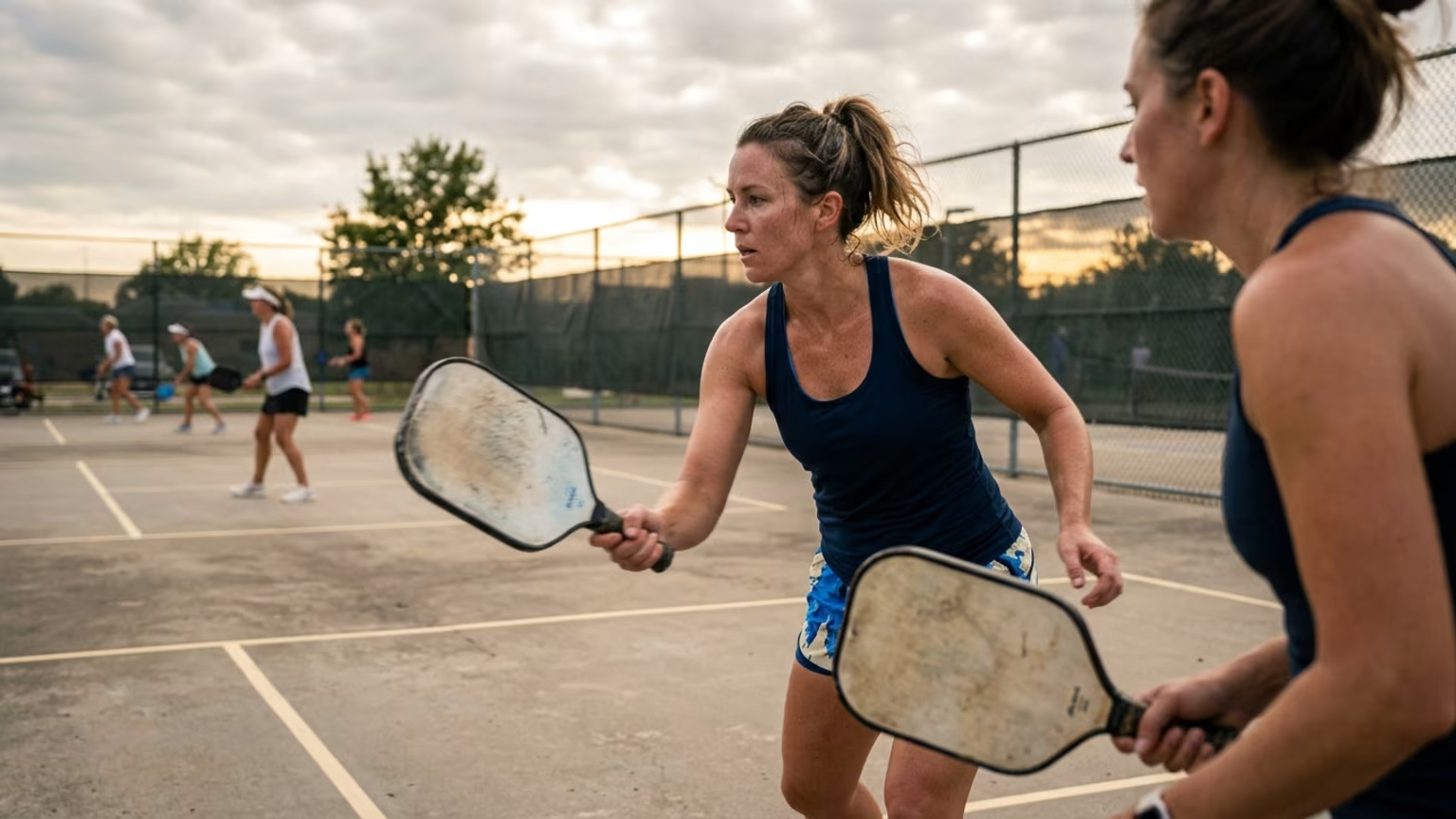

Learn how to separate marketing hype from performance reality when deciding to upgrade your tennis racquet or pickleball paddle.




A new piece of carbon fiber will not fix your poor footwork or cure your aching elbow. The racquet sports industry thrives on the idea that better performance is always one purchase away. Buying a new frame is often just an expensive distraction from the real work of movement and conditioning.
The marketing language surrounding court equipment is designed to sell confidence to amateur players. Manufacturers promise thermoformed power, massive sweet spots, and advanced spin capabilities to justify premium prices. This messaging drives substantial consumer spending across the sporting goods industry. Commercial market estimates differ sharply based on methodologies and definitions.
Fortune Business Insights reported a global racquet-sports-equipment market of $32.86 billion for 2025. Fortune Business Insights estimated the tennis-equipment market at $14.67 billion in 2025. They noted that tennis represented 44.66% of the global racquet-sports-equipment market in that year. Mordor Intelligence reported $96.12 billion for a broader market definition in that same year.
These massive figures show how much money recreational players spend chasing better performance. The reality on the court is much more mundane than the advertising suggests. USA Pickleball tells consumers to check whether a paddle is approved for sanctioned play. Approval guarantees that the equipment meets regulatory standards.
It does not mean the paddle is comfortable, durable, or suited to your specific body. An approved paddle with a grip that is too small can still cause joint irritation and forearm fatigue. Many players try to buy their way out of basic wear and tear. USTA reports that more than 27.3 million Americans played tennis in 2025.
Nearly 40% of those players hit the courts in public parks. With U.S. participation rising 54% since 2019, nearly 10 million new players are navigating equipment choices. These newcomers are quickly learning about when to properly maintain or cycle out their gear. USTA guidance suggests changing an overgrip more frequently as playing frequency increases.
A fresh grip often restores control far better than buying a completely new racquet. A player who hits once a week might only change their grip monthly. Players on the court several times a week might need a fresh wrap every few days.
Replacing a functioning racquet on a fixed schedule does not automatically improve recreational play. Athletic longevity comes from how well you prepare your body for the physical demands of the court. A 2026 randomized controlled trial listed by the Chinese University of Hong Kong examined an eight-week pickleball program involving older adults with pre-frailty. A news report summarizing the trial said the intervention used two 60-minute sessions per week.
The results of that specific program were highly encouraging for healthy aging. The report stated that 42% of the pickleball group versus 8% of the usual-lifestyle group returned to robust health. However, the physical toll of these sports is equally well documented across all age groups. A reported study of older pickleball players found that roughly one in three participants reported an injury during the previous year.
Lower-body injuries and soft-tissue problems were more common than fractures in that demographic. You cannot buy a paddle to prevent a pulled muscle or a rolled ankle. When I first started playing pickleball, I noticed how many people skipped warming up entirely. They would jump straight out of their cars and right up to the kitchen line.
I tried doing that and immediately pulled a calf muscle. Pickleball requires just as much explosive lateral movement as tennis, just in a tighter space. Since then, I always spend five minutes doing dynamic lunges and ankle rolls. It changes everything about how confident I feel pushing off the baseline.
Taking time to properly adapt your physical training routine will protect your joints more effectively than any equipment upgrade.
A defensible upgrade decision should begin with a functional problem rather than a shiny product. You should replace your equipment immediately if it is unsafe or structurally compromised. Cracks, a collapsing bumper, or a loose handle are legitimate reasons to seek a replacement. If the frame is sound, focus on maintenance interventions like replacing strings or adding a fresh base grip.
Consider your personal court movement before buying what a professional player endorses. An elite player uses equipment modified for their specific technique, physical capacity, and sponsorship arrangements. A baseline player might value stability, while a doubles specialist may prioritize maneuverability and quick handling. You should test new equipment during practice sessions to evaluate how it impacts your unique game.
Look for late contact, depth control, or any wrist discomfort during play.
Equipment standards are evolving rapidly as governing bodies tighten their technical requirements. Secondary reporting indicates that the USA Pickleball paddle-ball coefficient-of-restitution ceiling moved from 0.44 to 0.43 on November 1, 2025. Reports also indicate plans to introduce direct spin-rate testing with a 2,100-rpm cap for new certifications beginning October 1, 2026. Players competing under USA Pickleball rules should verify approval and consider how equipment ages.
One manufacturer-oriented source describes a four-part pre-shipment protocol involving impact, drops, temperature changes and torsion testing. However, players must remember that textured surfaces and paddle faces still degrade over time.
Players with persistent elbow or knee pain should not assume a new frame is the cure. Instead of browsing online stores, seek a professional physical therapy assessment to address the root cause. If you do need new gear, an in-person fitting session can be highly valuable. Mordor Intelligence estimated that offline retail accounted for 73.55% of sales in 2025.
Touching the handle and feeling the weight distribution is a crucial step before finalizing any purchase.
The real cost of a new racquet extends far beyond the initial purchase price. You must account for strings, grip changes, shipping costs and potential customization fees. Mordor Intelligence forecast online retail to grow at 7.6% annually through 2031. Buying online is convenient, but it prevents you from testing the exact frame you intend to use.
There is also the hidden cost of a transition period where your timing and confidence might suffer. For players returning from an injury, changing equipment while simultaneously increasing playing volume is a major mistake. It becomes nearly impossible to identify whether the new paddle or the extra workload caused your sudden shoulder soreness. Taking time to diagnose your movement mistakes is a much cheaper and more effective strategy.
True athletic longevity rarely arrives in a cardboard shipping box, but rather stems from the quiet discipline of conditioning the body that actually swings the racquet.
Follow Evercourts for practical insights on tennis, pickleball and padel performance, movement, recovery and healthy ageing. Stay connected for new articles, research-led guidance and ideas to help you play well and keep playing for years.


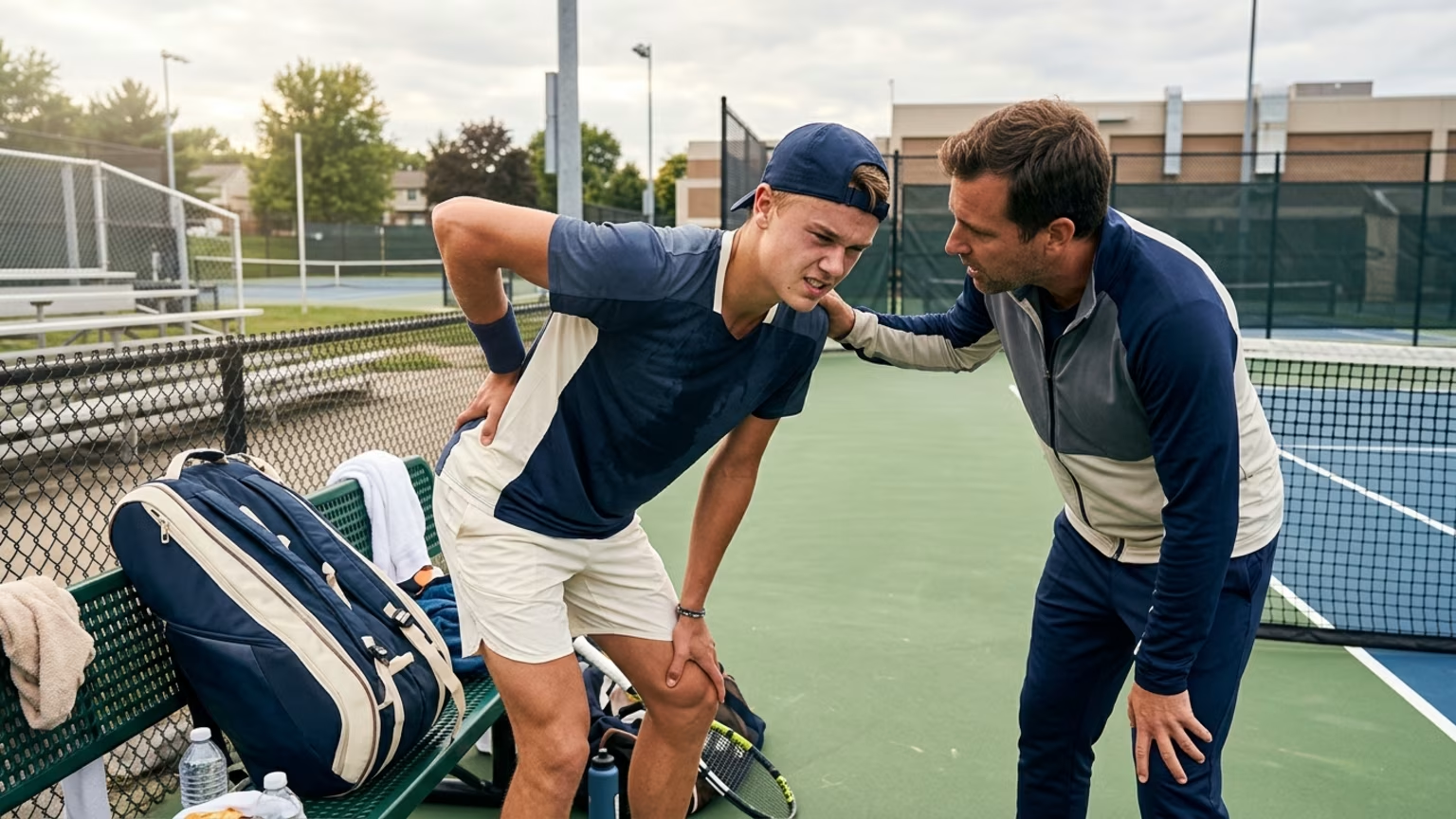
Holger Rune withdrew from the European Open with a back problem. The facts behind his decision and a grounded perspective for recreational players.

The Dink’s October 17 guide emphasizes deep returns, ball-height decisions and positioning against faster pickleball opponents.

A new report outlines padel and tennis gear trends. Learn how to assess adjustable rackets, sensor feedback and smart-court claims.
Read practical guidance for better movement, smarter preparation and a game that keeps working for you.
explore the Blog
