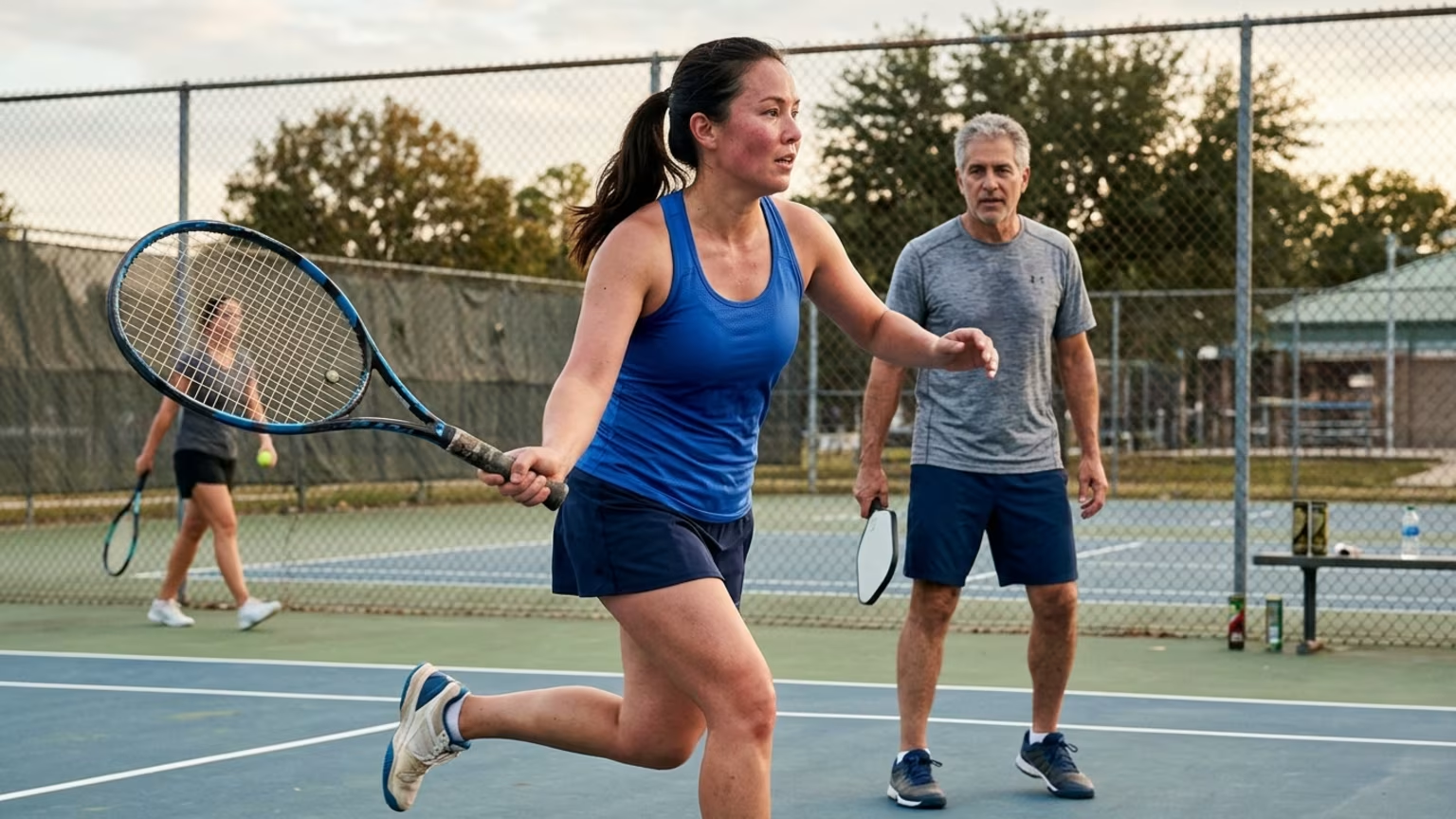

Learn how to choose tennis, pickleball, and padel equipment based on play style. Discover the practical trade-offs of gear weight, grip size, and shoes.




You are walking off the court after a heavy three-setter, carrying your equipment bag while your knees ache and your forearm throbs. The immediate temptation is to browse online for a heavily cushioned shoe or a lighter paddle to fix the discomfort. Upgrading your setup can certainly make your movement more efficient and support athletic longevity. Yet equipment is just a tool, and it will never replace the need for solid technique.
Our primary goal is to help you match your equipment to your physical reality without falling for marketing hype. The racquet sports community is expanding rapidly across the country. Sources citing SFIA data say 24.3 million Americans played pickleball in 2025, compared with 4.2 million in 2020. Additionally, USTA reported that more than 27.3 million people played tennis in the United States in 2025.
The USTA says U.S. tennis participation has risen 54% since 2019, bringing nearly 10 million new players to the sport. With millions of adult players entering the courts, understanding equipment choices is more critical than ever. The market is flooded with heavily marketed gear promising to remove aches. Our objective is to strip away that noise and focus on practical capability. We want to help you select equipment that supports your natural movement patterns.
A few years ago, I realized my tennis serve speed was dropping, and my shoulder was constantly throbbing after matches. Instead of pushing through the pain, I took a month to rebuild my mechanics and focus on rotator cuff endurance. I stopped trying to hit flat aces and developed a much heavier kick serve. My win rate actually went up, and my shoulder stopped hurting. Sometimes longevity means outsmarting your own ego on the court.
Total weight and mass distribution create a direct trade-off between maneuverability and stability. Equipment guidance describes lighter or more head-light setups as easier to maneuver, while additional mass can provide a more stable feel. There is no universally perfect weight for every adult player. The right choice depends entirely on your strength, swing mechanics, and tolerance for fatigue during a long match.
The priority is finding the heaviest setup you can repeatedly swing without shortening your strokes. A very light frame may be easy to accelerate initially. However, it can feel highly unstable when you are trying to block fast incoming balls. A heavier setup offers excellent stability but can become difficult to control late in a session.
If you rely on rapid preparation, a head-light balance might suit your style perfectly. Players who value stability on heavy shots often accept the additional swing effort required by a heavier frame. You should always test equipment during drills, extended rallies, and late-session movement. Trying a few comfortable swings in a retail shop will not reveal how the gear performs under fatigue.
Grip size is primarily a control variable rather than a guaranteed medical intervention. A study summarized by ScienceDaily found no significant differences in the tested forearm-muscle firing patterns across the grip sizes examined. The study authors concluded that grip-size variations were unlikely to be a contributing factor in tennis elbow. You should choose a grip that feels secure without forcing you to squeeze excessively.
If your grip feels insecure, you might compensate by adding unnecessary hand tension. If the handle feels too bulky, you may struggle to change grips quickly during fast exchanges. Your comfort and control remain legitimate reasons to adjust your grip size. However, sweeping injury prevention claims related to handle thickness require much stronger clinical evidence.
Maintaining your grip condition is just as important as finding the right size. USTA advises replacing grips when they become worn or dirty and suggests more frequent replacement for players who play several times a week. A fresh overgrip ensures that you do not have to over-focus on maintaining your hold. This simple maintenance step is crucial for reliable racquet handling, which is exactly why learning when your gear actually needs replacing is vital.
Court footwear requires distinct features that basic running shoes simply lack. Sports-footwear guidance recommends selecting tennis shoes for the court surface and looking for lateral support. A summary of running-footwear research cautions that shoe type and foot-type matching have not consistently demonstrated injury-prevention benefits. You should prioritize secure heel hold, comfortable forefoot space, and reliable traction over maximum cushioning.
Fit is always the first-order consideration when shopping for court shoes. Practical fitting guidance recommends trying shoes when your feet are swollen later in the day. You should leave approximately a thumbnail of space in front of your longest toe. Always check for pressure points or tightness while walking, stopping, and pivoting.
Your court movement requires constant braking, shuffling, cutting, and recovering to the center. A shoe that feels comfortable for straight forward running may not provide adequate support for lateral movements. Assess lateral stability through simulated court motions rather than just straight walking, and consider choosing racquet sports shoes for injury prevention based on your primary court surface. Replace your footwear when the internal support degrades, even if the outer tread still looks serviceable. General clinical guidance notes that cushioning can break down long before the rubber outsole wears flat.
Equipment cannot compensate for excessive workload or a lack of physical conditioning. The cited pickleball literature reports that prolonged intermittent play can reduce neuromuscular function and may impair movement control under fatigue. A new racquet or shoe does not eliminate the need for sensible progression and proper rest. You must maintain good form as you become fatigued to support athletic longevity.
A recent systematic review found favorable pooled effects for several tennis-related outcomes after neuromuscular training, while rating the certainty of evidence for many measures as low or very low. This reinforces the distinction between relying on equipment and developing your physical skills. Equipment should help you remain coordinated, but conditioning remains central. Make sure you complete a substantial warm-up and utilize a reliable routine to prepare your body for match day before every session.
Tennis requires covering a large court with explosive sprints, sudden stops, and heavy sliding. Your tennis shoes must provide robust lateral support and highly durable outsoles tailored to hard courts, clay, or grass. Racquets require careful tension management to handle the heavy impact of a pressurized ball. You must balance the physical demands of long tennis rallies with a frame that does not exhaust your arm.
Pickleball demands rapid changes of direction in a very confined space. Paddle weight directly impacts your ability to defend at the kitchen line during fast exchanges. Equipment guidance associates heavyweight paddles with greater power, but this may cause potential wrist fatigue. Players often benefit from testing lighter, highly responsive paddles to facilitate quick reactions without straining their elbows.
Padel involves unique biomechanics, including turning frequently to play balls off the glass walls. Padel shoes need specific tread patterns to grip sandy synthetic turf safely. Padel bats lack strings, so selecting the right core foam density dictates your shot comfort and shock absorption. You must weigh the balance of the padel bat against the frequent overhead swings required during a match.
Evercourts is committed to helping you refine your gear choices so you can focus on playing well, moving efficiently, and enjoying racquet sports for years.
Follow Evercourts for practical insights on tennis, pickleball and padel performance, movement, recovery and healthy ageing. Stay connected for new articles, research-led guidance and ideas to help you play well and keep playing for years.


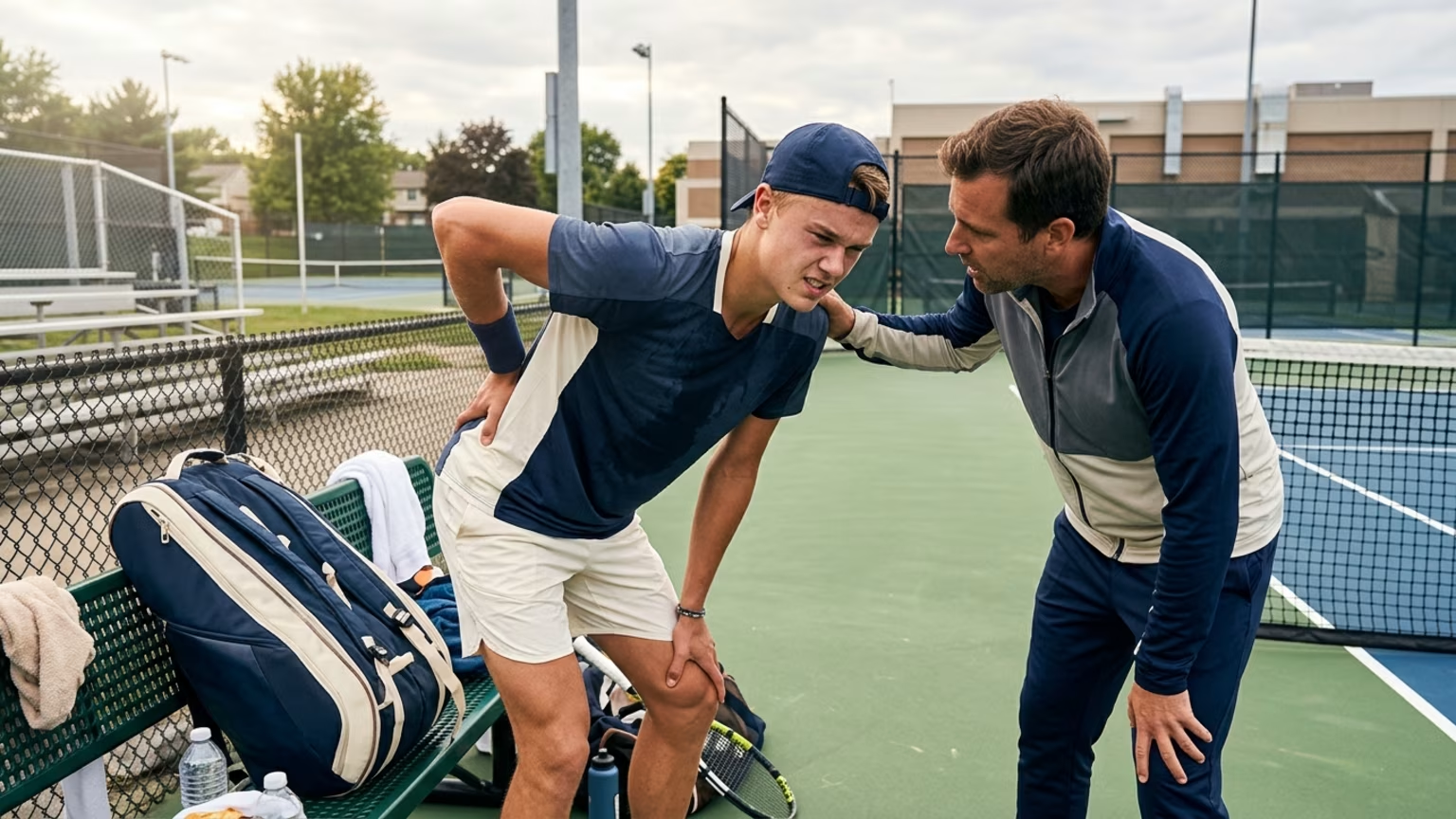
Holger Rune withdrew from the European Open with a back problem. The facts behind his decision and a grounded perspective for recreational players.

The Dink’s October 17 guide emphasizes deep returns, ball-height decisions and positioning against faster pickleball opponents.

A new report outlines padel and tennis gear trends. Learn how to assess adjustable rackets, sensor feedback and smart-court claims.
Read practical guidance for better movement, smarter preparation and a game that keeps working for you.
explore the Blog
