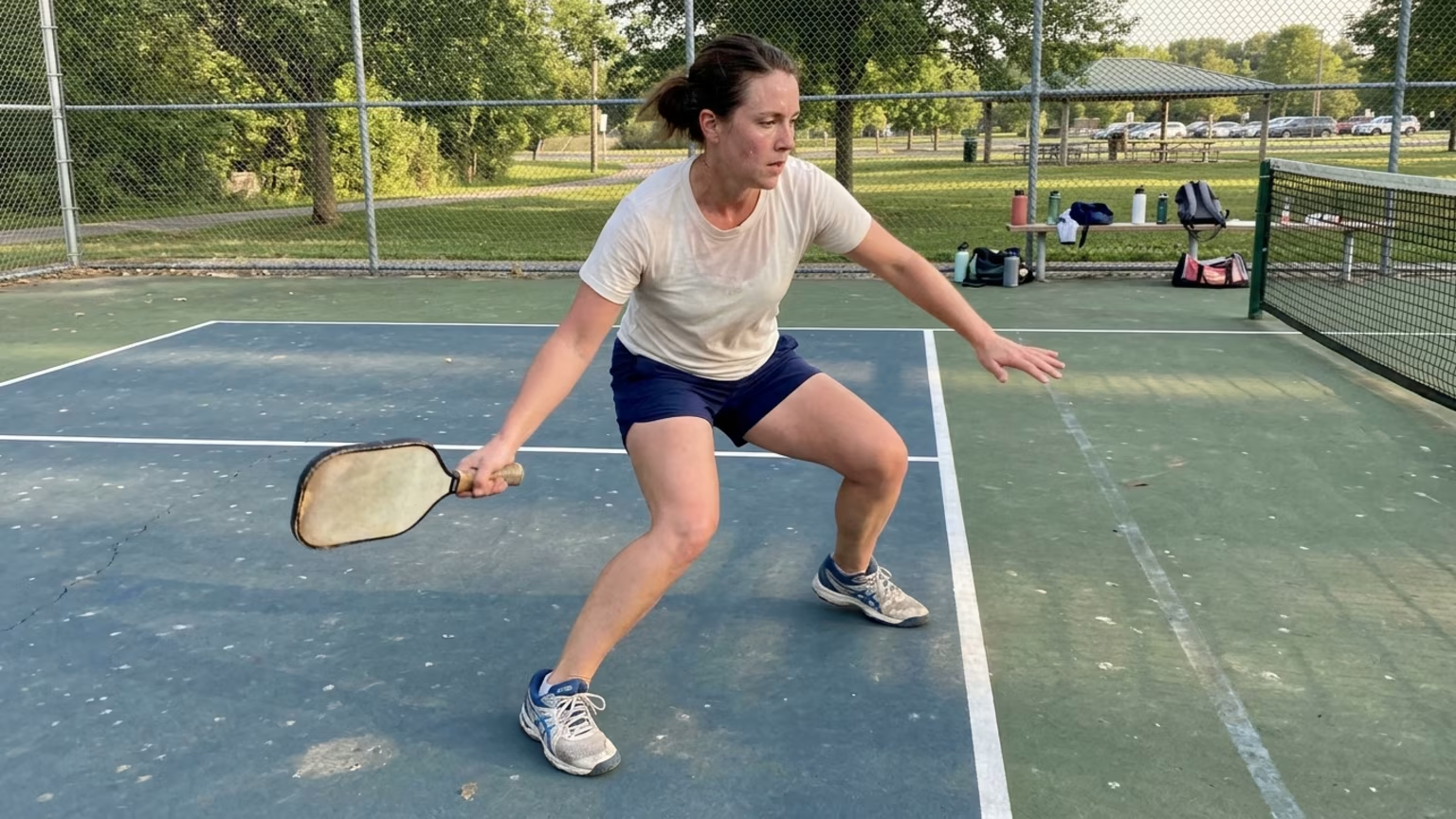

Understand braking and recovery in racquet sports, with a coaching-based movement progression and guidance on when to seek professional advice.




Braking is slowing your movement under control, while recovery means moving toward a useful court position after your shot. Together, they connect getting to the ball with being ready for what comes next.
Think of court movement as a linked skill: move toward the ball, control your arrival, play the shot and recover. The point is not simply to move faster. It is to make each part fit the next without treating the stop as an afterthought.
Here, recovery means footwork during play. It is different from the rest and recovery that happen between sessions.
Tennis, pickleball and padel involve repeated explosive efforts and changes of direction. Each burst toward a ball creates an arrival to manage. Getting there is only part of the task because the player must also prepare to move again.
A tennis training article describes this as a sequence involving controlled stopping, balance through the shot and movement into the next position. Its practical message is that acceleration should not be trained in isolation from what follows it. The article includes both planned movements and drills with unpredictable direction cues.
For tennis players, that provides a direct coaching framework for connecting movement to stroke practice. Rather than ending an exercise when the imaginary ball is struck, the exercise can include deliberate recovery steps. The finish of one shot becomes part of preparing for the next.
For pickleball and padel players, the useful application is the same movement question rather than an identical tennis drill: can the player arrive under control and then move toward a useful position? The recovery destination should reflect the situation being practised, not an assumption that every shot ends with a return to the middle.
Evercourts' guide to connecting stops with the next movement offers related court-practice context.
A tennis training article recommends controlled acceleration and stopping before more demanding direction-change work. It also describes lateral deceleration and recovery drills. These provide the coaching foundation for the progression below.
The healthy-aging research needs separate interpretation. A systematic review and network meta-analysis in European Review of Aging and Physical Activity examined racket sports in adults aged 60 and older. Evidence was concentrated in table tennis, and the authors could not establish that one racket sport was superior to another. The tennis evidence came from a single trial of 16 men without a non-exercise comparison group.
Those are the important boundaries: the review did not test braking drills, and the movement progression comes from coaching material rather than a controlled training trial. These sources do not establish that this sequence prevents injury or extends playing careers. The practical use is to organise movement practice around control before adding more demanding tasks.
A beginner tennis footwork guide describes shadowing a stroke and then taking deliberate adjustment steps back toward the middle. This makes the recovery part visible instead of leaving it out of the exercise.
At an easy pace, the practice emphasis is the sequence itself: shadow the shot, then recover deliberately. There is no need to add a ball or an unpredictable cue to make this a complete starting exercise.
The tennis training article recommends controlled acceleration-and-stopping drills and lateral deceleration exercises before more demanding changes of direction.
The coaching emphasis is a known movement followed by a controlled arrival. Because the direction is planned, attention can stay on managing the stop rather than reacting to a new instruction. Speed is adjustable rather than the main measure of success.
Next, the same coaching source describes progressive direction-change and lateral recovery drills. The stop now becomes a transition rather than the finish of the exercise.
A planned direction change can connect moving out with moving back toward a useful position. The emphasis remains control: complete the arrival, change direction and recover deliberately. A quicker effort is not the only way to make this practice meaningful.
Partner-directed and random-direction drills appear later in the tennis coaching material. These add a decision about where to move rather than leaving the full pattern known in advance.
The research packet's conservative coaching interpretation is to add speed or unpredictable cues only when the player can stop and reset under control. Staying with shadow movements or planned directions is also an option. Slower efforts and longer rests are ways to keep the practice manageable without changing its basic purpose.
For adult players, the long-term goal is practical: keep the ability to reach a ball, manage the arrival and prepare for another shot. Understanding those separate tasks gives practice a clearer focus than simply trying to look quicker.
It also offers a useful way to describe a difficulty. Is the challenge the initial movement, the stop or the recovery afterward? That is an observation to bring to a coach or qualified physio, not a diagnosis to make from a drill.
An evidence-informed approach does not require every practice to reach the most reactive version. A planned pattern can remain the focus when that is the version the player controls. Progression means matching the challenge to the movement being demonstrated rather than treating each harder drill as compulsory.
For players who switch sports, the framework can organise questions about practice without assuming that tennis, pickleball and padel require identical movement. What is the useful recovery position in this exercise? Does the drill include moving again after the shot? These questions keep the focus on the task being played.
A short practice note can record which version was used and whether stopping and resetting remained controlled. Evercourts' article on reading your movement between sessions provides related context for that reflection.
The aim is a repeatable movement skill that supports continued participation. Faster and more unpredictable are options within that work, not the definition of successful practice.
If pain or stiffness is changing how you stop or recover, consult a qualified physio or healthcare provider rather than treating the issue only as a footwork problem. Recurring symptoms deserve an individual conversation before the movement challenge increases.
Seek individual guidance as well if you repeatedly lose balance or cannot find a version of the movement that feels controlled. A coaching progression is not a substitute for assessing symptoms or deciding what is appropriate for a personal health situation.
Today, write down any symptoms or repeated loss of control affecting your court movement so you can describe them clearly to a qualified professional.
Follow Evercourts for practical insights on tennis, pickleball and padel performance, movement, recovery and healthy ageing. Stay connected for new articles, research-led guidance and ideas to help you play well and keep playing for years.


Learn how to turn, track and recover for pickleball lobs with a gentle partner drill, plus what fall research says about balance and footwork.

Tennis match data explain why conditioning involves repeated bursts and recovery. Apply the pattern without treating research averages as personal targets.

A flexible pickleball warm-up progressing from easy movement to controlled lunges, side steps, shadow swings and dinking, with readiness-based adjustments.
Read practical guidance for better movement, smarter preparation and a game that keeps working for you.
explore the Blog
