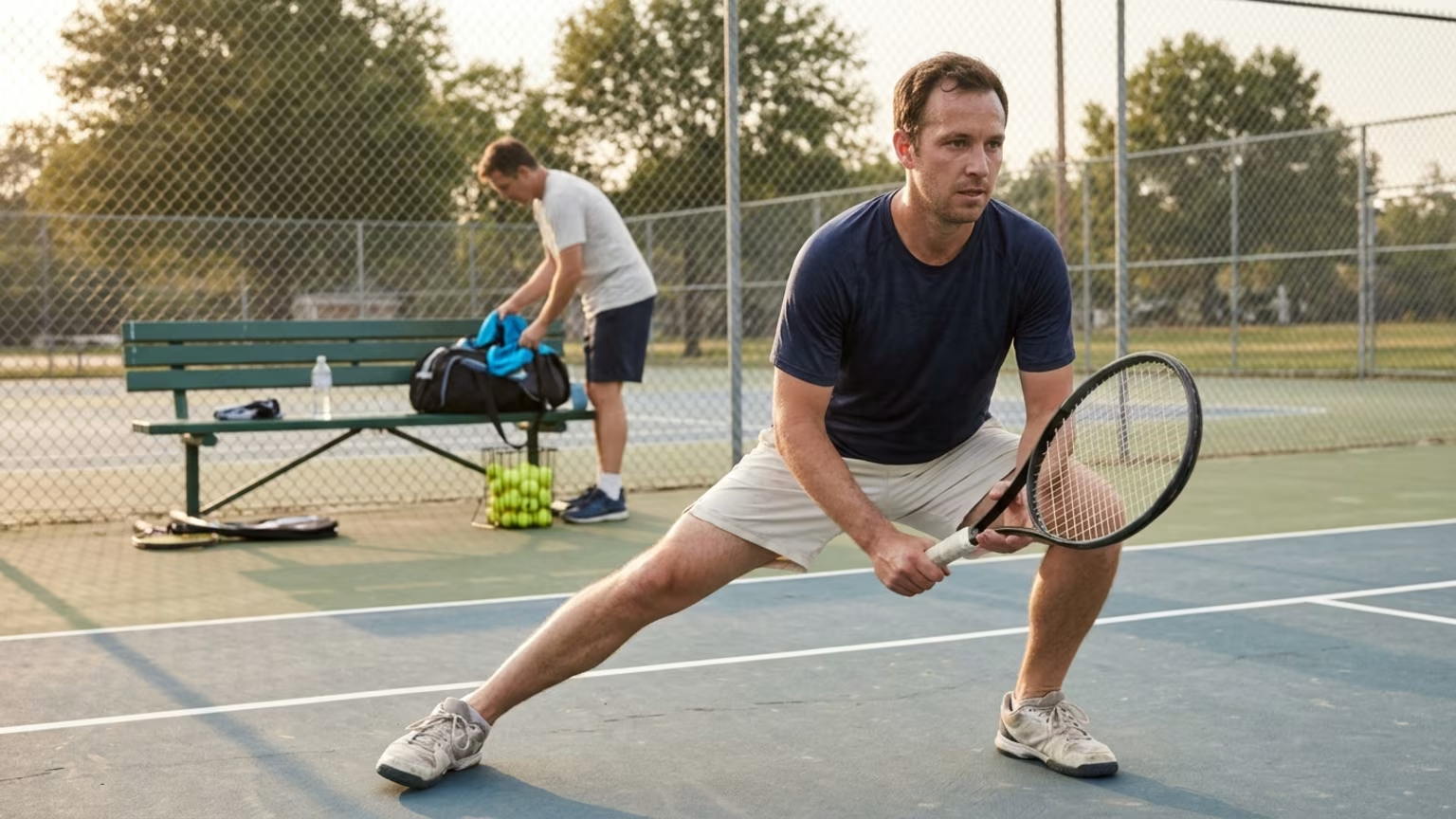

Build a flexible tennis warm-up around the session ahead, with gradual movement and stroke rehearsal plus clear limits on injury-prevention claims.




A tennis warm-up is a gradual transition from easy movement to the footwork and strokes your session will require. The organising idea is to prepare for the work ahead rather than complete a fixed list of exercises.
A baseline practice and a session centred on serving do not need identical finishing rehearsals. One coaching example matches the later stages to the planned hitting, including groundstrokes or net play and serves. That makes the session itself a useful starting point for deciding what belongs in your preparation.
When a session involves repeated quick efforts and changes of direction, preparation needs to account for those actions. The relevant question is not just whether you have moved, but whether you have rehearsed the movements you are about to use.
Tennis provides a clear example. Easy court movement is different from a split step followed by a shuffle, just as a light shadow swing is different from a full-speed serve. The coaching examples move between these demands gradually rather than making the first demanding action the starting point.
For pickleball and padel, apply the same session-first question: which quick efforts and direction changes are actually planned? Rehearsal should reflect the sport and the session rather than copy every tennis movement. A smaller menu of relevant actions is more purposeful than adding drills merely to make the routine longer.
Thinking about the demands of the playing format can help keep that distinction clear.
One coaching guide describes a roughly 12-minute example combining easy court movement with controlled mobility. It then adds split steps and shuffles before progressively harder hitting and serves. A separate warm-up guide offers about 10 minutes of easy activity followed by dynamic movements and light shadow swings.
These are examples from coaching and fitness sources, not a universally validated protocol. The available evidence establishes neither an ideal duration nor an adjustment formula for age or fitness. It also does not establish a warm-up sequence that guarantees injury prevention or a longer playing career. The routines described here are tennis examples; applying the progression to pickleball or padel is a practical interpretation rather than a tested cross-sport prescription.
A secondary tennis injury guide reports injury figures of 37% for the programme group versus 38% for the control group in an adult recreational tennis prevention trial. It says only 8% followed the programme closely. Those figures describe a particular prevention programme with low adherence, not a direct test of every pre-match warm-up.
The practical conclusion is narrower than either a prevention promise or a dismissal of warming up: use the progression as preparation for the task ahead.
For adult players focused on athletic longevity, a useful priority is making preparation relevant and repeatable. Treat the following as a flexible reading of the coaching examples, with the final rehearsal determined by the session rather than the clock.
Begin with easy whole-body movement before introducing quicker court actions. The sample sequence starts with easy movement rather than immediate hard hitting. Keep the early movement comfortable and controlled.
The longer example includes controlled mobility for the legs and trunk. It also includes the shoulders and wrists. Keep those movements controlled rather than rushing straight to the fastest version of a stroke. The point is to move from general activity toward the areas and actions involved in the session.
Split steps and shuffles appear in the tennis example. Use the day's planned movement to give that rehearsal a purpose. A session built around baseline rallies can lead toward the footwork accompanying those groundstrokes rather than treating every possible court movement as compulsory.
For baseline practice, progress through groundstrokes. If serving or net play is planned, include light rehearsals of serves or volleys and overheads before those actions are needed at full pace. Increase the hitting effort gradually rather than jumping from a light shadow swing to the hardest stroke of the day.
That session-based approach also fits preparation that builds toward the first point. The useful habit is to connect the warm-up to what follows, not chase an identical routine at every court booking.
Over the longer term, place this preparation within a playing week that considers more than court hours. A warm-up has a specific job: preparing for the next session. It should not carry every expectation attached to playing well for years.
Your warm-up does not need to double as a self-diagnosis. Pain that changes the footwork or strokes you can comfortably rehearse is a reason to seek individual advice. So is uncertainty about how your physical condition should affect preparation or participation. These are questions for a qualified physiotherapist or healthcare provider rather than something a general routine can settle.
Today, if pain is changing how you move or hit, contact a qualified physiotherapist or healthcare provider.
Follow Evercourts for practical insights on tennis, pickleball and padel performance, movement, recovery and healthy ageing. Stay connected for new articles, research-led guidance and ideas to help you play well and keep playing for years.


Learn how to turn, track and recover for pickleball lobs with a gentle partner drill, plus what fall research says about balance and footwork.

Tennis match data explain why conditioning involves repeated bursts and recovery. Apply the pattern without treating research averages as personal targets.

A flexible pickleball warm-up progressing from easy movement to controlled lunges, side steps, shadow swings and dinking, with readiness-based adjustments.
Read practical guidance for better movement, smarter preparation and a game that keeps working for you.
explore the Blog
