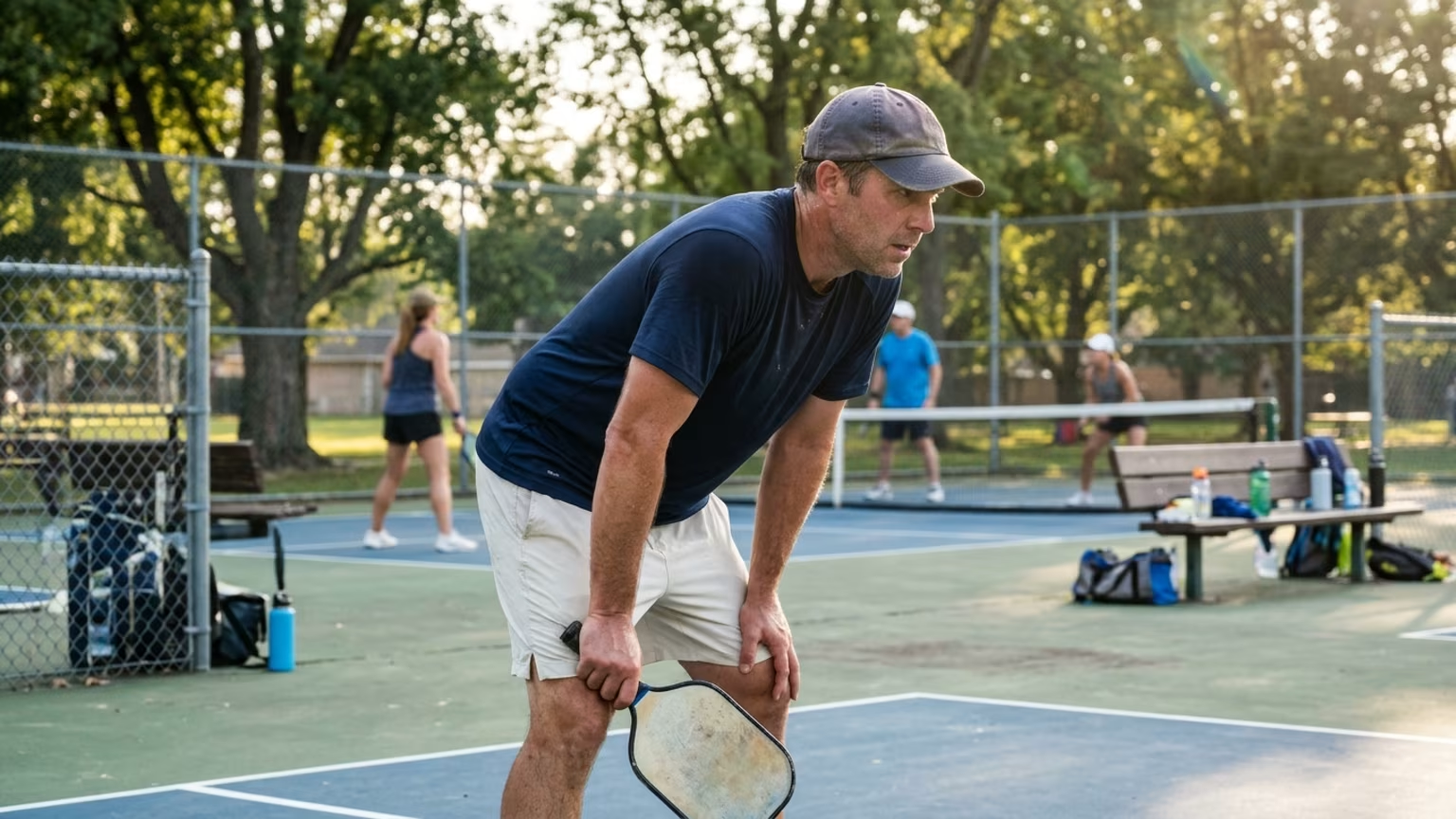

Elite careers around 40 offer a practical prompt for club players: focus on relevant abilities, workload response and recovery rather than more training.




On October 8, 2026, Sportsin60 published “Still in the Game: Why Great Athletes Keep Competing Around 40,” a feature about adapting training for extended athletic careers.
The feature's argument was straightforward: managing training may matter more than accumulating it. It highlighted tailored strength work, attention to individual workload responses and avoiding abrupt increases in training load. It also described a shift in priorities toward preserving relevant abilities and arriving ready to compete.
That is a performance argument rather than a call to abandon ambition. In the feature's account, an older athlete may remain highly conditioned without matching their younger self in every physical quality. The question becomes which abilities the athlete needs to retain and how the training plan serves those priorities.
The piece was marked “Prepared with AI assistance” and was an editorial rather than a controlled study. Its training themes should be read as broad principles, not as a validated program for recreational tennis, pickleball or padel.
An elite athlete's career and a club player's season are different projects. The feature places longevity alongside talent, opportunity, adaptation and good fortune. Its subjects' resources and competitive demands also differ from those of ordinary players.
That difference matters when interpreting their routines. For a professional, the objective is readiness for elite competition. For an adult league player, a useful version of the same question is whether the week supports the standard of play they want to maintain.
Experience belongs in that discussion as well. The feature points to anticipation, positioning and decision-making as ways experienced athletes may use what they have learned. It also makes clear that experience does not erase every physical disadvantage.
For the club competitor, that is a reason to value the quality of decisions alongside physical preparation. Maintaining a competitive game need not mean judging every quality against your younger self.
Practical interpretation starts with the feature's emphasis on preserving relevant abilities. Rather than treating another session as progress by definition, consider what that session is meant to support. Movement, strength and match readiness are useful starting points from the feature's broader message.
A tennis player can frame priorities around their own game without assuming the same choices suit every pickleball or padel player. Our discussion of connecting strength work to court tasks offers a related way to think about purpose rather than volume.
The feature's workload message is individual: consider how an athlete responds, not just how much work appears on the schedule. For recreational players, the editorial takeaway is to judge the plan by its relationship to playing readiness rather than by the satisfaction of completing more.
Useful questions include:
These questions apply the principle without turning an elite athlete's routine into a personal prescription.
That perspective fits with looking beyond minutes on court when considering a playing week. A fuller calendar is not the goal in itself.
A separate Sportsin60 tennis-injury feature summarizes USTA guidance that flags insufficient recovery and abrupt changes in activity or playing surface as overuse concerns. It also states that no single percentage increase is universally safe.
The practical implication is to consider recovery and changes in playing demands together. Gradual change is a consideration, not a guarantee against injury. There is no reason to turn the story into a fixed weekly increase for everyone.
For questions involving recurring symptoms or personal exercise decisions, seek qualified care rather than borrowing an elite athlete's plan. The wider planning issue is how competition fits into the rest of life, a theme in our guide to building a schedule around real commitments.
The feature listed Novak Djokovic as 39 and both Alex Ovechkin and LeBron James as 41. It also noted that James was preparing for his 24th NBA season. Those examples put the story across tennis, hockey and basketball rather than within a tennis-specific training investigation.
The same feature cautioned against reading those careers as evidence that athletes everywhere are competing longer. Players who remain visible are not the whole picture. Earlier retirements linked to injury, declining performance or lack of opportunity are easier to overlook.
For a recreational competitor, the distinction is useful. An exceptional career can provide motivation without becoming an age-based benchmark. Continuing to play does not need to mean reproducing an elite athlete's achievements or physical qualities.
According to the feature, Djokovic had identified Los Angeles 2028 as a major goal for defending his Olympic singles title. He would be 41, with reaching that target still dependent on health and performance. That is an ambition to follow rather than a confirmed appearance.
Over the next season, the more useful editorial question will be how extended-career athletes adapt to keep pursuing their goals. Watch for explanations of changing training priorities and recovery decisions rather than treating each birthday as evidence of a new rule about aging.
For adult racquet-sport players, the same focus keeps the story practical. The question is not how much more training can fit into the calendar. It is whether the work still supports the abilities needed to compete and the readiness to enjoy doing it again.
Next season's most useful longevity stories will be the ones that explain those adjustments, rather than simply counting birthdays.
Follow Evercourts for practical insights on tennis, pickleball and padel performance, movement, recovery and healthy ageing. Stay connected for new articles, research-led guidance and ideas to help you play well and keep playing for years.


Learn how to turn, track and recover for pickleball lobs with a gentle partner drill, plus what fall research says about balance and footwork.

Tennis match data explain why conditioning involves repeated bursts and recovery. Apply the pattern without treating research averages as personal targets.

A flexible pickleball warm-up progressing from easy movement to controlled lunges, side steps, shadow swings and dinking, with readiness-based adjustments.
Read practical guidance for better movement, smarter preparation and a game that keeps working for you.
explore the Blog
