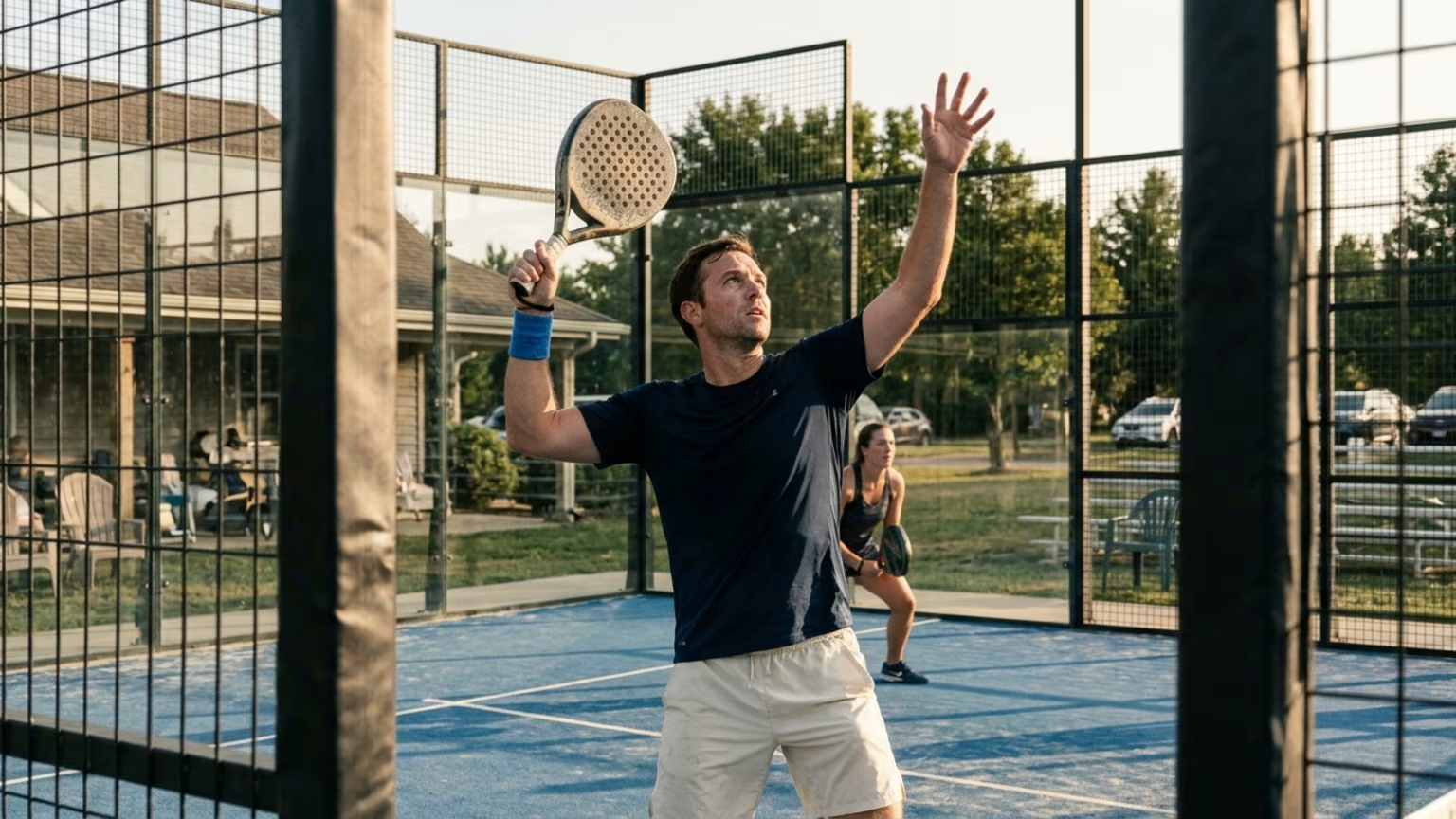

Choose padel overheads by lob depth, balance and recovery, with practical guidance on when to attack, use a bandeja or play off the back glass.




When should I control, defend or attack a lob in padel? Attack a short lob when balanced, use a controlled bandeja when the ball pushes you back but remains playable in front, and let a ball that has travelled too deep reach the back glass rather than forcing an overhead.
No. A bandeja coaching guide describes it as a controlled, sliced overhead intended to answer a lob while helping the pair retain the net. Its purpose is positional rather than simply producing a slower version of a finishing shot.
That distinction changes how to judge the result. A bandeja does not need to win the point outright to serve its purpose. The guide describes using depth to make the next reply more difficult while preserving a useful court position.
The víbora is presented as a more aggressive overhead with sidespin. The smash is the more direct finishing option when the lob is short and the player is balanced. These are different responses to the ball rather than successive levels in a power competition.
For recreational players, the useful question becomes: what should this overhead leave us able to do next? A ball that stays in play is only part of the answer. The pair's position after contact matters too.
This is the distinction behind choosing an overhead by its tactical purpose. Shot names are useful when they clarify the decision rather than distract from it.
The evidence boundary is straightforward: these sources provide coaching guidance rather than comparative trial evidence. They do not establish a statistically superior shot hierarchy or injury-prevention benefits from a particular overhead choice. Treat the framework as a way to organise decisions rather than a promise about outcomes.
Start with the ball's depth and your position beneath it. One smash coaching guide recommends attacking a short lob when close to the net and balanced. For a medium ball with time to prepare, it suggests a víbora or controlled smash.
The bandeja guidance adds the other end of that decision: a deeper lob may call for control or a return off the back glass. The choice depends on whether a comfortable overhead remains available.
This is the attacking opportunity described in the coaching framework. The important detail is not simply that the ball is high. It is that the lob is short enough for the player to be balanced and close to the net.
A useful interpretation is to let those conditions justify the attack. The wish to finish the point should not substitute for them.
The guide places the víbora or controlled smash here. This is the middle ground between a comfortable finishing opportunity and a lob that is pushing the player into defence.
There is no need to turn that middle ground into a demand for maximum pace. The practical question is whether the available shot fits the setup and leaves a workable recovery.
The bandeja becomes relevant when the ball remains playable in front despite pushing the player back. Once it has travelled too far behind, the back glass becomes the alternative described in the guide.
An editorial way to apply these coaching principles is to ask:
These questions keep attention on the situation rather than on a favourite shot. They also fit the wider principle of matching attacking ambition to the position available: the ball offers the opportunity before the player chooses the response.
Treat recovery as part of the shot. The bandeja guide advises using the shot's momentum to move back toward the net while staying level with the partner. A broader padel instructional guide likewise stresses moving forward and backwards together rather than leaving a gap between partners.
This is where hitting harder can conflict with the purpose of the bandeja. The bandeja guide warns that excessive pace may allow opponents to reach the ball before the pair has recovered. A forceful contact is not automatically a better positional result.
The practical interpretation is to judge the overhead and the recovery as one sequence. Did the shot give the pair time to move together? Or did contact finish with one player advancing while the other remained behind?
For practice, an editorially derived exercise is to feed a lob and play a controlled overhead. The player then recovers toward the net in coordination with the partner. Rather than stopping the observation at contact, consider where both players finish and whether their movement stays connected.
That keeps overhead preparation and recovery in the same conversation. The practice idea comes from the guides' positional advice rather than from a separate drill protocol.
The same attention to positioning applies when your pair plays the lob. Red Bull's padel guide suggests advancing when an opponent turns and runs back toward the glass. It advises holding position when that opponent remains ready to play an overhead.
That reverse view helps explain the tactical exchange. Both pairs are reading whether the lob has forced a retreat or left an overhead available. Movement follows the response to the ball rather than the assumption that every lob creates the same opportunity.
When it has gone too deep for a comfortable overhead. The bandeja guide explicitly recommends allowing a deep lob to come off the back glass instead of forcing contact above the head.
This is not the same as giving up on the rally. It is choosing the next playable situation rather than insisting on an overhead that the ball no longer offers. The distinction is especially useful when the determination to keep the net starts driving the shot choice.
A deeper ball can still suit a bandeja if it remains playable in front. A ball that has already travelled too far behind calls for a different decision. There is no need to preserve the appearance of attacking at the expense of a sound response.
The useful cue is simple: do not force an overhead merely to avoid letting the ball bounce. Control includes recognising when the next shot should come from the back of the court.
A sound overhead decision serves the next ball and the pair's position rather than treating every lob as a finishing chance. Calm choices have a place in confident, enjoyable padel.
Follow Evercourts for practical insights on tennis, pickleball and padel performance, movement, recovery and healthy ageing. Stay connected for new articles, research-led guidance and ideas to help you play well and keep playing for years.


Learn how to turn, track and recover for pickleball lobs with a gentle partner drill, plus what fall research says about balance and footwork.

Tennis match data explain why conditioning involves repeated bursts and recovery. Apply the pattern without treating research averages as personal targets.

A flexible pickleball warm-up progressing from easy movement to controlled lunges, side steps, shadow swings and dinking, with readiness-based adjustments.
Read practical guidance for better movement, smarter preparation and a game that keeps working for you.
explore the Blog
