

Understand the US pickleball eye-injury estimates, what the age findings mean, and the practical case for eye protection and prompt assessment.




On November 1, 2026, The Straits Times reported that a JAMA Ophthalmology study estimated rising US emergency-department-treated pickleball eye injuries and a higher risk among players over 50.
The newspaper described an increase in estimated eye injuries reaching emergency departments. Direct ball impacts were a prominent injury mechanism. For players, the practical issue is whether eye protection deserves a place alongside the other equipment considered before stepping onto court.
That does not require framing pickleball as a sport older adults should avoid. Evercourts' view is that the useful response is to understand the findings and consider practical protection without turning an age comparison into a warning against playing.
At elite level, this report is relevant to equipment decisions around competitive play. For a weekend league player, the useful question is less about copying a professional and more about whether eye protection has been considered at all. Neither a professional's equipment choices nor a relaxed match setting should settle that question for an adult recreational player.
The distinction matters because a professional example is not personal safety guidance. Watching elite play may inform how someone thinks about the game. It should not replace a separate decision about protective equipment or what to do after an eye impact.
The practical takeaway from the reporting is to consider protective eyewear designed for racquet or paddle sports. Keep that decision focused on the purpose of the equipment rather than on whether it appears in a professional match or looks familiar on another player.
For a broader equipment discussion, Evercourts' guide to choosing gear around fit and playing conditions provides related context. Questions about individual vision needs and suitable eye protection belong with a qualified eye-care professional.
For an experienced player, reviewing this choice need not mean reconsidering the whole sport. It can simply mean giving eye protection the same deliberate attention as the rest of the playing kit.
A direct eye impact warrants prompt professional assessment. Guidance in the Textbook of Urgent Care Medicine identifies trauma-related vision loss, bleeding and severe pain as reasons for urgent evaluation.
The practical distinction is between deciding whether to finish a match and obtaining an assessment of an eye injury. A close score or an important fixture should not determine the response to those symptoms. Decisions about an individual injury and subsequent play belong with a qualified clinician.
The numbers explain why the report has drawn attention. According to The Straits Times, estimated US emergency-department-treated pickleball eye injuries rose from fewer than 200 in 2021 to 1,262 in 2024. These figures describe an increase in estimated cases reaching that setting.
A separate summary published by AJMC adds detail about the study:
The age distribution and the reported age-related risk comparison answer different questions. The 70% figure describes the share of estimated cases among adults aged 50 and older. Separately, The Straits Times reported that the study estimated a 39% higher risk among players over 50 than among younger players.
Neither figure should be substituted for the other. A share of recorded injuries is not the same measure as a comparison between age groups. In particular, the 70% figure should not be described as an older player's chance of sustaining an eye injury.
The mechanisms also deserve attention. Direct ball impacts were prominent in AJMC's summary, but they were not the only recorded route to injury. Falls and paddle impacts were also represented. That makes this a broader court-safety discussion rather than simply a question of how hard an opponent hits the ball.
The fall findings provide a useful connection to balance and fall awareness during pickleball. The editorial takeaway is to consider eye protection alongside movement and court awareness rather than treating any single piece of equipment as the whole safety plan.
AJMC notes that the estimates were based on 73 sampled cases and that injuries treated outside emergency departments may be missed. The available summaries do not provide a per-player or per-session absolute risk or enough detail to assess how participation and playing exposure were accounted for. The age comparison therefore does not establish that age itself caused the difference.
The geographical boundary matters too. The Straits Times reported that Singapore lacks a pickleball-specific injury registry, preventing reliable local estimates of whether injuries have increased there. The US findings do not establish the same trend in Singapore or other countries.
Read within those boundaries, the findings support a proportionate response: consider sport-specific eye protection and give direct eye impacts appropriate professional attention. They do not provide a personal prediction for the next game.
Over the next season, the development worth watching is whether eye protection becomes a more routine consideration at both elite and recreational level. Progress would mean more than prominent players being photographed in eyewear. It would mean clearer discussion of protective equipment and a consistent response when an eye impact occurs.
Future reporting would also be more useful if it separated changes in injury counts from changes in participation and playing exposure. That would help readers interpret the age findings without treating a population estimate as an individual forecast.
For adult players, the sensible direction is neither alarm nor dismissal. Keep eye protection in the equipment conversation and seek prompt assessment after a direct eye impact. The aim is to make informed choices that support continued enjoyment of the sport.
Follow Evercourts for practical insights on tennis, pickleball and padel performance, movement, recovery and healthy ageing. Stay connected for new articles, research-led guidance and ideas to help you play well and keep playing for years.


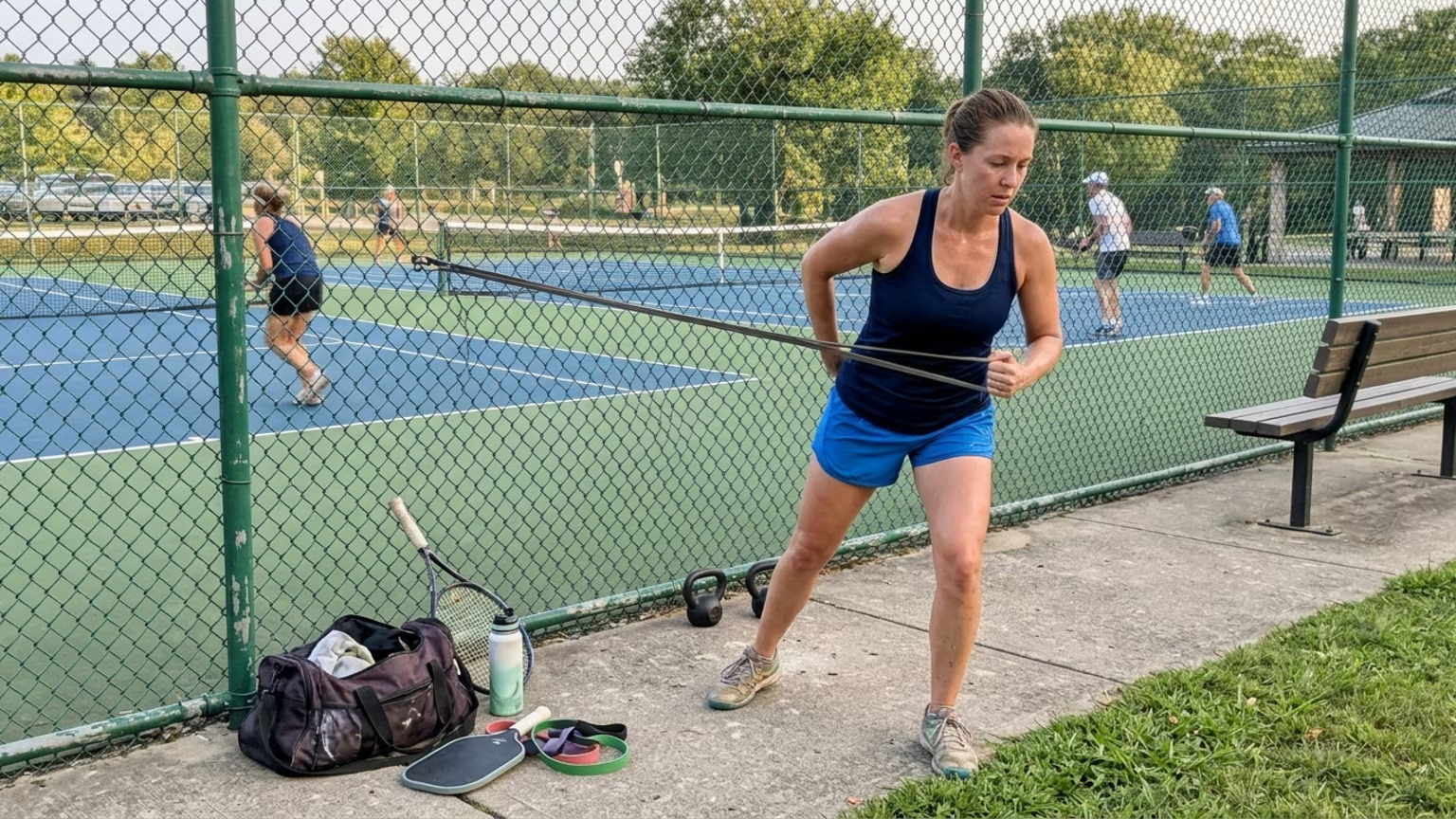
Plan court time alongside strength, balance and lighter movement, with a clear look at the evidence and when to seek individual advice.

Cronometer's recovery article puts nutrition alongside sleep, workload and rehabilitation, with practical context for recreational racquet-sport players.

Use minutes and perceived effort to track tennis workload, notice changes between sessions and keep wearable recovery findings in perspective.
Read practical guidance for better movement, smarter preparation and a game that keeps working for you.
explore the Blog
