

Learn how sensible movement habits, lower-body strength and better court awareness can help pickleball players manage fall risks and support athletic longevity.




Fall awareness on the pickleball court is the physical and mental ability to control your body weight during rapid direction changes. It combines muscular stability, court positioning, and sensible decision making under pressure. For adult players focused on athletic longevity, staying upright is just as critical as hitting a winning drive. Maintaining a steady center of gravity requires active preparation before the match even begins.
Pickleball asks players to move in unpredictable patterns within a confined space. You are constantly shifting your weight forward for dinks, pushing off laterally, and backpedaling for lobs. These repeated explosive efforts tax your lower body and challenge your center of gravity on every point. The sheer volume of stops and starts fatigues the stabilizing muscles in your legs.
Every time you plant your foot to return a serve, your ankles and knees absorb a tremendous amount of kinetic energy. If your core is not engaged, that energy can throw you off balance and force a messy recovery step. These small misalignments compound over the course of a two-hour session. Eventually, your body relies on compromised movement patterns that increase your risk of tripping.
The hard surface of the court offers absolutely no forgiveness for poor foot placement. A slight misstep on a grippy outdoor court can violently twist an unprepared ankle. This sudden friction requires your stabilizing muscles to fire instantly to keep you upright. Without adequate baseline strength, that sudden stop often results in a tumble.
In my own experience, I noticed early on how many people skipped warming up entirely. Players would jump straight out of their cars and walk right up to the kitchen line. I tried doing exactly that and immediately pulled a calf muscle. I learned quickly that pickleball requires explosive lateral movement in a very tight space.
Since that early injury, I always spend five minutes doing dynamic lunges and ankle rolls. This routine changes everything about how confident I feel pushing off the baseline. A proper warmup activates your nervous system and prepares your joints for the sudden forces of the game. Relying on essential footwork skills is critical for managing these demands safely.
The court dimensions in pickleball create a false sense of security regarding movement demands. Because the playing area is small, players often assume the physical toll is light. However, the short distances require rapid deceleration and sudden changes of direction. Your feet must manage these physical forces while your eyes stay locked on the ball.
The evidence supports taking falls seriously, but we must separate general statistics from sport-specific data. The CDC reports that more than one in four adults aged 65 and older falls each year. Furthermore, the agency notes that a previous fall doubles the chance of falling again. The CDC also reports about 4.5 million emergency-department visits due to older-adult falls each year.
When looking at the specific risks of racquet sports, the scientific data is still developing. Currently, no clinical trial has tested injury prevention programs specifically for pickleball. We do not have proven protocols that guarantee a player will avoid taking a tumble. Instead, players should rely on sensible movement guidelines and general health awareness.
The CDC identifies lower-body weakness and walking or balance difficulties as risk factors. Vision problems, foot pain or poor footwear, and some medicines can also contribute to falls. These elements provide a helpful checklist for evaluating your own court readiness. Assessing these personal factors is a practical starting point for any adult player.
Evaluating your physical preparedness should always precede your first match of the week. General fitness guidelines emphasize the importance of identifying personal physical limitations early. A player experiencing mild dizziness from medication, for example, faces a drastically elevated risk of tripping. Taking stock of these variables helps you make informed decisions about your intensity level on any given day.
Practical recommendations from sports health professionals offer a useful framework for managing risk. A pickleball-focused article from Lancaster Orthopedics recommends strengthening your calves, hips, thighs and trunk. The clinic suggests practicing balance exercises near a stable support. They propose practical examples like single-leg standing, tandem walking and controlled reaching.
This balance work should be challenging without creating a new fall risk. Incorporating these routines into your everyday exercise habits can help build a more resilient foundation. On the court, tactical choices play a large role in your physical safety. Lancaster Orthopedics strongly advises avoiding backward retreats for lobs whenever possible.
Backpedaling blinds you to obstacles and puts your center of gravity behind your heels. The clinic also recommends communicating clearly with your partner during every point. Finally, they advise players to simply let an unreachable ball go. Chasing a lost cause is never worth compromising your long-term health.
Understanding how to stay steady on your feet directly impacts your ability to play for years. Adult players often worry about losing a step or taking a serious fall as they age. By focusing on lower-body strength and sensible court habits, you build physical resilience. You learn to recognize dangerous situations before you commit your body weight to a frantic lunge.
This proactive approach helps keep you on the court and out of the recovery room. Building a foundation of strength gives you the margin of error you need. When you stumble slightly, a strong lower body can often correct the imbalance. Weak muscles offer no such protective buffer against sudden shifts in momentum.
Consistently practicing good movement habits preserves the integrity of your major joints. Every time you successfully abort a dangerous reach, you save your knees from unnecessary shear force. Over months and years, these small protective decisions accumulate into a healthier overall athletic profile. Players who prioritize spatial awareness rarely find themselves sidelined by preventable court collisions.
Movement confidence fundamentally changes the way you approach the game. When you trust your feet, you can focus entirely on strategy and shot selection. You will stop second-guessing your lateral pushes when defending the court during a tight rally. Cultivating leg strength is a practical investment in your future playing time.
Clearing the court edges of stray balls and gym bags becomes an automatic safety habit. This mindset shift is one of the most effective sustainable health practices a player can adopt. Maintaining this awareness protects you from completely avoidable accidents caused by clutter. Smart players recognize that injury prevention relies heavily on simple spatial awareness.
Even with sensible habits, you might experience issues that require professional attention. If you feel consistently unsteady on your feet, you should consult a qualified healthcare provider. Players who have recently fallen should definitely seek a medical evaluation before returning. A physical therapist can review your lower-body strength and identify any specific deficits.
The CDC points older adults to its STEADI resources to help assess general fall risks. Ignoring these early warning signs can lead to more significant physical setbacks. You must listen to your body and prioritize professional guidance when your balance feels compromised. Take action today by clearing all equipment and stray balls from the space directly behind your baseline before serving.
Follow Evercourts for practical insights on tennis, pickleball and padel performance, movement, recovery and healthy ageing. Stay connected for new articles, research-led guidance and ideas to help you play well and keep playing for years.


An evidence check on sports supplements like tart cherry juice. Learn why racquet sports players should prioritize core nutrition over functional foods.
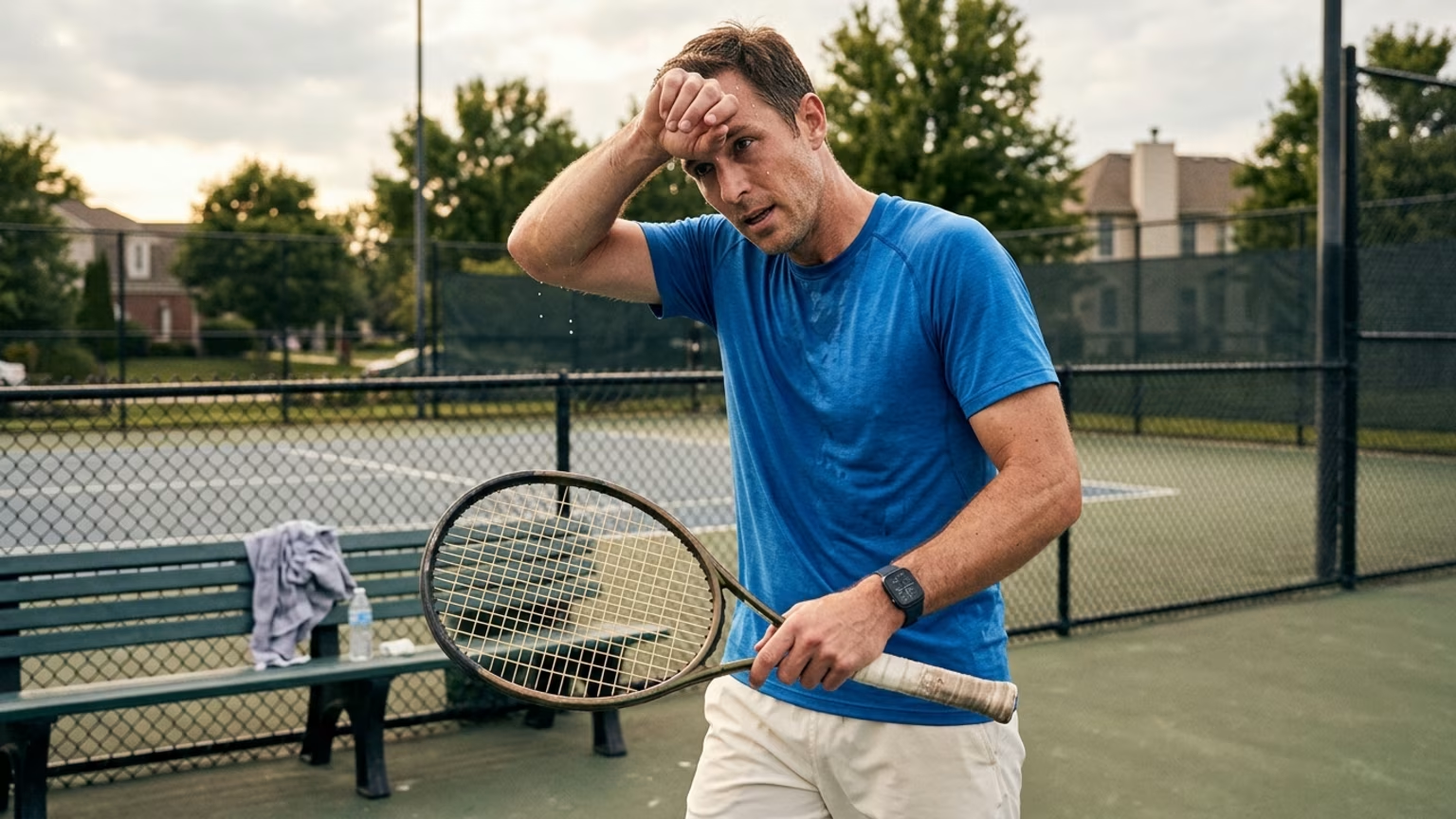
In late 2026, Oura analyzed wearable data to see how recreational tennis impacts heart health and recovery. Learn what this means for your athletic longevity.
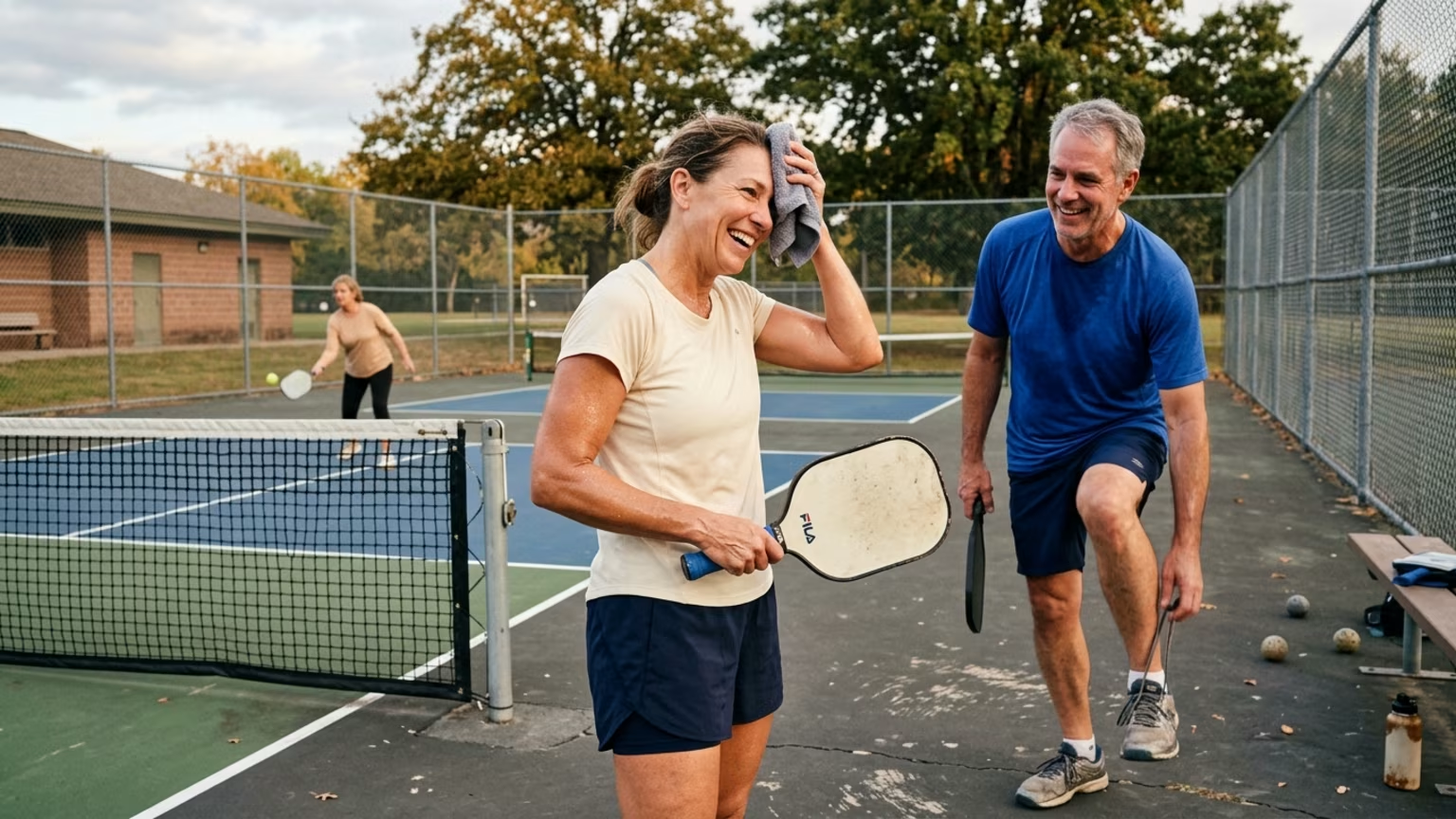
Recent guidelines emphasize gradual progression, dynamic warm-ups, and scheduled recovery to help adult racquet sports players maintain athletic longevity.
Read practical guidance for better movement, smarter preparation and a game that keeps working for you.
explore the Blog
