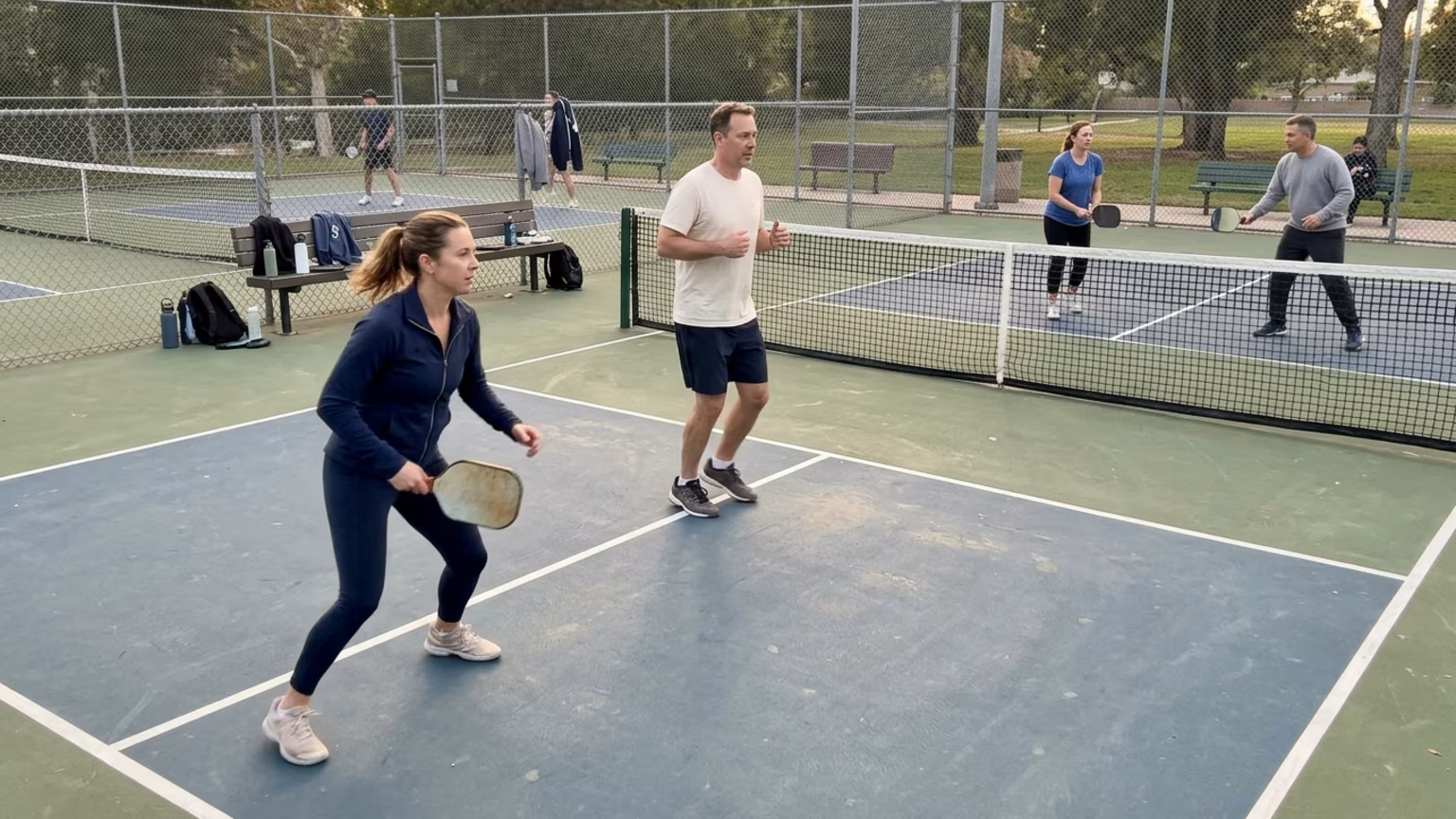

A practical pickleball warm-up that moves from easy activity to controlled movement, lateral footwork and gentle rallies before full-speed play.




“A few hard shots are all the warm-up you need.” A better approach is to build from easy whole-body movement to controlled footwork and gentle hitting before full-speed play. ATI Physical Therapy recommends increasing the pace gradually and finishing prepared rather than fatigued.
That changes the role of those opening shots. They belong near the end of preparation rather than standing in for the entire process. The useful question is not how quickly you can start hitting hard. It is how your warm-up connects easy movement with the movement and hitting that follow.
The shortcut has an understandable logic: if the session involves hitting a ball, hitting a ball seems like the obvious preparation. It also gives players something familiar to do with a partner. There is no need to dismiss that instinct. Gentle hitting has a place in the published recommendations.
The mistake is treating resemblance to the sport as the only thing that matters. ATI Physical Therapy places side shuffles and calf raises alongside arm circles and easy paddle swings. Its recommendations extend beyond the paddle and ball.
A more useful interpretation is that hitting completes the warm-up rather than replacing its earlier parts. This preserves what players value about an informal hit while giving whole-body movement and footwork their own place. You do not have to abandon the familiar start to a session. You can put it in a better order.
A published movement sequence begins with walking or marching. It then includes heel raises and shallow squats alongside shoulder circles and torso turns. Slow side steps follow with controlled stops and shadow shots.
The practical biomechanical point is the difference between rehearsing a swing and rehearsing a sequence of movements. Side steps involve moving across the court. Controlled stops add the task of bringing that movement to a halt. Shoulder circles and torso turns bring other parts of the body into the preparation.
This is an interpretation of the recommended movements rather than a finding that any particular exercise order is superior. It explains why a warm-up can reasonably include more than repeated contact with the ball. The sequence moves from general activity toward more recognisable court actions.
The evidence boundary matters here. A broad review in Sports Medicine - Open reports that research on acute performance readiness is more extensive than research on injury reduction. That review is not pickleball-specific. A physiotherapy discussion of pickleball injuries also reports finding no pickleball-specific prevention trials.
The routines described here are published recommendations rather than a tested injury-prevention protocol. Their useful purpose is preparation for the session. That gives players a clear goal without attaching a medical promise to a set of movements.
The source-supported sequence is straightforward: easy activity followed by controlled movement, lateral footwork and gentle hitting. Treat the following as a general framework rather than an individual exercise prescription. The emphasis is on progression rather than completing a fixed amount of work.
Walking or marching provides the opening stage in the published movement sequence. Start the framework there rather than making the opening activity a hard rally. The distinction is simple: the session begins with easy movement before asking for faster court actions.
There is no need to turn this opening into a separate conditioning workout. ATI Physical Therapy’s stated aim is to finish prepared rather than fatigued. For a fuller discussion of that transition, see our guide to starting easily before building toward court movement.
The next part of the published sequence includes heel raises and shallow squats. Shoulder circles and torso turns sit alongside those movements. ATI Physical Therapy also suggests calf raises and arm circles followed by easy paddle swings.
These examples offer a way to include lower-body and upper-body movement before hitting begins. They are not a reason to collect every possible warm-up exercise. The practical priority is to preserve the gradual progression described by the sources rather than turning preparation into a demanding exercise circuit.
For decisions about exercise selection when pain or an existing injury is involved, seek guidance from a qualified health professional. A general article cannot make those personal decisions.
Slow side steps and controlled stops appear in the published movement sequence. ATI Physical Therapy recommends side shuffles. A separate published warm-up routine includes side shuffles and split steps before its hitting sequence.
The common thread is rehearsing footwork before increasing the intensity of play. Keep the purpose distinct from conditioning: this is a bridge toward the session rather than a test of how much work you can tolerate. ATI’s recommendation to build gradually remains the organising principle.
Our guide to developing court footwork as a separate skill provides related reading. In this warm-up framework, the focus stays on a gradual introduction to movement.
ATI Physical Therapy recommends easing into gentle rallies before playing at full speed. The separate published routine gives a more detailed example: dinks followed by volleys, drops and drives. Serves and returns come later as intensity increases.
That is one published progression rather than a required shot checklist. Its useful feature is the direction of travel from lower-intensity hitting toward fuller play. Gentle rallies are therefore part of the warm-up itself rather than a delay before the “real” session.
The practical change is to give those first exchanges a preparation role. Agree with your partner that the opening rallies will build gradually. The ball can be in play without the session immediately becoming a contest.
Begin with easy movement. Build through controlled movement and lateral footwork. Use gentle hitting as the final bridge to full-speed play.
The first hard shot is not the warm-up. It comes after preparation that has included more than the swing. For players who want pickleball to remain part of life for years, that is a more useful habit to carry onto court: prepare for the session rather than rushing past its beginning.
Follow Evercourts for practical insights on tennis, pickleball and padel performance, movement, recovery and healthy ageing. Stay connected for new articles, research-led guidance and ideas to help you play well and keep playing for years.


Learn how to turn, track and recover for pickleball lobs with a gentle partner drill, plus what fall research says about balance and footwork.

Tennis match data explain why conditioning involves repeated bursts and recovery. Apply the pattern without treating research averages as personal targets.

A flexible pickleball warm-up progressing from easy movement to controlled lunges, side steps, shadow swings and dinking, with readiness-based adjustments.
Read practical guidance for better movement, smarter preparation and a game that keeps working for you.
explore the Blog
