

A research-led guide to progressing from easy movement to court footwork and hitting, with a clear distinction between preparation and injury prevention.




A progressive warm-up is a gradual move from easy whole-body activity to the footwork and shots used during play. It gives preparation a clear order: start comfortably, introduce court movement and then build the pace of hitting.
Both pickleball preparation guidance and a padel coaching guide describe versions of this general-to-specific approach. The details differ, but the shared idea is straightforward. The opening movements lead toward the activity that follows.
For adult players, that makes a warm-up easier to understand as a transition rather than a collection of exercises. Each part has a purpose. Easy activity establishes the starting point; footwork and racket work bring preparation closer to the session ahead.
Tennis, pickleball and padel combine repeated quick efforts with changes of direction. That makes the preparation question broader than whether a player has hit a few comfortable shots. Movement into position matters alongside the stroke itself.
The cited guidance reflects this by including lateral movement before faster racket work. Its practical logic is to rehearse more of the activity than ball contact alone. Easy hitting belongs in the sequence, but it is not the entire sequence.
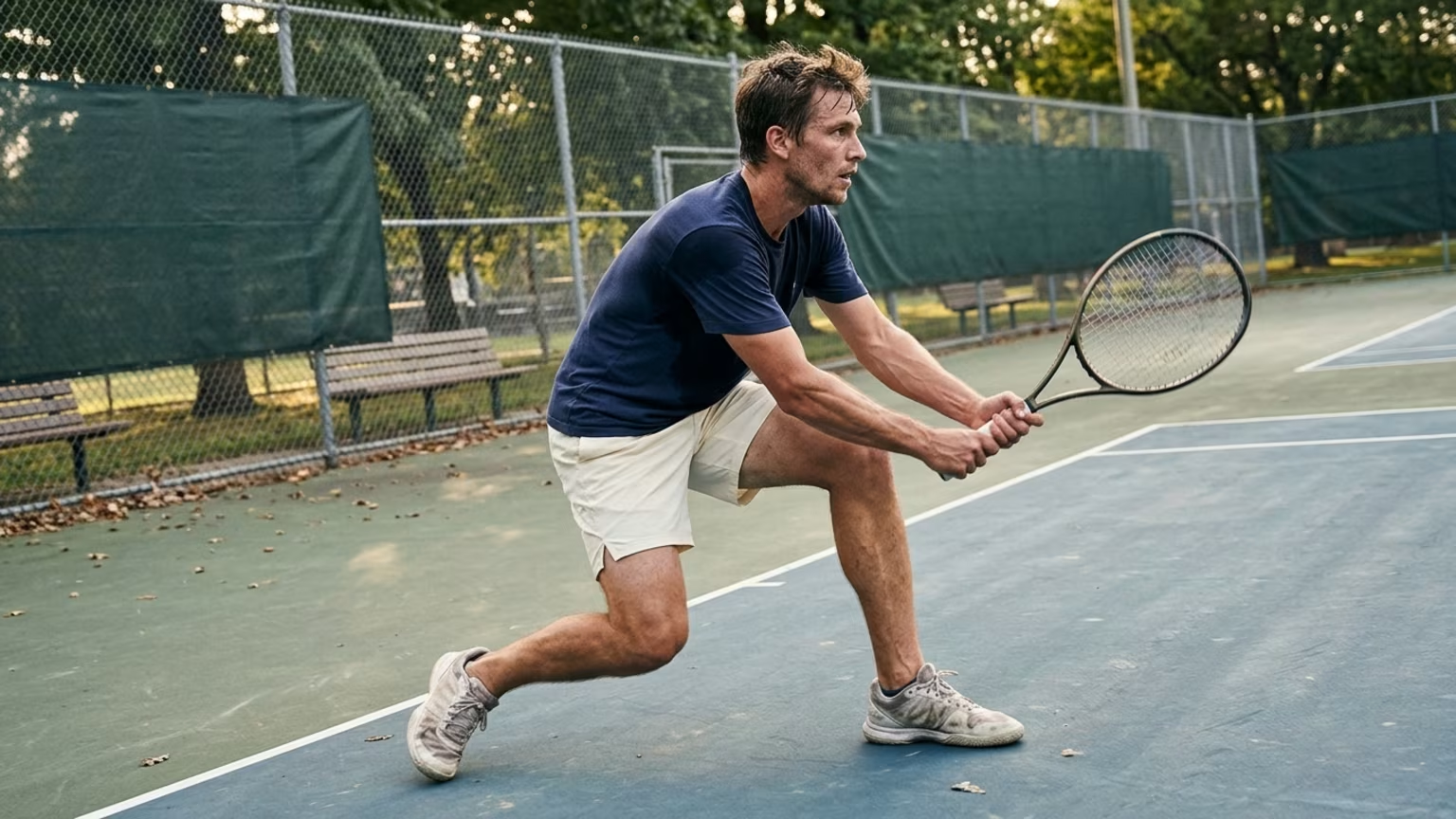
For tennis, a practical translation is to consider the movement around the stroke as well as the swing. A gentle rally offers a place to build shot pace. Controlled lateral footwork gives the movement component its own place in preparation.
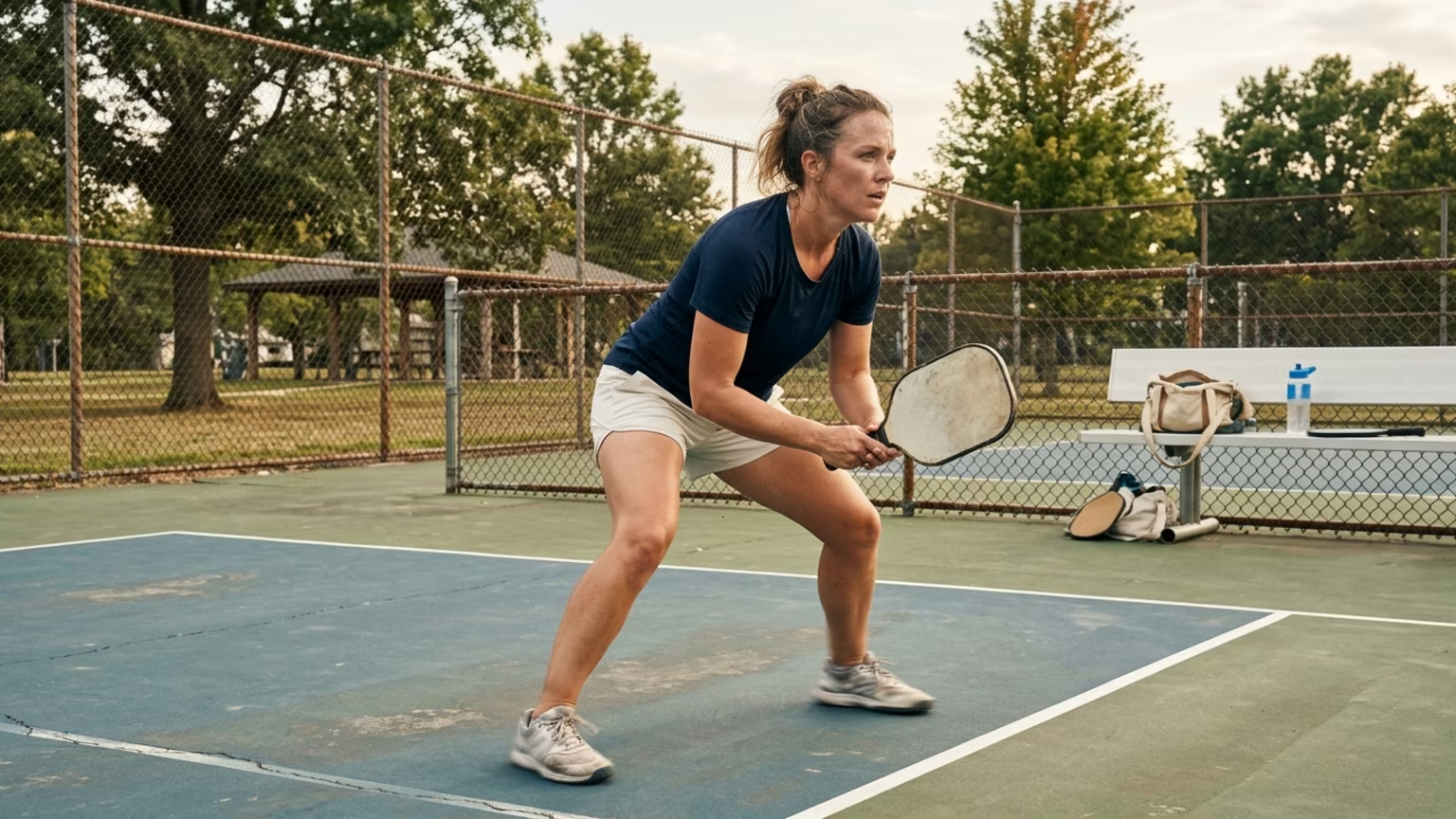
The pickleball example includes lateral steps alongside easy paddle work. Its hitting progression moves through comfortable dinks, volleys or groundstrokes before full-power shots. This treats preparation as both moving and hitting rather than simply beginning a game slowly.
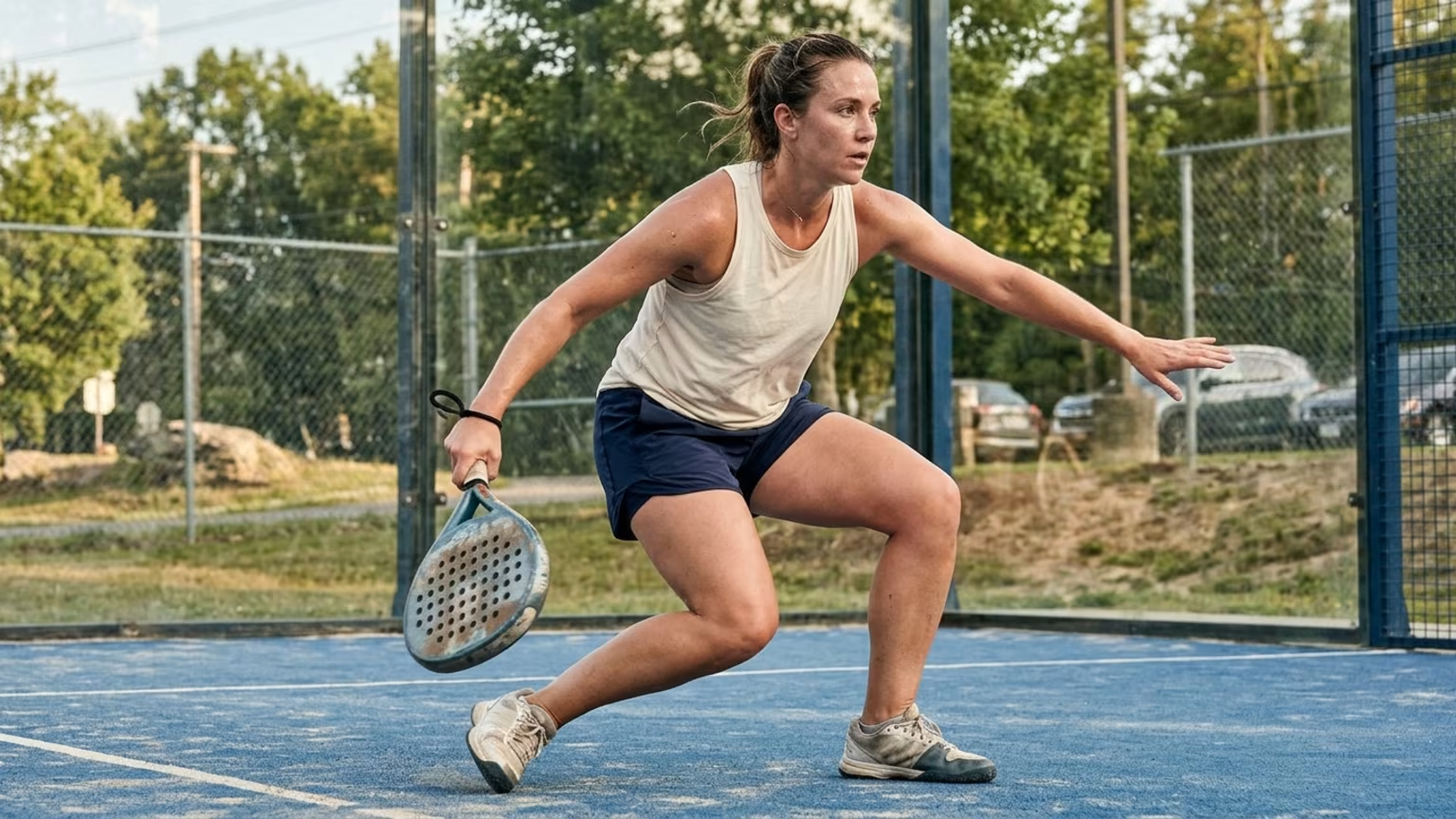
The padel guide makes that connection explicit through light activity and mobility followed by footwork. Racket work then progresses from controlled shots toward volleys and overheads. The sequence brings the movement and stroke demands together gradually.
Considering how movement changes across court formats also keeps the warm-up connected to the session being played. The useful question is which familiar movements belong in that transition, not which sport has the longest routine.
A 2026 scoping review mapped 964 warm-up studies. It found that research more often examined immediate performance measures than injury-related outcomes, competition-relevant outcomes or implementation in practice.
That distinction matters. An immediate change in a performance test is not the same finding as fewer injuries over time. The review also cautions that gaps in the evidence should not be interpreted as proof that warm-ups are ineffective.
The evidence has several boundaries worth keeping together. The review covers athletes broadly rather than adult racquet players alone. The pickleball and padel sequences are practitioner guidance rather than controlled demonstrations that those routines reduce injuries. Their suggested durations also differ and do not establish one optimal warm-up length for every player.
The practical conclusion is narrower and useful: treat this progression as preparation for movement and hitting. It is not a promise of protection. Its details can reflect familiar movements, the upcoming session and how the player feels.
The following sequence draws from the cited guidance. It describes an approach rather than a fixed prescription for every age or ability.
The order is more important to this explanation than completing an identical set of drills. Each stage becomes a little more like the activity that follows. Comfortable movement leads toward footwork, then toward hitting at the pace the session will require.
For adults who want to keep playing over the years, a useful editorial principle is to give preparation a purpose without turning it into another performance target. There is no need to judge a warm-up by how impressive it looks or how much work it contains.
The practical aim is consistency of approach without rigidity in the details. General movement still comes before more demanding court work. Familiar footwork still has a place before faster play. The particular movements can reflect the sport and the session rather than a routine copied unchanged from somewhere else.
This is where thinking about the transition into match pace becomes useful. It directs attention toward the work about to begin. A controlled hitting exchange has a different purpose from a competitive point, even when both happen on the same court.
Understanding that distinction supports a measured approach to athletic longevity. The warm-up becomes an opportunity to consider how the session begins rather than something to rush through or turn into a separate workout. The guidance supports gradual progression and attention to personal limits, not a requirement to prove readiness through maximum effort.
The progression described here begins with comfortable movement. If familiar movements feel uncomfortable, or you are unsure how hard to play, those are reasons to discuss your situation with a qualified physiotherapist or healthcare provider.
The same boundary applies when you are using a warm-up to decide what an ache means or whether a movement suits your health circumstances. Those are personal questions rather than problems a general sequence should be expected to resolve. Adding more drills is not a substitute for individual guidance.
A thoughtful start to a session leaves room for judgement as well as movement.
Follow Evercourts for practical insights on tennis, pickleball and padel performance, movement, recovery and healthy ageing. Stay connected for new articles, research-led guidance and ideas to help you play well and keep playing for years.


Understand court movement beyond speed, from controlled arrival to purposeful recovery, with coaching examples and clear limits on the research.
A practical padel strength and balance framework built around controlled movement, supported options and gradual returns after a break.
Understand deceleration in tennis, the research on braking strength, and how controlled movement practice fits long-term court preparation.
Read practical guidance for better movement, smarter preparation and a game that keeps working for you.
explore the Blog
