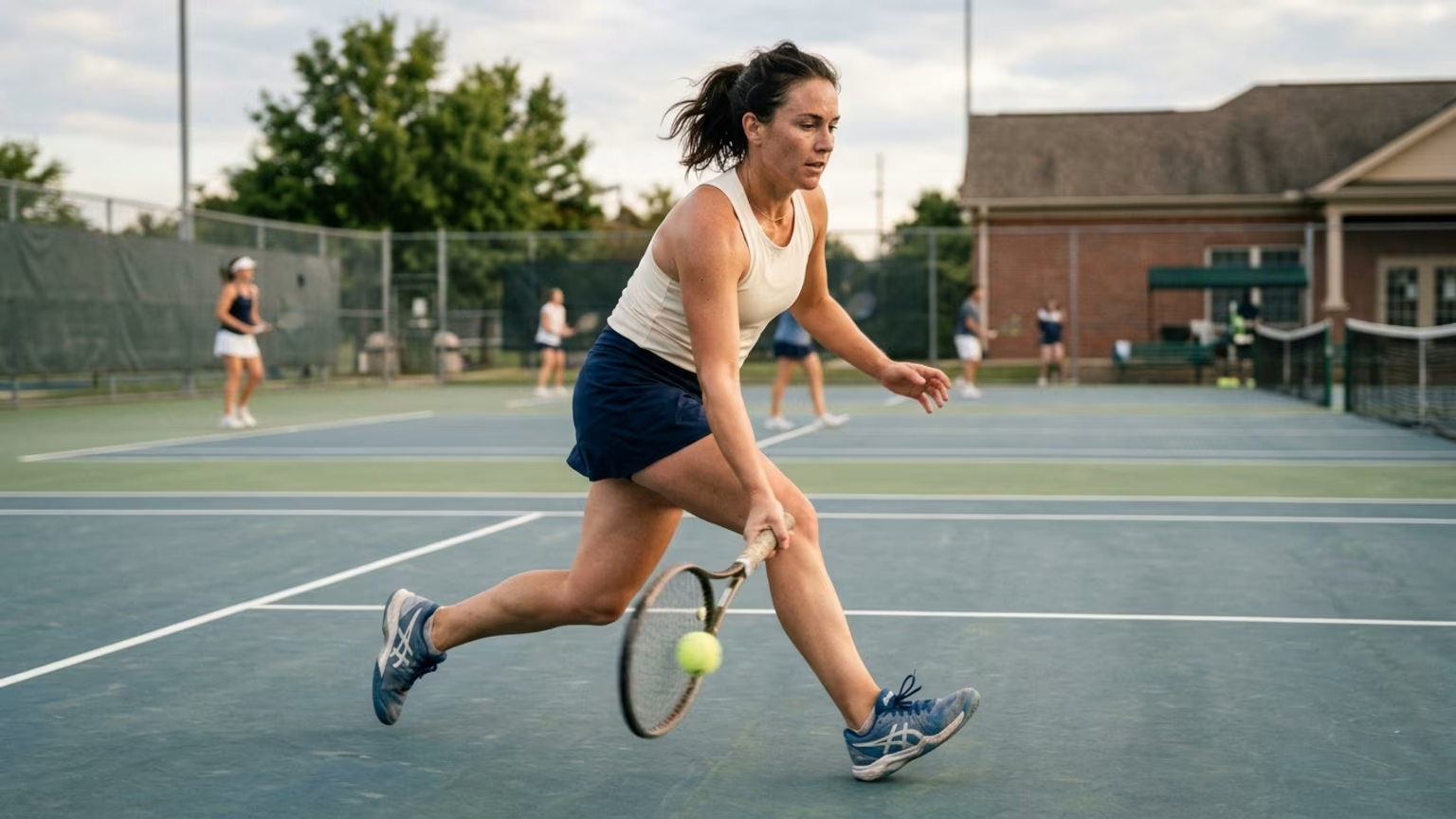

Master essential footwork for tennis, pickleball, and padel. Build athletic longevity with this practical court movement playbook for adult players.




The International Tennis Federation classifies court paces from slow to fast, determining exactly how much time a player has before the ball arrives. That single variable dictates whether you reach the contact point balanced or completely out of control. It highlights why precise footwork mechanics matter far more than pure sprinting speed on any playing surface.
You have just finished a brutal three-setter, and your knees are barking as you trudge toward the net for the final handshake.
The objective of this movement playbook is to build a reliable toolkit for athletic longevity on the court. It strips away complicated fitness influencer hype to focus purely on the steps that maintain your physical capabilities. Mastering these fundamental footwork patterns allows adult players to cover the court efficiently without placing unnecessary stress on their joints. The ultimate aim is to ensure you can continue playing racquet sports for years to come with total confidence.
Our team at evercourts believes that moving well is the primary foundation of playing well. A systematic approach to court coverage keeps the body healthy and fully ready for the next challenging shot. Every racquet sport requires players to position the body, stop, strike the ball cleanly and recover. We must break this common movement problem into repeatable steps that any player can master without needing a professional coach.
The split step is a small preparatory hop that finishes with the feet loaded just as the opponent strikes the ball. A research summary on trained players reports that this step improves movement initiation after the direction is known, rather than making the cognitive decision itself faster. It is a vital physical preparation skill that prevents you from getting caught flat-footed during a fast rally. The most useful and efficient version is small, quiet and timed accurately to the contact point of your opponent.
You can practice this skill using a simple contact-and-go drill. Start in an athletic ready stance while a partner points left, right or forward. Perform a small split step as your partner simulates contact, landing with your feet approximately shoulder-width apart. Push in the indicated direction for two or three steps before returning to your ready stance.
The lateral shuffle is highly effective when the required movement is short and you need to remain facing the net. It allows for frequent foot adjustments without the rotational delay of a full turning stride. The shuffle preserves your orientation toward the ball for smaller corrections during a point. This makes it an essential tool for maintaining strong court positioning during rapid exchanges.
You can train this movement with a basic shuffle-and-stick drill. Mark a two-metre lane, begin in the middle, and shuffle toward one line. Stop with your outside foot loaded and your chest stable to practice quiet braking. Shuffle back through the center to the other line, always finishing in a balanced ready stance.
The crossover step becomes essential when you must cover more ground quickly across a large open space. This pattern is particularly useful in tennis singles or when moving toward a deep corner to retrieve a tough shot. It allows you to build speed faster than a lateral shuffle when covering significant distances. The objective is to cross the legs efficiently without losing your overall balance.
Try a crossover-to-deceleration drill to build this habit. Start in a ready stance, take one crossover step toward a target on a partner's signal, and follow with one or two running steps. Lower your hips to decelerate over the final two steps before shadowing a stroke. Recover to your starting position using short adjustment steps.
Deceleration serves as the critical bridge between speed and usable court position. Players who accelerate without braking often overrun the contact point or place excessive stress on their lower limbs. Arriving under control is just as important as arriving quickly. You must learn to lower your center of mass and brake effectively before you reach the ideal hitting zone.
A practical three-step braking drill helps build this specific capacity. Accelerate for three steps, use the penultimate step to lower your body, and use the final step to stabilize completely. Hold that balanced position for one second before pushing back to your starting point. Begin at a moderate speed and increase your pace only if your stopping position remains perfectly stable.
Recovery positioning ensures you are ready for the next exchange without unnecessary scrambling. This step requires moving back to a tactically appropriate area immediately after you complete your stroke. Proper lateral movement recovery allows you to sustain long rallies without fatiguing early in the match. Practice this by shadowing a shot, decelerating into the imagined contact position, and recovering immediately to your base position.
I used to think a tough conditioning block was the only way to improve my court endurance. Then I started tracking my sleep. I noticed that on days I slept less than six hours, my reaction time at the net was noticeably sluggish, and I felt gassed by the second set. Prioritizing consistent rest did more for my late match stamina than any extra sprints ever did. Recovery is the true foundation of performance.
Good sleep habits and a solid foundation in court-based conditioning are far more effective than training to exhaustion. You do not need professional-level sprint sessions to improve your movement. A simple routine focusing on readiness, lateral control and braking is enough to build a highly useful toolkit.
The physical environment significantly changes how these footwork tools should be applied. A tennis court measures 23.77 metres long, and it is 8.23 metres wide for singles and 10.97 metres wide for doubles. This massive footprint means tennis players must prioritize wider movement patterns, longer acceleration distances and efficient crossover steps. A slower or higher-bouncing tennis court might create more time, but it can also push players farther behind the baseline.
Developing tennis players can refine their movement using modified environments. The ITF Play and Stay system features red, orange and green balls that are progressively closer to the speed and size of the standard yellow ball. The orange-ball court measures approximately 18 metres long, while the green-ball setup uses a full-length court. These modified courts allow players to practice their movement mechanics without being overwhelmed by excessive ball speeds.
Pickleball compresses the movement problem into a much smaller open area. This sport emphasizes ball placement, anticipation, hand speed and balance during competitive exchanges near the non-volley line. Players generally need fewer long sprints but must make repeated micro-adjustments to stay balanced. Your training for this sport should prioritize short split-step reactions, rapid braking after forward movement and stability under compact loading.
Padel introduces a complex third dimension because the ball can rebound from the walls. A systematic-review listing identifies research examining how ball type and court surface affect rebound kinematics on padel walls. You must delay your movement on balls heading toward the back glass, turn efficiently and avoid arriving at the wall too early. Padel is played as doubles, which means your recovery positioning must always be coordinated with your partner.
Master this simple sequence, and those barking knees after a grueling three-setter will finally get some quiet relief.
Follow Evercourts for practical insights on tennis, pickleball and padel performance, movement, recovery and healthy ageing. Stay connected for new articles, research-led guidance and ideas to help you play well and keep playing for years.


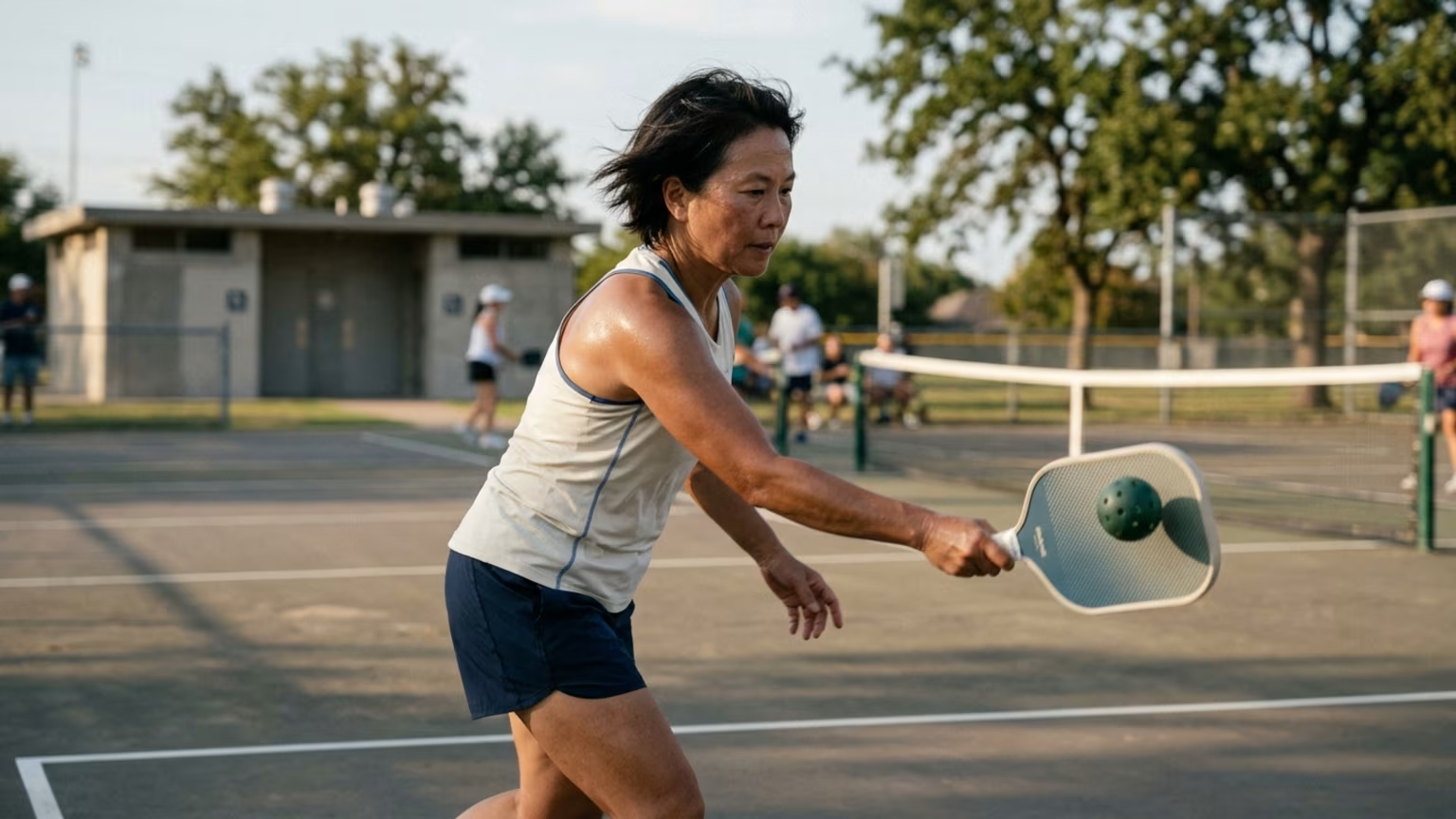
A recent live-play test of a silent pickleball highlights its value for practice, but standard balls still perform better for match play and power control.

An evidence check on sports supplements like tart cherry juice. Learn why racquet sports players should prioritize core nutrition over functional foods.
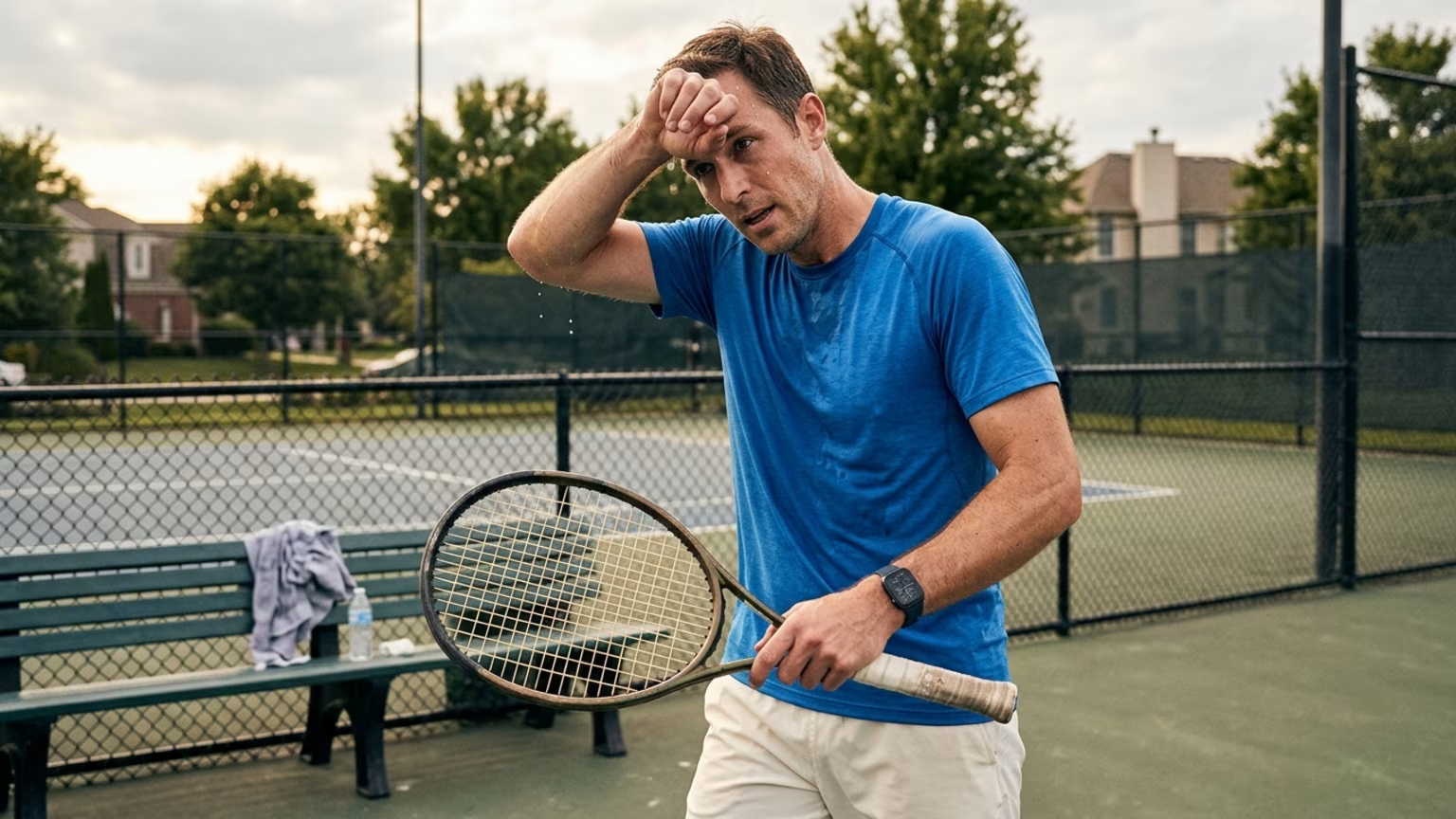
In late 2026, Oura analyzed wearable data to see how recreational tennis impacts heart health and recovery. Learn what this means for your athletic longevity.
Read practical guidance for better movement, smarter preparation and a game that keeps working for you.
explore the Blog
