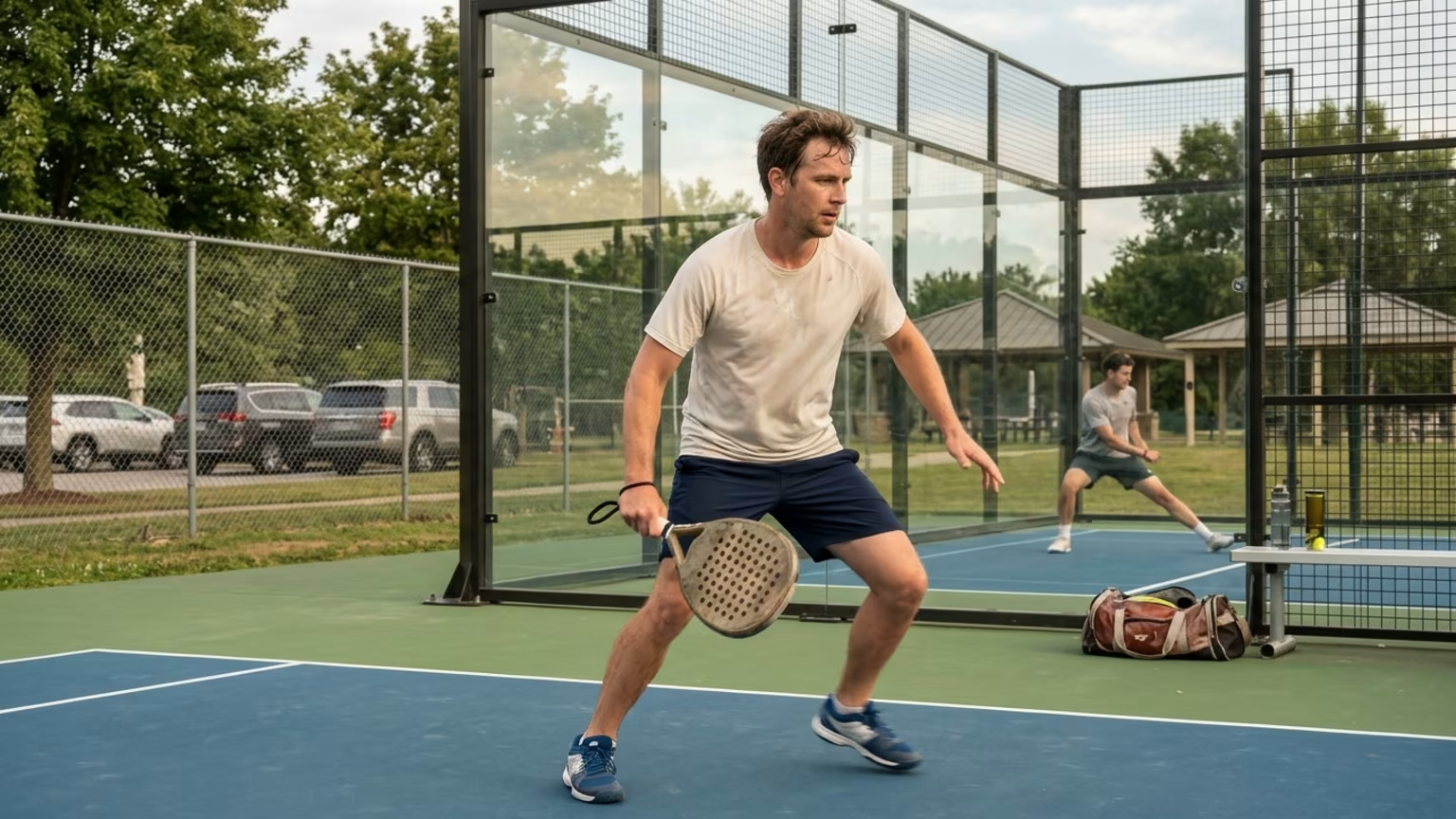

Plan a padel warm-up with general movement, side shuffles and racket practice, plus an optional coaching suggestion for controlled stops.




This padel warm-up addresses a practical problem: how to progress from general movement into the lateral steps, stops and racket actions of a session. It gives your preparation a repeatable order while leaving the pace and movement range adaptable.
The goal is to rehearse the movements and shots you are about to use, not to turn preparation into a separate workout. For an adult player focused on athletic longevity, the emphasis is on preparing for continued participation rather than chasing a fitness target before the first rally.
The Lawn Tennis Association’s winter guidance recommends setting aside roughly 15 minutes to warm up before padel. It suggests dynamic movements followed by a few minutes of padel-specific practice. That gives this example its organizing principle: move generally first, then make the activity more like the game ahead.
There is no established ideal duration in these sources. A commercial training article proposes an 8-minute sequence that includes lateral movement and overhead swings. These are practical recommendations rather than evidence validating the sequence below or demonstrating an injury-prevention benefit.
The useful aim is coverage, not compliance with a stopwatch. General movement, lateral preparation and racket work each have a place in the sequence. Personal decisions about exercising with an injury or ongoing symptoms belong with a qualified health professional.
Begin with easy general movement before adding more court-like actions. This follows the broad progression supported by the LTA’s advice rather than beginning immediately with overheads or demanding exchanges.
Keep the opening relaxed and adjust the pace to how you feel and the session ahead. The research does not supply a separate exercise list for this opening phase, so there is no need to turn it into an elaborate circuit.
Think of this as the first part of a progression, not a task to finish as quickly as possible. The more specific movements come next.
The LTA suggests leg swings, arm rotations, lunges and side shuffles. These are the named dynamic movements that form the foundation of this example.
Work through those movement types with pace and range adjusted to the day. Keep the sequence recognizable rather than adding exercises simply to make it longer. The purpose here is preparation for play, not an extra conditioning session.
This movement-led approach also connects with our guide to preparing through active court rehearsals. For this padel example, the LTA’s list remains the starting point.
Give side shuffles a clear place in the routine. The LTA specifically describes them as preparation for padel’s quick changes of direction.
A practical coaching option is to progress from relaxed side steps to controlled stops before moving into racket work. This stop rehearsal is an editorial suggestion, not a drill prescribed by the LTA.
Treat that option as movement practice rather than a speed test. Keep it within the same adaptable approach to pace and range used earlier. It should not become a separate challenge that changes the purpose of the warm-up.
The distinction matters: side shuffles come directly from the organizational guidance. Adding a controlled stop is one way to organize a movement-focused example around them.
The LTA suggests spending a few minutes on padel-specific practice. Its examples include rallies, shots off the glass, volleys and overheads.
Begin with easy hitting and gradually rehearse the listed shots. Rather than treating racket work as an afterthought, use it as the final transition from general preparation into playing padel.
Keep glass play in the picture. It is explicitly included in the LTA’s guidance and gives the final phase a padel-specific element. Our guide to working with rebounds from the glass offers related context for that part of play.
The practical check is whether the hitting phase reflects more than one familiar shot. Easy rallies alone do not cover the full set of activities the LTA lists. Volleys and overheads should have a place alongside glass practice in this example.
These sources describe padel preparation. They do not establish the different biomechanical demands of tennis and pickleball, so a detailed comparison of movement loads or sport-specific exercise requirements would go beyond the evidence here.
Keep the LTA’s padel-specific elements in the final phase: rallies, glass play, volleys and overheads. Side shuffles belong earlier in the sequence because the association connects them with changes of direction.
The optional controlled-stop rehearsal sits between general movement and hitting. That placement is an editorial way of organizing the example, not an additional LTA requirement.
Carry over the general-to-specific order as a planning framework rather than copying the padel shot list. The final racket-work phase needs tennis-specific guidance instead of assuming that every element of this padel example transfers unchanged.
That preserves the useful structure without presenting padel advice as a complete tennis warm-up.
Use the same distinction between a preparation framework and a sport-specific routine. General movement followed by dynamic movement and relevant hitting is the transferable organizing idea.
The actual pickleball shot practice needs guidance specific to that sport. Do not assume that padel’s selection of glass play and overhead practice establishes what a pickleball player needs before a session.
Follow Evercourts for practical insights on tennis, pickleball and padel performance, movement, recovery and healthy ageing. Stay connected for new articles, research-led guidance and ideas to help you play well and keep playing for years.


Learn how to turn, track and recover for pickleball lobs with a gentle partner drill, plus what fall research says about balance and footwork.

Tennis match data explain why conditioning involves repeated bursts and recovery. Apply the pattern without treating research averages as personal targets.

A flexible pickleball warm-up progressing from easy movement to controlled lunges, side steps, shadow swings and dinking, with readiness-based adjustments.
Read practical guidance for better movement, smarter preparation and a game that keeps working for you.
explore the Blog
