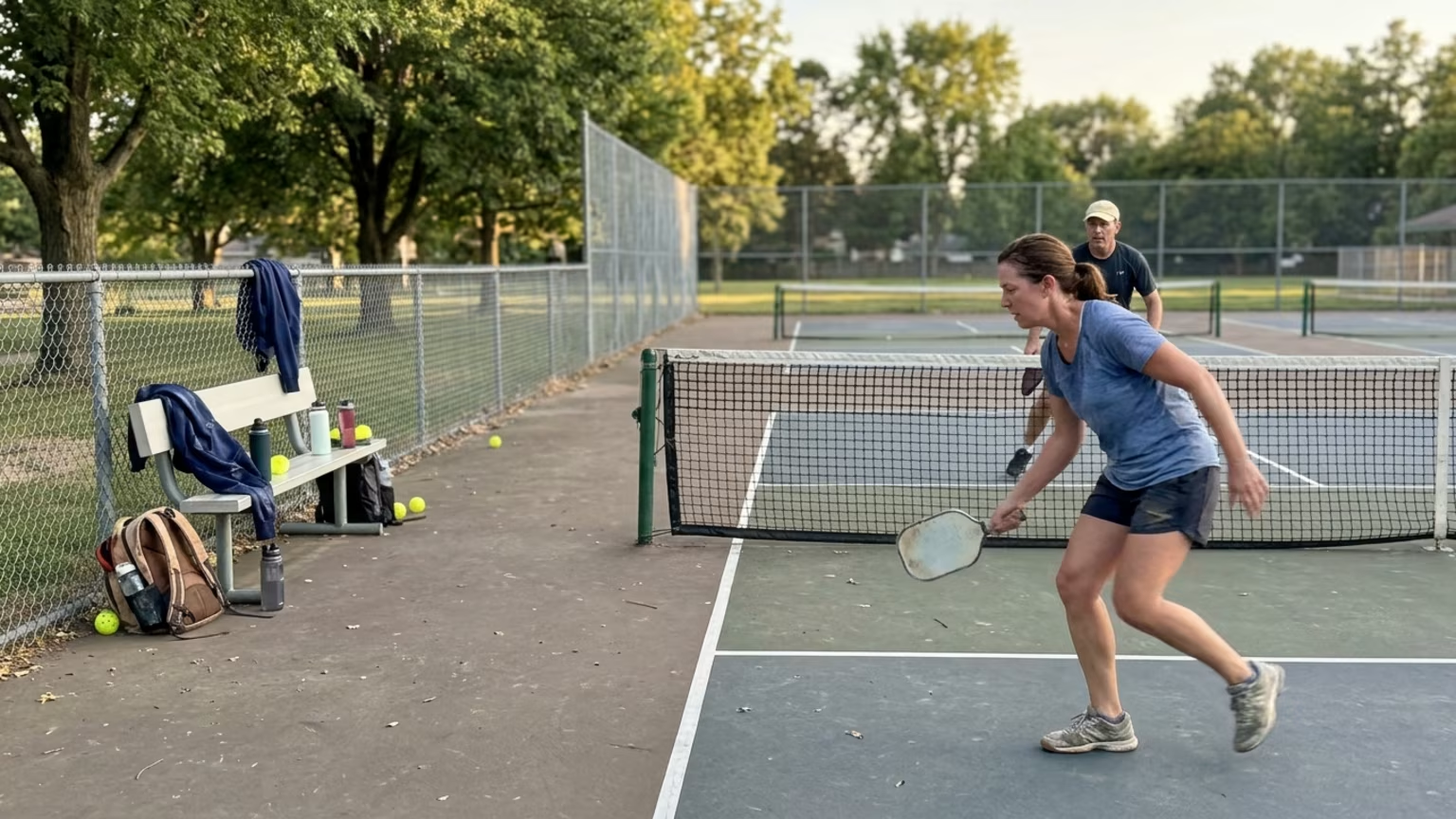

Build a progressive pickleball warm-up from easy movement to gentle rallies, with practical adjustments for cold mornings, stiffness and time away.




A progressive pickleball warm-up addresses the jump from little movement to the first fast rally. The aim is to work through easy activity, controlled footwork and gentle hitting so the opening point follows preparation rather than a sudden test of pace.
For an active or aging player, the immediate goal is readiness for court movement. That means gradually introducing the movements and hitting that will follow during play. The longer-term priority is keeping physical capability central to the playing experience rather than turning every preparation session into another workout.
ATI Physical Therapy recommends beginning slowly, increasing pace while staying controlled and finishing with gentle rallies. Its practical endpoint is useful: feel prepared rather than fatigued.
The evidence needs a clear boundary. A 2026 scoping review in Sports Medicine - Open found that warm-up research has focused more on immediate performance readiness than injury reduction. Evidence about transfer into real-world competition was also limited. The available pickleball guidance establishes neither an optimal duration nor a single tested sequence, so the progression below combines practical recommendations rather than presenting a proven injury-prevention protocol.
Think of this as preparation for the session ahead, not a replacement for developing strength or general fitness. Our guide to moving gradually from easy activity toward play provides related warm-up context.
The sequence follows the broad progression described by Bendiii: easy activity, mobility work, increasingly active footwork and easy dinking. ATI Physical Therapy adds specific movement options and the principle of finishing ready rather than tired.
Start with easy walking or jogging before asking for faster court movement. Bendiii includes brisk walking or easy jogging as the opening stage of its suggested routine.
The practical distinction is between starting to move and immediately testing match pace. Keep the opening controlled and let the progression become more demanding later. This first stage does not need to look like a conditioning drill to serve its place in the routine.
Move into comfortable mobility work. ATI Physical Therapy includes calf raises and arm circles among its suggested exercises. Bendiii places mobility and muscle-activation work between the opening activity and faster footwork.
Shallow, comfortable lunges are an optional lower-body rehearsal within this stage. They are a practical movement option rather than a compulsory part of a tested protocol. Keep the range manageable instead of treating depth as the goal.
For a player who feels stiff, this is an opportunity to keep movements controlled rather than rush toward the next stage.
Add controlled side-to-side movement. ATI Physical Therapy specifically includes side shuffles, while Bendiii recommends gradually faster footwork after the earlier preparation.
The progression matters more than making the first shuffle fast. Introduce the movement under control before building pace. This keeps the lateral work consistent with the overall approach: start easier and make the preparation more specific as it develops.
Avoid turning this stage into a separate fitness challenge. Its role here is movement rehearsal before play.
Bring the paddle into the sequence with gentle shadow swings. Easy paddle swings are another element of ATI Physical Therapy's suggested warm-up.
Treat these as rehearsals rather than attempts to produce maximum speed. The aim is to introduce the hitting action before adding a ball and a partner.
This step also keeps the transition gradual. The routine moves from general activity to footwork, then toward the action that will finish the warm-up.
Begin hitting softly. Bendiii places easy dinking after movement preparation, and ATI Physical Therapy recommends gentle rallies before full-speed play.
Build the pace gradually rather than using the opening exchange as a test. The finish should still follow the same controlled progression as the earlier stages.
Use ATI Physical Therapy's distinction between prepared and fatigued as the guiding idea. A warm-up does not need to leave a player tired to count as useful preparation.
On a cold or early morning: RIR Lift suggests spending longer on the opening movement phase and adding ankle and hip mobility. This is practitioner guidance rather than a finding from a controlled comparison of warm-ups in different temperatures. The practical adjustment is more easy preparation before increasing pace, not a more demanding opening drill.
After time away: A pickleball guide recommends gradual progression when returning after a break. That is general guidance rather than a tested return-to-play schedule. Apply it by easing back into movement and play instead of making the first session a full-intensity test. Completing a warm-up should not become a reason to rush the rest of that return.
When stiffness is a factor: ATI Physical Therapy recommends adapting its exercises as tolerated. Keep early movements controlled and use a comfortable range, progressing only when the movement feels manageable. Decisions about persistent pain or returning after an injury belong with a qualified healthcare professional rather than a generic warm-up checklist.
The useful distinction is between a general progression and a sport-specific exercise list. This article provides the latter for pickleball, not a complete routine for every racquet sport.
For pickleball, the cited guidance supports a progression that includes lateral movement and easy paddle swings before gentle hitting. Keep easy dinking or rallies at the end rather than treating them as a substitute for all the movement preparation that comes before.
That gives the routine a clear order without making every suggested exercise compulsory.
The pickleball recommendations do not establish the biomechanical differences between tennis and padel or the precise adjustments those differences require. A coach familiar with the relevant sport can help select appropriate footwork and hitting rehearsals rather than simply carrying over the pickleball finish.
Use the easy-to-specific progression as a planning principle, not as evidence that identical exercises prepare players equally for all three sports. For more pickleball-focused context, see our guide to building movement toward match pace.
Follow Evercourts for practical insights on tennis, pickleball and padel performance, movement, recovery and healthy ageing. Stay connected for new articles, research-led guidance and ideas to help you play well and keep playing for years.


Learn how to turn, track and recover for pickleball lobs with a gentle partner drill, plus what fall research says about balance and footwork.

Tennis match data explain why conditioning involves repeated bursts and recovery. Apply the pattern without treating research averages as personal targets.

A flexible pickleball warm-up progressing from easy movement to controlled lunges, side steps, shadow swings and dinking, with readiness-based adjustments.
Read practical guidance for better movement, smarter preparation and a game that keeps working for you.
explore the Blog
