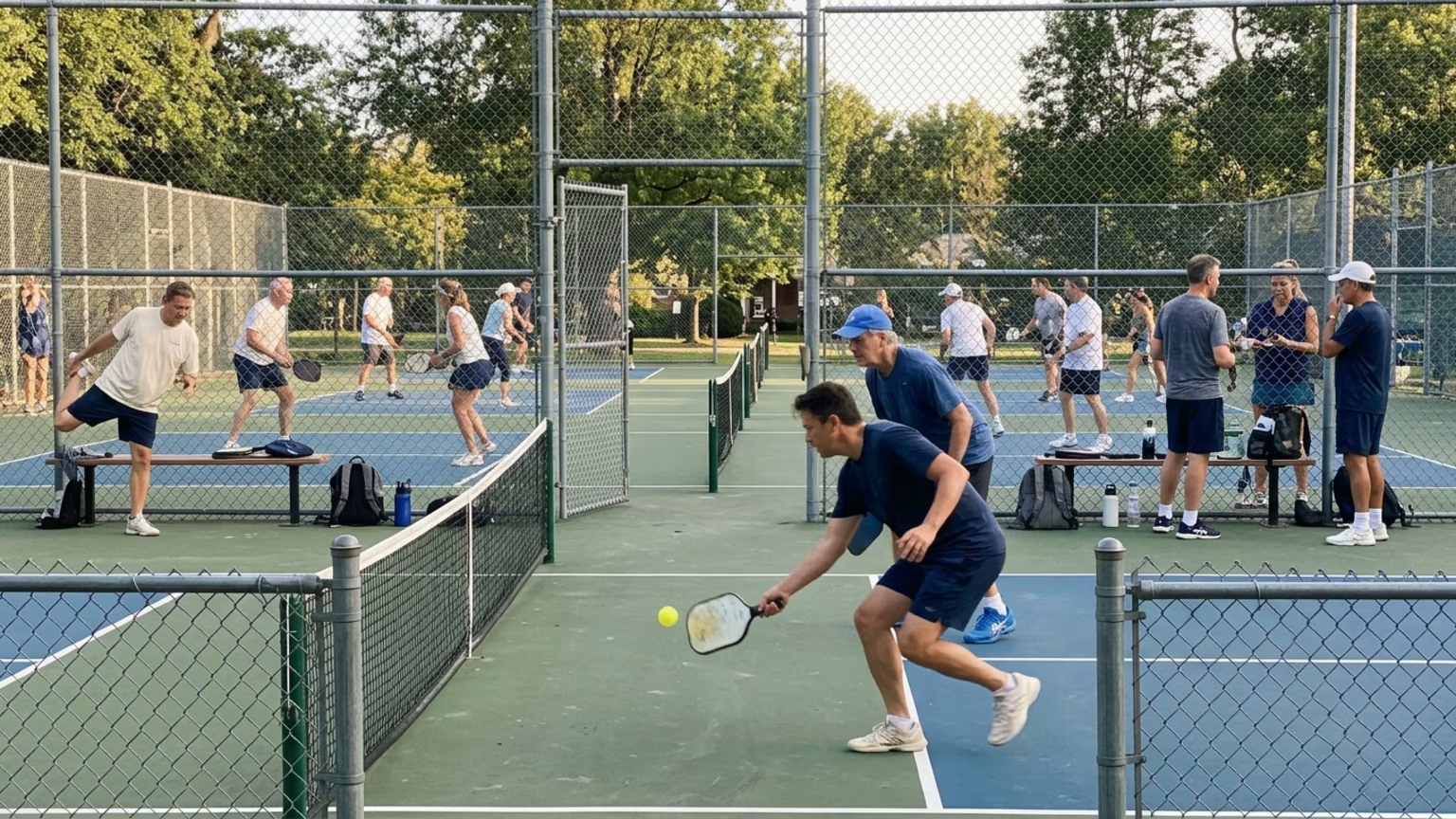

Build toward pickleball match pace with easy movement, court footwork and controlled hitting, plus a short-format option and guidance after a break.




A few rushed dinks leave out much of the movement that comes before and between pickleball shots. This progressive warm-up provides a practical bridge from easy activity to court footwork and controlled hitting before full-intensity play.
The goal is straightforward: rehearse moving around the court and contacting the ball before asking those actions to happen at match pace. For an aging or active player, that keeps the focus on useful playing capabilities rather than completing an impressive exercise routine.
Think of preparation as one part of a longer-term approach to staying active on court. Athletic longevity is the broader aim. The immediate task is simply to move from general activity toward the actions the game requires.
The detailed sequences below are published coaching suggestions rather than clinically tested protocols. The sources do not establish that these warm-ups prevent pickleball injuries. Treat them as preparation for play, not protection against every problem that might arise during it.
A specialist pickleball warm-up guide proposes five stages: general movement, moving mobility, pickleball footwork, gentle paddle-and-ball work and a short rally below full intensity. The sequence matters more than presenting every stage as a separate workout.
The guide begins with walking or jogging. This is the general activity stage rather than an immediate test of court speed.
Keep the opening distinct from the later footwork and hitting. In this published progression, ordinary movement comes first. There is no need to begin by trying to reproduce a demanding point.
The next stage includes leg swings and arm circles. These introduce movement before the routine turns toward court patterns and ball contact.
The source gives examples rather than a compulsory exercise inventory. It does not supply a universal repetition target for this stage, so there is no reason to attach an invented count to each movement.
The guide includes side shuffles, split-step work and diagonal court movement. This is where preparation becomes recognisably related to moving around a pickleball court.
Give the footwork its own place in the sequence rather than assuming that easy hitting covers it. The practical distinction is simple: this stage rehearses movement around the court, while the next introduces paddle-and-ball control.
Dinks and mini-volleys appear in the guide as examples of easy ball contact. They follow the movement stages rather than replacing them.
The emphasis here is gentle control. This is not yet the final rally stage, and the published progression does not call for immediate full-intensity exchanges. Keep the purpose of this phase clear: introduce hitting before increasing the demands of play.
The final stage is a short rally below full intensity. The guide also includes controlled serves, returns and third-shot drops among its examples.
This is the bridge toward the opening point, not an instruction to make the warm-up competitive. The sequence has now moved from general activity through court movement to more recognisable patterns of play. It finishes below full intensity rather than using the warm-up itself as a match.
A separate specialist article offers this five-minute example:
This is one published option, not an established minimum or an optimal duration for every player. It also differs from the longer sequence because it finishes with movement and shadow serves rather than ball contact.
If using it as the movement portion of preparation, the main progression still offers the next steps: gentle hitting followed by a controlled rally. Do not treat the timer reaching five minutes as evidence that the same preparation suits every situation.
OrthoGA's guidance on overuse injuries in older adults advises building duration and intensity gradually after time away. It cautions against immediately returning to long sessions or high-intensity competition.
That is general older-adult guidance rather than a pickleball-specific return protocol. Its practical implication is to separate the warm-up from the larger return to playing: completing a preparation routine is not the same as rebuilding tolerance for a long or demanding session.
For personal decisions about returning after injury or managing ongoing symptoms, seek guidance from a qualified healthcare professional. The routine here is not an individual rehabilitation plan.
The available material supports a detailed pickleball example. It does not describe the different biomechanical demands of tennis and padel or establish corresponding warm-up adjustments. A detailed comparison would therefore go beyond what these sources support.
A newspaper report on a pickleball training regimen describes a professor highlighting lateral movement near the non-volley zone. The report discusses progressively building side-to-side range and intensity within that regimen.
For this warm-up, the practical connection is to retain the published side-shuffle work before easy hitting. Dinks belong in the sequence, but so does movement. The report concerns training rather than a test of this pre-match routine.
Keep the general-to-specific order as an organising idea rather than transferring the pickleball drill list unchanged. Tennis players can refer to a separate progression toward the first point instead of relabelling pickleball shots as tennis preparation.
Padel likewise needs its own movement and hitting choices. Those choices are outside this pickleball protocol rather than details to fill in by assumption.
Follow Evercourts for practical insights on tennis, pickleball and padel performance, movement, recovery and healthy ageing. Stay connected for new articles, research-led guidance and ideas to help you play well and keep playing for years.


Zheng Qinwen’s early finish to 2026 puts fatigue and recovery in focus. Here is the practical lesson for adult racquet-sport players.
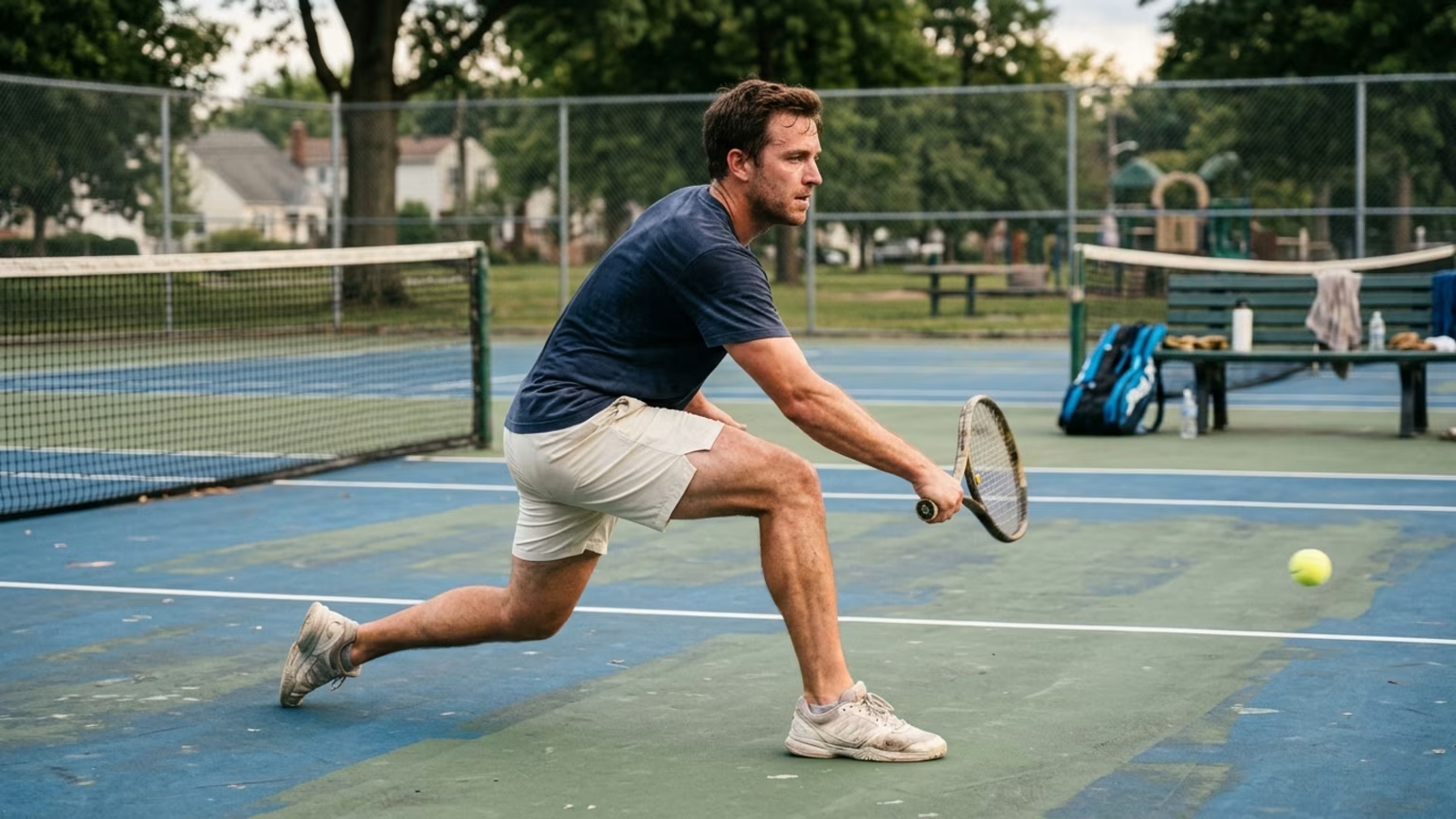
Understand single-leg control, lateral movement, rotation and braking in tennis strength training, with an illustrative week and clear evidence limits.
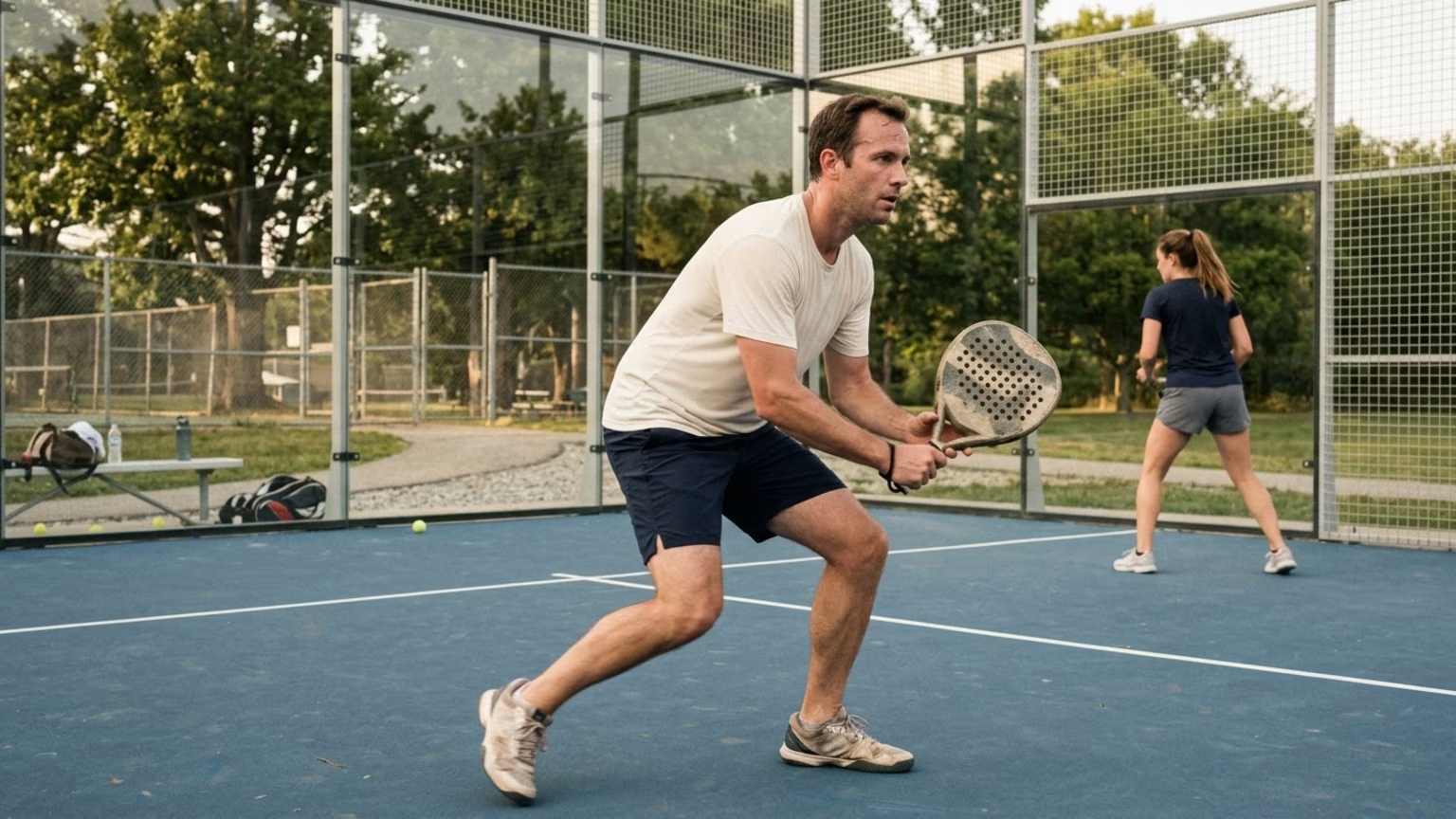
A research-led padel warm-up framework for starts, stops and turns, with adaptable movement guidance and clear limits on injury-prevention claims.
Read practical guidance for better movement, smarter preparation and a game that keeps working for you.
explore the Blog
