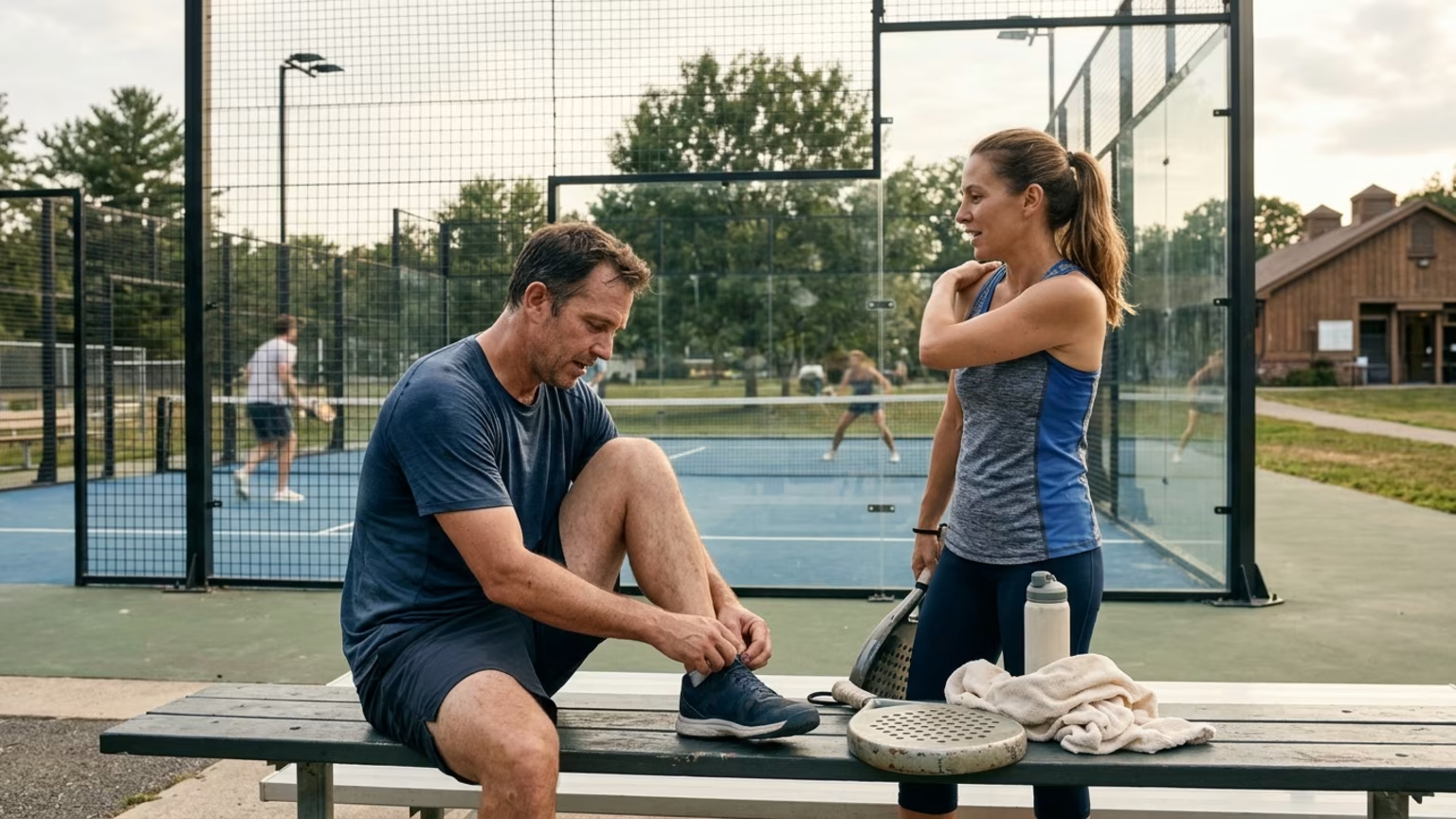

A practical padel return mailbag on recent activity, manageable sessions and gradual adjustments, with a clear distinction between time away and injury.




How do I return to padel after a break without rushing the build-up? Start with your recent activity and current health, choose a manageable session and adjust one playing demand at a time rather than following a universal weekly schedule.
Start with your recent circumstances rather than your old playing routine. The aim is to choose a sensible starting point, not to recreate your busiest week before the break.
A useful starting point is a short review of what you have actually been doing:
These prompts are planning tools, not a readiness test. They help frame the return around your present situation without assigning everyone the same starting session.
From there, describe the session you intend to play before booking it. Consider its duration and intended intensity alongside how often you expect to play. A manageable session should be a deliberate choice rather than whatever the group happens to arrange.
There is no need to make the first booking a statement about your old standard. Its purpose is to provide a starting point for subsequent decisions. Keeping that distinction clear makes the plan easier to describe and review.
Our broader guide to planning a return after time away provides related context. For this padel return, keep the initial question narrow: what playing commitment makes sense given your recent activity and circumstances?
Use duration, intensity and frequency as separate planning choices rather than increasing them together on an automatic calendar.
The evidence needs one clear boundary here. The small study Neuromuscular Alterations of Knee Extensors During Padel Match Play concerned trained players during extended match play, not a validated return plan for recreational players. A separate practitioner's post-injury guidance offers a staged approach rather than a protocol tested in a clinical trial. The planning suggestions in this mailbag are therefore cautious editorial applications, not an established weekly progression for ordinary breaks.
In practical terms, separate the demands you are considering:
Changing one demand at a time gives the plan a clearer structure. If you are considering a longer session, that does not also have to mean more demanding play and more bookings. Equally, adding another session need not become an occasion to increase every other demand.
Before making a change, look back at what you actually played. Compare that with what you had intended and consider whether the next proposed session still fits your activity and schedule. This is a review of the plan, not a requirement to progress every week.
Write down the intended change in plain language. A note about longer play is more specific than a general ambition to do more. If the proposal includes several changes at once, separate them before deciding what belongs in the next session.
A week with no increase can still be a deliberate part of the return. The useful distinction is between maintaining a manageable level by choice and feeling obliged to add more because another week has passed.
For the wider scheduling question, our coverage of balancing padel with training and rest offers related reading. Keep the return plan anchored to what you can manage now rather than to a deadline for matching your former routine.
Yes. An injury-related return involves personal rehabilitation decisions that an ordinary scheduling framework should not attempt to settle.
The practitioner's post-injury article describes progression from everyday movement and targeted strength work to padel-specific drills, followed by shorter games at lower intensity. It also says that the time required depends on the injury and its history. That is a description of the source's approach, not a sequence every returning player needs to adopt independently.
For a current or recent injury, individualized medical or physiotherapy advice is the more defensible basis for deciding how to return. A general article should not determine which rehabilitation stage applies to you or when you should move beyond it.
The practical distinction is between organizing available playing time and making a decision about an injury. A manageable booking can address the first question. It does not answer the second.
If the break was unrelated to injury, keep the planning discussion focused on recent activity and available time. Do not turn the return into a self-directed rehabilitation programme simply because much return-to-sport advice is written for injured players.
The same distinction matters when discussing plans with playing partners. A session chosen around your schedule and a session shaped by rehabilitation advice may look similar on the booking sheet. Their purposes are different, so neither needs to be judged against someone else's comeback timetable.
Include tennis or pickleball in your recent-activity picture, but keep your padel activity visible as a separate part of it. As a planning choice, that is more useful than either ignoring other sport or treating every racquet-sport session as interchangeable.
For tennis activity, note what you have actually been playing. Do the same for pickleball. Then consider the padel session you are proposing without assigning either sport an invented conversion into padel readiness.
Our guide to moving between racquet sports addresses that broader planning topic. Here, the key is to acknowledge all recent activity while keeping the return decision specific to padel.
Returning to the opening question, a measured padel comeback starts with your present circumstances and builds through deliberate changes rather than a universal weekly timetable. Getting back on court can be a positive step without making the first session a test of your former self.
Follow Evercourts for practical insights on tennis, pickleball and padel performance, movement, recovery and healthy ageing. Stay connected for new articles, research-led guidance and ideas to help you play well and keep playing for years.


Learn how to turn, track and recover for pickleball lobs with a gentle partner drill, plus what fall research says about balance and footwork.

Tennis match data explain why conditioning involves repeated bursts and recovery. Apply the pattern without treating research averages as personal targets.

A flexible pickleball warm-up progressing from easy movement to controlled lunges, side steps, shadow swings and dinking, with readiness-based adjustments.
Read practical guidance for better movement, smarter preparation and a game that keeps working for you.
explore the Blog
