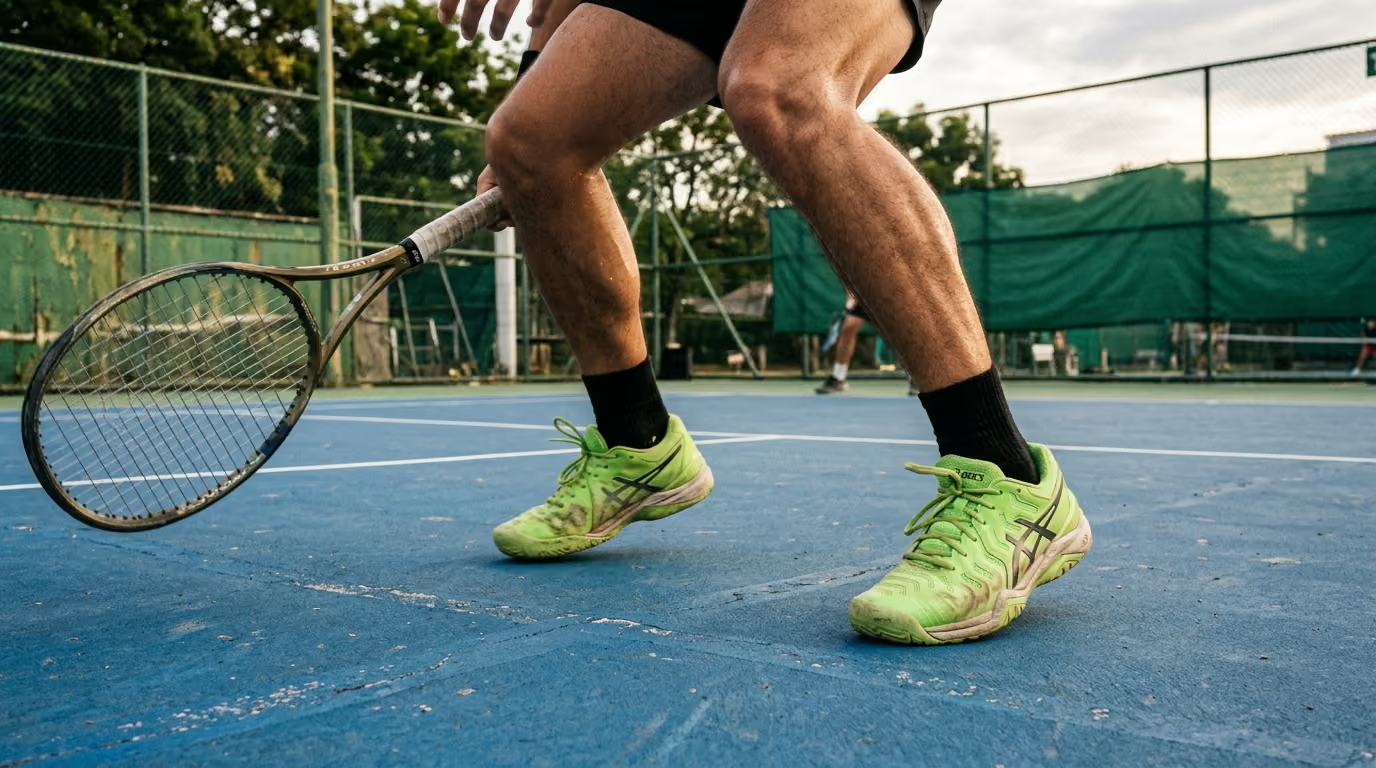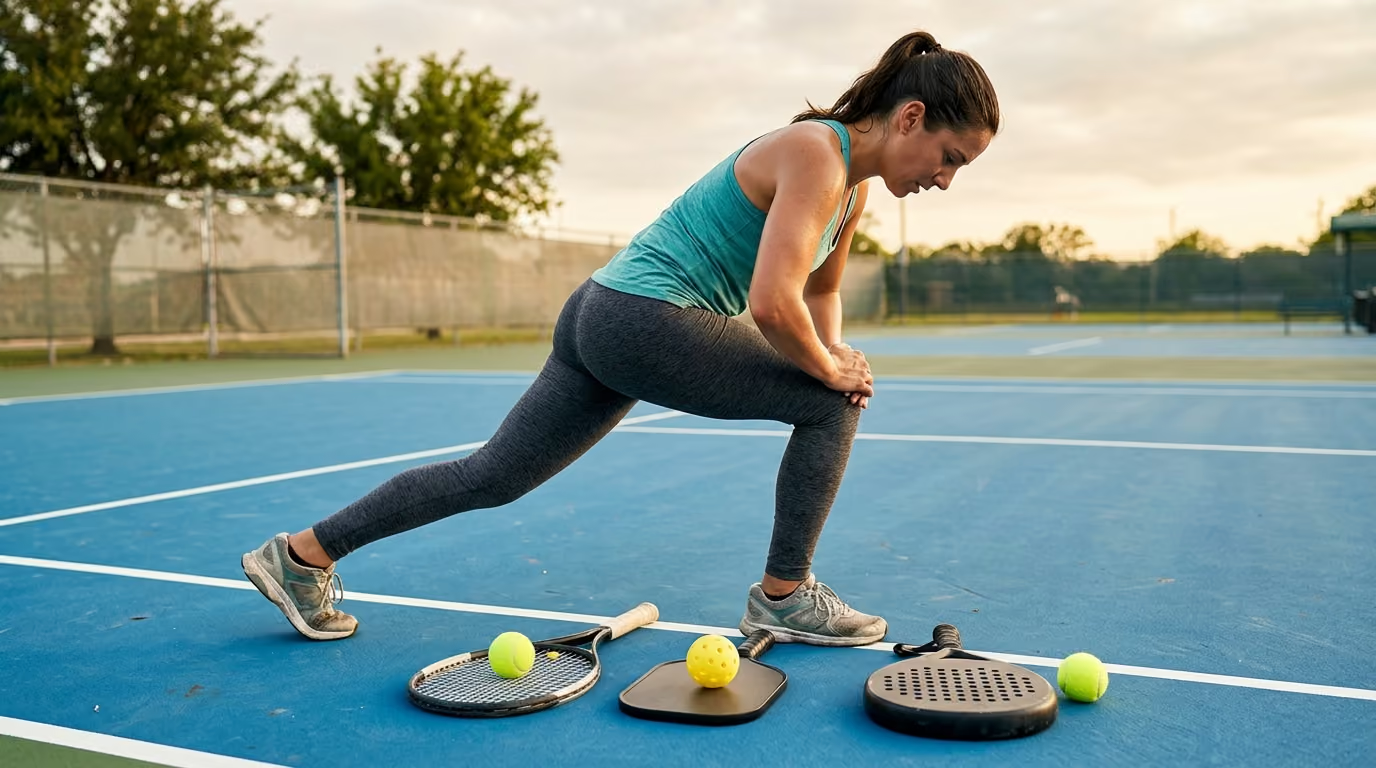

A 1.5 acute-to-chronic workload ratio is a reliable indicator for monitoring injury risk when cross-training between tennis, pickleball, and padel.




If you regularly switch between tennis, pickleball, and padel, you have likely asked yourself why your elbow hurts or why your calves feel perpetually tight. This comprehensive guide provides a definitive roadmap to alternating among these popular racquet sports without overloading your joints. By understanding how changes in court dimensions, equipment weight, and stroke mechanics affect your body, you can maintain your physical performance and enjoy these sports for years to come.
Alternating between tennis, pickleball, and padel is highly beneficial for athletic longevity if you manage the shifting physical demands of each court. The key to staying healthy lies in recognizing that while these sports share similar hand-eye coordination, they impose vastly different loads on your muscles and tendons. By tracking your total playing time, gradually introducing new stroke patterns, and maintaining a targeted warm-up, you can enjoy all three sports without injury.
To train safely across multiple sports, players must distinguish between skill transfer and load transfer. Skill transfer refers to your ability to read the ball, anticipate opponent positioning, and execute clean volleys. This cognitive aspect of play transfers easily from tennis to pickleball or padel. You do not need to relearn how to track a moving object or how to position your body relative to a bounce.
Load transfer, however, refers to how your muscles, tendons, and joints absorb physical forces. Your body does not automatically transfer the tissue tolerance or joint conditioning required for a new sport. For example, a tennis player may have excellent cardiovascular fitness but lack the specific calf and tendon conditioning needed for the tight, rapid movements of pickleball. When you switch sports, your brain expects your body to perform movements that your muscles are not prepared to support.
Physical stress on the court is divided into external and internal loads. External load is the work you perform on the court, which includes distance covered, accelerations, decelerations, and the number of balls hit. Inertial-device research defines player load as the vector sum of acceleration across the vertical, forward-backward, and lateral axes. Internal load is how your body responds to that work, which is measured by heart rate, perceived exertion, muscle soreness, and sleep quality.
To prevent overuse injuries, you must monitor both types of load. A ninety-minute social session of pickleball doubles might feel easy, but it can still accumulate hundreds of micro-decelerations. Conversely, a sixty-minute singles tennis match on clay will have high cardiovascular demands and large lateral excursions. Understanding these differences helps you plan your training week and avoid sudden spikes in joint stress.
Our tissues adapt best to gradual changes in physical stress. When you suddenly increase your playing time or switch sports without preparation, you create a workload spike. A review of racquet-sport injuries suggests that keeping your acute-to-chronic workload ratio below 1.5 is a reliable way to monitor risk. This ratio compares your current week of playing time to your average playing time over the past four weeks. If your average is three hours a week, jumping to six hours in a single week raises your risk of tissue failure.
To build a complete movement profile across these three sports, you must master several basic actions:
The physical demands of each sport are dictated by the size of the court and the presence of walls. Tennis is played on a large court measuring 78 feet long and up to 36 feet wide for doubles. This expansive area requires players to cover significant distances. Research indicates that tennis players cover an average of eight to nearly ten meters per point, resulting in significant running volumes over a multi-set match.
The large court size means tennis involves high-speed running, long-distance sprinting, and heavy braking. Tennis rallies are relatively short, averaging between five and seven seconds. However, the intensity of each movement is high, requiring significant eccentric muscle strength in the quadriceps and calves to decelerate. When transitioning from smaller courts back to tennis, players often struggle with the physical demands of these long-distance sprints.
A standard pickleball court is much smaller, measuring 20 feet wide by 44 feet long. The non-volley zone, known as the Kitchen, restricts players from hitting volleys within seven feet of the net. While the small court reduces long-distance sprinting, it concentrates mechanical stress in a smaller area. Players must perform rapid, repetitive starts and stops, low lunges at the kitchen line, and quick lateral adjustments.
Because the court is small, players often assume pickleball is a low-impact sport. However, epidemiological data shows a significant rise in pickleball-related injuries, particularly among older adults. A study of emergency department visits revealed a sharp increase in injuries like wrist fractures, ankle sprains, and muscle strains. The combination of rapid lunging and minimal warming up can cause acute injuries to the Achilles tendon and calf muscles. For more on managing these risks, read our injury prevention resources for court athletes.
Padel is played on a 10-meter by 20-meter court surrounded by glass and mesh walls. This unique environment alters how players move and track the ball. A systematic review of padel movement shows that lateral shuffling is the most common action, followed by forward lunges and pivot turns. Because the ball can bounce off the glass, players must constantly adjust their positioning, rotating their hips and spine to chase rebounds.
A comparison of padel and tennis shows that padel involves longer rally durations, more total hits, and fewer rest periods. While tennis requires higher maximum running speeds, padel demands continuous, low-intensity movement with frequent rotational twisting. This constant pivoting can place unique stresses on the feet and ankles. Research indicates that the forefoot experiences substantial pressure during these turns, which can lead to plantar fasciitis or joint inflammation. To learn more about padel mechanics, view our padel articles.
The tools you hold in your hand determine how force is transmitted up your arm. A tennis racket is long, strung, and designed to generate high ball speeds. The average weight of a tennis racket creates significant leverage, which requires strong shoulder and forearm muscles to control. The tennis serve and overhead smash are complex, high-velocity movements that require a coordinated kinetic chain from the feet to the wrist.
First-serve speeds can easily exceed 150 kilometers per hour, showing the extreme forces acting on the shoulder joint. If you have been playing pickleball or padel for several weeks, you may feel fit, but your shoulder is likely unprepared for these high-velocity serves. Returning to tennis serving requires a gradual reintroduction of volume and intensity to prevent rotator cuff strains.
A pickleball paddle is short, rigid, and made of solid composite materials. The ball is a lightweight, perforated plastic sphere that does not compress. Because the paddle does not have strings to absorb impact, the vibration of every hit is transmitted directly to your wrist and elbow. Players often compensate for this rigid feel by squeezing the paddle too tightly.
Holding the paddle with a tight grip can lead to chronic forearm tension and lateral epicondylitis, commonly known as tennis elbow. When tennis players try pickleball, they often use a long tennis swing, which is inefficient and hard to control with a short paddle. The quick reaction times required at the kitchen line can lead to late contact, placing additional strain on the wrist joint. For practical tips on paddle control, visit our pickleball articles.
A padel racket is thick, solid, and perforated with holes to reduce wind resistance. Like the pickleball paddle, it lacks strings, meaning the arm must absorb significant impact forces. Padel players must also deal with the complex timing of ball rebounds off the walls, which can lead to awkward contact points. If you hit the ball too far behind your body, you place extreme stress on your elbow and shoulder tendons.
To prevent upper extremity strain when switching equipment, you should follow a structured acclimatization protocol:
The different strokes used in each sport can create coordination confusion and physical strain. The tennis serve is a highly demanding movement that utilizes the entire body. The motion starts with a deep knee bend, transfers energy through hip and trunk rotation, and ends with explosive shoulder extension. If this kinetic chain is disrupted, the shoulder and elbow must work harder to generate power.
Padel also features overhead shots, such as the bandeja and the smash, but they are played with different mechanics. Padel overheads focus on spin, placement, and control rather than raw downward speed. Pickleball does not allow overhand serves, but players still face repetitive overhead challenges when defending lobs. If you transition between these sports, do not assume that playing pickleball or padel prepares your shoulder for the high-velocity demands of a tennis serve. To build a stronger upper body for these demands, read our strength and conditioning resources.
Groundstrokes also differ significantly across the three sports. Tennis groundstrokes require a large backswing, significant racket-head speed, and heavy topspin. Padel groundstrokes must be shorter and more compact because the ball rebounds quickly off the walls. Pickleball groundstrokes are the shortest of all, requiring quick, push-like motions with minimal wrist action.
A common mistake is using a tennis-style swing on a pickleball or padel court. Taking a large backswing in these sports often causes you to hit the ball late, which strains the forearm and wrist. Conversely, returning to tennis with a shortened pickleball swing can lead to poor ball depth and shoulder strain from trying to muscle the ball. When switching courts, take five minutes during your warm-up to consciously adjust your swing size and contact point.
Net play is a prominent feature of both padel and pickleball. In pickleball, the kitchen line forces players to engage in fast volley battles at very close range. In padel, players constantly work to control the net using volley variations to keep opponents deep. Tennis doubles also involves net play, but the distance between players is generally greater, allowing more reaction time.
The primary hazard of close-range volleying is the tendency to tense the entire arm. When the ball travels fast, players often freeze their feet, stand too upright, and stab at the ball with a stiff wrist. This placing of the arm in a rigid position under load can stress the elbow joint. A helpful coaching cue is to keep your feet active, split step before every shot, and move your body toward the ball rather than reaching with your arm.
Each court sport places unique demands on specific parts of your skeletal system. The elbow and forearm are especially vulnerable when you frequently change equipment. Padel research consistently shows that the elbow is the most common site of injury, with epicondylitis affecting both recreational and competitive players. The combination of a solid racket, heavy balls, and repetitive backhands can easily overload the wrist extensor tendons.
To protect your elbows, ensure your grip size is correct. A grip that is too small forces you to squeeze tighter to keep the racket from twisting. If you experience persistent elbow pain that does not improve with rest, seek advice from a professional. You can read more about managing joint strain in our player health articles.
The shoulder is another common area of concern, particularly for tennis and padel players. The overhead smash in padel and the serve in tennis place high rotational forces on the shoulder joint. If your shoulder muscles are fatigued from playing multiple sports, your scapula may not move correctly. This can cause impingement, where the rotator cuff tendons become compressed against the shoulder bones.
To protect your shoulders, focus on maintaining core strength and upper back mobility. Your shoulder relies on your trunk and hips to generate power. If your core is tired from a long pickleball session, your shoulder must work harder during your next tennis match. Incorporating simple resistance band exercises for your rotator cuff can help keep your shoulder stable across all three sports.
The lower body absorbs the impact of every sprint, split step, and lunging recovery. Padel players often report knee strain, particularly around the patellar tendon, due to the frequent lateral sliding and pivoting. In pickleball, the rapid, short-distance movements place significant stress on the Achilles tendon and calf muscles. If you have tight calves, the sudden backward steps required to chase lobs can lead to acute strains.
The foot also bears substantial stress, particularly during the lateral movements of padel and tennis. The constant shifting of weight can cause plantar fasciitis, a painful inflammation of the tissue along the bottom of your foot. To reduce this risk, choose footwear that matches the court surface. Do not wear running shoes, which lack lateral support and increase your risk of rolling an ankle. For more advice on footwear and recovery, view our recovery science resources.
Falls represent a serious risk, particularly for older adults playing pickleball on hard outdoor surfaces. Emergency room data shows that fractures and sprains are common injury diagnoses among players over sixty. Many of these injuries occur when players backpedal to retrieve a lob and lose their balance.
To prevent falls, practice turning your hips and running backward or sideways rather than backpedaling. Keep your eyes on the court and maintain clear communication with your doubles partner to avoid collisions. Ensuring the court is free of stray balls or moisture is another simple way to prevent sudden slips.
To cross-train safely, use a structured framework to evaluate the physical demands of your schedule. We recommend performing a simple three-load audit before you switch courts. This audit helps you identify which parts of your body will face new stresses during your next session.
First, assess your locomotor load. Consider how much sprinting, lateral shuffling, and lunging the sport requires. If you are switching from pickleball doubles to tennis singles, your locomotor load will increase significantly. You should prepare your calves and hamstrings for longer sprints and harder braking.
Second, evaluate your stroke load. Look at the number of overhead shots, serves, and high-impact volleys you will hit. If you are transitioning from pickleball to tennis, your shoulder will face a major increase in serving volume. You should limit your service repetitions during your first few matches back on the tennis court.
Third, look at the environmental and tactical load. This includes the court surface, the presence of walls, and whether you are playing singles or doubles. Playing on a hard court places more stress on your joints than playing on clay or artificial turf. If you are playing padel for the first time, the walls will require you to perform new twisting movements that can fatigue your back muscles.
When you start playing a new sport, follow a progressive introduction strategy. Do not play a high-intensity match on your first day. Use your first session to practice basic ball-striking and footwork. During your second session, engage in moderate-intensity rallying. By your third or fourth session, you can comfortably play competitive matches.
A balanced weekly schedule should provide adequate recovery time between different physical demands. Here is an example of a weekly plan for a recreational player who enjoys all three sports:
Every session should begin with a dynamic warm-up that prepares your muscles for movement. A generic warm-up is not enough to protect your joints from the specific demands of court play. Your warm-up should raise your heart rate, mobilize your joints, and rehearse the movements you will perform during the game.
Our team has learned the value of a structured warm-up through personal experience. When I first started playing pickleball, I noticed how many people skipped warming up entirely. They would jump straight out of their cars and right up to the kitchen line. I tried doing that and immediately pulled a calf muscle. Pickleball requires just as much explosive lateral movement as tennis, just in a tighter space. Since then, I always spend five minutes doing dynamic lunges and ankle rolls. It changes everything about how confident I feel pushing off the baseline.
Your warm-up should follow these five simple steps:
Many court players fall victim to common myths that can lead to preventable injuries. The first myth is that pickleball is so easy that you do not need to warm up. While the court is indeed smaller than a tennis court, the movements are fast and repetitive. Skipping a warm-up before a pickleball session places your calf muscles and Achilles tendons at risk of acute strains.
The second myth is that padel is physically easier than tennis because there is less running. While tennis requires larger running distances, padel features longer rallies and more total hits per match. The constant lateral shuffling, pivoting, and jumping can create significant physical fatigue. Padel reduces one type of load but increases another, requiring excellent muscular endurance.
The third myth is that being a skilled tennis player makes you immediately safe on a pickleball or padel court. Tennis players often have excellent hand-eye coordination, which gives them false confidence. However, they may lack the specific tissue conditioning needed for the low lunges of pickleball or the twisting turns of padel. This false confidence can cause players to push their bodies too hard, leading to sudden muscle strains.
The fourth myth is that you can ignore mild, dull aches as long as they do not prevent you from playing. Many tendon injuries start as minor stiffness that disappears once you warm up. Ignoring these early warning signs can lead to chronic tendonitis, which takes months to resolve. Pay attention to how your joints feel the morning after a match, and adjust your schedule if you notice escalating discomfort.
The fifth myth is that taking a single rest day is always enough to fully recover. Your muscles and tendons recover at different rates. While your cardiovascular system may feel refreshed after a day of rest, your tendons may need forty-eight to seventy-two hours to adapt to a heavy training session. If you play back-to-back days across different sports, you may be accumulating silent fatigue that can eventually lead to injury.
The sixth myth is that you can track your training load by simply counting your total playing hours. One hour of singles tennis on a hard court is physically much more demanding than one hour of pickleball doubles. To manage your training load effectively, you must consider the intensity of each session. Use a simple journal to track your playing time, the type of sport, and your level of perceived exertion.
Playing multiple court sports can place a heavy burden on your recovery systems. Your tendons require time to remodel and strengthen after every training session. If you play tennis on Monday, pickleball on Tuesday, and padel on Wednesday, your tendons never get a break. This continuous load can lead to micro-tears, which weaken the tendon structure over time.
To support healthy aging and athletic longevity, you must prioritize sleep and nutrition. Sleep is when your body releases growth hormone to repair damaged muscle fibers. Aim for seven to nine hours of quality sleep per night, especially after high-intensity matches. For more on recovery strategies, visit the Evercourts blog.
The surface you play on also plays a major role in joint recovery. Hard courts, which are common in tennis and pickleball, provide zero shock absorption. This places a heavy burden on your knees, hips, and lower back. Clay courts and modern padel turf are much gentler on your joints, allowing for smoother sliding and lower impact forces. If you are feeling physically fatigued, try to schedule your matches on softer surfaces to give your joints a break.
Active recovery can help speed up your return to the court. Instead of sitting on the couch on your rest days, engage in light, low-impact movement. A gentle twenty-minute walk, light cycling, or a swimming session can improve blood flow to tired muscles without loading your joints. Incorporating gentle foam rolling and stretching for your calves, quadriceps, and shoulders can also help relieve muscle tension.
While minor muscle soreness is a normal part of training, some symptoms require immediate attention from a healthcare provider. Do not try to play through pain that alters your movement or worsens from session to session. Early intervention is the key to preventing a minor strain from becoming a chronic injury.
Seek professional medical advice if you experience any of the following warning signs:
A qualified physical therapist or sports medicine specialist can help you identify the root cause of your discomfort. They can evaluate your movement patterns, identify any muscle imbalances, and design a customized rehabilitation program. If you want to learn more about our research-led approach to athletic longevity, visit about Evercourts. If you have questions about our resources, you can contact us.
To apply the advice in this guide, follow this checklist to plan your training week and protect your joints:
By following these simple steps, you can safely navigate the physical demands of tennis, pickleball, and padel. Enjoying multiple racquet sports is a fantastic way to maintain your physical fitness, challenge your mind, and build lasting friendships. With a smart approach to load management and recovery, you can keep playing the sports you love for many years to come. For more helpful guides, visit our resources for court athletes.
Follow Evercourts for practical insights on tennis, pickleball and padel performance, movement, recovery and healthy ageing. Stay connected for new articles, research-led guidance and ideas to help you play well and keep playing for years.


Read practical guidance for better movement, smarter preparation and a game that keeps working for you.
explore the Blog