

Ben Shelton's record-late US Open match shows the reality of short-turnaround recovery. Here is why sleep and basic planning outrank complex treatments.




In September 2026, Ben Shelton defeated defending champion Carlos Alcaraz in a five-set US Open quarterfinal that ended at 3:33 a.m. local time. The 4-hour-28-minute contest set a new record for the latest finish in US Open history. This marathon surpassed the previous 2:50 a.m. benchmark from 2023. The match immediately triggered a compressed 48-hour recovery race before the 23-year-old American faced Frances Tiafoe in his scheduled Friday semifinal.
Shelton entered this historic quarterfinal after winning his earlier matches against Tallon Griekspoor, Hubert Hurkacz, Denis Shapovalov and Stefanos Tsitsipas in more routine fashion. The quarterfinal victory improved his North American hard-court record to 13-2. This recent run included winning his second ATP Masters 1000 title in Montreal. He also reached the US Open semifinals for the first time since 2023.
After leaving the court, he entered a highly structured recovery sequence reported by The Times. His routine included eating white fish at approximately 4 a.m. and taking strategic naps. The Times reported that he also received 45 minutes of soft-tissue treatment and utilized cupping. Finally, he completed a 20-minute active-recovery gym session featuring basic movements.
Recreational players should treat Shelton’s routine as an example of prioritization rather than a literal prescription. The professional tour demands extreme measures after late nights. An ordinary club session simply does not resemble a Grand Slam quarterfinal that began after 11 p.m. Shelton was preparing for a semifinal just two days later, which required professional oversight.
Instead of copying exact methods, adult players can adopt the underlying principle of having a solid plan. A practical takeaway is to prepare your recovery steps before a tournament day begins. Have appropriate food available, reduce unnecessary post-session delays, and decide in advance which recovery steps are essential. When sleep and extra physical work compete after a late finish, it helps to be efficient.
When managing a late finish, professional tennis commentary suggests considering whether additional treatment is actually worth delaying bedtime. The priority is to organize the immediate post-match period around a manageable meal and a solid sleep opportunity. You should only add as much extra movement as you can tolerate. Doing more activity is not always synonymous with actual athletic recovery.
I remember finishing a tough two hour padel match on a cold Tuesday night and waking up the next morning feeling like my lower back was locked in concrete. For a long time, I just accepted this as the price of playing hard in my forties. But once I started spending just ten minutes on targeted hip mobility before heading to the club, the stiffness almost completely vanished. It taught me that we do not have to accept pain as a default state of aging.
The most pressing issue after late court time is the trade-off between active work and actual rest. In Shelton’s case, The Times noted his use of cupping alongside his brief gym session. While cupping marks show the treatment was used, the accessible reporting does not prove it is a mandatory intervention for all athletes. The reporting establishes only that cupping was part of his documented routine.
For most adult players, completing more recovery work is counterproductive if it severely cuts into sleep. Establishing a consistent post-match routine that limits unnecessary delays is far more effective. Players interested in building better habits can explore a complete post-match recovery routine that fits their own schedule. Prioritizing rest over complex treatments ensures you wake up ready to move well the next day.
The extreme timing of Shelton’s victory over Alcaraz was not an isolated scheduling anomaly. Sports Business Journal reported that three other matches ended after 2 a.m. during this specific tournament. These late-night events fundamentally alter the environment for competing athletes. Starting a five-set match at 11 p.m. creates immense physiological challenges.
Late scheduling drastically shifts an athlete's eating windows, recovery timing, and entire daily rhythm. Shelton won the 4-hour-28-minute quarterfinal in five grueling sets. Surviving a match of that length deep into the night requires massive energy expenditure. When a match ends that late, the standard recovery timeline is severely compressed.
Players can mitigate these challenges by focusing on breathing and relaxation for better recovery. Managing the transition from high performance to deep rest is crucial when facing a short turnaround. If sleep is unusually poor, players should seek individualized advice from a qualified health professional. Professional strategies are informative but should never replace personalized medical guidance.
Late-night scheduling has become a highly visible issue in professional tennis today. A match beginning after 11 p.m. can easily stretch past 3 a.m. while leaving the player with subsequent obligations. The debate around protecting athletes from these extreme timelines will likely intensify over the next season. Tournaments face a continuous tension between maximizing broadcast audiences and respecting physical limits.
As more matches stretch well past midnight, players managing these long US Open night sessions must refine their immediate recovery strategies. For the broader racquet sports community, this trend highlights the absolute necessity of personal adaptability. Understanding how to manage a shifted daily rhythm will remain a critical skill for performing consistently. We expect players at all levels to place a stronger focus on sleep quality and practical preparation in the year ahead.
Follow Evercourts for practical insights on tennis, pickleball and padel performance, movement, recovery and healthy ageing. Stay connected for new articles, research-led guidance and ideas to help you play well and keep playing for years.


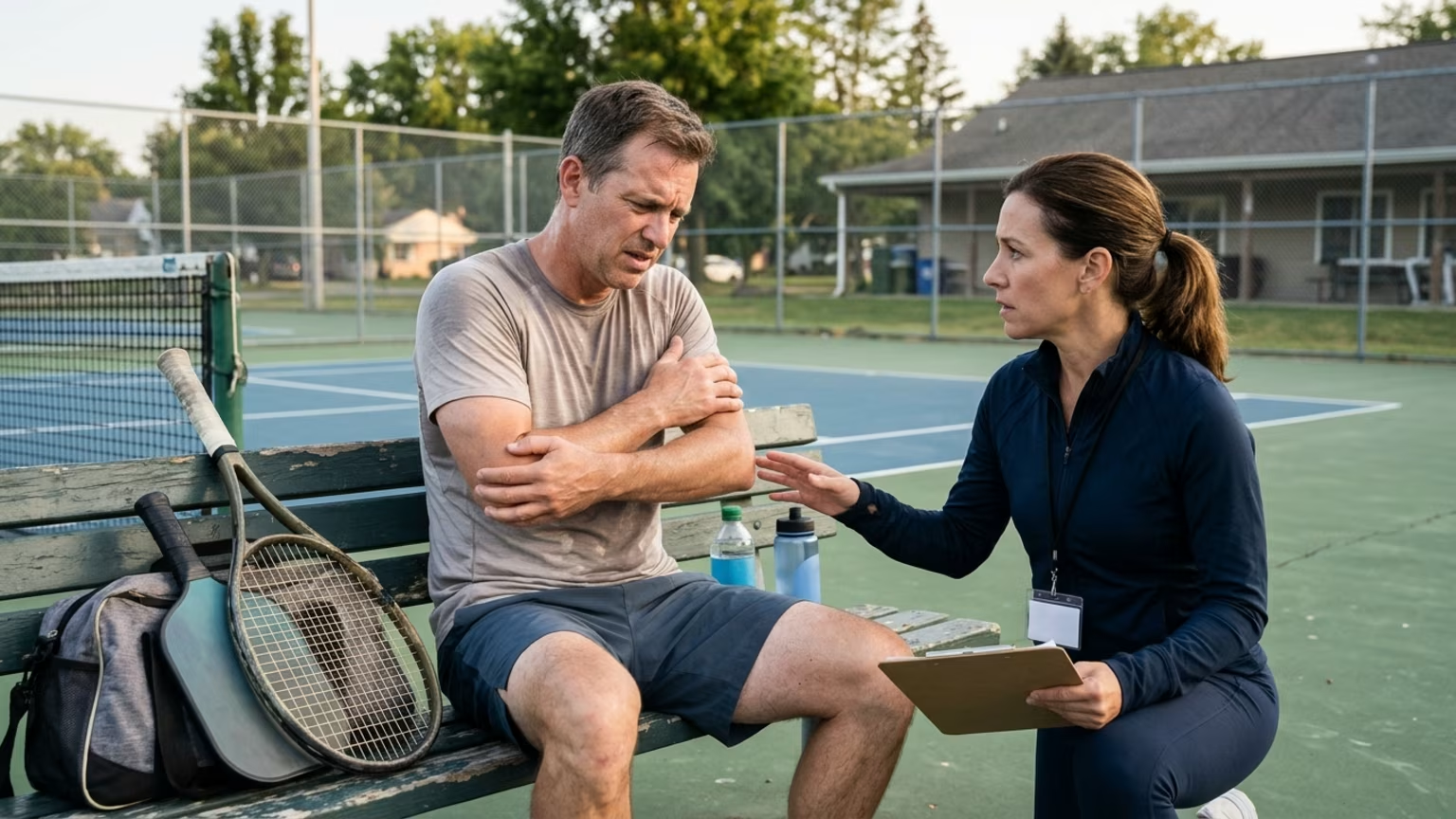
Why a specialist urges assessment for persistent pain, and how guided tendon rehabilitation differs from resting or playing through symptoms.

Compare scheduled leagues with flexible club play, using tennis, pickleball and padel examples to judge commitments, partner arrangements and fit.

ACSM highlighted an active-aging coordination model. Here is what it means for recreational racquet-sport players and what the evidence supports.
Read practical guidance for better movement, smarter preparation and a game that keeps working for you.
explore the Blog
