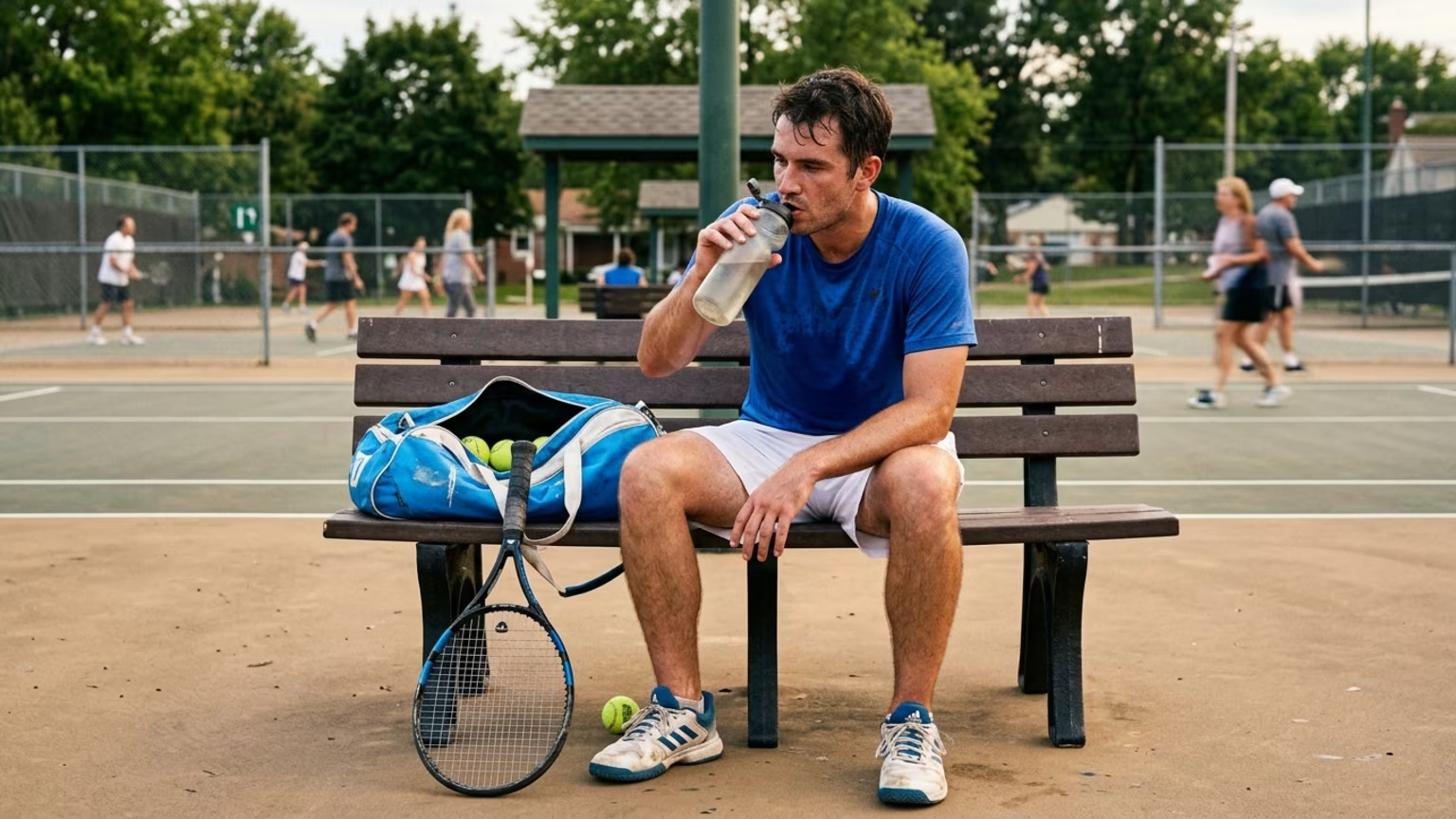

Discover how extreme US Open schedules highlight the critical need for strict sleep, nutrition, and recovery protocols for tournament racquet sports players.




At the 2026 US Open this week, top seed Alexander Zverev defeated Quentin Halys in a match lasting 4 hours and 33 minutes. The contest finished at approximately 2:15 a.m. local time on Friday morning. Coco Gauff also defeated Paula Badosa in a physically demanding two-set match under the lights at Arthur Ashe Stadium. These contrasting schedules immediately highlight the immense physical demands placed on competitive athletes.
Zverev's late-night marathon victory followed another incredibly demanding appearance on the court. He had already needed five sets to defeat Lorenzo Sonego in his opening-round match. Sky Sports reported that Zverev became the first top-seeded man in the Open Era to start a major with back-to-back five-set matches. The ATP reported that Zverev spent 9 hours and 26 minutes on court across his first two matches, marking the longest opening-round workload for a top seed at a major since 1999.
Badosa faced a different structural challenge leading up to her match with Gauff. She had been playing for a third consecutive day. Rain interruptions had previously forced her to complete her first-round match on Wednesday. These two examples illustrate how both unusually long matches and compressed schedules create significant physical stress.
Professional players have massive support systems to manage these extreme workloads. They rely on dedicated medical staffs, physiotherapists, and highly individualized nutrition plans. Zverev said after his second five-set victory that he felt physically well. However, his comment should not be treated as proof that consecutive five-set matches carry no recovery cost.
Adult recreational players face very different logistical realities. Club players managing a weekend tournament do not have private medical teams waiting at 2:00 a.m. When rain compresses a local draw, recreational players must rely on conservative self-monitoring. Adult players who try to copy this professional resilience often accumulate dangerous levels of fatigue.
"I used to think a tough conditioning block was the only way to improve my court endurance. Then I started tracking my sleep. I noticed that on days I slept less than six hours, my reaction time at the net was noticeably sluggish, and I felt gassed by the second set."
"Prioritizing consistent rest did more for my late match stamina than any extra sprints ever did. Recovery is the true foundation of performance."
Adult players can draw several practical lessons from these professional scheduling extremes. You must plan for the whole tournament weekend, rather than focusing only on the next match. You should consider the next day's schedule when deciding whether to accept an additional match. Players who want to maintain a sustainable tournament calendar must respect their personal physical limits.
Protecting your first available sleep window is absolutely critical after a late finish. Keep your post-match routine short and strictly familiar. Rehydrate quickly, eat a tolerable snack, and reduce unnecessary screen time. You can read our complete sleep and recovery guide to optimize your nighttime routines.
You should also schedule a light recovery day following any extreme match. A report on McGill research found that brief exercise and a 90-minute nap were each associated with better memory-test performance after severe sleep deprivation. While the study did not test tennis players, it supports a cautious discussion of light movement and planned naps. It does not establish that a short workout can completely restore tennis performance.
Sleep deprivation affects cognitive performance and physical coordination on the court. When players lack sleep, their reaction times drop and their decision making suffers. The McGill study noted that the exercise intervention did not replace the need for actual sleep. Competitive players must prioritize total sleep hours over early morning training sessions if they finish playing late at night.
Mental fatigue is a direct result of these disrupted schedules. When a match finishes past two in the morning, the brain struggles to process routine tactical decisions the following day. Recreational players often attribute missed shots to bad technique when the true culprit is central nervous system fatigue. Prioritizing rest is the only reliable way to maintain your shot selection deep into a tournament.
Nutrition plays a major role in surviving long matches. Players should arrive with fluids and familiar carbohydrate-containing foods. Replace what you can tolerate after play, and avoid introducing unfamiliar supplements late at night. Reviewing basic carbohydrate recovery protocols will help you prepare your tournament bags effectively.
Players must also treat heat and humidity as massive workload multipliers. On hot tournament days, shorten your warm-ups where appropriate, and seek shade during permitted breaks. Be willing to stop if symptoms such as dizziness, confusion, or unusual weakness appear. A secondary report cited an analysis of 360 Australian Open matches that associated higher environmental heat with more medical calls.
The risk of heat-related events rises significantly when schedules are compressed. Adult players often underestimate how much hydration they lose during back-to-back matches in direct sunlight. The cited Australian Open analysis clearly linked rising wet-bulb globe temperatures to increased requests for cooling devices. Managing these environmental stressors is just as important as monitoring your total court time.
Adult players should always use next-morning readiness checks before playing again. Assess your overall sleep duration, resting fatigue, muscle soreness, and physical coordination. Ask yourself whether normal warm-up movement feels comfortable on the court. If your movement quality is poor, reducing intensity or withdrawing is much safer than continuing.
A simple morning warm-up serves as a highly effective diagnostic tool. If basic lunges or lateral shuffles cause sharp pain, your body needs more rest. Players with persistent dizziness, altered gait, or unusual swelling should immediately seek proper medical evaluation. Attempting to solve genuine medical problems with nutrition or basic recovery exercises is a dangerous mistake.
You must build realistic recovery windows into your tournament entries. Avoid stacking multiple high-intensity matches without a solid meal, hydration, and sleep plan. The US Open examples are clear reminders that straight sets do not always mean an easy physical outing. Do not use professional resilience as an excuse to ignore your own bodily warning signs.
The reported statistics from New York provide a clear look at cumulative court time. Zverev spent an astonishing 9 hours and 26 minutes on court across just two matches. The 4 hours and 33 minutes required to beat Halys represents an extreme physical burden. These durations highlight the sheer volume of stress placed on the body during competition.
Badosa's schedule provides another critical data point regarding continuous physical load. Playing on three consecutive days creates an entirely different type of fatigue profile. Interrupted schedules drastically reduce the time available for critical sleep and nutrition between appearances. Fatigue accumulates rapidly when players lose their standard rest periods.
These examples reinforce that total match time is only one piece of the puzzle. A compressed schedule can turn an otherwise standard tournament into an extreme physical test. Even a straight-sets victory exacts a heavy toll when your body lacks adequate recovery windows. Monitoring your complete schedule provides the clearest picture of your true injury risk.
As the professional season continues, extreme match lengths and late finishes will remain critical topics. We expect scheduling debates to intensify whenever weather disruptions compress tournament draws. Medical teams will likely place even greater emphasis on strict sleep protection following late-night sessions. Adult players should observe these trends and consistently apply conservative load management to their own local events.
Follow Evercourts for practical insights on tennis, pickleball and padel performance, movement, recovery and healthy ageing. Stay connected for new articles, research-led guidance and ideas to help you play well and keep playing for years.


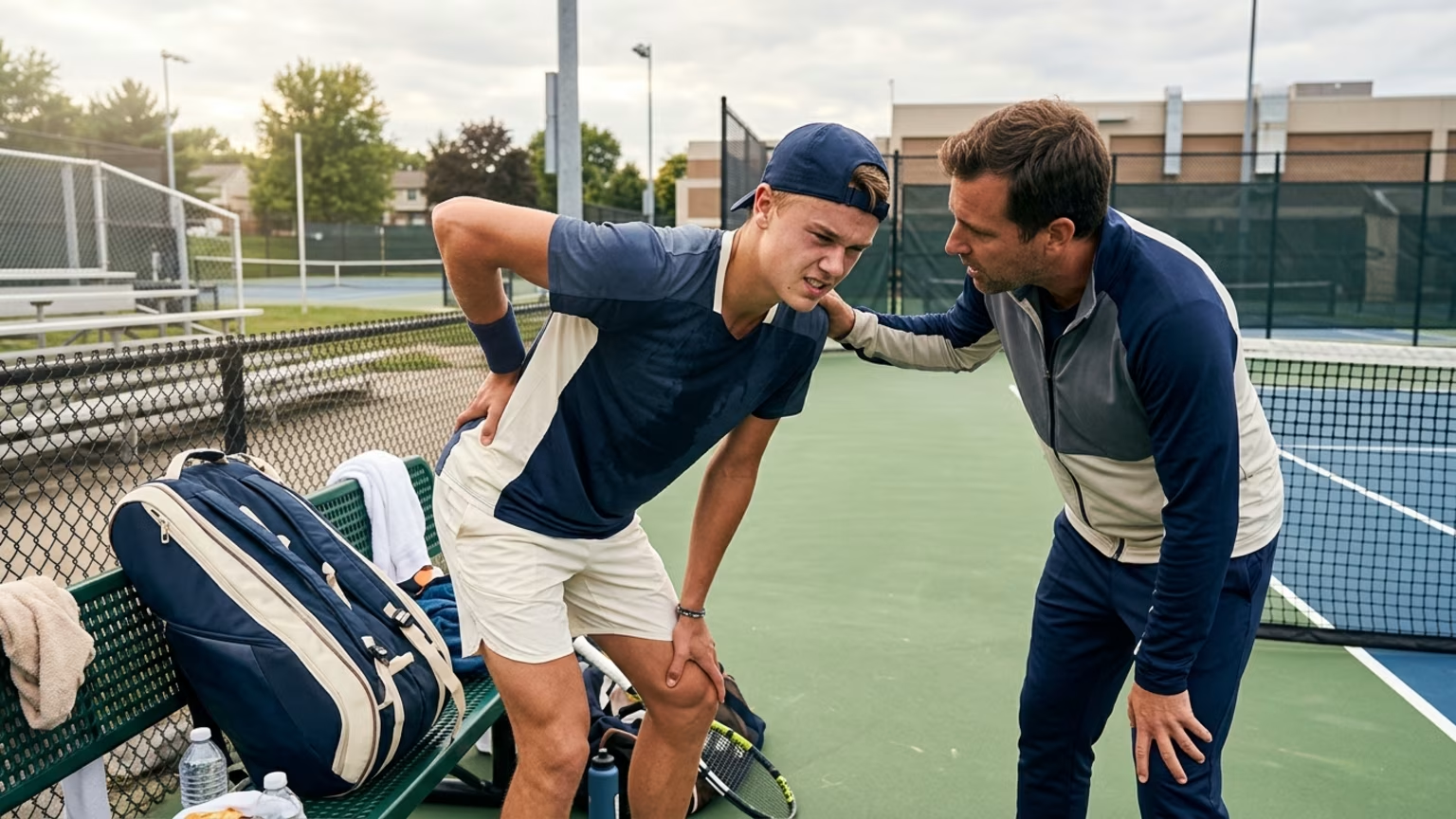
Holger Rune withdrew from the European Open with a back problem. The facts behind his decision and a grounded perspective for recreational players.

The Dink’s October 17 guide emphasizes deep returns, ball-height decisions and positioning against faster pickleball opponents.

A new report outlines padel and tennis gear trends. Learn how to assess adjustable rackets, sensor feedback and smart-court claims.
Read practical guidance for better movement, smarter preparation and a game that keeps working for you.
explore the Blog
