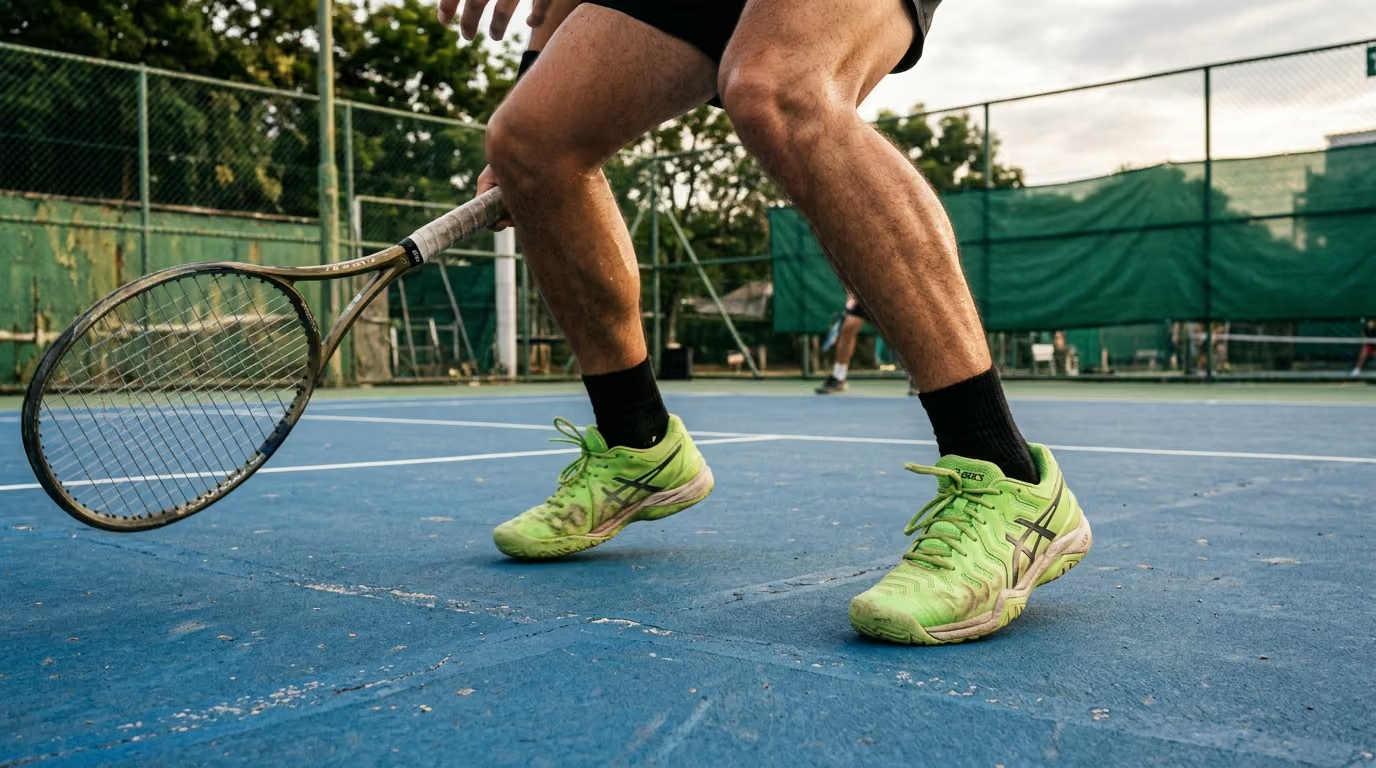
Parasympathetic downshifting helps athletes transition from high-alert competitive states to quiet recovery through targeted breathing and progressive muscle relaxation.




Why do you feel completely wired and unable to sleep for hours after a late-evening match? If you have ever stared at the bedroom ceiling at midnight after a grueling three-setter, you have experienced the post-match sympathetic buzz.
Parasympathetic downshifting is a structured process that transitions your nervous system from a high-alert competitive state to a quiet recovery state. By using targeted breathing exercises and progressive muscle relaxation, court athletes can safely lower their heart rate, reduce residual muscle bracing, and clear mental arousal. This physiological shift prepares your body for deep sleep and initiates the long-term recovery process.
To recover effectively after intense court play, your body must shift its internal balance. During a match, your sympathetic nervous system dominates. This branch of your nervous system increases your heart rate, dilates your airways, and directs blood flow away from digestion and toward your active muscles. It prepares you to sprint, slide, and react to fast incoming balls.
After the final point is played, recovery requires the reactivation of the parasympathetic nervous system. This branch is often referred to as the rest-and-digest system. It helps calm your cardiovascular system, restore normal digestive function, and allow your muscles to relax.
However, these systems do not operate like a simple on-and-off light switch. Both branches of your nervous system can remain active at the same time. This means that recovery is a gradual, time-dependent transition rather than an instantaneous event.
Research shows that high physical fatigue can delay this transition, keeping you in an elevated state of alertness. For more details on managing the physical demands of play, check out our comprehensive recovery science resources.
Heart rate recovery is a practical marker of this autonomic transition. It measures how quickly your heart rate drops after you stop exercising. The standard formula for one-minute heart rate recovery is simple. You subtract your heart rate at one minute after exercise from your peak heart rate during exercise.
A rapid drop in heart rate generally indicates a highly responsive parasympathetic system. For example, a study of boys and adult men after maximal exercise showed that younger participants had a greater one-minute recovery. The boys had a recovery of 58 beats per minute, while the adult men averaged 47 beats per minute. This difference shows that age, fitness level, and training status all influence how quickly your body naturally settles.
Well-trained endurance athletes and young children show faster heart rate recovery than untrained adults. Their metrics during the 60 to 150-second post-exercise interval show greater parasympathetic activity.
These findings mean that a slow post-match heart-rate decline may reflect more than poor relaxation. It can also be influenced by your current fitness, hydration levels, local heat, posture, and even minor illnesses.
Heart rate variability is the variation in time between consecutive heartbeats, measured in milliseconds. This variability reflects the continuous interaction between your respiration, blood pressure, and autonomic nervous system.
Common research metrics include RMSSD, which stands for the root mean square of successive differences between normal heartbeats. Another common metric is high-frequency heart rate variability, which is strongly influenced by your breathing patterns.
Athletes often assume that a low variability score means they are overtrained or physically run down. However, this metric is highly context-sensitive. Your immediate post-exercise readings are incredibly unstable due to body temperature, hydration status, and residual emotional stress.
Therefore, you should never use a single post-match score to judge your entire physical condition. Focus on your long-term baseline trends rather than immediate numbers.
Breathing directly alters your heart rate through a mechanism called respiratory sinus arrhythmia. When you inhale, your heart rate increases slightly to help distribute oxygenated blood. When you exhale, your heart rate slows down as the vagus nerve exerts a calming influence on your heart.
Slowing down your breathing rate exaggerates this natural fluctuation. While this change temporarily boosts certain metrics of heart rate variability, it does not mean your tissues are instantly repaired. Instead, think of slow breathing as a sensory anchor. It helps signal safety to the brain, which then allows the physical muscles to stop guarding.
Psychological detachment means mentally disengaging from the competition once it ends. It is not about suppressing your emotions or pretending you do not care about the score. It is about deliberately shifting your attention away from tactical analysis and performance judgment.
When physical fatigue is exceptionally high, cognitive detachment becomes much harder. This state is known in sports science as the underrecovery trap. High physical fatigue makes you more likely to replay mistakes, which maintains a state of mental threat.
This mental threat keeps your sympathetic nervous system active, which then disrupts your sleep. Breaking this loop requires a deliberate physical intervention to settle your nervous system before you try to process your performance.
Using structured relaxation routines helps create a physical buffer zone. It allows your body to settle before your mind tries to analyze the match. This sequence is vital for long-term health and athletic longevity. If you want to explore more ways to maintain your body over time, visit our collection on healthy aging and athletic longevity resources.
Structured relaxation routines may not have unique physiological magic, but they provide a highly valuable benefit. A study of college athletes compared a twenty-minute progressive muscle relaxation session with twenty minutes of simple quiet time.
Both groups showed significant reductions in stress and fatigue. The progressive muscle relaxation group was not vastly superior to the quiet time group for most emotional outcomes.
This suggests that a major portion of the benefit comes from protected quiet time. Reducing stimulation, stepping away from social media, and shutting out the noise of the court are powerful recovery tools. Whether you use a formal breathing method or simply sit quietly, the removal of stimulation is what initiates the recovery process.
To transition smoothly from competition to rest, we recommend a systematic five-stage downshift model. This model helps you move gradually from peak physical output to a state of sleep readiness.
The first stage begins the moment your match ends. Instead of immediately collapsing onto a bench or sitting in your car, keep moving at a very slow pace. Walk around the court, shake out your arms, and allow your respiration to settle naturally.
This gentle movement keeps your blood circulating, which prevents blood pooling in your lower limbs. This stage is about physical safety and transition. Let your body register that the intense physical exertion has concluded before you start any formal relaxation.
Once your initial panting subsides, transition to quiet nasal breathing. The key is to prolong your exhalation without forcing it. According to breathing-retraining guidelines from the American Psychological Association, you should focus on a gentle inhalation followed by a slow, relaxed exhalation.
Try inhaling for three to four seconds, then exhaling comfortably for four to six seconds. Avoid holding your breath or trying to fill your lungs to their absolute maximum capacity. This soft, prolonged exhale acts as a physical brake system for your heart rate.
After heavy physical play, your muscles often maintain a state of low-grade contraction, or muscle bracing. Progressive muscle relaxation is an excellent tool to release this residual tension.
By tensing a muscle group for a few seconds and then completely releasing it, you train your brain to recognize the sensation of true relaxation. This step is particularly helpful for restoring comfortable movement patterns and reducing next-day stiffness. We will cover the specific muscular sequence in detail later in this guide.
Do not allow your mind to replay the match indefinitely on your drive home. Create a structured mental container for your performance. Ask yourself four simple questions: What are the facts of what happened? What am I currently telling myself this means? Is there one actionable lesson I can take away? What details can wait until my next scheduled practice?
Once you answer these questions, write down your thoughts or say them aloud. Then, declare the review closed for the evening.
The final stage is about environmental control. As you prepare for bed, dim your household lights and limit exposure to high-stimulation screens. Repeat a brief round of your favorite slow breathing exercise to signal that it is safe to sleep.
Remember that breathing exercises do not guarantee instant sleep, but they do create the physical conditions that make sleep possible. For more insights on maintaining your body over time, visit our collection on mobility and movement resources.
Structured breathwork is a highly accessible tool for court athletes. It requires no special equipment and can be performed anywhere. Here are four validated protocols you can use after your next match.
This protocol is ideal for the locker room or the ride home because it requires very little mental effort. It is especially useful when you are physically exhausted and do not want to count complicated ratios.
Resonance-frequency breathing involves finding the specific pace, usually around six breaths per minute, that maximizes your autonomic balance. This slow, rhythmic pace helps optimize your blood pressure regulation through the baroreflex system.
To practice this, use a steady count of five seconds for the inhalation and five seconds for the exhalation. Keep your breaths quiet, smooth, and continuous, avoiding any sudden pauses.
Keep in mind that the exact optimal pace varies between individuals, so adjust the count slightly to find what feels most comfortable for you. Focus on the sensation of air moving gently through your throat and nose.
Box breathing uses four equal parts to help center your attention when your mind is racing. It provides a clear counting structure that gives your brain a specific task, helping to interrupt intrusive thoughts about the match.
If you are highly fatigued or short of breath, holding your breath can feel uncomfortable. In those cases, simply shorten the pauses to two seconds, or eliminate them entirely to focus on a continuous cycle.
Diaphragmatic breathing emphasizes the movement of your abdomen rather than your upper chest. Place one hand on your chest and the other hand just below your rib cage to feel the movement.
As you inhale slowly, focus on expanding your abdomen outward while keeping your upper chest relatively still. This technique reduces the work of your secondary respiratory muscles, such as your neck and shoulders, which are often tight after a match.
A study on women with systemic disease found that twelve weeks of diaphragmatic breathing reduced stress hormones and lowered blood pressure, highlighting its role in system regulation. While a single session will not produce long-term clinical changes, it is an excellent way to initiate immediate relaxation.
Progressive muscle relaxation works as a sensory training exercise. Many players walk off the court with clenched jaws, raised shoulders, and tight hips without even realizing it. This physical bracing can persist for hours, contributing to next-day soreness and joint stiffness.
By deliberately contracting a muscle group, holding it for five seconds, and then releasing it, you highlight the contrast between tension and release. This practice helps lower overall muscle guarding, which can otherwise contribute to next-day soreness and joint stiffness.
To learn more about keeping your body supple and preventing injury, check out our mobility and movement resources.
You do not need an hour to perform this exercise. A simple six-region sequence can be completed in less than ten minutes in the locker room or at home.
In our experience, we remember finishing a tough two hour padel match on a cold Tuesday night and waking up the next morning feeling like our lower back was locked in concrete. For a long time, we just accepted this as the price of playing hard in our forties. But once we started spending just ten minutes on targeted hip mobility and breathing before heading to the club, the stiffness almost completely vanished.
It taught us that we do not have to accept pain as a default state of aging. Incorporating progressive muscle relaxation alongside mobility work can make a profound difference in how your tissues recover.
While progressive muscle relaxation is highly effective, it is not a magical cure. A study of college athletes found that a twenty-minute session of progressive muscle relaxation and twenty minutes of simple quiet time both reduced stress and fatigue.
The relaxation group did not show a massive advantage over the quiet time group for most emotional outcomes. This suggests that the primary benefit of these routines may simply come from protected quiet time, reduced stimulation, and a break from competition.
Therefore, if you dislike tensing your muscles, do not force yourself to do it. Simply lying quietly in a dark room or listening to calm music can provide a very similar restorative benefit.
The physical and mental demands of racquet sports vary significantly. Understanding these differences allows you to tailor your post-match downshift routine to your specific sport.
Tennis matches are often long and unpredictable, requiring prolonged cardiovascular endurance. The single-player nature of the sport also places a heavy psychological burden on the athlete. Because tennis players spend hours in isolation, the mental replay loop can be particularly intense.
Tennis players should prioritize closing the competition loop quickly to prevent mental fatigue from carrying over into the night. Physically, the service motion and groundstrokes create significant unilateral tension in the shoulder and upper back.
Focus extra attention on releasing the dominant shoulder and chest during your post-match relaxation routine. For more tips on managing court demands, explore our tennis articles.
Pickleball is characterized by rapid-fire rallies, quick reaction times, and constant lateral movement. The paddle hand and wrist often remain tightly clamped for long periods, leading to forearm fatigue. Pickleball players should focus on hand, wrist, and forearm release during their muscle relaxation routine.
Additionally, the bent-over posture required in the kitchen section of the court can place high strain on the lower back. Spend extra time using diaphragmatic breathing to soften the abdominal wall and ease lower back tension. Discover more strategy and wellness tips in our collection of pickleball articles.
Padel is a fast, highly physical game played on synthetic turf enclosed by glass walls. The frequent overheads, low bounces off the glass, and quick turning motions place unique physical demands on the core, glutes, and lower back. Because padel points are often long and played in enclosed spaces, the mental stimulation can remain incredibly high.
Padel players can benefit from a brief period of quiet walking immediately after a match to transition safely. Focus on releasing the glutes, hips, and lower back muscles during your downshift routine. If you want to read more about specific strategies for this sport, browse our padel articles.
Even well-intentioned athletes make mistakes when trying to wind down after a match. Recognizing these common pitfalls can help you avoid unnecessary stress.
The rise of wearable fitness trackers has led many athletes to obsess over their heart rate variability scores. This obsession can actually create more stress, defeating the entire purpose of recovery.
Remember that heart rate variability is highly sensitive to simple factors like hydration, digestion, and room temperature. Do not let an arbitrary score on your watch dictate how you feel. Trust your subjective feelings of restfulness and physical ease over a digital metric.
Many players believe that taking massive, deep breaths is the best way to calm down. However, taking deep breaths too quickly can lead to hyperventilation, which reduces carbon dioxide levels in your blood.
This drop in carbon dioxide can cause lightheadedness, tingling in your fingers, and a racing heart, which your brain may mistake for panic. Keep your breathing slow, quiet, and comfortable. The goal is to reduce your respiratory effort, not to maximize the volume of air in your lungs.
Collapsing directly onto a bench immediately after a grueling match is a common mistake. This sudden stop can cause blood to pool in your lower extremities, leading to dizziness or nausea.
Instead, spend at least three to five minutes walking slowly around the court or the facility. This gentle transition allows your heart rate to decline safely and helps your body clear metabolic waste products.
Trying to force yourself to feel calm when you are angry about a loss or excited about a win is often counterproductive. Emotional suppression is a form of stress that can keep your nervous system in a high-alert state.
Instead of trying to banish these thoughts, acknowledge them. Say to yourself, "I am disappointed about the loss, but I can process it tomorrow." This simple step allows you to release the immediate emotional charge and begin your physical downshift.
You do not need a highly complex, hour-long routine to recover effectively. In fact, trying to follow a rigid, complicated routine can create more stress.
The best routine is the one you can perform consistently, comfortably, and safely. Keep it simple, focus on the basics of breathing and movement, and adjust the routine to fit your schedule.
Breathing and muscle relaxation are designed to help you transition into a restful state, but they are not medical treatments. It is vital to recognize when your physical symptoms require professional evaluation rather than a relaxation routine.
If you experience chest tightness, persistent shortness of breath, or dizziness that does not improve with rest, you should seek immediate medical attention. These symptoms can indicate underlying cardiovascular issues or severe heat illness that require professional evaluation.
Similarly, if you experience sudden, severe joint pain or muscle weakness, stop your downshift routine and consult a healthcare provider. Do not try to breathe through a potentially serious injury.
Persistent insomnia, chronic fatigue, and an inability to hit your normal heart rate zones during matches are signs of potential overtraining. If your sleep quality remains poor for several weeks despite using structured relaxation routines, consult a qualified healthcare provider.
Similarly, if you suffer from loud snoring, daytime sleepiness, or witnessed breathing pauses during sleep, you should be evaluated by a sleep specialist. Always prioritize professional medical guidance over self-treatment.
For more information on when to seek professional care, visit the Evercourts Blog for research-led articles on player health.
To help you apply these principles this week, here is a simple next-steps checklist:
By integrating these simple steps into your routine, you can support your body's natural transition to rest, protect your physical health, and continue playing the sports you love for years to come.
Follow Evercourts for practical insights on tennis, pickleball and padel performance, movement, recovery and healthy ageing. Stay connected for new articles, research-led guidance and ideas to help you play well and keep playing for years.


Read practical guidance for better movement, smarter preparation and a game that keeps working for you.
explore the Blog