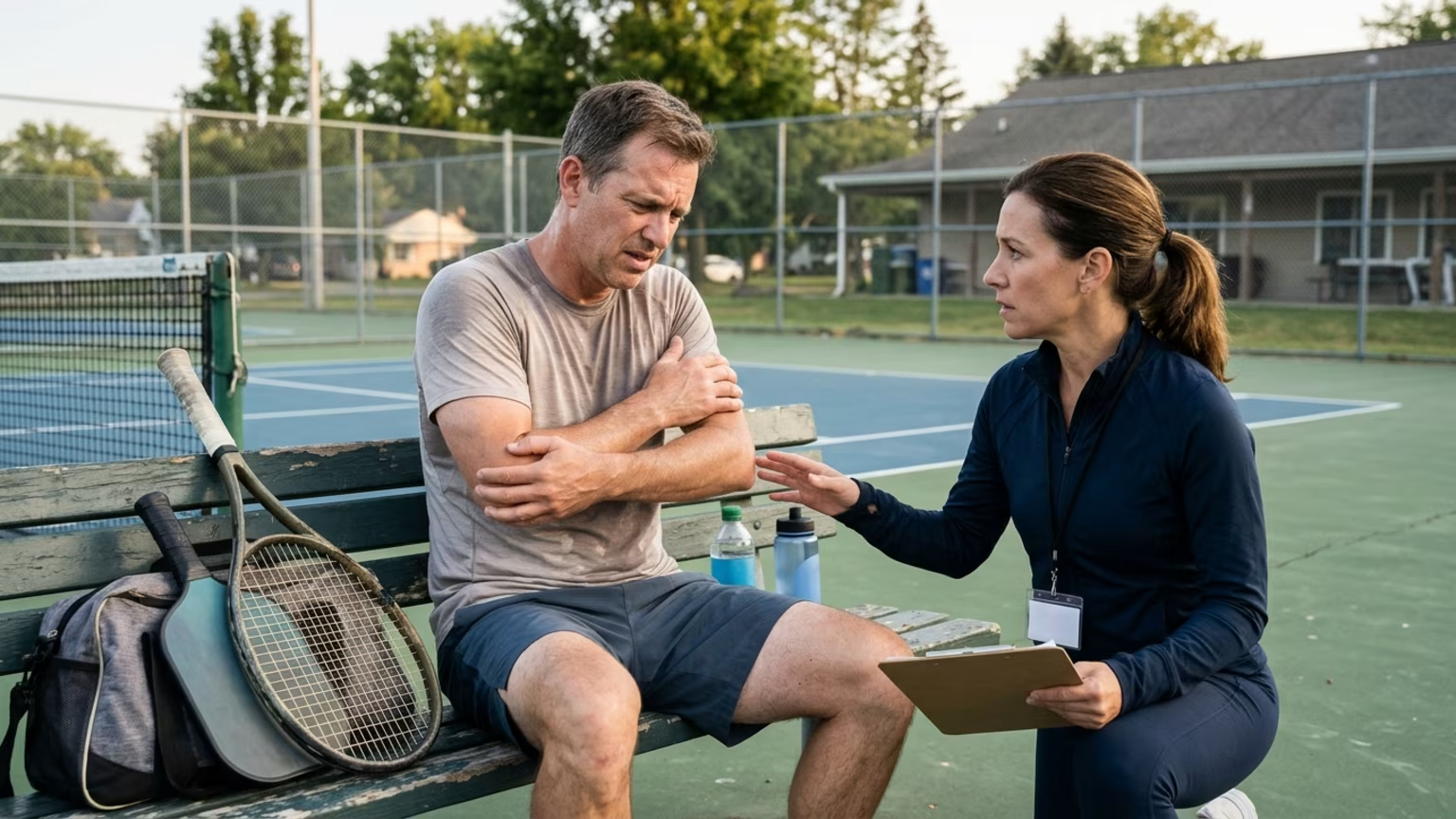

Why a specialist urges assessment for persistent pain, and how guided tendon rehabilitation differs from resting or playing through symptoms.




On October 21, 2026, La Vanguardia published an interview with traumatologist María Vitoria warning that tendinitis may require medical treatment rather than rest alone.
Vitoria's central point was not that rest has no value. She said rest is needed for recovery and tendon adaptation. Her warning was that tendinitis should not be expected to resolve through rest alone and may require treatment from a traumatologist or rehabilitation specialist.
The interview concerned exercise-related injuries and returning after inactivity. Vitoria cautioned against immediately resuming a previous training intensity without time to adapt. She linked that approach to overload, tears and pain, including tendinitis.
This was practitioner guidance in an interview, not a clinical trial or formal treatment guideline. It should inform the decision to seek assessment rather than serve as a diagnosis or a treatment plan.
For an elite player, the return-to-play question centres on readiness for competition. For a weekend league player, the more useful starting point is whether symptoms are affecting ordinary activity or normal movement. Neither a competition deadline nor the wish to keep a regular court booking should turn persistent pain into something to ignore.
The practical interpretation is not to copy a professional comeback. It is to separate the wish to play from the need to understand ongoing symptoms. Vitoria's warning signs give that conversation a clear starting point.
Vitoria highlighted the following reasons to seek professional assessment:
These signs are not proof of tendinitis or a tendon tear. They are reasons for an examination rather than a self-diagnosis.
Her advice was to adapt exercise when pain occurs and seek a traumatologist if it persists. For personal decisions about which activity to modify, qualified assessment matters more than a general article. Our guide to changes in court movement offers related reading without replacing that assessment.
Vitoria named calf tears, Achilles tears and Achilles tendinitis as possible padel injuries. Persistent symptoms around the calf or Achilles therefore belong in the assessment conversation rather than being dismissed as part of the sport.
The interview did not rank these injuries or measure their frequency. It also supplied no comparable tennis or pickleball data. Tennis and pickleball readers can take the warning-sign message seriously without assuming that padel examples establish their own sport's injury pattern.
Vitoria also cautioned that being pain-free does not by itself establish full recovery. She described gradual sports readaptation before a return to normal activity. The interview supplied no validated return-to-play test or universal timeline.
For recreational players, the useful distinction is between feeling better and being ready for normal playing demands. A return should be discussed as a progression rather than decided from a symptom-free moment alone. That is also the question behind deciding whether to play or adjust a court day.
Kent Community Health NHS Foundation Trust's tendon programme describes exercise and progressively increased strengthening as part of tendinopathy management. It says exercise can reduce pain and improve function across most types of tendinopathy. This supports a more active rehabilitation discussion than simply waiting for symptoms to disappear.
The leaflet describes six group sessions over 12 weeks for referred participants with leg tendinopathy after assessment. That is one local service format, not a recovery deadline for every player or a schedule to copy independently.
The programme also says moderate pain up to 4/10 may occur during its physiotherapist-guided exercises. Vitoria separately mentioned 4/10 as a commonly stated exercise threshold without providing supporting research. Neither statement gives players a universal pain limit for continuing a match.
A guided rehabilitation session and a competitive match are different contexts. The practical point is to avoid taking a programme-specific number out of the setting in which it was offered. Questions about an individual's exercise progression belong with the clinician overseeing their care.
Rest still has a place in this discussion. The distinction between taking time off and choosing active recovery is useful background, but it does not replace an assessment of persistent symptoms. The evidence here supports discussing recovery and rehabilitation together rather than treating them as rival options.
Over the next season, the useful development to watch is whether return-to-play advice becomes more specific about assessment and gradual progression. A widely repeated pain number matters less than clarity about who the advice applies to and how activity is being reintroduced.
For adult players, the standard should be sustainable participation rather than the earliest possible comeback. Vitoria's interview points toward that approach: take persistent symptoms seriously and make returning to normal play a considered process rather than a test of how much discomfort can be tolerated.
Follow Evercourts for practical insights on tennis, pickleball and padel performance, movement, recovery and healthy ageing. Stay connected for new articles, research-led guidance and ideas to help you play well and keep playing for years.


Compare scheduled leagues with flexible club play, using tennis, pickleball and padel examples to judge commitments, partner arrangements and fit.

ACSM highlighted an active-aging coordination model. Here is what it means for recreational racquet-sport players and what the evidence supports.

Understand padel fatigue and use research-led principles to balance matches, other training and recovery without a rigid weekly formula.
Read practical guidance for better movement, smarter preparation and a game that keeps working for you.
explore the Blog
