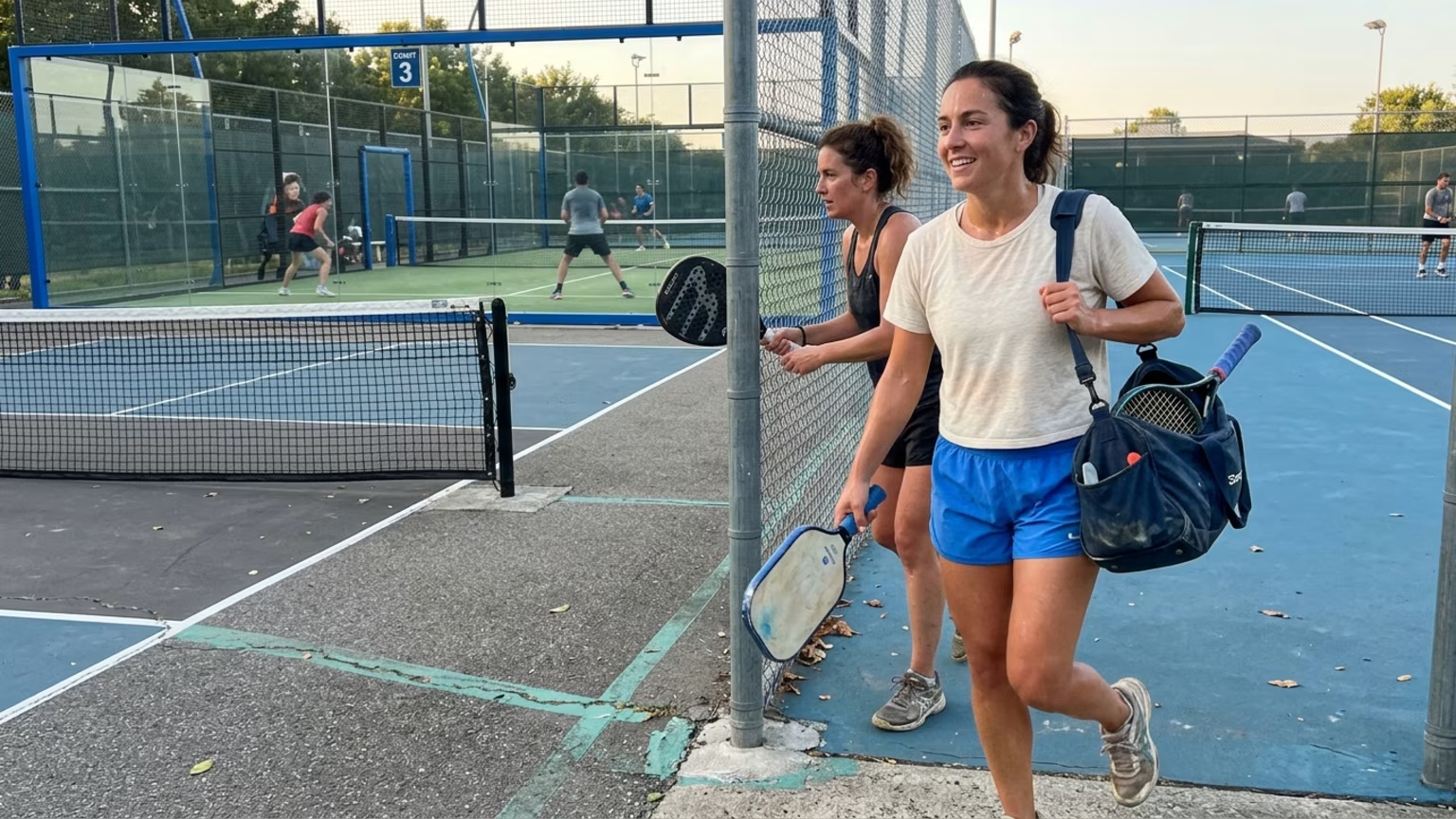

Learn how to adapt your body and movement patterns when switching between tennis, pickleball and padel to support healthy aging and athletic longevity.




A player finishes a two-hour tennis match on a Saturday morning. By Sunday afternoon, they are standing at a pickleball kitchen line. The court boundaries have shrunk, the equipment feels entirely different and the required footwork has changed overnight.
Cross-court switching is the ongoing process of adjusting physical movement and shot selection when moving between different racquet sports. It requires a player to map their existing athletic skills onto new court dimensions and entirely different rally patterns. Understanding these distinct environments allows players to transfer useful abilities without carrying over counterproductive mechanical habits. The primary challenge lies in the physical space and the specific equipment used for each game.
A standard tennis court measures 78 feet long and requires extensive open-court running. Tennis utilizes a strung racquet and a pressurized felt ball designed to generate pace and heavy spin. A regulation pickleball court compresses the action into a 20 by 44-foot space featuring a designated 7-foot non-volley zone. Standard padel is played on a 20-by-10-metre enclosed court with service lines 6.95 metres from the net.
Each sport loads the body in unique ways due to repeated explosive efforts, varied contact points and sudden changes of direction. Tennis demands long sprints, full-length swings and constant recovery over a large baseline area. This wide-open space places significant stress on the shoulders during overhead serving and taxes the hips during wide lateral lunges. The kinetic chain must generate massive force to move a heavy ball deep into the opposing court.
Pickleball reduces the total running distance but requires low defensive positions and constant short lateral movements. The compressed court demands rapid hand-speed exchanges that heavily load the calves and knees. When I first started playing pickleball, I noticed how many people skipped warming up entirely. They would jump straight out of their cars and right up to the kitchen line.
I tried doing that and immediately pulled a calf muscle. Pickleball requires just as much explosive lateral movement as tennis, just in a tighter space. Since then, I always spend five minutes doing dynamic lunges and ankle rolls. It changes everything about how confident I feel pushing off the baseline.
Padel introduces backward tracking, rapid rotations to read wall rebounds and awkward defensive contacts in constrained spaces. The wall system forces players to delay contact, requiring excellent core stability and controlled deceleration. A player who is highly comfortable sprinting in open tennis space may struggle with the specific preparation needed for glass rebounds. These shifting demands require intentional physical preparation to manage the different impact forces safely.
The rapid growth of these sports has prompted researchers and industry bodies to look closely at participation and physical outcomes. In 2025, the Sports and Fitness Industry Association reported that 24.3 million Americans played pickleball. That marked a massive retrospective increase from the 4.2 million players recorded in 2020. A 2026 industry report also describes pickleball as the fastest-growing sport in the United States for a fifth consecutive year.
Padel has seen similar international expansion in recent years. The FIP World Padel Report 2025, as cited by Premier Padel, listed more than 35 million amateur padel players worldwide. This global footprint included 77,300 courts and more than 24,600 clubs across 150 countries. As participation grows across these distinct disciplines, scientists are evaluating the health associations of these activities.
A 2025 systematic review identified 71 potentially relevant studies on padel, pickleball and wellbeing. The researchers ultimately included 14 studies involving 1,403 participants or observations. This review reported associations between pickleball participation and wellbeing. It also linked the sport to life satisfaction, happiness, lower depression indicators and social integration.
These positive associations were noted particularly among older adults. However, the existing literature is relatively small. These findings represent reported associations rather than guaranteed medical outcomes.
Understanding how to navigate these different court mechanics directly supports healthy aging. Players who respect the distinct physical demands of each sport can maintain their physical capabilities longer. Treating each sport as a unique training tool helps balance the load on your joints and soft tissues. Tennis provides excellent aerobic conditioning, full-length swing mobility and open-court movement practice.
Pickleball sharpens reaction speed, balance and compact preparation without the sheer mileage of a tennis match. Padel develops partner coordination, short-area agility and tactical patience during complex wall rebounds. If you want to keep playing for years, give your body a dedicated transition period when switching courts. Spend the first few sessions focusing on technical familiarization rather than intense, high-stakes competition.
A tennis player moving to pickleball should consciously shorten their backswing and expect the two-bounce phase before attacking the net. A consistent warm-up routine is essential to prepare your lower body for the specific lateral stops of the kitchen line. Someone transitioning from tennis to padel must learn to move with their partner rather than covering the court independently. You have to expect the ball to rebound from the walls, using the lob as a reset tool instead of rushing forward.
Adjusting your movement patterns prevents you from forcing a massive tennis swing into a confined space. Intentionally varying your court performance schedule allows different muscle groups to recover. This approach helps prevent overuse injuries over the long term.
Even with a smart approach to cross-training, the cumulative stress of multiple racquet sports can take a physical toll. You should consult a qualified physiotherapist if you experience sharp, localized pain during sudden changes of direction. Persistent stiffness in your knees, hips or shoulders that outlasts a normal recovery day is another clear warning sign. A healthcare provider can help you identify whether a specific movement habit is causing underlying structural strain.
Do not ignore lingering discomfort in your elbows or Achilles tendons after switching equipment or court surfaces. A professional can assess your joint mobility and prescribe targeted exercises to handle the specific loads of tennis, pickleball and padel. They can also provide a clear assessment of your biomechanics, ensuring you are distributing force efficiently across your kinetic chain. Addressing these minor aches early ensures you can keep enjoying racquet sports for years.
At evercourts, we believe a pragmatic transition strategy keeps you competitive, resilient and ready for your next match on any court.
Follow Evercourts for practical insights on tennis, pickleball and padel performance, movement, recovery and healthy ageing. Stay connected for new articles, research-led guidance and ideas to help you play well and keep playing for years.


An evidence check on sports supplements like tart cherry juice. Learn why racquet sports players should prioritize core nutrition over functional foods.
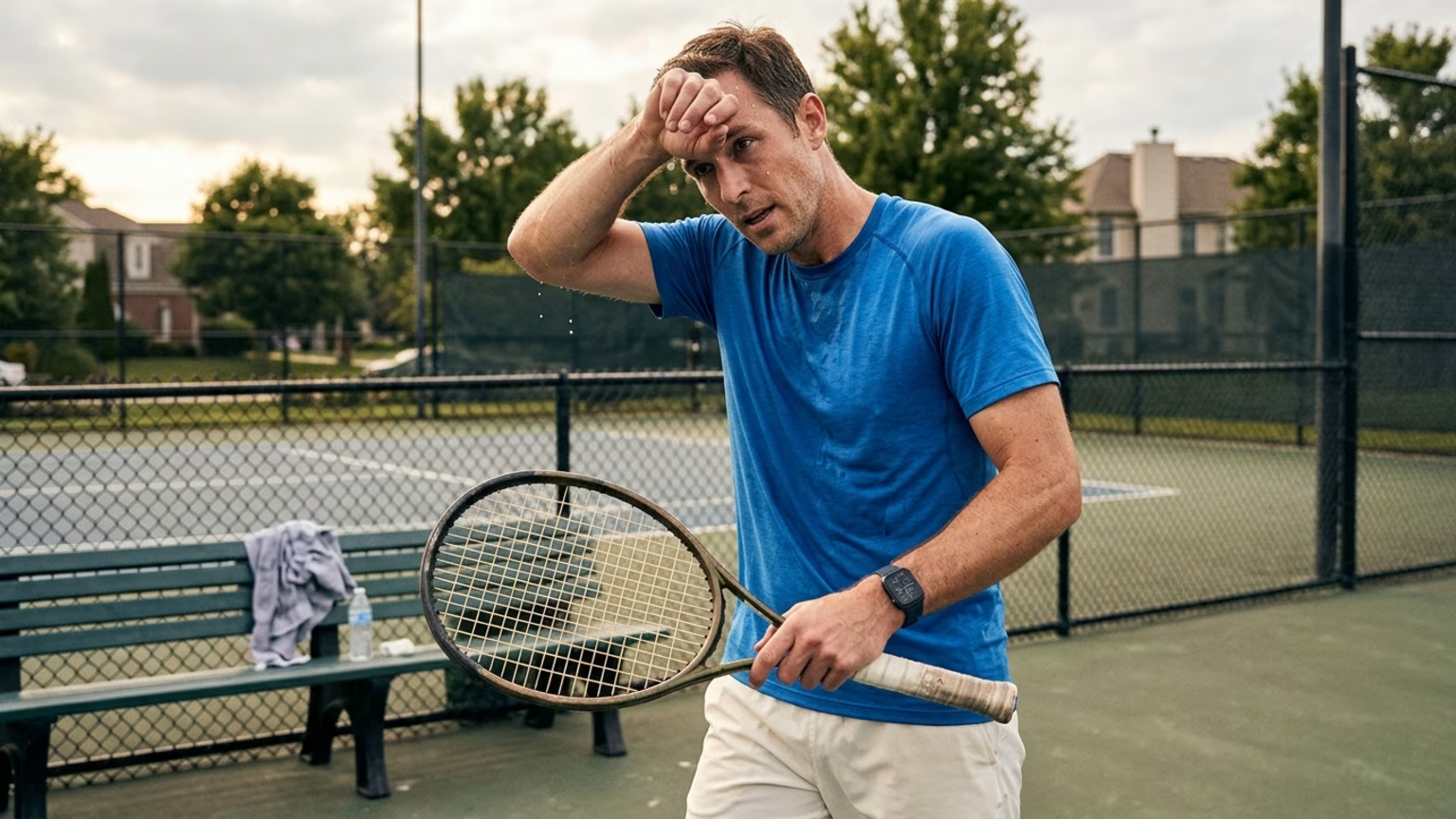
In late 2026, Oura analyzed wearable data to see how recreational tennis impacts heart health and recovery. Learn what this means for your athletic longevity.
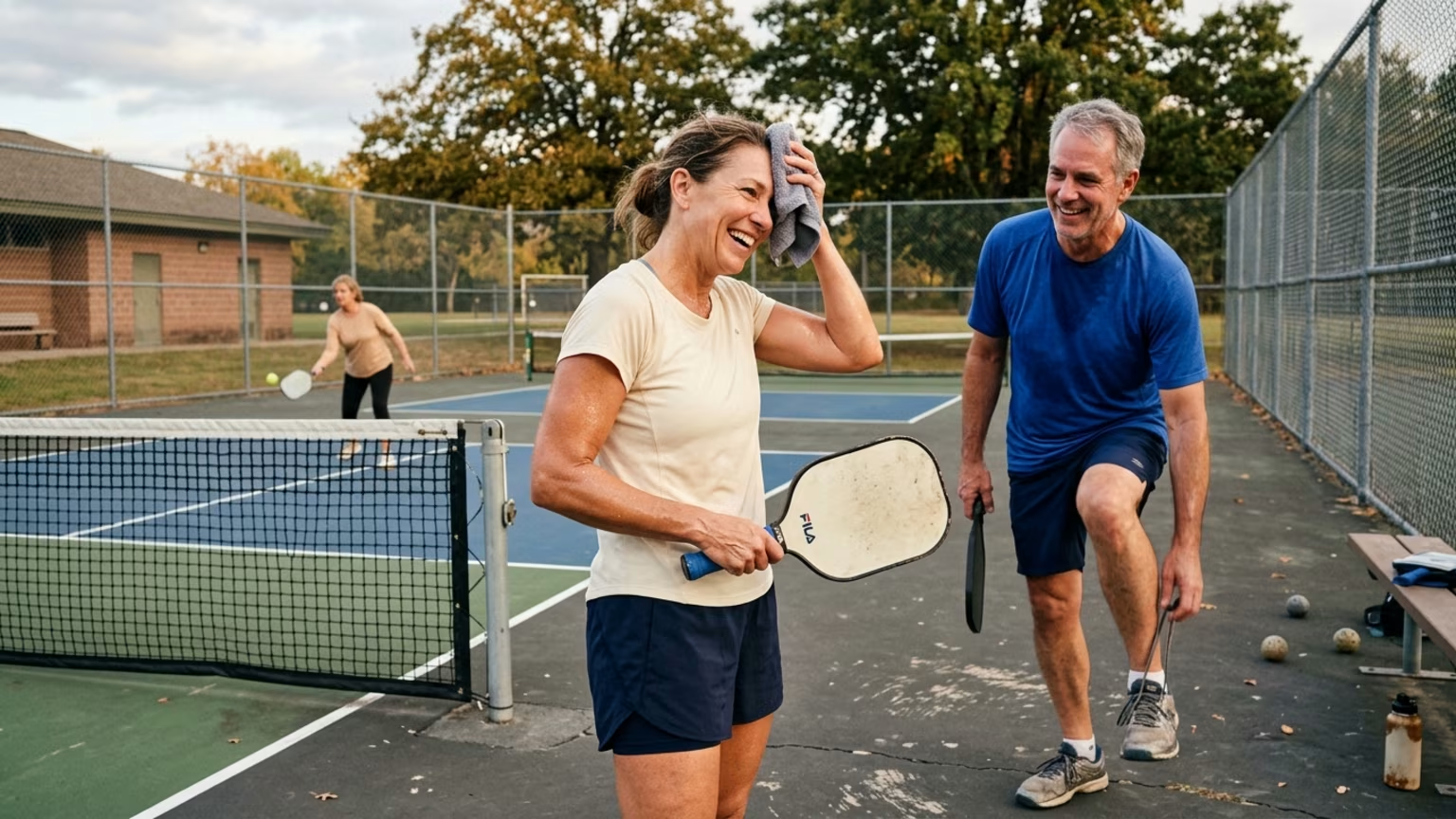
Recent guidelines emphasize gradual progression, dynamic warm-ups, and scheduled recovery to help adult racquet sports players maintain athletic longevity.
Read practical guidance for better movement, smarter preparation and a game that keeps working for you.
explore the Blog
