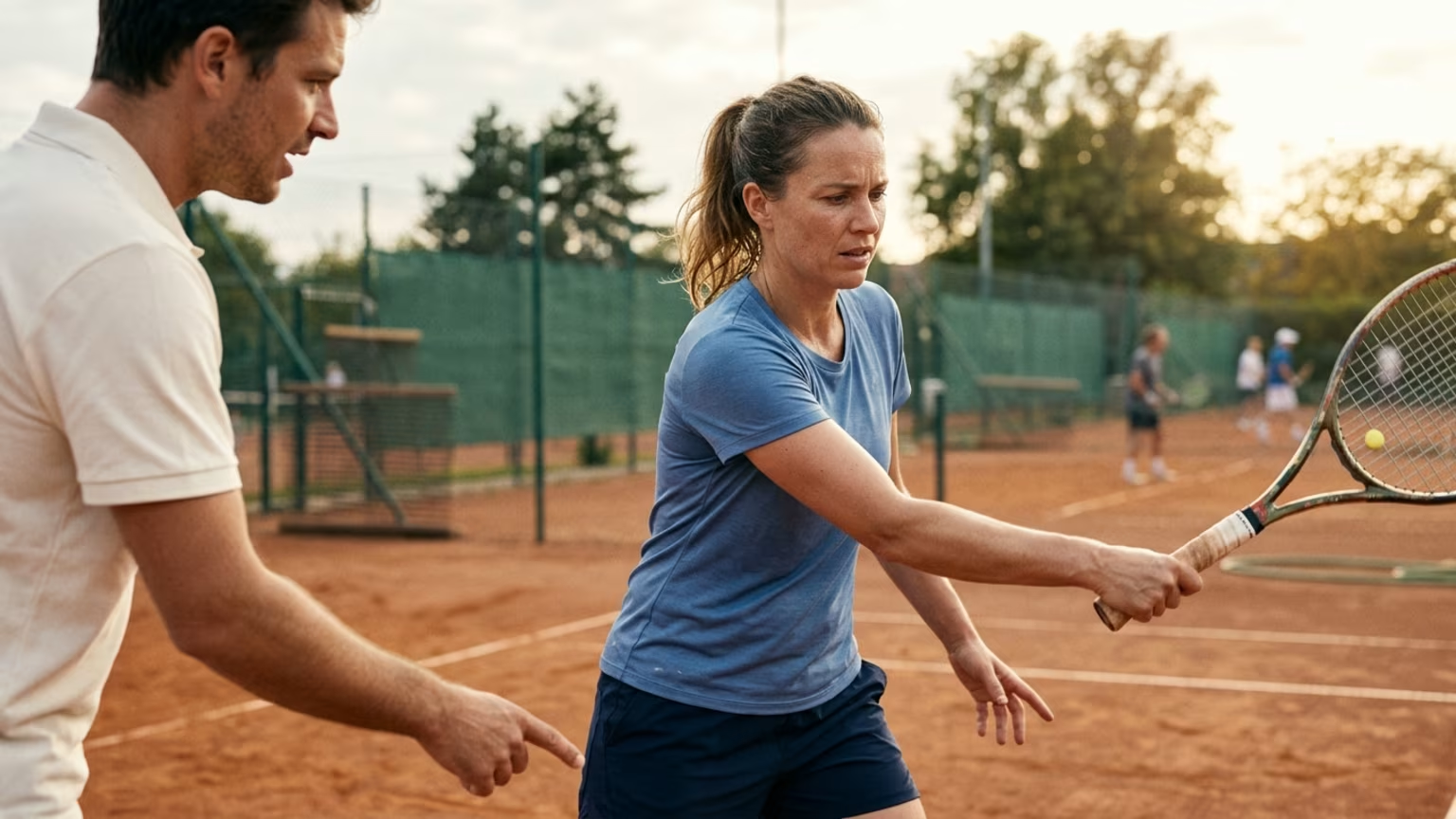

Diagnose late preparation, poor spacing, and movement mistakes causing your racquet sport misses. Learn to evaluate footwork for tennis, pickleball, and padel.




You have just framed another forehand directly into the bottom of the net, leaving you staring at your strings in frustration. Behind those everyday missed shots is a massive wave of adult court activity. A Statista summary reports approximately 23.84 million U.S. tennis participants in 2023, which is an increase of about 1% from the previous year. Recognizing that many errors actually begin with your feet is an important step for protecting your physical capabilities.
"When I first started playing pickleball, I noticed how many people skipped warming up entirely. They would jump straight out of their cars and right up to the kitchen line. I tried doing that and immediately pulled a calf muscle. Pickleball requires just as much explosive lateral movement as tennis, just in a tighter space."
"Since then, I always spend five minutes doing dynamic lunges and ankle rolls. It changes everything about how confident I feel pushing off the baseline." Movement preparation is a performance issue and a load management issue for adults. Understanding this relationship helps you avoid common pitfalls.
This diagnostic approach gives the active adult player a practical framework for identifying the root causes of court errors. The goal is to build a foundation of healthy aging and sustainable athletic longevity without relying on confusing technical advice. Instead of obsessing over wrist angles, you will learn to read your balance and court positioning. This creates a resilient foundation that supports your performance across any racquet sport you choose to play.
Our team at evercourts believes that resources for court athletes must focus on movement quality first. Coaching guidance suggests that many apparent swing problems should first be checked against spacing and preparation timing. The swing is simply the visible event, while your preparation determines whether you can execute that swing comfortably. After an error occurs, you should ask yourself a series of targeted questions before making any technical adjustments.
The following steps form a complete diagnostic sequence to evaluate your movement quality. You can use these checkpoints to identify late arrival, poor spacing, and unstable contact.
The split step is your first line of defense against a fast incoming ball. Coaching sources emphasize that a small preparatory movement must be timed perfectly to your opponent making contact. If you land too late, your reaction time disappears entirely. Practice taking a small split step just as the server strikes the ball.
Many players misjudge the distance of the ball and end up forced to reach awkwardly. Your final adjustment steps dictate whether you are too close or too far away from the contact point. Try introducing catch, set, and hit drills to expose poor spacing habits. These drills force you to rely on moving your feet instead of overextending your arm.
A late racquet is a common culprit in fast exchanges. You must evaluate whether your paddle or racquet was prepared before the ball entered your hitting zone. Taking a backswing that is too large for the available reaction time will consistently rush your contact point. Compact preparation is significantly more reliable for handling heavy pace.
Contact balance is your ability to strike the ball without falling or being jammed. Take note of whether your weight was moving in a useful direction during your swing. If you are regularly hitting while falling backward, your technique will inevitably break down. Hit and freeze drills can quickly reveal whether you actually finished your stroke in a stable position.
Tactical balance requires finishing one shot in a position that actively supports the next one. Many players hit a solid groundstroke but fail to recover their paddle or center their body. If you are still admiring your result when the next ball arrives, your sequence is incomplete. A balanced recovery step after contact prepares you for the upcoming reply.
The biomechanical demands of these sports differ significantly, requiring tailored adjustments to your diagnostic routine. Understanding these specific contexts helps players monitor their workload and adapt their injury prevention strategies effectively. The research shows varying challenges across different court surfaces.
The tennis return of serve requires handling high speeds from a significant distance. Return of serve coaching commonly emphasizes a compact preparation and a controlled return against pace. You should use a short block return rather than attempting a large attacking swing against a powerful first serve. Stand several feet behind the baseline, use a small shoulder turn, and keep your target simple.
Pickleball relies heavily on rapid kitchen line hand battles and quick transitions. Coaching sources recommend watching your opponent for visual cues and resetting your paddle after each fast exchange. This helps you avoid starting the next sequence from a low or wide posture. Reaction speed is partly perceptual, so players should practice random feeds rather than repeating predictable shots.
An Orthopaedic Carolina Research Institute summary of a 2018 through 2022 Achilles repair study provides important context here. It reports that more than eight in ten pickleball related ruptures occurred in patients over 50, with a median age of 60. The study summary describes a rise in pickleball related Achilles repairs that peaked in 2021. While this pattern does not prove pickleball caused the increase, it highlights why proper calf strengthening and gradual loading matter.
Padel places repeated demands on short sprints, directional changes, and frequent stroke preparation. A 2026 PLOS ONE protocol cites reported padel injury estimates of three injuries per 1,000 training hours and eight per 1,000 matches. It also notes an injury prevalence of 40% to 95% across player levels. The authors describe padel injury prevention evidence as limited and heterogeneous.
The protocol authors also note the absence of consensus federation led prevention protocols for the sport. However, the 2026 PLOS ONE protocol estimates more than 35 million amateur padel players in 2025. Furthermore, it reports that the professional circuit grew from six international tournaments in 2019 to 318 in 2025. Padel players should prioritize single leg balance exercises, controlled deceleration, and lateral movement drills.
Building physical capacity away from the court is just as important as your movement drills. The Achilles focused guidance additionally recommends calf strengthening, balance work, and lower body conditioning. A sensible adult player routine can therefore include single leg balance exercises and gradual calf loading. You should also incorporate trunk rotation and aerobic conditioning appropriate to your current fitness level.
In an American Medical Association interview, sports medicine physician Christopher Wu provided practical guidance for adult players. He said the pickleball injuries he commonly observed were strains or overuse problems. Acute injuries could occur during actions such as stepping incorrectly or lunging for a ball.
Medical guidance recommends building activity gradually and warming up dynamically before matches. You should maintain general conditioning, wear suitable court shoes with firm sides, and hydrate properly. Proper court footwear is essential because running shoes may not provide the necessary lateral support. Players must also stop playing when persistent pain or concerning symptoms appear to protect their court performance.
The next time you frame a forehand into the net, stop staring at your strings in frustration. Instead, look down at your feet and use this simple framework to diagnose the real issue. These checkpoints will help you stay active on the court for years to come.
Follow Evercourts for practical insights on tennis, pickleball and padel performance, movement, recovery and healthy ageing. Stay connected for new articles, research-led guidance and ideas to help you play well and keep playing for years.


A recent live-play test of a silent pickleball highlights its value for practice, but standard balls still perform better for match play and power control.

An evidence check on sports supplements like tart cherry juice. Learn why racquet sports players should prioritize core nutrition over functional foods.
In late 2026, Oura analyzed wearable data to see how recreational tennis impacts heart health and recovery. Learn what this means for your athletic longevity.
Read practical guidance for better movement, smarter preparation and a game that keeps working for you.
explore the Blog
