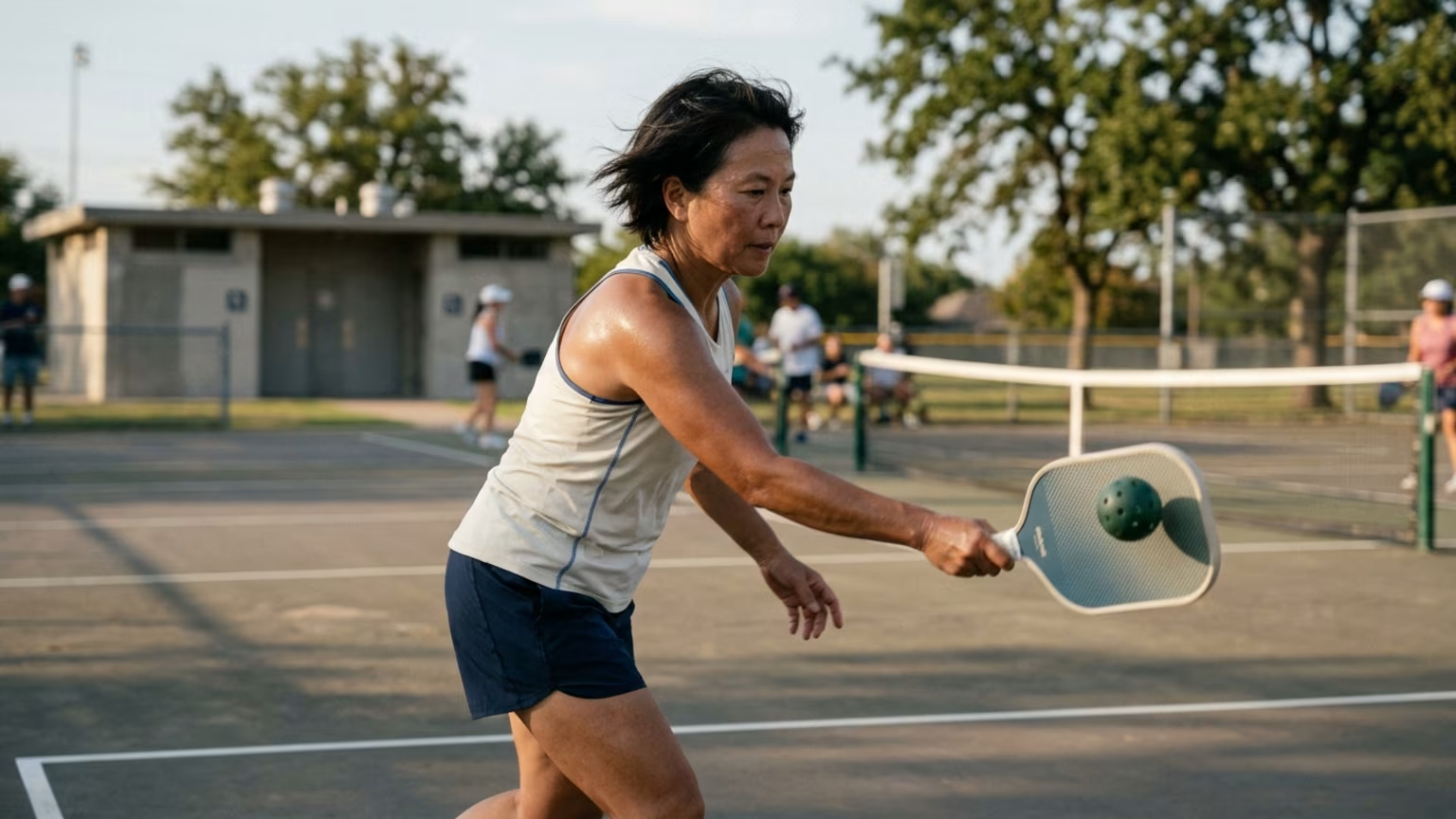

A recent live-play test of a silent pickleball highlights its value for practice, but standard balls still perform better for match play and power control.




On October 4, 2026, Pickleball Globe published a live-play comparison evaluating a silent pickleball against a standard ball. The test evaluated sound, control, power, feel, and live-point performance on the court. The publication attributed the accompanying video evaluation to Connor Garnett Pickleball. This practical report gives racquet sports players an honest look at how noise-reducing equipment handles actual play.
The Pickleball Globe report identified a distinct performance gap between the new noise-reducing product and traditional equipment. The reviewer confirmed that the new ball was noticeably quieter during live play. Despite this acoustic benefit, the standard ball performed better overall for power and control during live points. The term silent is not entirely literal, as the ball still produces an audible sound upon impact.
The article presented its conclusions as a practical equipment test rather than a clinical scientific study. Pickleball Globe did not report any sound-meter readings, ball-speed measurements, or a formalized testing protocol. The published findings represent the specific observations of the tester during standard point play. This hands-on evaluation helps players understand how the ball actually feels during movement.
This test provides valuable context for players navigating community courts with strict rules. The reviewer focused on the tactile feedback and playability of the ball in a real environment. By testing the equipment in live points, the reviewer captured the nuances that laboratory data might miss. This practical approach emphasizes functional performance over marketing claims.
Recreational players should view this quiet equipment as a specific training option rather than a complete replacement for their regular ball. The Pickleball Globe tester noted that soft shots and drops felt completely manageable with the quieter model. This characteristic makes it a reasonable choice for players working on specific touch elements. Using the ball for targeted reaction-time work and fast-hands practice drills is a highly practical application.
The limitations of the quiet ball become quite apparent during aggressive play or outdoor sessions. The tester reported that fuller swings, power shots, and serves were significantly harder to control. Outdoor shots also proved far less predictable than they are with a standard plastic ball. The quiet ball simply does not replicate the exact flight path or bounce of standard tournament equipment.
Competitors preparing for an upcoming match must practice with the ball they expect to use in competition. Evercourts advises players to build a repeatable match-day routine using their standard tournament gear. Drilling with a quiet ball can help develop fast hands in a heavily noise-restricted area. However, players must transition back to standard equipment to refine their timing, power, and rhythm.
Building a sustainable weekly training plan requires a clear understanding of the tools at your disposal. Adult recreational players often seek ways to practice more frequently without disturbing their immediate neighbors. The quiet ball provides a solution for local noise issues, but it introduces a new variable into a player's timing. Consistent timing and rhythm are critical for maintaining healthy movement patterns on the court.
Evercourts focuses on helping players move well and perform better without relying on unproven trends. We recommend treating the quiet ball strictly as a tool for touch and controlled placement. When you practice your dinks and drops, the lower predictability of the ball poses less of a physical issue. For explosive movements and full baseline swings, you should stick to a standard ball.
Players focusing on athletic longevity need reliable equipment to reinforce good movement habits. Practicing with a ball that behaves inconsistently on serves can erode a player's confidence and stroke mechanics. You should build your skills on a foundation of predictable, high-quality practice repetitions. A standard ball provides the consistent feedback necessary for developing true athletic capability.
Adapting to new equipment requires patience and a clear understanding of your personal fitness goals. If a quiet ball allows you to play more frequently, the cardiovascular benefits of extra practice are worthwhile. However, you must monitor your body for any unusual soreness caused by swinging harder to generate power. Staying healthy on the court means recognizing when a training tool forces you into compromised positions.
Proper movement and conditioning remain much more important than equipment choices. Players looking to improve their court coverage should focus on their first three steps for court movement instead of relying on ball designs. Equipment adjustments should support your physical preparation, not dictate your fundamental movement. The quiet ball offers a way to keep practicing when tight noise restrictions apply.
Local municipalities are already creating specific, localized rules to manage pickleball noise in residential areas. The city of Roanoke announced that quiet pickleballs would be available at designated quiet-court locations. The city website also stated that players could bring balls listed in USA Pickleball's Quiet Category. This localized approach allows communities to maintain access to public courts while addressing neighborhood noise complaints.
USA Pickleball continues to guide the sport through formal equipment certification and standardized facility rules. The organization oversees rules, referee training, and programs intended to safely expand access to the game. As equipment technology improves, we will likely see more cities adopt the Quiet Category standards for local parks. Players should verify local venue regulations before purchasing new balls for outdoor recreational play.
The demand for quieter equipment will heavily shape how manufacturers design future pickleball products. Brands will continue refining their materials to better mimic the precise feel of a standard ball. Until those designs improve significantly, recreational players must navigate the trade-off between noise reduction and match performance. Balancing court access with proper athletic preparation requires a thoughtful approach to daily training.
Follow Evercourts for practical insights on tennis, pickleball and padel performance, movement, recovery and healthy ageing. Stay connected for new articles, research-led guidance and ideas to help you play well and keep playing for years.


An evidence check on sports supplements like tart cherry juice. Learn why racquet sports players should prioritize core nutrition over functional foods.
In late 2026, Oura analyzed wearable data to see how recreational tennis impacts heart health and recovery. Learn what this means for your athletic longevity.
Recent guidelines emphasize gradual progression, dynamic warm-ups, and scheduled recovery to help adult racquet sports players maintain athletic longevity.
Read practical guidance for better movement, smarter preparation and a game that keeps working for you.
explore the Blog
