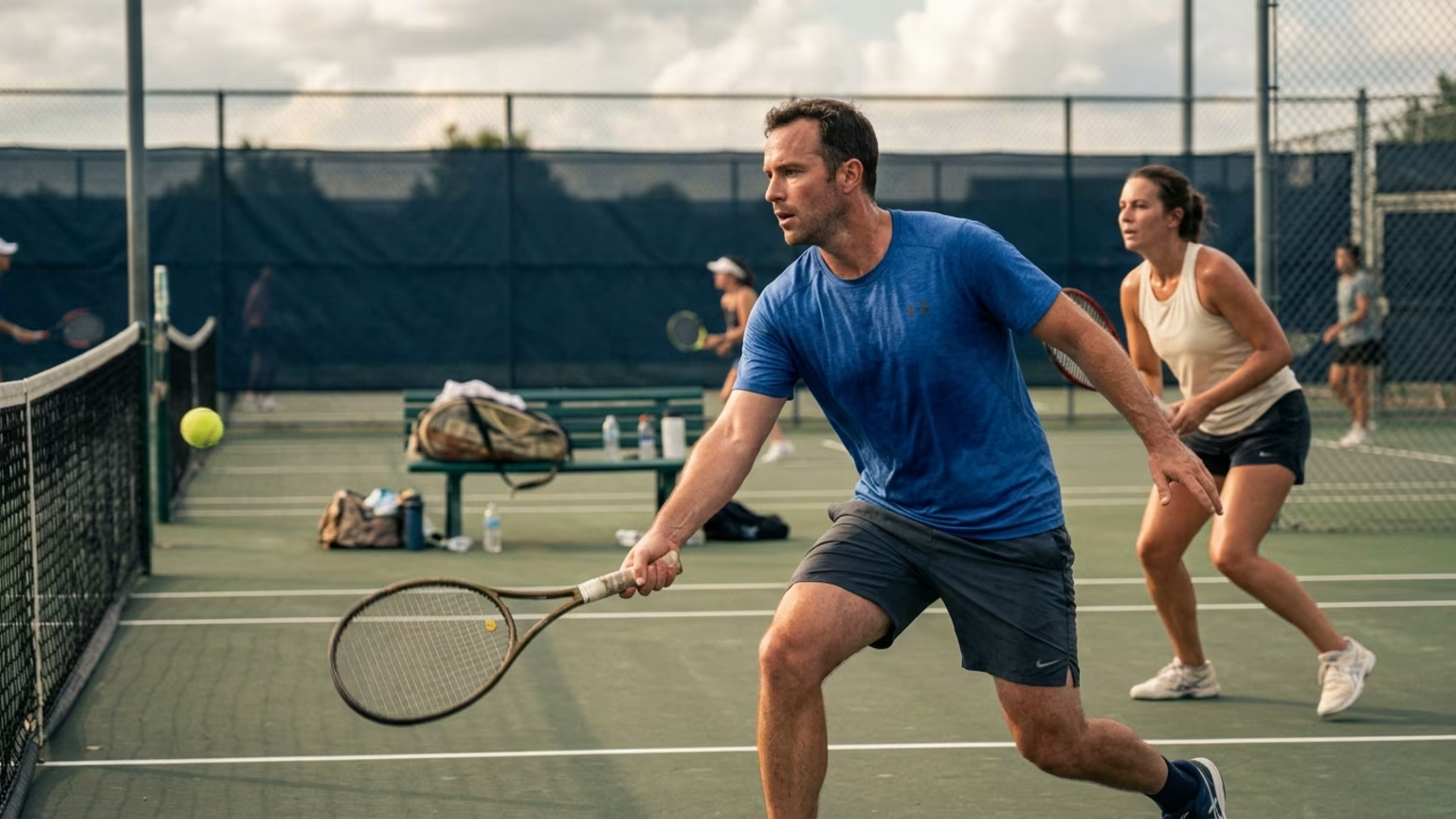

Learn how to improve your racquet sports anticipation and reaction time with practical drills, sports science insights and realistic training methods.




You stand at the transition zone with your paddle ready for the return. A fast volley clips the net cord and drops quickly toward your feet. You manage to block it just in time to keep the point alive.
Raw reaction time is frequently blamed when players feel slow on the court. The truth is that pure reflex speed is rarely the main factor holding adult athletes back. You do not need to be born with faster twitch muscle fibers to handle high pace. You simply need to recognize the physical cues earlier in the sequence.
A player can move with incredible speed and still select the wrong shot entirely. Training should prioritize the full chain of seeing, predicting, deciding and moving. Many experienced players compensate for minor age-related slowing by improving their court awareness. They learn to move efficiently before the ball even crosses the net. Anticipation always beats a hurried reaction.
Online fitness spaces often promote extreme drills to build lightning-fast reflexes. You might see athletes catching falling items, reacting to flashing lights or dodging laser beams. These isolated tests look great on camera, but they rarely translate to reading a heavy topspin lob. The hype suggests you need laboratory-level twitch speed to remain competitive.
The reality for adult racquet sports players is much more grounded. We need sensible athletic longevity rather than exhausting party tricks. The real goal is linking visual tracking to stable balance and a compact preparation. Your brain needs actionable information to trigger the right physical response on the court.
I remember finishing a tough two hour padel match on a cold Tuesday night and waking up the next morning feeling like my lower back was locked in concrete. For a long time, I just accepted this as the price of playing hard in my forties. But once I started spending just ten minutes on targeted hip mobility before heading to the club, the stiffness almost completely vanished. It taught me that we do not have to accept pain as a default state of aging. Effective preparation solves the actual problems we face.
Racquet sports are growing rapidly, making evidence-based training even more important for adult players. Playtomic's 2026 global report lists 19.4 million players, nearly 20,000 clubs and 58,300 courts. The same report projects 91,000 courts by 2028. This massive player base deserves better than untested theories about physical readiness and speed.
The research clearly distinguishes anticipation from simple response time. According to a report discussing research in the Journal of Neurophysiology, the brain can begin predicting the trajectory of a very fast serve before the ball's full flight is available to visual tracking. Players do not just react to the ball in isolation. They process a complex set of environmental variables to predict the future position of the shot.
Cognitive load directly impacts how quickly we can perform these visual tasks. A 2026 tennis study found that concurrent cognitive load slowed reaction time and visuomotor target acquisition in adolescent tennis athletes. The reported reaction-time increase reached 59 percent under the study's subtraction task. This shows that thinking too much during a point actively slows your physical response.
Targeted training methods do show promise for improving this complex skill chain. A 2026 review of stroboscopic-vision training reported that a synthesis of 14 studies involving 542 athletes found improvements in reaction time, hand-eye coordination, agility and reactive agility. A separate study of competitive tennis players reported that combined cognitive-motor training produced greater improvements than regular tennis training alone in reactive-agility time, decision-making accuracy, decision-making response time and match performance.
Instead of chasing hyped reflex gadgets, adult players can use progressive court drills to build practical anticipation. The focus must remain on reading the opponent and making early decisions. We recommend visiting the evercourts blog for deeper insights into structuring your practice sessions. Here is a progressive framework you can apply immediately to improve your reading of the game.
Visual tracking should always be linked to a realistic physical constraint. In fast exchanges near the net, you often have very little time for a full swing. Your tracking practice must involve compact preparation and stable balance. Start with a simple wall catch-and-track drill using a soft tennis ball. Throw the ball against the wall at different heights, and catch it before the second bounce.
Decision-making drills force you to distinguish between tactical options rather than merely responding to a predictable feed. A partner can give a visual cue, and you must shuffle to the correct position based on that prompt. This type of cue recognition builds the bridge between perception and actual movement. It is far more effective than trying to artificially push your neurological reflex limit.
High-level performers gather information early and make predictions rather than just waiting for the ball. A padel coaching source similarly recommends reading backswing height and speed, stance, weight transfer and the ball's rebound from the glass. The source advises adding cues progressively rather than attempting to process everything at once. Start by reading backswing height. Once you master that, begin reading stance and weight transfer.
You can practice this with a simple shot-calling drill during your warm-up routine. Ask your partner to prepare a shot without hitting it at full speed. Before contact, you must call out the expected direction. This builds the habit of watching the opposing player rather than just staring blankly at the ball.
Pickleball-specific coaching recommendations include kitchen hand battles, variable dink drills, random-feed movement drills and transition-zone decision-making scenarios. Start these drills at a comfortable distance with cooperative blocks. Use compact swings and keep a neutral ready position at all times. Limit your initial targets to the middle area before adding random changes in direction.
A transition-zone decision drill is a great way to test your tactical choices. The feeder alternates between balls that can be attacked, blocked or reset. You must call out your decision before you execute the shot. Combining this cognitive task with physical execution is excellent for overall court performance.
Once you master basic cue recognition, you should finish your practice with randomized live play. Start short points from specific tactical positions like the transition zone or the kitchen line. Play out the point only until the first decisive exchange is complete. The feeder might attack only after a ball rises above a defined height.
You should earn points for making the correct tactical decision regardless of the technical outcome. A correct choice followed by a minor technical miss is a sign of good anticipation. The primary goal is representative decision-making under real match pressure. This approach builds court awareness far better than trying to survive a barrage of fast balls.
Reaction drills are completely useless if your body cannot reach the ball safely and efficiently. You must combine reactive practice with sensible strength, balance and mobility work. Fast movement does not mean maximal exertion on every single point you play. Stop the drill before your quality collapses and your form breaks down entirely.
If you need help staying healthy on the court, explore our injury prevention resources for guidance. Athletic longevity requires a balanced approach to physical conditioning and recovery. By improving your anticipation slowly, you can remain highly competitive without overtaxing your joints. Play smarter, read the game earlier and let your brain do the heavy lifting.
Real speed on the court comes from early recognition and calm decision-making rather than relying on frantic physical reflexes.
Follow Evercourts for practical insights on tennis, pickleball and padel performance, movement, recovery and healthy ageing. Stay connected for new articles, research-led guidance and ideas to help you play well and keep playing for years.


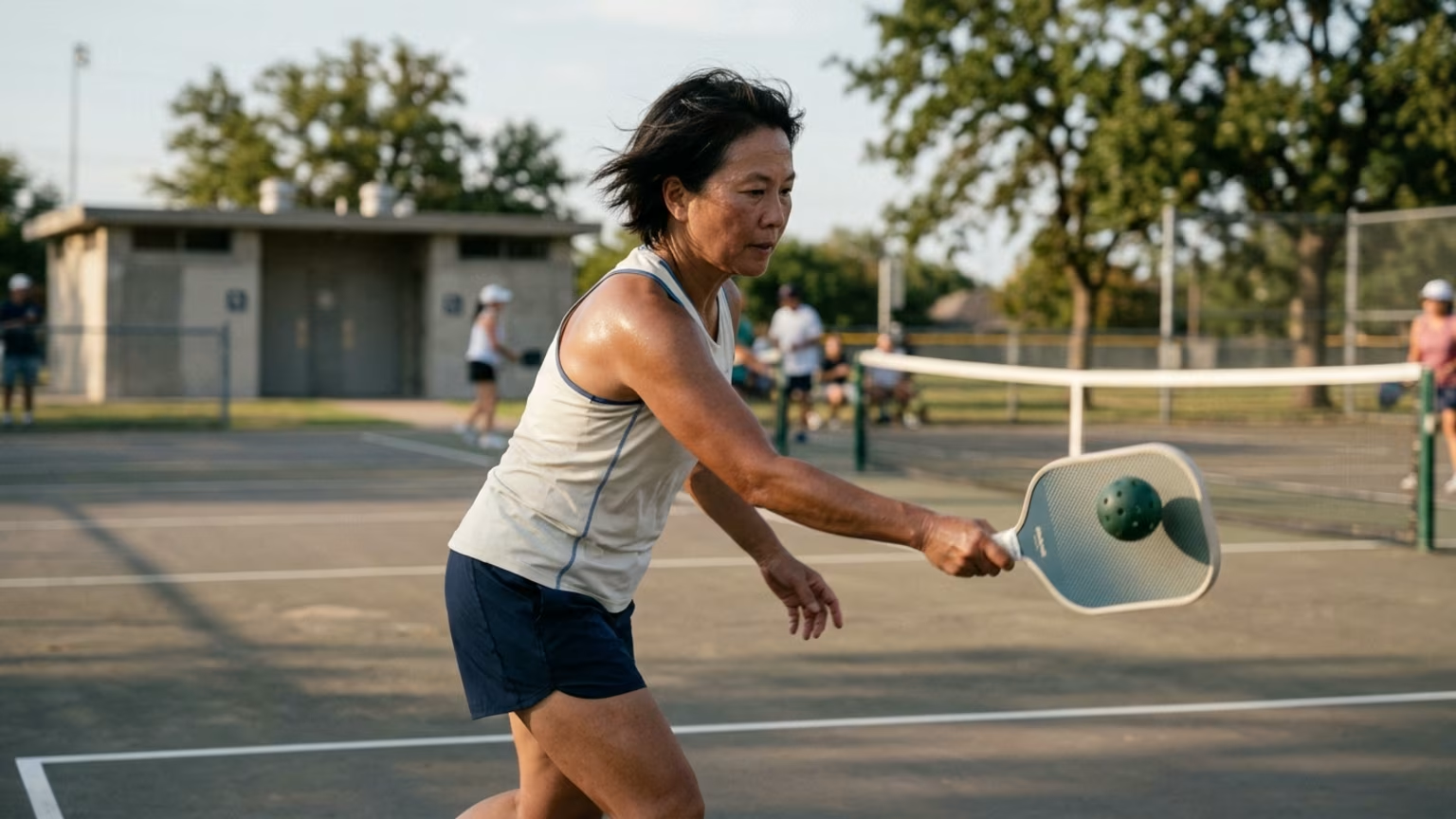
A recent live-play test of a silent pickleball highlights its value for practice, but standard balls still perform better for match play and power control.

An evidence check on sports supplements like tart cherry juice. Learn why racquet sports players should prioritize core nutrition over functional foods.
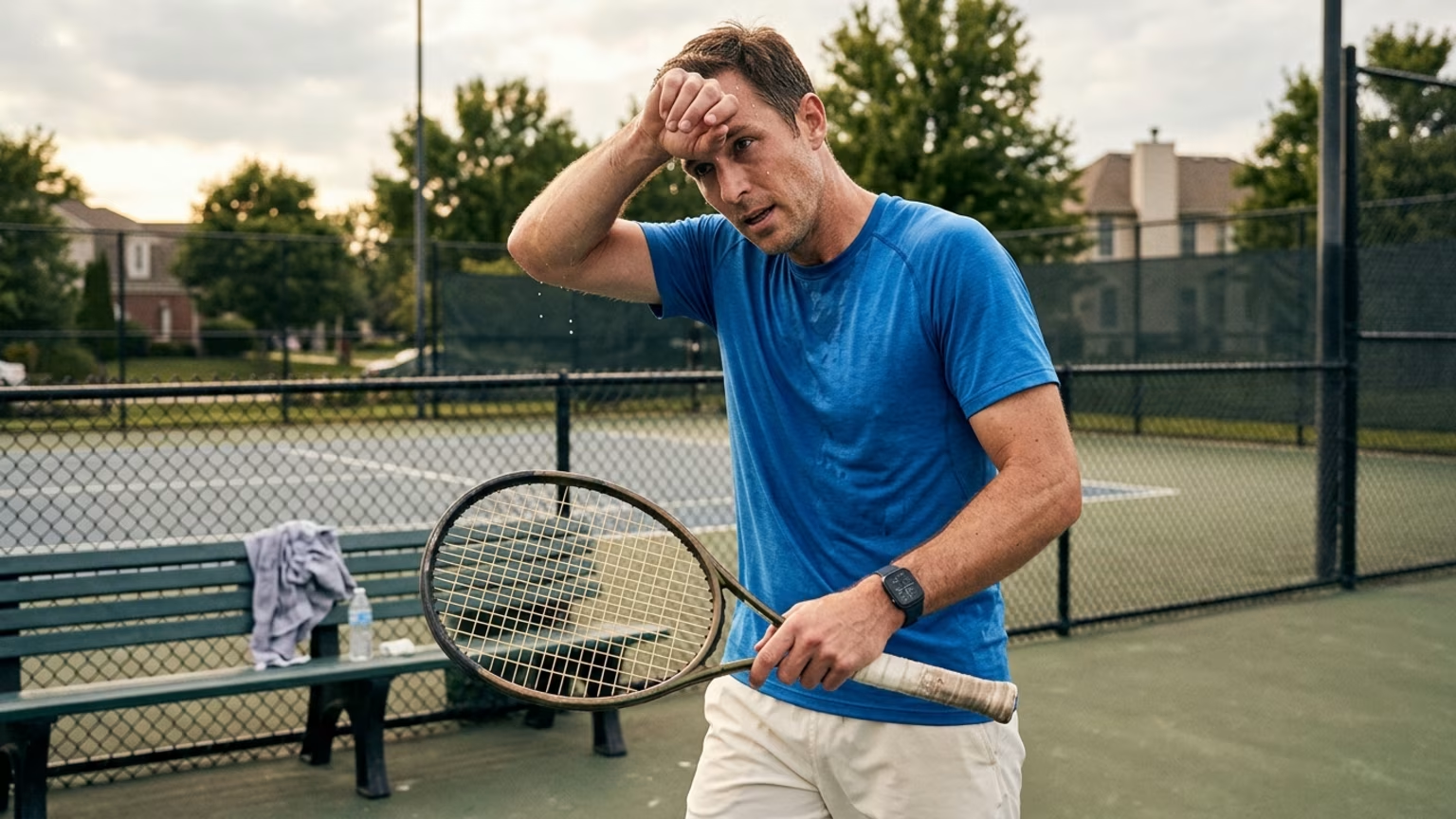
In late 2026, Oura analyzed wearable data to see how recreational tennis impacts heart health and recovery. Learn what this means for your athletic longevity.
Read practical guidance for better movement, smarter preparation and a game that keeps working for you.
explore the Blog
