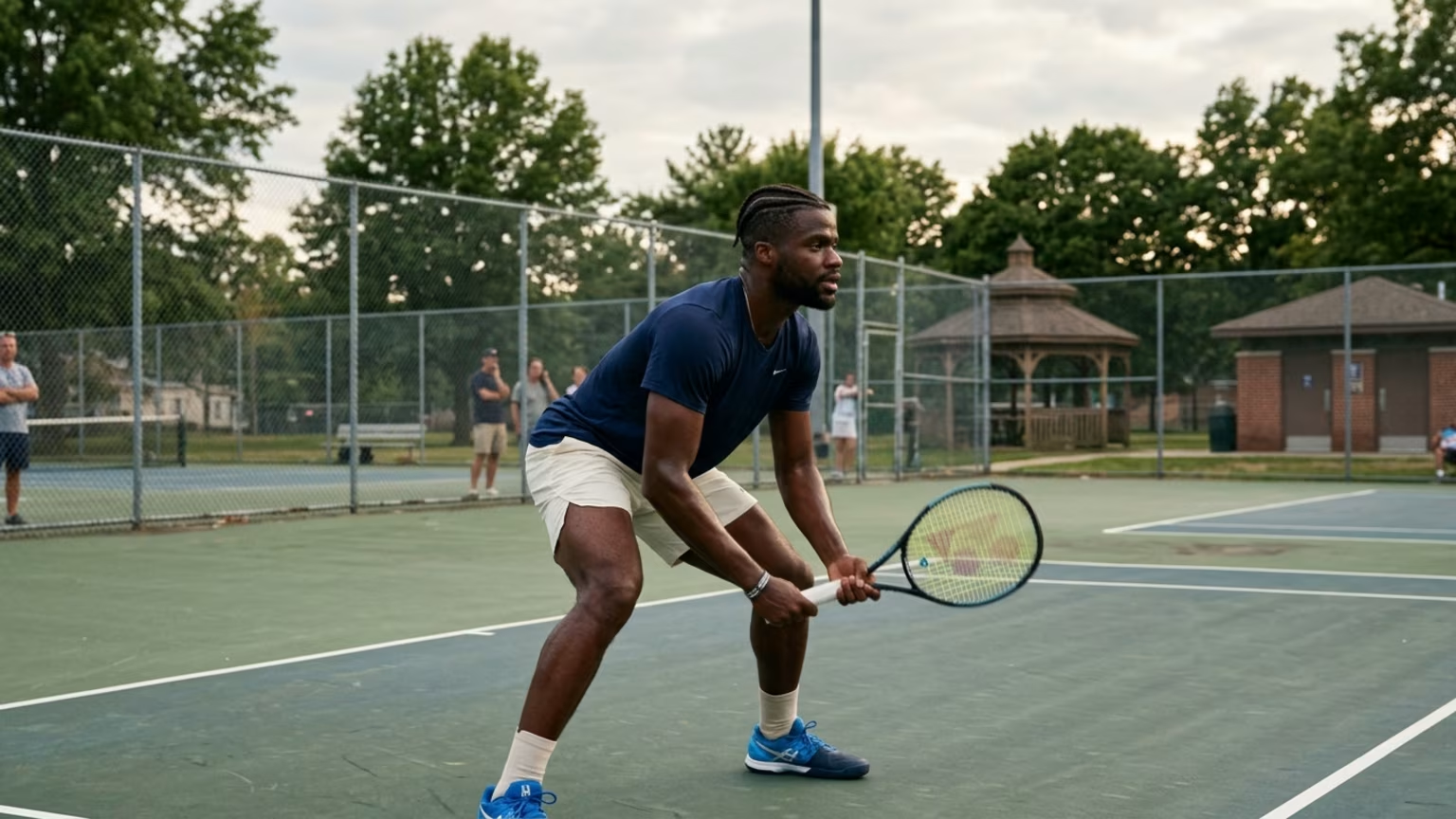

An analysis of the 2026 US Open semifinal explores how a compact return strategy can manage big serves, offering practical tactics for adult players.




On September 12, 2026, Ben Shelton defeated Frances Tiafoe in four sets during the US Open semifinals. The all-American matchup secured Shelton his first Grand Slam final appearance. The match also provided a real-time look at how players attempt to neutralize massive power on the court. TennisTemple provided live commentary during the broadcast, where one observer noted that Tiafoe's return was minimizing Shelton's serve.
Shelton ultimately advanced past Tiafoe to set up a championship match against Alexander Zverev. His victory required overcoming an opponent who showed early success in neutralizing raw speed. Shelton’s semifinal victory continued his 2026 US Open run to his first Grand Slam final. Meanwhile, Tiafoe reached his third US Open semifinal in five years but again did not reach the championship match.
The dynamic between a powerful server and a tactical returner became the defining theme of the contest. The match highlighted specific tactical adjustments, demonstrating the importance of strategic pacing. Observers closely monitored how court positioning influenced the outcome of each set. Understanding these professional tactics can help adult players refine their own match strategies.
Andy Roddick provided a preview analysis of the matchup before the players took the court. He explained that Tiafoe uses very small swings on his return. This compact motion allows him to handle elite pace without making a large backswing. Such an approach significantly reduces the time required to make contact.
Roddick described Tiafoe as capable of bunting returns back over the net. He noted that Tiafoe could stand inside the baseline against a second serve. He also emphasized that Tiafoe can vary his return position effectively. By using a slice against wide serves, Tiafoe keeps the ball in play from near the baseline rather than automatically retreating.
This adaptable positioning offers a sharp contrast to a fixed defensive stance. Instead of backing away from power, a player can use small movements to absorb it. The perspective of a professional coaching team adds further context to these tactical decisions. Shelton's coach stated that return improvement depends on understanding exactly where to stand.
This applies to positioning in both the deuce and ad courts. The coach highlighted the importance of knowing the intended return pattern before the point begins. Building this kind of anticipation requires extensive work on the practice court. Shelton's coach pointed to the necessity of accumulating repeated practice against different types of serves.
Watching a professional step inside the baseline to return a powerful serve is highly entertaining. However, adult recreational players need a slightly different approach for weekly league matches. The core lesson from Tiafoe is the value of a compact preparation motion. You do not need a violent swing to manage a fast serve.
A shorter backswing reduces the time and space required to make clean contact. This simple mechanical change can dramatically improve your consistency. It is a principle similar to optimizing your initial time on the court. By shortening your swing, you rely on the server's pace rather than generating your own.
Choosing a starting position with purpose is just as critical for recreational players. Many club players stand in the exact same spot for every single point. Instead, you should adjust your position based on the incoming serve location. You might stand closer to take a slow second serve early.
Conversely, you could stand further back to create time against a heavy first serve. The goal is to set a clear tactical intention before the server tosses the ball. Understanding how your body manages this physical load is part of building a sustainable tournament calendar. Letting the return absorb pace is a highly effective strategy for athletic longevity.
Using a blocked or sliced return minimizes physical strain while neutralizing power. You want to make the server hit an additional shot rather than forcing a winner. Over time, reducing unnecessary lunging helps protect your physical capacity. Evercourts consistently focuses on methods that support safe and sustained court movement.
Interestingly, an Oura analysis showed that regular tennis participation is associated with favorable cardiovascular-health indicators. Focusing on smart movement rather than frantic scrambling aligns perfectly with healthy aging. You can conserve energy by positioning yourself correctly and limiting your swing length. A controlled return sets a sustainable tone for the rest of the point.
The match statistics show that a compact return strategy is not a perfect shield. Shelton hit 20 aces and made 75 percent of his first serves. He also recorded only three double faults during the four sets. This high serving percentage kept constant pressure on his opponent throughout the afternoon.
A statistical account of the match highlighted Shelton's dominance on key points. He won 62 percent of the return points played against Tiafoe’s second serve. The statistical pattern of the match shifted sharply after the first set. Early on, the short return swings yielded significant tactical results.
Tiafoe won nine of 13 second-serve points in the opening set. This early success equated to a 69 percent win rate. However, he only won 11 of 39 second-serve points in the remaining sets. This drop reduced his success rate to a mere 28 percent.
First serves presented an ongoing hurdle that could not be fully neutralized. A preview characterized Tiafoe as an opportunistic returner. Over the previous 52 weeks, Tiafoe had won slightly over 26 percent of points against first serves. These numbers highlight the difficulty of consistently breaking an elite serve.
Conversely, Shelton demonstrated exceptional serving metrics leading up to the semifinal. He had won almost 70 percent of his first-serve points in his preceding match. His opponent in that previous round was a highly regarded returner. These metrics demonstrate that first-serve quality often dictates the final scoreboard.
Looking ahead to the next season, the balance between server power and return positioning will continue to shift. Players will likely experiment further with blocked returns to offset rising serve speeds. Varied baseline stances will become a standard tactical adjustment on the professional tour. The emphasis will move away from aggressive swings toward strategic pace absorption.
This tactical evolution will eventually trickle down to recreational racquet sports. Club players will realize that defensive positioning offers a smarter path to victory. Adapting to power without overexerting the body will be a key theme for adult athletes. As serving power increases at all levels, adaptable return mechanics will remain essential. The ability to neutralize pace quietly will become the defining factor in competitive matchups.
Follow Evercourts for practical insights on tennis, pickleball and padel performance, movement, recovery and healthy ageing. Stay connected for new articles, research-led guidance and ideas to help you play well and keep playing for years.


A new pickleball dating app highlights the growing demand for digital tools that help adult players match on-court compatibility, skill level, and scheduling.
A recent KeepActive directory update highlights a Melbourne-area padel program offering introductory coaching and social play for adults aged 65 and over.
Bhushan Akut won three 60+ gold medals at the 2026 Pickleball World Cup. Learn how sensible preparation and tactics inform recreational senior play.
Read practical guidance for better movement, smarter preparation and a game that keeps working for you.
explore the Blog
