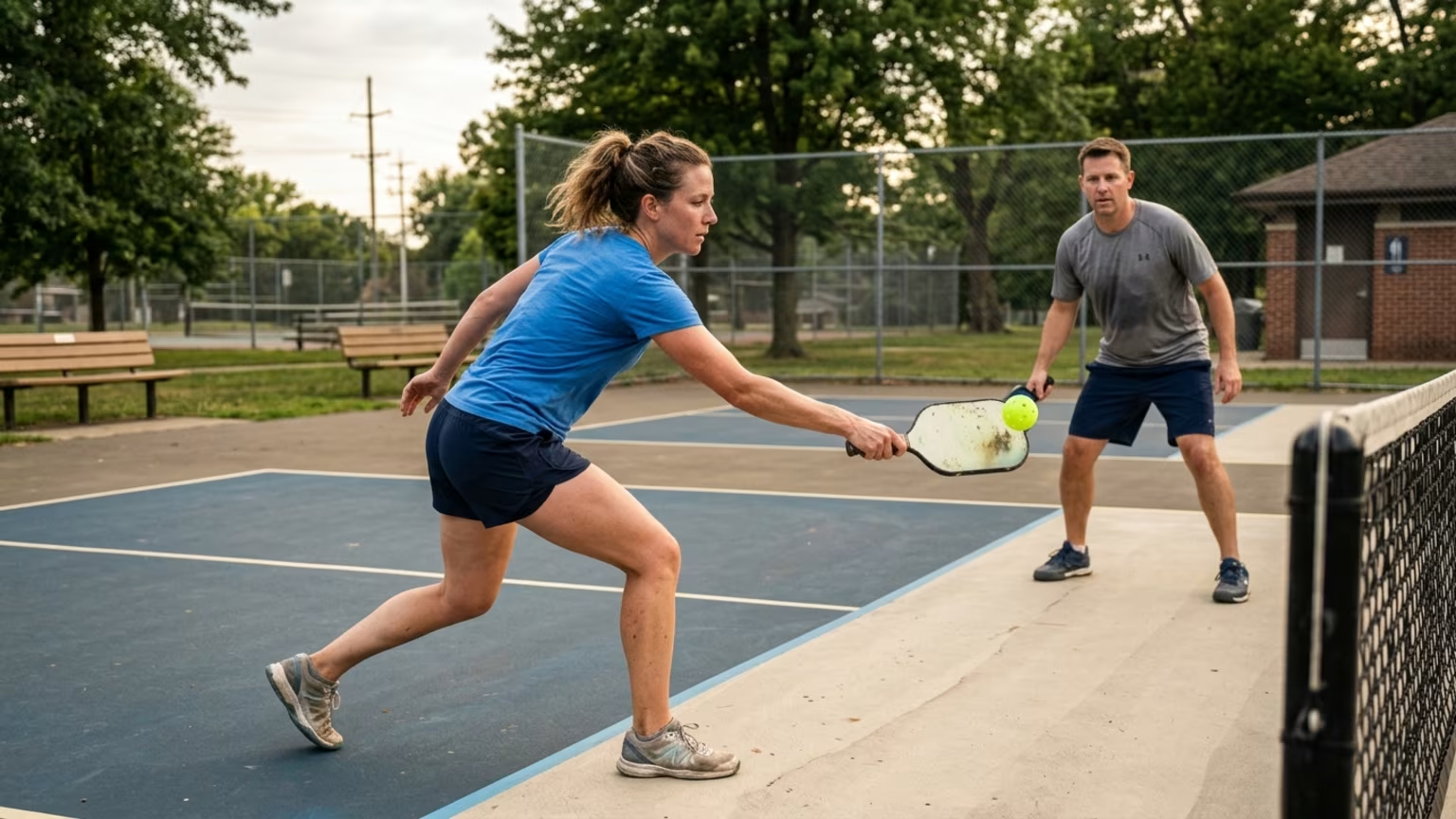

Discover why the first ten minutes of a racquet sports match dictate performance. Learn how to replace reactive habits with a progressive preparation protocol.




I remember finishing a tough two hour padel match on a cold Tuesday night and waking up the next morning feeling like my lower back was locked in concrete. For a long time, I just accepted this as the price of playing hard in my forties. But once I started spending just ten minutes on targeted hip mobility before heading to the club, the stiffness almost completely vanished. It taught me that we do not have to accept pain as a default state of aging.
Many players bring a purely reactive approach directly onto the court. They transition straight from travel or desk work into repeated acceleration and deceleration. Without a deliberate routine, the player has not yet established a reliable ready position or a dependable first step.
Common movement failures happen quickly during this vulnerable window. Players often stand upright, react only after the ball bounces, and take large steps instead of small adjustments. These poor habits make a player feel late even when their stroke technique is perfectly sound.
To compensate for feeling late, players frequently attempt aggressive shots before calibrating the court and the ball. According to recent analysis on tennis consistency, errors in the first three shots of a point often reflect poor patterns and rushed decisions. Instead of establishing solid spacing, they force the action and shorten the rally unnecessarily. This creates a cycle of frustration that ruins the opening games.
In doubles formats, a reactive start often leads to complete confusion over middle coverage. Partners fail to move together, leaving one player stranded at the net while the other remains trapped far behind the baseline. They do not communicate effectively, waiting for a lost point to realize they had entirely different assumptions. This lack of verbal clarity turns simple middle balls into frustrating unforced errors.
The progressive opening phase serves as a critical information gathering period. It helps adult players answer essential questions about their movement capabilities, recovery positioning, and reliable game plans. A practical routine begins with light continuous movement before adding dynamic mobility and lateral shuffles. Players can then progress to harder hitting as their bodies adapt to the physical stress.
Effective spacing requires returning to a solid ready position between every single shot. The racket stays in front, the knees remain slightly bent, and the body weight rests lightly on the forefoot. A sharp split step should happen exactly as the opponent makes contact with the ball. This fundamental timing allows the player to push efficiently in either direction.
Smart recovery focuses on geometry rather than simply running back to the middle of the baseline. Players should recover toward the midpoint of the opponent's available angles instead of automatically returning to the center mark. You want to maintain enough court behind you to defend without retreating blindly. This approach is a core part of smarter footwork for better court coverage, saving significant physical energy over a long match.
A solid progressive start also requires a clear checklist for the return of serve. Players must decide whether their primary goal is depth, height, direction, or simply getting the ball back safely into play. You should protect the most likely serve direction without completely abandoning the other side of the court. Once the return is struck, the player must recover immediately and anticipate the server's next shot rather than standing still to admire their work.
In doubles, partners must use these first few minutes to coordinate their shared movement perfectly. They need to agree on middle coverage, manage lobs, and communicate clearly before every serve. Doubles instruction commonly recommends moving as a coordinated pair and holding a slightly staggered formation. A simple verbal call helps partners avoid collisions and secures the center of the court.
After roughly ten minutes of play, adult players should evaluate their start objectively. They can ask themselves how many unforced errors occurred before the third shot. If the main issue is poor spacing, the player can simply adjust their recovery location. This objective checklist turns a frustrating opening into a calm tactical diagnosis.
Each racquet sport demands a slightly different tactical focus during the first ten minutes of competition. In tennis, the progressive start centers heavily on intelligent serve targeting and return positioning. Experimental serve targeting research describes a trade-off where tighter targets may be harder to return but carry an increased fault risk. The receiver must stand far enough back to make a full defensive response without becoming entirely passive.
For pickleball players, the opening sequence requires managing the transition zone effectively. A deep return is essential to make the server's advance uncomfortable right from the start. Both partners must move forward with control rather than sprinting blindly toward the net. Rally tolerance in pickleball often means resisting the urge to speed up a neutral exchange prematurely.
Padel introduces unique demands regarding multidirectional movement and the complex bounce of the glass walls. Rally tolerance here means using safer lobs and cross-court balls until the opponents fall out of position. Trying to win the point on the second shot often leads to unnecessary unforced errors. Across all three sports, adult players benefit from an evidence-based pre-match routine that reduces early errors.
The universal rule is to make your opponent earn any change of direction. Start with height and depth, attacking only when the ball is short or clearly uncomfortable. By prioritizing safe placement over raw power, you build immediate confidence and dictate the early momentum of the match.
The progressive preparation protocol is the definitive winner for players focused on long term health and performance. It allows the body to acclimate to explosive demands without forcing dangerous early sprints. Observational research has associated regular racquet sport participation with longer life and a lower overall mortality risk. However, these physical benefits depend entirely on sensible load management and smart preparation habits.
Using the first ten minutes to build intensity prevents the sudden strains that occur when an unprepared body attempts aggressive movements. A recent review found low certainty evidence that neuromuscular training may improve some tennis specific speed outcomes. This supports the idea that progressive physical preparation helps the lower limbs handle the unique demands of court coverage. Proper warm up protocols are vital for anyone managing previous injuries or age related changes in speed.
A sensible opening routine should make your movement feel progressively more prepared as the games continue. It turns the start of a match into a tactical evaluation rather than a desperate physical test. By prioritizing balance and smart positioning, you protect your joints and increase your chances of staying active for decades.
Next time you walk onto the court, use the first three games strictly to hit safe cross-court targets and secure your split step timing.
Follow Evercourts for practical insights on tennis, pickleball and padel performance, movement, recovery and healthy ageing. Stay connected for new articles, research-led guidance and ideas to help you play well and keep playing for years.


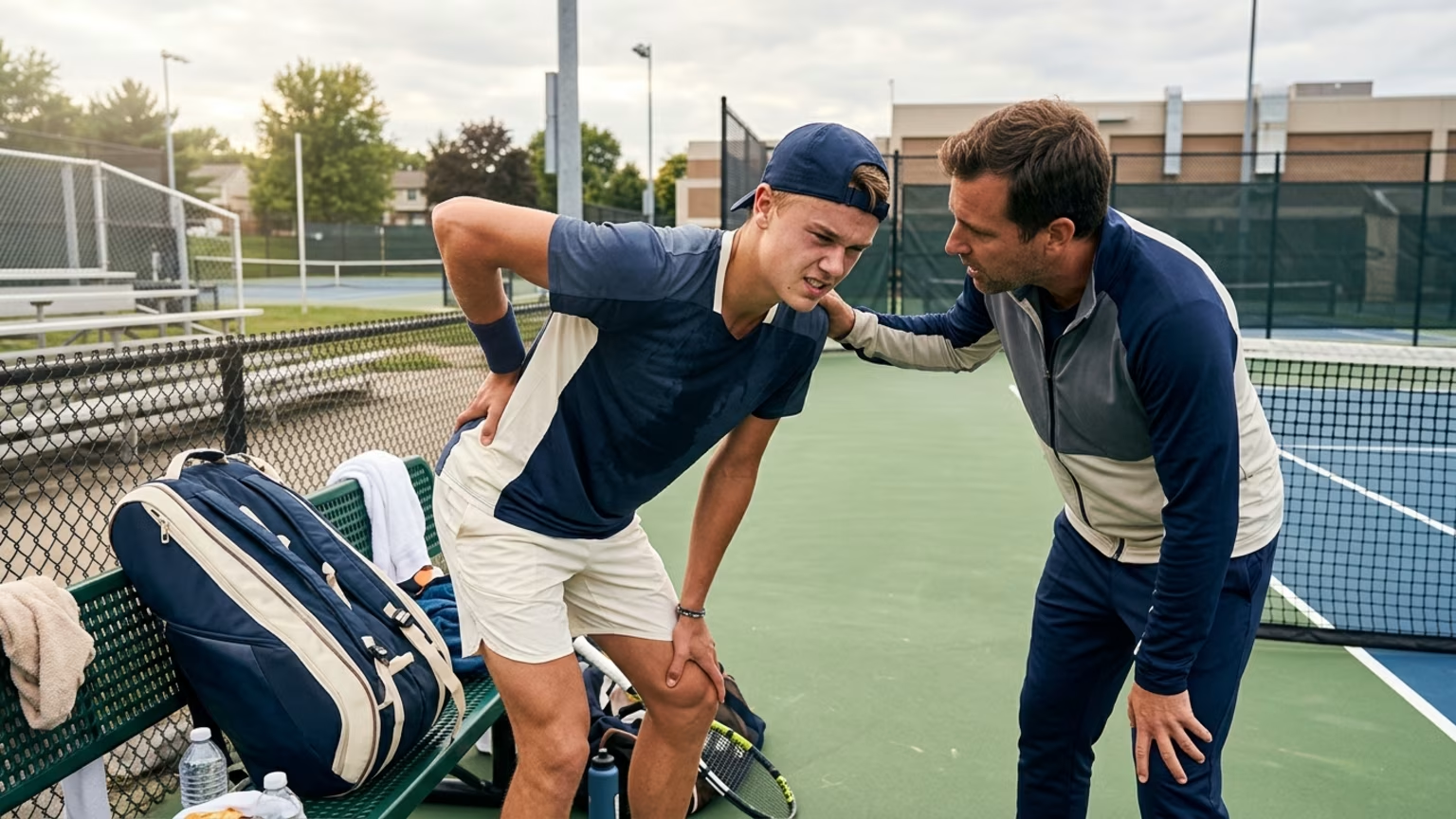
Holger Rune withdrew from the European Open with a back problem. The facts behind his decision and a grounded perspective for recreational players.

The Dink’s October 17 guide emphasizes deep returns, ball-height decisions and positioning against faster pickleball opponents.

A new report outlines padel and tennis gear trends. Learn how to assess adjustable rackets, sensor feedback and smart-court claims.
Read practical guidance for better movement, smarter preparation and a game that keeps working for you.
explore the Blog
