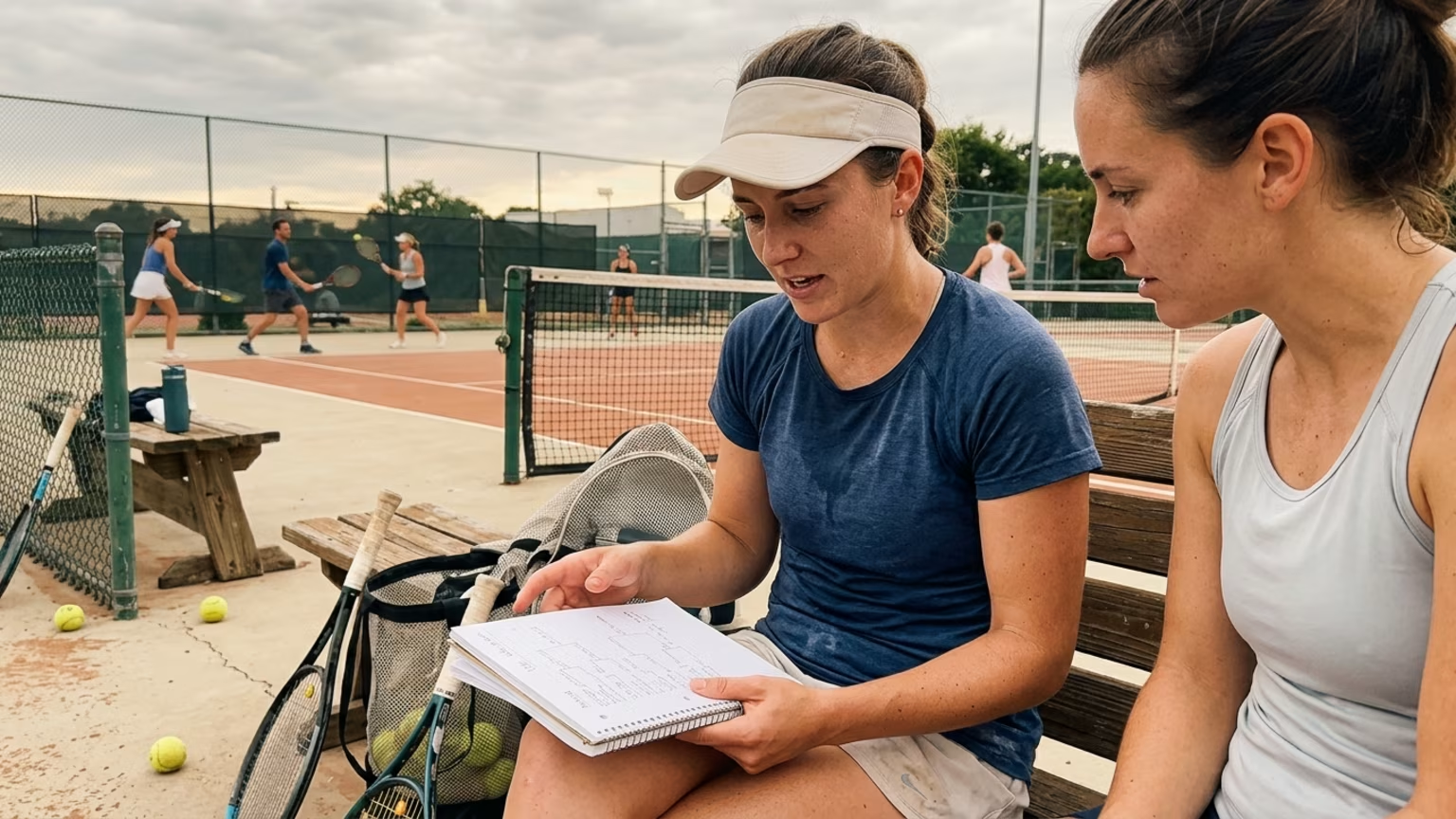

Learn how to build a sustainable tournament calendar for tennis, pickleball, and padel. Balance competition, recovery, and healthy aging with practical steps.




You have just finished a brutal three-setter, and your knees are barking as you walk to the car. Your phone buzzes with a text asking if you are signing up for a local shootout next weekend. You want to play, but your body is begging for a weekend off.
The goal of a well-planned schedule is to protect your body while maintaining a high level of competition. A sustainable calendar leaves enough capacity for training, recovery, and daily life. It helps you maintain your physical capabilities and healthy aging for years without constantly feeling broken down. Managing your schedule effectively means taking a realistic look at your limits.
A few years ago, I realized my tennis serve speed was dropping, and my shoulder was constantly throbbing after matches. Instead of pushing through the pain, I took a month to rebuild my mechanics and focus on rotator cuff endurance. I stopped trying to hit flat aces and developed a much heavier kick serve. My win rate actually went up, and my shoulder stopped hurting.
Sometimes longevity means outsmarting your own ego on the court. It means realizing that a sustainable season requires more than just picking open weekends on a calendar. You have to treat every competition as part of a structured system.
Choose one primary objective for each block of your calendar. You might pick a rating goal, where you enter events that provide meaningful competition close to your current level. You might choose a development goal to expose specific weaknesses against new opponents. Avoid treating every tournament as a peak event. You should identify a small number of priority competitions, classifying the rest as practice or optional events.
A tournament should be challenging without requiring an unrealistic level of performance. Entering too far above your level can create short matches with high physical stress but little useful competition. Entering too far below your level provides volume without the technical challenge you need. Look for events that promise several meaningful competitive situations based on your recent official rating.
You must count more than just the match itself. Your tournament load includes match minutes, waiting periods, travel, and environmental factors like heat. At the USTA League National Championships, teams are expected to play two matches on Friday and two on Saturday. Semifinalists are expected to play two additional matches on Sunday.
This shows how quickly a multi-day event can accumulate volume. The USTA also requires players at League Nationals to be on site and ready to play 30 minutes before the scheduled match. They note that match times can change and matches may be called earlier than listed. Be sure you are understanding how match formats dictate your volume before you register.
You should run a personal capacity check before entering any event. Return-to-play literature describes readiness as dynamic, multifactorial, and context-dependent. This readiness involves biological healing, functional recovery, psychological readiness, and tolerance to load. A 2026 review cautioned that acute:chronic workload-ratio research should be used as a contextual flag within an individualized, multi-marker monitoring system.
That review advised using the ratio as a prompt, rather than as a stand-alone diagnostic or decision-making tool. You should not rely on a single clearance test to decide if you are ready for a heavy weekend.
Strategic spacing prevents fatigue from carrying over into the next event. A sustainable calendar usually features three distinct types of weeks. Competition weeks use the tournament as the main high-intensity stressor. Development weeks prioritize technical, tactical, and strength work.
Recovery weeks reduce volume so the player can restore normal movement and sleep. You need to log managing your weekly court workload carefully to ensure these recovery blocks happen.
You do not need complicated technology to track your workload effectively. A practical monitoring system can track session duration, perceived exertion, sleep quality, and morning soreness. Watch for unusual fatigue or a decline in your movement quality late in matches. Use these metrics to adjust your plans rather than expecting certainty from a single digital score.
The name of the sport alone is an inadequate measure of difficulty. Court dimensions, scoring formats, and match length can all change the physical demand on your body.
Tennis usually involves longer points and greater total court coverage. These elements generate significant lower-body fatigue over a long weekend, demanding focused rest periods. The Professional Tennis Players Association has called for fewer mandatory commitments and more recovery time in response to player-workload concerns. This professional principle applies to adult recreational players just as much.
Pickleball has expanded rapidly in the United States. The Sports & Fitness Industry Association estimated 24.3 million participants in 2025, up 22.8% from the previous year. The same report differentiated between 16.8 million casual players and 7.48 million core players who played at least eight times. This large player base means many adults are competing without a structured recovery plan.
A study of 247 pickleball players aged 50 and older found that roughly one in three reported at least one injury during the previous year. Most injuries were in the lower body. Affected areas included the calf, knee, ankle, hamstring and foot. Soft-tissue injuries were more common than fractures.
The same study reported that players who spent more hours on court each week reported more injuries. The study also found that relatively few new injuries occurred during tournament play itself. This cautions against assuming that the tournament is the sole source of injury. Your accumulated weekly exposure matters just as much.
Padel adds repeated directional changes, partner coordination, and wall-based movement. A systematic review has examined injury epidemiology in padel, tennis, and squash players. The available search results do not provide enough detail to responsibly state a single injury rate or make a definitive ranking among the three sports. Treat all cross-training as physical stress, and focus on balancing high intensity matches with active recovery across all your sports.
Measure your success by your ability to recover and continue playing the sport you love next week.
Follow Evercourts for practical insights on tennis, pickleball and padel performance, movement, recovery and healthy ageing. Stay connected for new articles, research-led guidance and ideas to help you play well and keep playing for years.


Holger Rune withdrew from the European Open with a back problem. The facts behind his decision and a grounded perspective for recreational players.

The Dink’s October 17 guide emphasizes deep returns, ball-height decisions and positioning against faster pickleball opponents.

A new report outlines padel and tennis gear trends. Learn how to assess adjustable rackets, sensor feedback and smart-court claims.
Read practical guidance for better movement, smarter preparation and a game that keeps working for you.
explore the Blog
