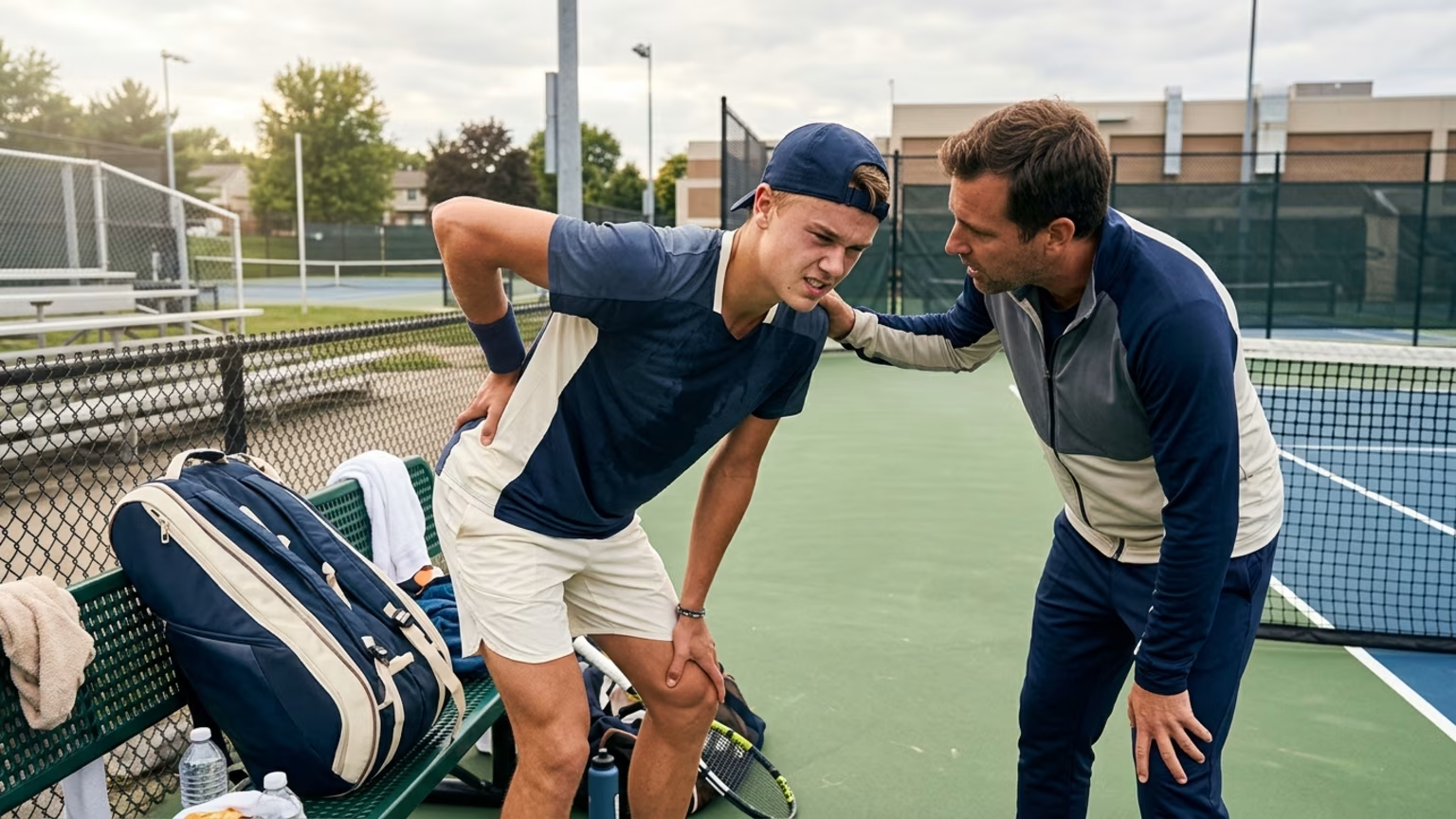

Holger Rune withdrew from the European Open with a back problem. The facts behind his decision and a grounded perspective for recreational players.




On October 18, 2026, Holger Rune withdrew from the BNP Paribas Fortis European Open in Brussels after reporting that his back had “seized up,” according to the ATP Tour.
Rune said scans indicated that the problem was “nothing serious” and that he needed two to three days of rest. He described the timing as frustrating. The ATP Tour reported that the tournament was scheduled for the following week.
The withdrawal interrupted a recent return to competition after a lengthy absence with an Achilles injury. Rather than keeping the Brussels appearance on his schedule, Rune stepped out of the event after reporting the new back problem and receiving scan results.
The ATP Tour account and secondary reporting on the withdrawal do not identify a specific diagnosis or provide an independent medical assessment. The reporting does not establish that the Achilles injury caused the back problem. Rune’s stated rest period was not a confirmed return date. These reports also do not provide a general protocol for assessing back pain or deciding when another player is ready to compete.
That leaves a straightforward sporting story: a player returning from a long interruption reported a new problem and withdrew from his next tournament. The practical value lies in understanding that decision without turning it into a recovery prescription.
For Rune, the immediate consequence was a missed tour event during his return to competition. For an adult league player, the useful lesson is about how to view a playing commitment when a new symptom enters the picture. It is not about reproducing the length of his rest.
At tour level, attention naturally falls on the tournament lost and the next appearance. Evercourts’s view is that recreational players should place less weight on that calendar narrative. A scheduled match is a sporting commitment, not evidence that someone is physically ready to play it.
Rune described the timing as frustrating. That reaction belongs alongside the withdrawal rather than in opposition to it: he could be unhappy about missing Brussels and still decide not to compete there.
For a weekend player, the same distinction offers a useful way to think about a setback. Wanting to play and being ready to play are different questions. Disappointment deserves acknowledgment without becoming the deciding argument about participation.
Our resource on putting results and setbacks in perspective addresses the competitive side of that experience. Questions about an individual injury or readiness to return belong with a qualified clinician.
A professional player’s update is information about that player. The constructive response is to understand the decision being described rather than use it as permission to compete or a reason to withdraw from an unrelated match.
That distinction matters whether the reader plays tennis, pickleball or padel. The story offers perspective on respecting a new concern within an existing comeback. It does not require every recreational player to make the same scheduling choice.
For personal decisions, seek an individual assessment from a qualified clinician when symptoms raise questions about readiness. The relevant discussion is the player’s own situation, not whether their next fixture falls within Rune’s reported rest window.
This is also the central distinction in our coverage of why elite comeback stories are not personal recovery guides. Following professional sport can help frame better questions without supplying someone else’s answers.
According to the ATP Tour, Rune returned to competition in September after an 11-month layoff for an Achilles injury sustained in Stockholm the previous October. His return included a singles win for Denmark in a Davis Cup tie against Bulgaria. He then lost his opening matches at ATP Tour events in Tokyo and Shanghai before the Brussels withdrawal.
That sequence gives the missed tournament its competitive context. Brussels was not simply another stop in an uninterrupted run of appearances. It followed a long absence and a short stretch of renewed competition.
At the time of the ATP Tour report, Rune was 23 and ranked No. 195. His career-high ranking was No. 4, reached in August 2023. Those figures help explain the sporting significance of his comeback: a player who had reached the leading ranks was working his way through a return from an extended absence.
The results belong in that account as results. A Davis Cup win and opening-match losses describe what happened on court. Reading them as a verdict on the medical success of his return would go beyond their role in this story.
The next meaningful development will be Rune’s announced competitive plans and how his return unfolds through subsequent appearances. Over the next season, the more useful story will be the sequence of events rather than any single reassuring phrase or frustrating withdrawal.
For readers following that progress, the editorial standard should stay consistent: report what Rune says, distinguish it from independent medical findings and assess his tennis through the matches he plays. A comeback deserves room to develop without every result becoming a declaration that the process has succeeded or failed.
For recreational players, the enduring takeaway is narrower and more practical. Keep the ambition to compete, but do not make a tournament date the authority on a new physical concern. Rune’s Brussels withdrawal is a reminder that stepping away from an event can be part of a return story rather than its final judgment.
Follow Evercourts for practical insights on tennis, pickleball and padel performance, movement, recovery and healthy ageing. Stay connected for new articles, research-led guidance and ideas to help you play well and keep playing for years.


The Dink’s October 17 guide emphasizes deep returns, ball-height decisions and positioning against faster pickleball opponents.

A new report outlines padel and tennis gear trends. Learn how to assess adjustable rackets, sensor feedback and smart-court claims.
NDTV’s October 16 padel explainer highlights quick direction changes, gradual progression and practical preparation for recreational players.
Read practical guidance for better movement, smarter preparation and a game that keeps working for you.
explore the Blog
