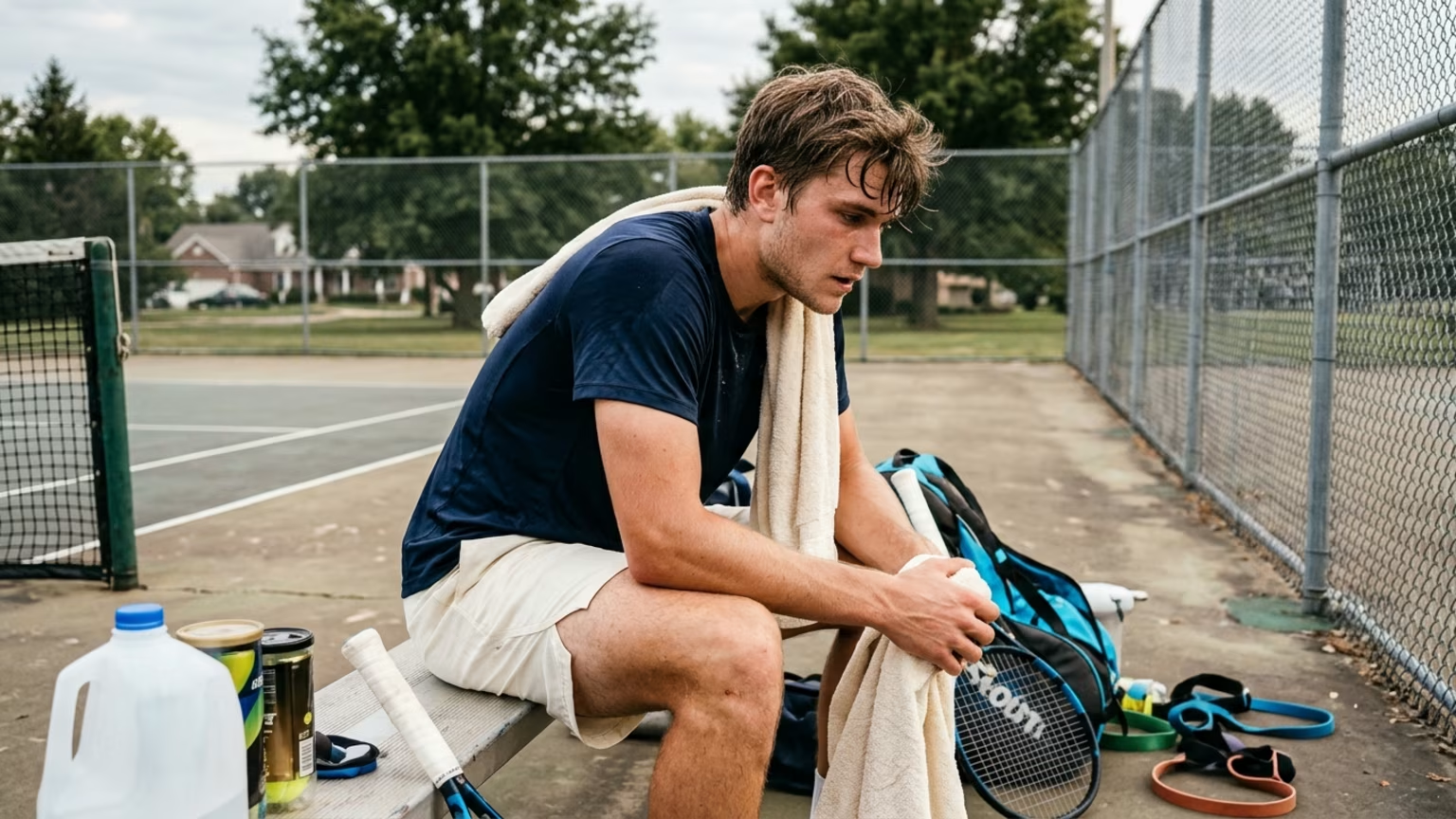

Jack Draper’s account puts sleep, rehabilitation and conditioning in context as he aims to return to competition in 2027.




On October 23, 2026, ESPN Deportes reported that Jack Draper had resumed tennis practice in Brazil rather than competitive tour play.
Separate reporting said Draper had ended his 2026 season in September and was aiming to return to the tour at the start of 2027. Alongside that comeback goal, his account of training and rehabilitation offers a look at how his priorities have changed.
Draper told Men’s Health UK that symptoms started as pins and needles during the Madrid tournament. They became more frequent during play and practice before developing into sharp pain. He said scans after Wimbledon showed serious bone stress in his arm.
He described pain for much of the first six to eight months. Repeatedly using the arm to play tennis complicated the experience, according to his account. His interview places that prolonged difficulty alongside a reassessment of training, sleep and recovery.
For a weekend league player, the useful takeaway is a broader view of preparation rather than a copy of Draper’s calendar. Court time belongs in the conversation alongside conditioning and recovery. That is why reading elite comeback stories in context matters more than borrowing their schedules.
“The only way I believe you get fitter from an endurance perspective is by suffering,” Draper told Men’s Health UK. He was describing his personal belief that repeated exposure to hard endurance efforts helps him adapt. Read alongside his comments about sleep and rehabilitation, the interview presents a broader picture than that line alone.
The interview is a personal account, not a clinical program for tennis, pickleball or padel players. It does not establish that a conditioning method prevents injury or that extra sleep heals an arm injury. His reported bone stress is not interchangeable with tennis elbow or a diagnosis readers can apply to themselves. Persistent or worsening pain calls for individualized assessment from a qualified clinician.
The practical reading is to separate the purpose of a demanding conditioning effort from the decision to continue playing with symptoms. Those are different questions. For an adult player, a hard session should not become a test of whether they can disregard a concern about their health.
Draper said a normal training week would probably include strength work two or three times, endurance work two or three times, substantial rehabilitation and perhaps Pilates or yoga. He distinguished that from competition weeks, when he described a greater focus on injury management and strength work aimed at prevention.
He also said his strength training was intended to help him function better on court rather than build his physique. The organizing principle is useful: each part of preparation has a purpose. The number of sessions is a description of his routine, not the main lesson.
For recreational players, the practical question is what each activity is meant to contribute to their own playing goals. That is a more useful starting point for considering workload alongside those goals than matching someone else’s session count. It also leaves room to discuss how preparation should differ between a competition week and a week without matches.
For conditioning, Draper said he favored a bike or VersaClimber when he wanted to stay off his tendons and joints where possible. The important detail is his reason for choosing those options: he was considering the demands of conditioning alongside the demands of tennis.
For an adult player, the planning question is whether every conditioning session needs to involve more court time. A different format is an option to discuss with a coach or treating clinician when organizing training. The choice should serve the player’s circumstances rather than reproduce Draper’s preferred machine or hardest workout.
This is a distinction between copying equipment and understanding a decision. His account gives recreational players a useful question to ask about their preparation: what is the intended role of this session within the rest of the week?
Draper told Men’s Health UK that he previously tended to push on even when tired. Following the injury, he said he paid more attention to getting sleep. That change is an important counterpoint to the endurance quote: his account includes reconsidering when to push, not simply finding new ways to work harder.
The useful shift in emphasis is that tiredness became relevant to preparation rather than something to dismiss. Adult players can bring that idea into conversations about their own week. How do matches and other training fit alongside time for sleep?
The practical goal is to make those priorities fit together rather than treating recovery as whatever remains after playing commitments. For players interested in athletic longevity, that is a more constructive interpretation of Draper’s experience than turning “suffering” into a training slogan.
ESPN Deportes reported that Draper had played 15 matches in 2026, with eight wins and seven losses. It placed him 157th in the rankings at the time of its October report.
Those figures describe his competitive season and where he stood at that point. They are not a clinical measure of his recovery. For a club player, the useful comparison is therefore not a ranking or a win total but whether the next playing decision fits their own circumstances.
The numbers also give context to the return story. Resuming practice is part of a season that included relatively little competitive play, rather than evidence that his usual competition schedule had resumed.
As the 2027 season approaches, the next meaningful development to watch is a confirmed competitive return. After that, attention should stay on how Draper describes the balance between match play and the preparation he discussed with Men’s Health UK. A comeback deserves more than a highlight of the toughest interval session.
Over the next season, the useful direction for this conversation is away from toughness as a complete explanation of performance. Draper’s own account gives sleep and rehabilitation a place alongside strength and endurance work. That is the thread worth following as his return develops.
For adult players, the longer view remains straightforward: make room for preparation that serves the person as well as the next match. Athletic longevity is a better benchmark than reproducing the hardest day in a professional player’s week.
Follow Evercourts for practical insights on tennis, pickleball and padel performance, movement, recovery and healthy ageing. Stay connected for new articles, research-led guidance and ideas to help you play well and keep playing for years.


A new pickleball explainer outlines calf-strain clues, Achilles warning signs and workload guidance, with context for interpreting injury statistics.

A practical review of The Dink's backhand volley guide, its two exercises and weekly schedule, with clear limits on performance and injury claims.
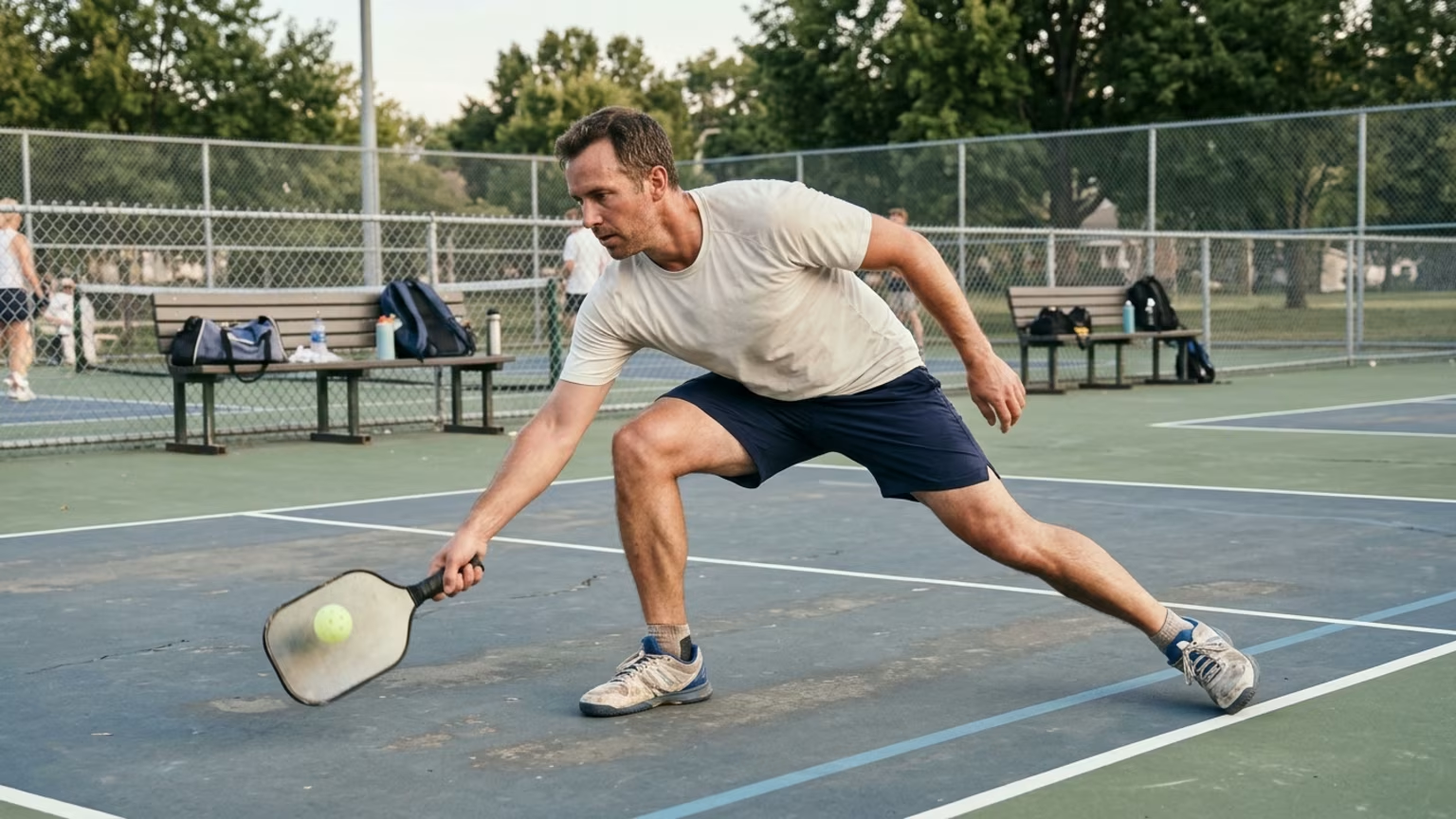
Understand leg strength, balance and control through reaching, stopping and recovery, with adaptable practice ideas for tennis, pickleball and padel.
Read practical guidance for better movement, smarter preparation and a game that keeps working for you.
explore the Blog
