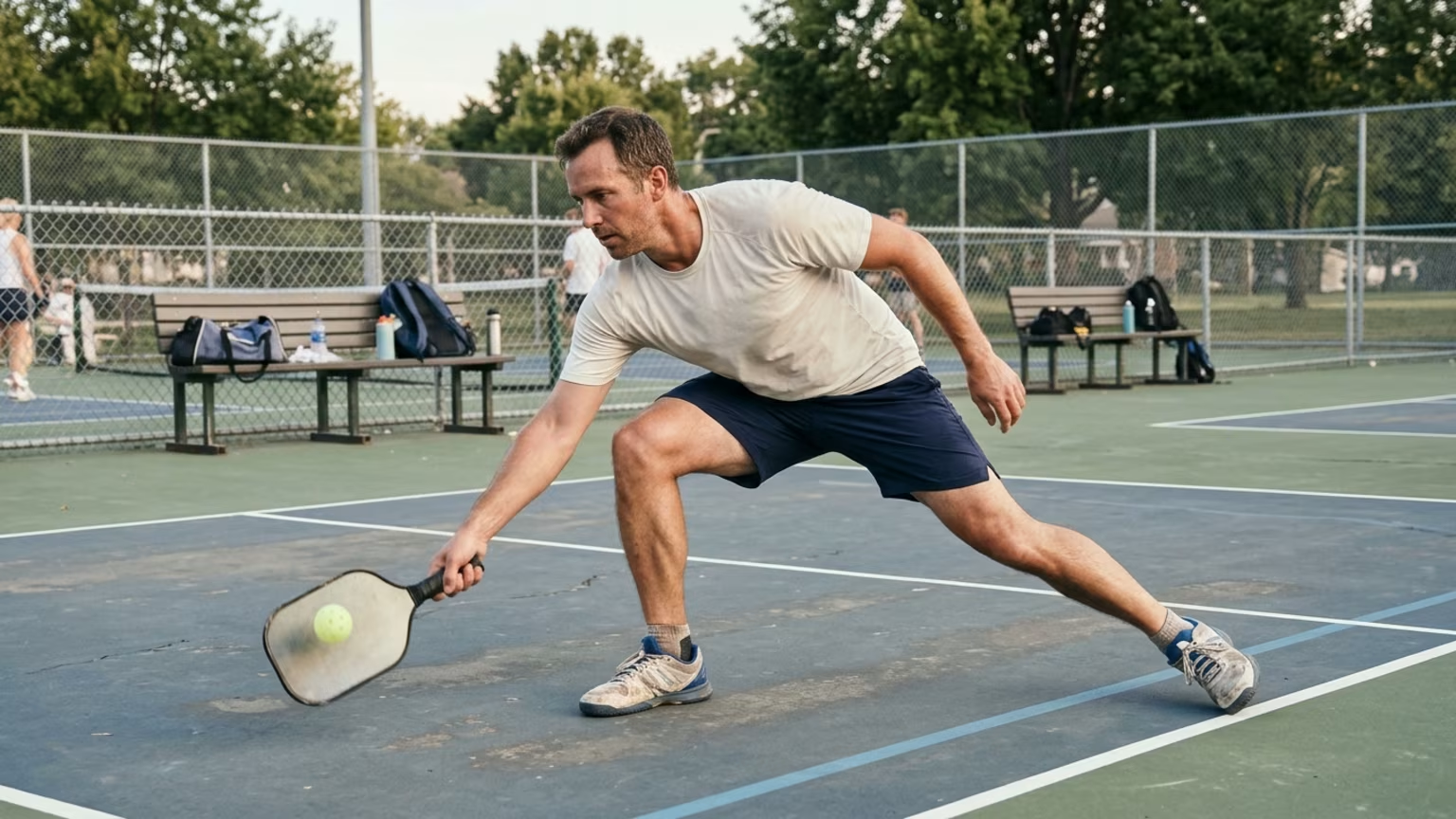

Understand leg strength, balance and control through reaching, stopping and recovery, with adaptable practice ideas for tennis, pickleball and padel.




Lower-body strength, balance and control are the abilities to produce force through your legs, stay steady and manage movement. On court, they come together when you reach a ball, control the stop and recover to a useful ready position.
These are related skills rather than interchangeable labels. Strength concerns producing force. Balance concerns staying steady as your position changes. Control brings attention to how a movement begins and finishes.
That gives lower-body practice a clear court-side purpose: rehearse the arrival and the recovery, not just the effort of getting to the ball. It also makes room for different starting points without treating every player as a candidate for the same routine.
Tennis, pickleball and padel involve repeated bursts of movement and changes of direction. The useful movement question is not simply how quickly a player gets moving. It is how the player reaches the shot, manages the stop and becomes ready to move again.
For tennis, frame the task as balanced movement to the ball and back into readiness. Look at the arrival and what follows it rather than judging the movement only by distance covered. This is the same court-side lens used when discussing how to organise a controlled stop.
For pickleball, lateral reaching and recovery provide a useful focus. A pickleball coaching guide connects single-leg practice with balance and ankle and hip stability. That puts steadiness alongside strength rather than treating them as competing priorities.
For padel, a movement coaching guide recommends a split step to prepare to move. It also describes short adjustment steps before a volley and a return to a balanced position after contact. These provide a clear sequence for thinking about split-step timing and preparation.
A 2026 systematic review in European Review of Aging and Physical Activity examined racquet sports in adults aged 60 and older. It included 13 trials reported in 14 papers. Its primary analysis used 10 randomized trials with 469 participants.
The evidence was concentrated in table tennis. The review authors said the tennis evidence came from one trial of 16 men with no non-exercise control group. That could not support firm conclusions about tennis versus control.
The review examined tennis, badminton and table tennis. It found no direct sport-to-sport trials and could not determine whether one racquet sport was superior. It therefore does not establish equal effects across tennis, pickleball and padel.
The exercise and footwork guides serve a different purpose: they offer coaching suggestions. They are not controlled evidence that a particular routine improves match performance, prevents injury or extends a playing career. Together, these sources support adaptable practice ideas rather than a universal training prescription.
For adult players, a useful athletic-longevity goal is to keep the reach-stop-recover sequence in view. That means thinking beyond a harder exercise or a faster feed. Practice can be organised around the physical capabilities you want to keep using on court: strength, balance and movement control.
The coaching material offers several ways to make that goal concrete. Choose among movement options according to ability and the task being rehearsed. The following examples describe adjustable choices rather than a fixed session.
The pickleball coaching guide suggests squats, Romanian deadlifts and lateral lunges. It also includes single-leg balance reaches and calf raises. These give players a vocabulary for discussing lower-body practice without assuming that every exercise belongs in every player's plan.
For the squat pattern, options include a shallow squat or a sit-to-stand. A smaller movement can make the option simpler. Increasing movement range is another available adjustment when control remains comfortable.
Silver&Fit's guide describes using nearby support for balance work. It also describes reducing an exercise's range or complexity. Supported single-leg balance or a balance reach are examples of how steadiness can become the focus.
Its examples of greater challenge include narrowing the stance or shifting weight. The practical distinction is between changing the task and simply asking for more effort. Support is an adaptation, not a score that ranks a player's ability.
A small side-step followed by a controlled stop is one adaptable illustration from the movement guidance. Slower feeds and smaller movements offer simpler versions. Greater movement range or a direction cue can add challenge while control remains comfortable.
The padel guide also describes partner-fed split-step practice and volley-and-recover drills. The task is to rehearse preparation, adjustment and a balanced recovery. Returning to that sequence keeps the practice connected to the next shot rather than ending the exercise at contact.
For pickleball, the same organising idea can centre on lateral reaching and recovery. For tennis, keep balanced movement as the reference point rather than copying a padel net drill unchanged. The shared framework is the movement goal, while the practice context remains sport-specific.
These options can sit within a broader approach to progressive movement practice. A useful conversation with a coach or physio is which task fits the player now and which adjustment makes sense next.
Pain, a sense of instability or health concerns about these movements are reasons to consult a qualified physio or healthcare provider. General exercise examples cannot answer questions about your individual symptoms or medical circumstances.
Bring the court task into that conversation. Explain whether the difficulty comes while reaching, controlling the stop or recovering after the shot. Describe the support or modifications involved so the discussion stays grounded in what you are trying to do.
The opening image still matters: reach the ball, control the stop and recover to a useful ready position. When pain or instability makes that sequence uncertain, individual guidance is the next useful step.
Follow Evercourts for practical insights on tennis, pickleball and padel performance, movement, recovery and healthy ageing. Stay connected for new articles, research-led guidance and ideas to help you play well and keep playing for years.


How calves and ankles handle repeated court moves, what limited injury research shows, and how adult players can think about preparation and seek care.

Practical answers on pickleball session length, playing frequency and response tracking, without a fixed ramp-up schedule.

Choose racquets, paddles, shoes and bags around fit and court use, with practical advice on trying equipment and recognizing replacement cues.
Read practical guidance for better movement, smarter preparation and a game that keeps working for you.
explore the Blog
