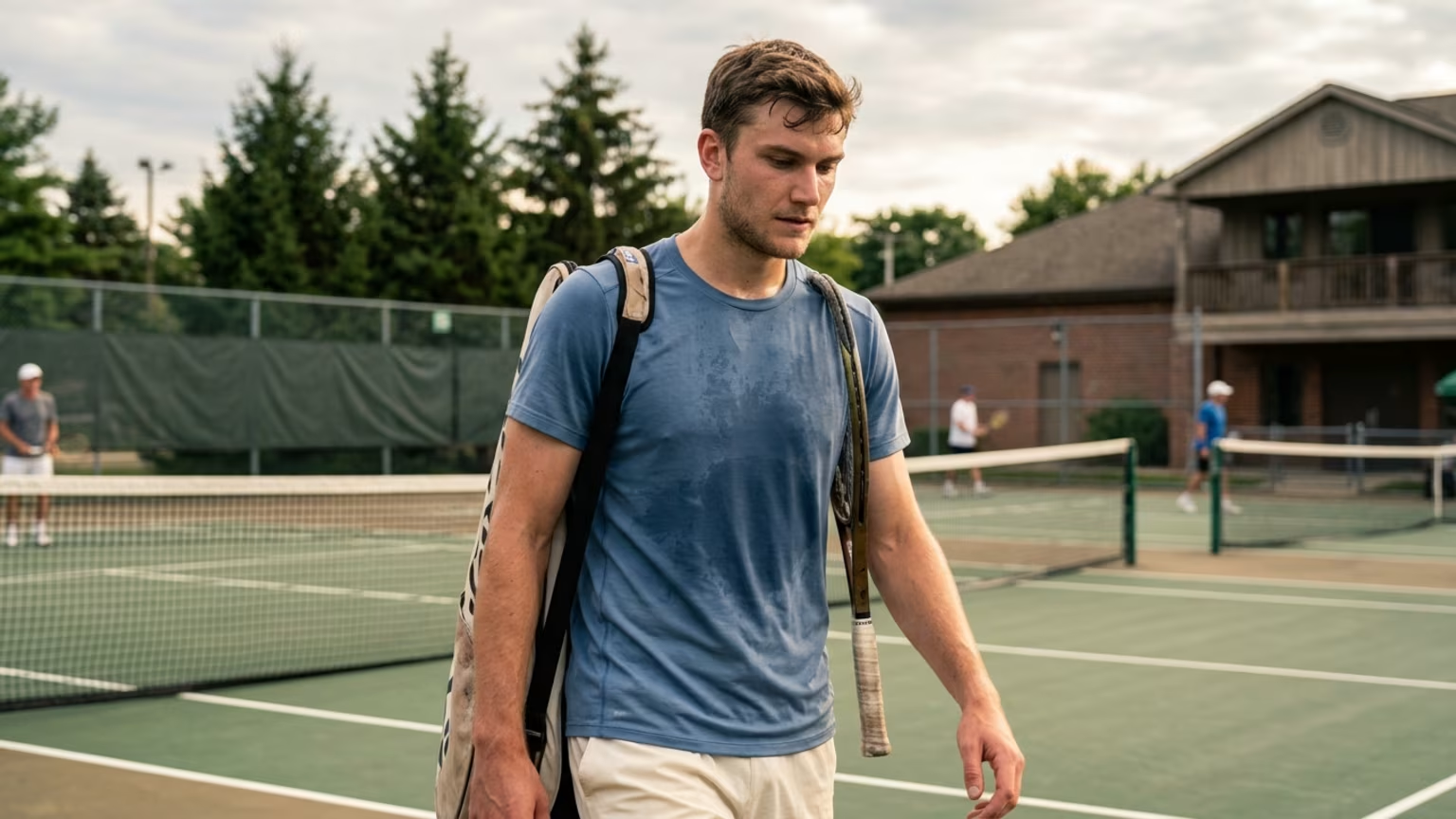

Jack Draper ended his 2026 tennis season early to heal. This profile explains how adult players can apply workload management lessons to stay competitive longer.




On September 15, 2026, Jack Draper announced he would not play again during the rest of the season and is targeting a return to the ATP Tour at the start of 2027. He stated that a complicated injury made things incredibly challenging and that he is taking time to reset and heal.
The decision follows a difficult stretch for the professional player. Draper reached a career-high No. 4 ranking in June 2025 after winning his first ATP Masters 1000 title at Indian Wells and reaching the Madrid final. His 2025 breakthrough included a semifinal victory over Carlos Alcaraz at Indian Wells, which was followed by a final win over Holger Rune. He also reached the 2024 U.S. Open semifinals, giving him a second major-level breakthrough before his ranking rise in 2025.
That upward trajectory was interrupted by a left arm injury. After losing to Marin Cilic in the second round at Wimbledon in 2025, Draper experienced arm pain that was later described as bone bruising involving his playing or serving arm. The injury forced Draper to withdraw from the 2025 U.S. Open after winning his first-round match, and he ended that season early.
He returned to competition in 2026 but was limited by both the arm problem and a separate right knee issue. According to The Athletic, tendinitis in the knee forced him to retire from his first-round match at the Barcelona Open. His strongest 2026 results were a quarterfinal appearance at Indian Wells, where he defeated Novak Djokovic, and a semifinal run at Eastbourne.
However, he lost his next matches in Montreal and Cincinnati and subsequently withdrew from the U.S. Open. By September 2026, his ranking had fallen to No. 155. He wrote that he wanted to return only when he was completely ready to go, rather than rushing back before feeling capable of performing freely. This deliberate pause represents a strategic shift from trying to push through ongoing physical limitations.
Draper’s situation perfectly illustrates the difference between reaching an elite level and maintaining it. For adult recreational players, the professional calendar is not a direct model, but the underlying lesson applies directly to everyday court life. League players often create similar physical stress by combining heavy matches with tournaments and drilling sessions without adequate recovery between them. Long-term competitiveness relies heavily on managing workloads and recovery windows across an entire season.
Our team at Evercourts sees this dynamic frequently in adult racquet sports. I used to think a tough conditioning block was the only way to improve my court endurance. Then I started tracking my sleep. I noticed that on days I slept less than six hours, my reaction time at the net was noticeably sluggish, and I felt completely fatigued by the second set. Prioritizing consistent rest did more for my late match stamina than any extra sprints ever did. Recovery is the true foundation of performance.
Treating practice as workload is essential for athletic longevity. Serving practice, high-intensity drilling, and ball-machine work all add stress to the exact same tissues used in heavy competition. Draper’s case underscores the importance of respecting serving arm symptoms early. Adult players should not use a professional athlete's persistence as a justification to play through joint pain. Persistent or worsening symptoms require assessment from a qualified clinician rather than a tough mindset.
When players shift between racquet sports, this workload management becomes even more crucial. A tennis player trying out a local padel league might not realize how much extra load they are placing on their knees and lower back. Tracking how the body responds over several days is a very practical habit. A simple log can record session duration, perceived fatigue, and any pain during play. This tracking approach is not a clinical diagnosis, but it helps players identify risky patterns before a minor ache turns into a lost season. For guidance on structuring safe practice schedules, players can review our guide on Training Load Management for Tennis, Pickleball, and Padel Players.
Recreational players should map out their schedule before committing to a crowded competitive season. A strong local tournament result does not prove the body is ready for another immediate block of competition. Just as Draper produced high-level results at Indian Wells in 2026 before needing to step back, amateur players must build deliberate recovery windows into their calendars.
The impact of interrupted competition is clear when looking at the participation numbers. According to coverage from The Athletic, Draper played only 15 competitive singles matches in 2026. Other published reports use different counts depending on whether they measure events or competitive matches. Tennis Up To Date listed eight tournaments for the year, while BBC coverage indicated he had played nine events since the previous Wimbledon, and another report summarized his 2026 record as eight wins and seven losses.
These limited schedules caused significant disruption to his competitive rhythm. Draper missed all four Grand Slam tournaments in 2026, according to AP coverage. The ranking decline from No. 4 down to No. 155 is a direct consequence of missed competition and the loss of opportunities to accumulate ranking points. We discuss the broader physical impacts of heavy professional schedules in our analysis of Why Pro Tennis Workload Concerns Matter for Recreational Court Health.
The numbers highlight why a return from injury must be progressive. We often hear from players who feel frustrated by the slow pace of rebuilding match fitness. Draper’s need to regain sharpness after multiple interruptions illustrates why recovery is an ongoing project. A return to court must progress gradually from controlled practice to full competitive intensity.
For adult players who want to keep playing tennis, pickleball, or padel for years, the most useful question is not how much volume they can tolerate this week. The real measure of success is finding a schedule that allows them to remain healthy and competitive across the entire year. Skipping crucial recovery steps usually results in an unfortunate cycle of repeated absences.
As the 2027 season approaches, the sport will closely watch how returning players manage their initial workload. Draper’s target of a full reset will likely set a strong example for prioritizing complete physiological readiness over rushing back for specific events. We expect to see more structured progressive return protocols across the tour over the next season, emphasizing sustainable pacing rather than isolated tournament peaks.
Follow Evercourts for practical insights on tennis, pickleball and padel performance, movement, recovery and healthy ageing. Stay connected for new articles, research-led guidance and ideas to help you play well and keep playing for years.


An evidence check on sports supplements like tart cherry juice. Learn why racquet sports players should prioritize core nutrition over functional foods.
In late 2026, Oura analyzed wearable data to see how recreational tennis impacts heart health and recovery. Learn what this means for your athletic longevity.
Recent guidelines emphasize gradual progression, dynamic warm-ups, and scheduled recovery to help adult racquet sports players maintain athletic longevity.
Read practical guidance for better movement, smarter preparation and a game that keeps working for you.
explore the Blog
