

A practical review of The Dink's backhand volley guide, its two exercises and weekly schedule, with clear limits on performance and injury claims.




On October 29, 2026, The Dink Media Team published “Fix Your Two-Handed Backhand Volley With These Drills,” a coaching guide built around open-book rotations and side-lying weighted external rotations.
The guide connects upper-back movement and shoulder control with a specific technical aim: a compact backhand punch rather than a large swing. The Dink argues that upper-back rotation and shoulder stability support shoulder turn and paddle-face control.
Its exercise descriptions focus on different movements:
The Dink recommends the drills two to three times per week. Its proposed schedule uses open-book rotations before sessions and external rotations twice weekly after play. It also suggests filming the volley once a week to check for an early shoulder turn.
That makes the article more specific than a general instruction to work on mobility. It connects named exercises with a place in the playing week and a technical feature to review on video.
The key qualification is that this is a coaching guide rather than a trial of the routine. The Dink mentions a randomized trial and a muscle-activity study without enough identifying details to check them. The article does not establish that this exact routine improves volley performance or prevents injury.
Evercourts' reading is to treat the guide as a practice idea rather than a correction every player needs. Its useful question is specific: how does the preparation relate to the compact volley the article describes? That keeps the discussion tied to a stroke instead of a broad promise about shoulder health.
For an elite player, the relevant test would be whether the work changes the volley under competitive pressure. Better execution of an exercise would be one observation. A more consistent shoulder turn or paddle face during exchanges would be a separate outcome worth assessing. Those outcomes should not be treated as interchangeable.
For a weekend league player, the useful starting point is the stroke review rather than copying a professional training setup. The Dink's filming suggestion provides a concrete reference: look for the early shoulder turn described in the guide. A recording can be used to frame a technical conversation without turning it into a medical assessment.
The compact-punch cue also deserves attention in its own right. The Dink does not describe the backhand volley as a large swing that needs more rotation at every opportunity. Its message is about preparation for a compact action. Reading the exercise advice alongside that cue is more useful than assuming that more movement must produce a better volley.
Our wider discussion of using two hands at the net offers context for thinking about the stroke. This update adds a narrower point: the movement exercise and the volley should remain separate things to assess.
The same distinction applies to scheduling. The Dink puts the open book before play and the resisted exercise later. Players considering that idea can also read about keeping court preparation purposeful rather than treating every new drill as another item that must be added.
Any additional routine belongs within the context of recent playing time. The editorial priority is a workable week of racquet sports rather than perfect compliance with a media schedule. For anyone with shoulder pain or an existing condition, decisions about resisted exercise belong with a qualified healthcare professional who can consider the individual situation.
A 2026 preprint on medRxiv estimated that U.S. emergency-department-treated pickleball injuries increased from 1,391 in 2014 to 24,294 in 2023. The researchers also reported that participation grew by about 4.4 times from 2017 to 2023 while injury estimates grew by 4.0 times.
These figures came from emergency-department records. The researchers cautioned that the available data could not establish whether injury risk per player had increased. The preprint did not assess The Dink's exercises or shoulder-conditioning routines.
The useful context is therefore about how safety information is read. More recorded injuries and a higher personal risk are different claims. Neither the headline count nor the participation comparison should be turned into a reason to promise protection from this routine.
For adult players, that distinction supports a calmer discussion of athletic longevity. Safety coverage should help explain the evidence rather than use a growing sport's injury totals to sell certainty.
Over the next season, the most useful follow-up would connect these practical coaching ideas with clearly described outcomes. That could mean reporting how the volley was assessed rather than stopping at whether a player completed the exercises.
For performance coverage, the questions should stay close to the court:
These are the kinds of questions that would make a future assessment useful to players.
The editorial trend worth supporting is greater precision: clear movement cues alongside equally clear descriptions of what was measured. A short routine can be an accessible coaching format without carrying every promise attached to performance and healthy aging.
For the coming season, judge this approach by the quality of the connection between preparation and play. Keep the guide's practical specificity and ask future coverage to make that connection easier to assess.
Follow Evercourts for practical insights on tennis, pickleball and padel performance, movement, recovery and healthy ageing. Stay connected for new articles, research-led guidance and ideas to help you play well and keep playing for years.


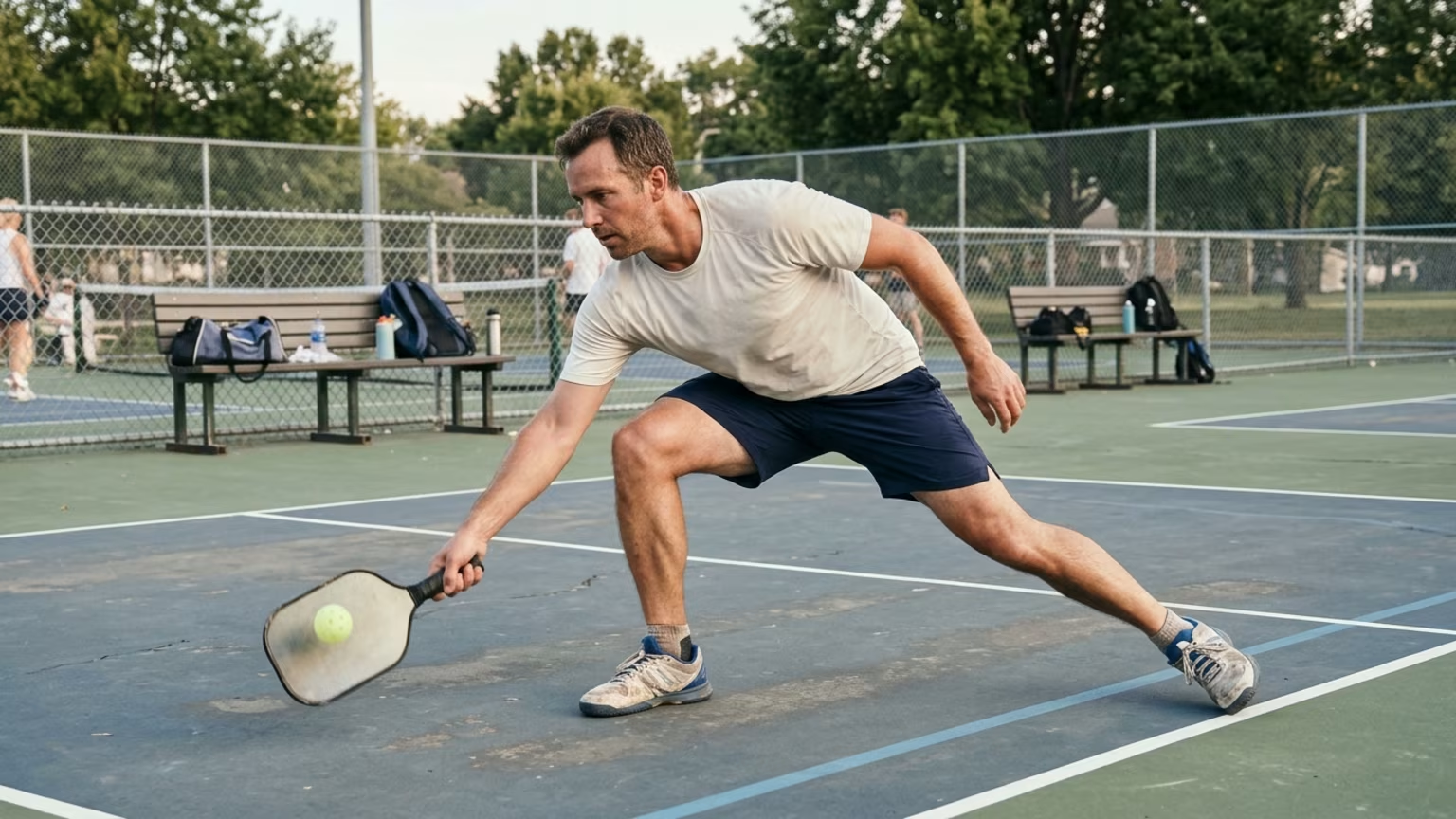
Understand leg strength, balance and control through reaching, stopping and recovery, with adaptable practice ideas for tennis, pickleball and padel.

How calves and ankles handle repeated court moves, what limited injury research shows, and how adult players can think about preparation and seek care.

Practical answers on pickleball session length, playing frequency and response tracking, without a fixed ramp-up schedule.
Read practical guidance for better movement, smarter preparation and a game that keeps working for you.
explore the Blog
