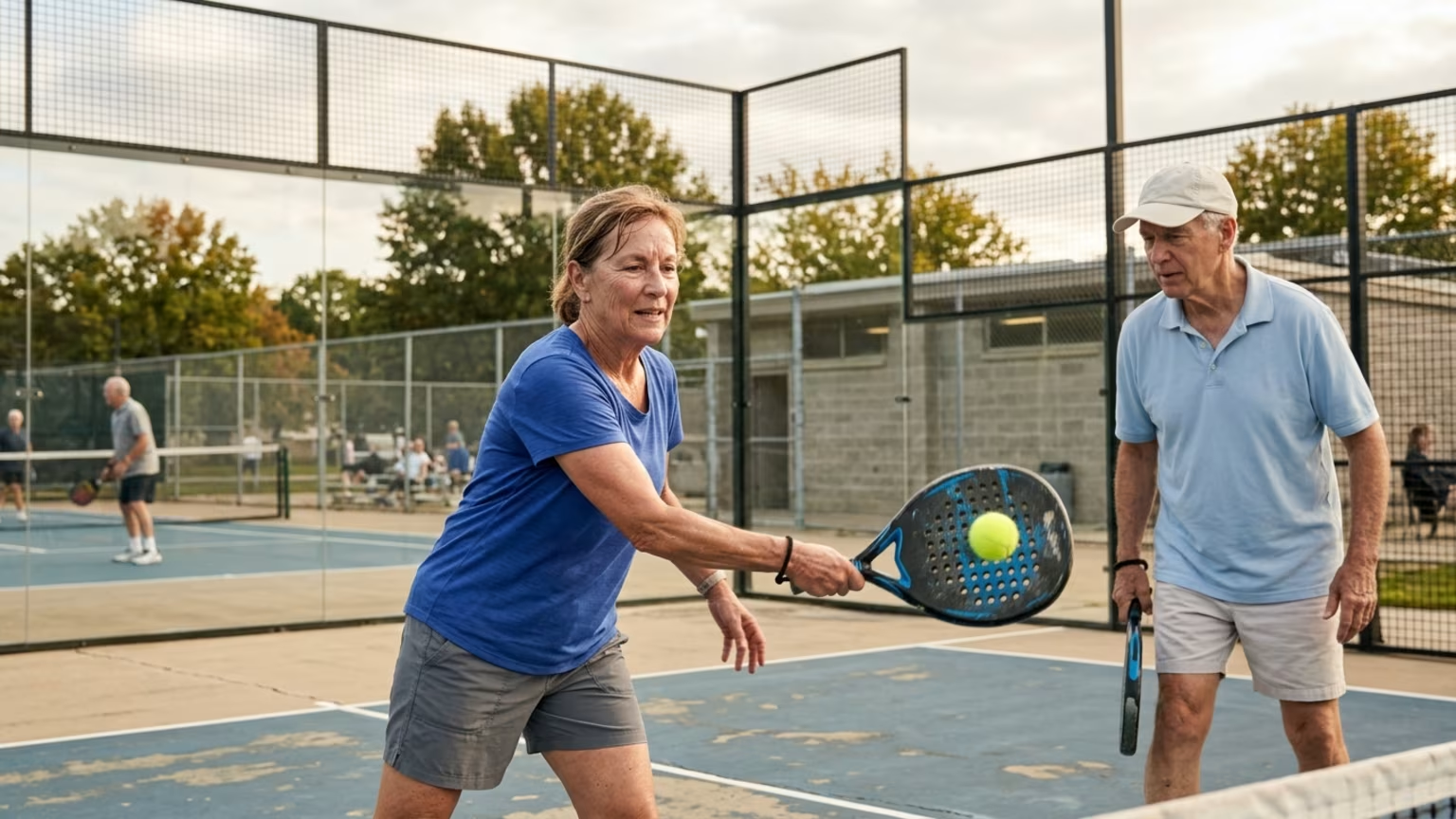

A recent KeepActive directory update highlights a Melbourne-area padel program offering introductory coaching and social play for adults aged 65 and over.




On September 11, 2026, the KeepActive directory in the Bentleigh area updated its local seniors activities to feature Colosso Brighton Padel Social and Coaching in Brighton East, Victoria. The listing presents an organised pathway for older adults to try racquet sports through a unique combination of social match play and beginner coaching. The advertised age range explicitly covers participants from 5 to 65 and over, making it a prominent community option. This highlights a growing local push to make padel highly accessible for returning players who want technical instruction alongside low-pressure games.
The KeepActive directory entry outlines an accessible format for newcomers seeking to learn the game. The program offers organised social sessions that rely heavily on court rotations and extended rallies. It also includes a relaxed women's session that successfully combines targeted coaching with casual games. The directory displays an approximate price of $50 for the activity, making it a distinct local offering in Brighton East, Victoria.
A key component of the listing is an introductory clinic designed specifically for first-time players. This small-group clinic covers padel rules, serving mechanics, and basic shots in a friendly and non-competitive setting. This sensible structure allows a newcomer to begin with formal instruction before they transition into the rotating social matches.
While the listing explicitly welcomes adults aged 65 and over, it does not represent a strict seniors-only program. KeepActive does not provide specific session dates, times, coach credentials, or confirmed booking links in the main search result. Participants must verify the exact price and equipment requirements directly with the Brighton East organiser.
Professional racquet sport programs focus intensely on load management and advanced tactical conditioning. For the everyday adult recreational player, the barriers to entry are usually logistical and highly social. The Colosso Brighton rotational format directly addresses these common hurdles for players looking to stay active. Players do not need to arrive with an established partner or a fixed group of four to get a game. They can simply show up, rotate through different match configurations, and meet other participants at their own skill level.
The small-group introductory clinic also serves a highly practical purpose for athletic longevity. Returning players often struggle with the specific movement patterns required for a new court sport. By learning the basic rules and fundamental strokes before playing full matches, older adults can build vital technical confidence. This foundational instruction is absolutely critical when cross-training across courts to avoid unnecessary joint strain.
However, recreational players must learn to separate basic technique coaching from certified medical supervision. While a padel coach can improve your slice serve, the directory does not establish that these sessions are clinically designed to manage existing injuries. Older adults should treat the introductory clinic strictly as a way to learn the sport safely. It is not a medically prescribed rehabilitation program for aging joints. Players returning from a long break should always clarify court duration and rest periods before booking a local session. Taking adequate time for a proper court-ready warm-up remains essential for long-term health.
When older adults arrive at a new facility, they should also ask the organiser about the specific movement demands. The listing describes rallies and rotating matches, which can quickly increase physical fatigue. Prospective participants should verify the actual session schedule, required equipment, and venue access before committing to a block of classes. Clarifying these practical details ensures a smoother transition back into competitive or social sports.
The push to include older adults in local racquet sports aligns closely with broader public health research. A 2026 systematic review found that older adults receive significant health benefits from consistent physical activity. These documented benefits include remarkable improvements in functional health, cognitive function, mental health, and overall quality of life. The same comprehensive review noted positive links between physical activity and lower risks of falls, frailty, and osteoporosis. A recent systematic review also says that exercise programs for community-dwelling older adults can reduce fall-related injuries and fractures. This kind of movement may contribute to healthy aging and general injury prevention.
General racquet sport participation carries strong observational associations with long-term longevity. A secondary medical explainer cited a massive British cohort of 80,306 adults who were followed for approximately nine years. That group showed a 47 percent lower risk of death from any cause and a 56 percent lower risk of cardiovascular death among racquet sport participants. Furthermore, a separate article cites a Danish study of more than 8,500 people tracked over 25 years. This study reported nearly 10 additional years of life expectancy for racquet sport participants compared to completely sedentary individuals.
Despite these highly promising statistics, padel is still a demanding physical activity that carries inherent physical risks. A physiotherapy article reported estimated injury rates of roughly three injuries per 1,000 training hours and eight injuries per 1,000 matches. The article described these specific figures as broadly comparable with tennis and squash rather than clearly lower. Older players should absolutely not assume that padel is an automatically injury-free or universally low-impact environment.
Additionally, research indicates that playing padel alone may not be enough to prevent dangerous falls. A separate review concluded that the most consistent fall-prevention benefits actually come from regular, progressive, and individually tailored exercise programs. These specialized programs must combine balance work, functional exercises, and targeted strengthening routines. Therefore, adults over 65 should ideally pair their social padel matches with a dedicated physical conditioning routine. Research reported by PsyPost also notes that padel studies have largely focused on performance outcomes like self-confidence rather than clinical health metrics.
As padel expands globally, community facilities will increasingly need to adapt their standard programming for older adults. The model seen in the KeepActive directory highlights a growing trend toward highly structured introductory pathways. Over the next season, more local clubs will likely adopt this exact blend of non-competitive clinics and rotational social play. This sensible approach provides a clear onboarding process that deeply respects the physical realities of returning athletes.
Facilities that want to retain adults over 65 will need to move far beyond simple age-range inclusion language. We expect to see organizers actively implement clearer guidelines around match intensity, mandatory rest periods, and modified court movement requirements. Successful community programs will prioritize fundamental technique instruction and essential footwork skills to systematically build player confidence. Ultimately, providing a supportive and transparent entry point will become the standard requirement for sustainable community padel growth.
Follow Evercourts for practical insights on tennis, pickleball and padel performance, movement, recovery and healthy ageing. Stay connected for new articles, research-led guidance and ideas to help you play well and keep playing for years.


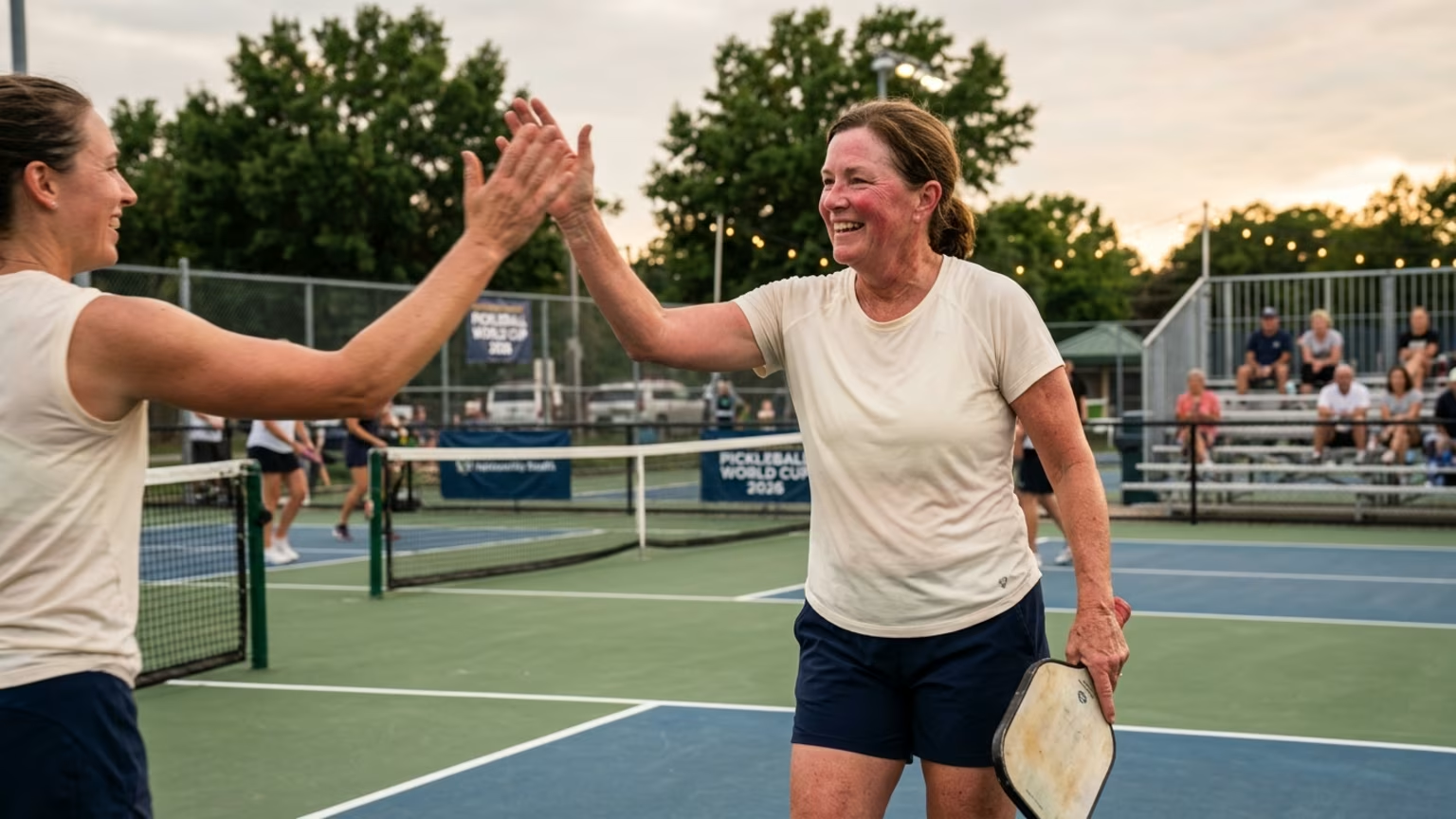
Bhushan Akut won three 60+ gold medals at the 2026 Pickleball World Cup. Learn how sensible preparation and tactics inform recreational senior play.

Understand why racquet sports injuries spike after summer and how to safely return to the court using a phased approach to frequency and match intensity.
The 2026 US Open men's semifinals highlighted how "not before" start times create unpredictable preparation windows. Learn how adult racquet players can adapt.
Read practical guidance for better movement, smarter preparation and a game that keeps working for you.
explore the Blog
