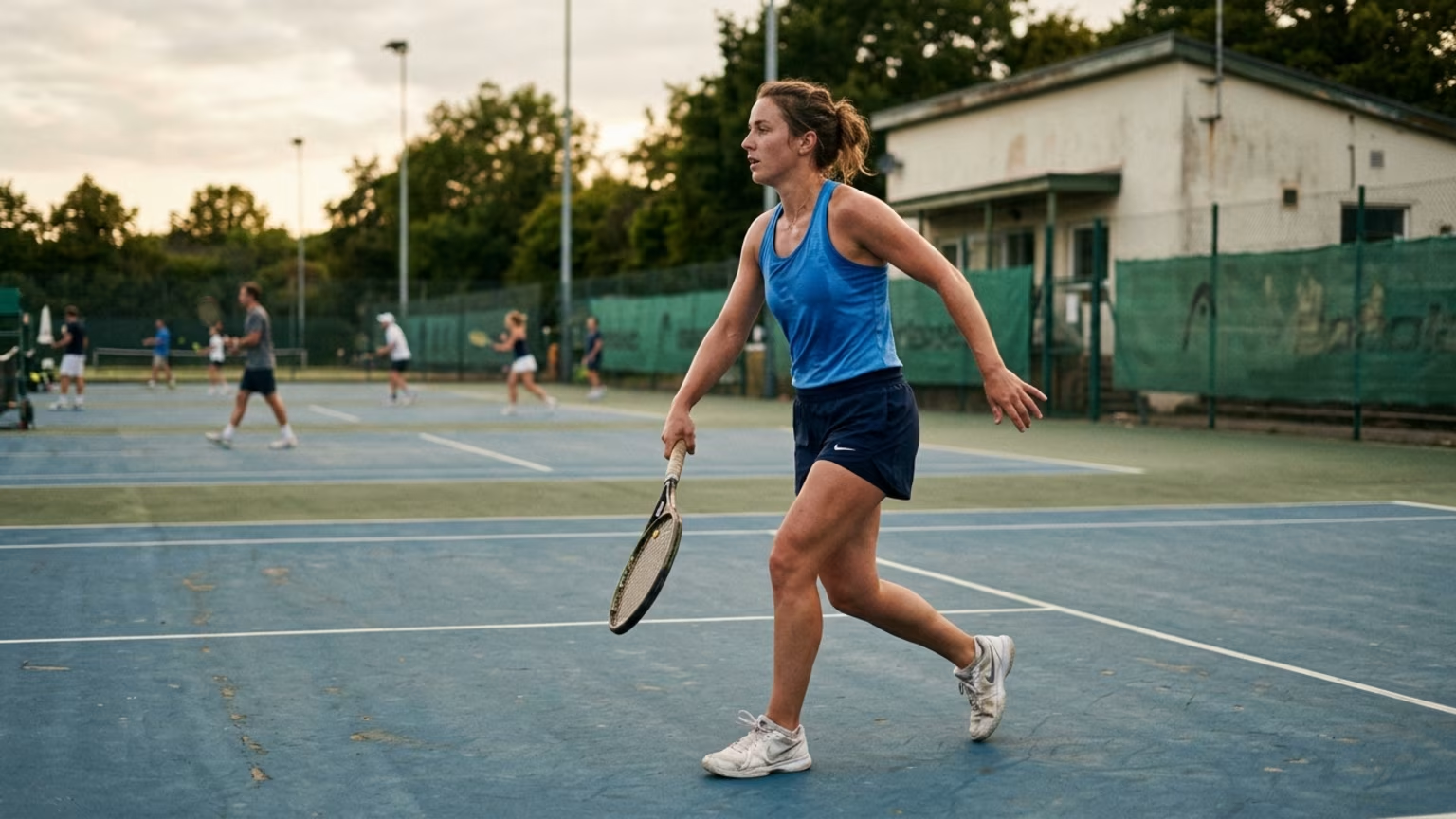

Discover a 12-minute court-ready warm up for tennis, pickleball and padel. Learn how to raise your temperature and improve readiness before your next match.




When I first started playing pickleball, I noticed how many people skipped warming up entirely. They would jump straight out of their cars and right up to the kitchen line. I tried doing that and immediately pulled a calf muscle. While a generic routine does not guarantee safety, structured protocols like the roughly 20-minute FIFA 11+ football program have reported injury reductions ranging from 30% to 46% according to clinic data.
Adult players often mistake static holds for adequate preparation before a casual match. Holding a long stretch might feel productive while waiting for a court to open. However, long and fatiguing static holds are better reserved for a separate flexibility session or a post-match cool down. A recent exercise evaluation notes that these static holds can be counterproductive when immediate speed or power matters on the court.
A functional routine acts as a progressive preparation sequence for the physical demands ahead. Players need to raise their body temperature and move joints through relevant ranges. This gradual process activates key muscles without creating heavy fatigue before the first serve. You want to rehearse the specific actions that will occur in the opening games.
Adult players frequently underestimate the sheer physical force generated during a casual rally. The body must decelerate its entire mass rapidly while simultaneously swinging a racket. This combined action creates immense stress on the ankles, knees and lower back. Preparing your muscular system to absorb this dual force is essential for healthy aging.
Racquet sports force the human body to manage aggressive stopping and sudden explosive starts constantly. A player regularly transitions from passive waiting to maximum exertion in split seconds. A cold muscle absorbs this sudden kinetic energy poorly during these rapid adjustments. Preparing the body appropriately ensures that muscles and connective tissues can handle these rapid transitions.
To build readiness safely, movement must progress from easy steps to more demanding actions. You can begin with a brisk walk or gentle court laps around the perimeter. This initial phase helps the body shift from a sedentary state to an athletic state. Skipping this gradual temperature increase is a primary reason why early match stiffness occurs.
Another physical challenge is the repetitive nature of racquet sports on the upper body. Every single swing and overhead reach accumulates localized stress on specific joint structures. Over a long match, this repetitive load demands immense muscular resilience and joint stability. A thorough active preparation phase readies these specific tissues for the upcoming workload volume.
The exact length of a useful routine varies based on individual needs and current stiffness levels. However, a dynamic warm up lasting between 5 and 15 minutes is a commonly proposed range. One specific evidence summary recommends approximately 7 to 10 minutes of active and sport relevant movement before performance. Integrating a structured dynamic warm up routine provides a highly practical window for most recreational players trying to optimize their court time.
Understanding the data from other sports offers valuable perspective for court athletes everywhere. The FIFA 11+ program combines running, balance, strength, landing and cutting exercises over roughly 20 minutes. A systematic review reported an ankle focused injury rate ratio of 0.67 among teams using this specific protocol. These exact numbers cannot transfer directly to racquet sports, but the underlying principle of active preparation remains highly relevant.
Researchers caution that proving generic warm ups prevent all injuries remains a difficult scientific challenge. Injury outcomes and specific movement protocols vary substantially across different athletic settings. We cannot promise that a specific 12-minute routine will eliminate all physical risks entirely. We can state confidently that dynamic preparation improves movement quality and supports better match readiness.
Instead of holding static poses, players should use controlled repetitions of active movements. Recommended actions include ankle rocks, calf raises, hip hinges and walking lunges. You can also add leg swings, trunk rotations, arm circles and shoulder movements to complete the sequence. These dynamic actions safely prepare the joints for the multi-planar movement required during heavy competition.
Every racquet sport features a unique physical footprint that should actively influence your preparation. Tennis requires players to prepare for extensive court coverage and long acceleration patterns. Players must also manage repeated lateral recovery and significant overhead demand from heavy serves. A tennis player should therefore build up to crossover steps and gradual rehearsal of their main strokes.
Tennis players should also prepare their shoulder joints for the heavy serving motion. The serve requires a complex chain of kinetic energy transferring through the upper body. Gradually rehearsing the serve motion at half speed helps prevent sudden shoulder strains. This progressive approach ensures the rotator cuff is ready for peak match intensity.
Pickleball relies on a smaller court layout that encourages short and frequent lower body movements. Players face rapid lateral adjustments, compact recovery steps and repeated stopping near the non volley zone. The sport requires just as much explosive lateral movement as tennis, just in a tighter space. This fast paced environment demands immediate joint stability to prevent sudden ankle strains.
To prepare for these specific demands, pickleball players must prioritize their lower body readiness. Since then, I always spend five minutes doing dynamic lunges and ankle rolls. It changes everything about how confident I feel pushing off the baseline. This targeted preparation ensures your lower body can handle sudden stops safely.
Padel introduces another unique environment with its enclosed court and heavy reliance on wall rebounds. This distinct setup makes backward movement, rapid rotation and spatial awareness especially critical for success. Padel players should focus their preparation on controlled backward steps and turning to simulate wall play. Using court-based conditioning drills can help replicate these specific movement demands before the first point.
Adjusting for the surface also plays a critical role in how you prepare your body. Playing on a cold outdoor hard court requires a more gradual temperature building phase. You should extend the initial walking or jogging portion rather than forcing your muscles to stretch harder. A smart athlete always listens to the environment and adapts their preparation timing accordingly.
Taking these insights and applying them practically is the core goal for our team at evercourts. You do not need a highly complex routine to see meaningful benefits on the court. A practical 12-minute format offers a realistic structure that you can repeat consistently before playing. Consistency is much more important than trying to replicate a professional athlete routine perfectly.
Spend your first three minutes simply raising your body temperature with brisk walking or light jogging. Transition into three minutes of controlled dynamic mobility using hip hinges and arm circles. Dedicate the next three minutes to low amplitude lateral shuffles and basic split step patterns. Use your final three minutes to rehearse a few progressive accelerations and controlled racket swings.
Pay close attention to how your body responds during this active 12-minute preparation window. If a movement produces sharp pain or unusual symptoms, you should stop and seek professional medical assessment. A physical preparation routine is a readiness check, not a brutal test of your athletic toughness. Prioritize your physical health so you can sustain your court performance for years to come.
The available data shows that active preparation makes a measurable difference in your athletic readiness. Make this 12-minute dynamic routine a non negotiable habit before every single practice session. Arrive at the courts early, start your watch, and commit to preparing your body properly. Take your first active steps today before you even pick up your paddle or racket.
Follow Evercourts for practical insights on tennis, pickleball and padel performance, movement, recovery and healthy ageing. Stay connected for new articles, research-led guidance and ideas to help you play well and keep playing for years.


An evidence check on sports supplements like tart cherry juice. Learn why racquet sports players should prioritize core nutrition over functional foods.
In late 2026, Oura analyzed wearable data to see how recreational tennis impacts heart health and recovery. Learn what this means for your athletic longevity.
Recent guidelines emphasize gradual progression, dynamic warm-ups, and scheduled recovery to help adult racquet sports players maintain athletic longevity.
Read practical guidance for better movement, smarter preparation and a game that keeps working for you.
explore the Blog
