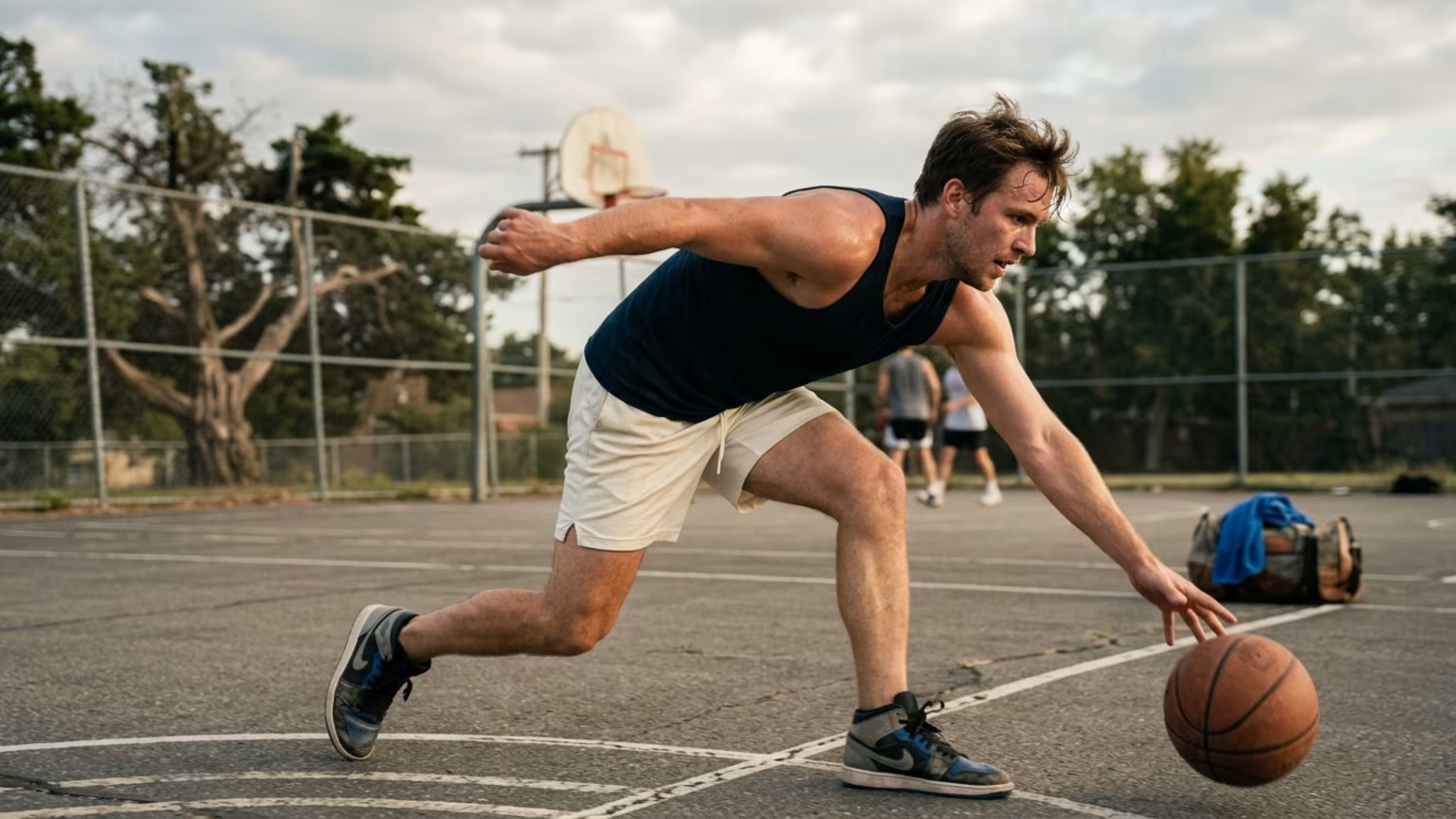

Learn why usable mobility beats extreme flexibility on the court. Review specific routines for ankles, hips, thoracic rotation and shoulders to stay agile.




A player drops their bag by the net post, pulls one heel to their glute and holds it for a few seconds. They touch their toes, swing their arms in a few hurried circles and step onto the baseline. Within ten minutes of the first rally, their movement looks completely rigid.
You have heard it a million times: if you want to move smoothly and prevent injuries, you need to stretch until you are as flexible as a gymnast. Here is why that is outdated. Passive range of motion does not equal athletic capability during a highly competitive rally. Court sports demand that you load your legs, brake rapidly and rotate your trunk with control.
If you have the flexibility to reach a deep lunge but lack the strength to push out of it, that extra range does not help your game. Extreme flexibility without corresponding strength can leave your joints vulnerable during high speed directional changes. Usable mobility is about controlling your body weight at the specific angles required by tennis, pickleball and padel. The goal is functional capability rather than simply touching your toes.
Players naturally assume that a tight muscle needs to be stretched aggressively before playing. We grew up seeing static stretching routines printed on gymnasium walls and locker room posters. It makes intuitive sense to pull a muscle until it feels loose when you step onto a cold court. We just wanted a simple way to feel ready for intense competition.
Treating mobility as a flexibility contest ignores how our joints actually manage force. Recreational players adopted these passive stretching habits because they were easy to perform and required no equipment. Nobody explained that preparing for explosive racquet sports requires a different approach than preparing for a static fitness test. We adopted the simplest advice available at the time.
Players watch elite professionals stretching on television and assume they should do the same. We forget that those professionals have dedicated coaching teams, massive strength foundations and very different daily workloads. We copied the aesthetics of professional preparation without understanding the mechanics behind it. This created a lasting misconception about how adult players should physically prepare.
A 2026 systematic review of 23 studies involving 627 athletes found that static stretching improved flexibility by approximately 2.97% from baseline. It showed a 2.36% improvement compared with controls. Dynamic stretching produced a smaller flexibility improvement of approximately 0.77% compared with controls. However, dynamic stretching yielded a small performance improvement of approximately 0.55% compared with controls.
The researchers found that static stretching longer than 60 seconds produced larger short-term flexibility improvements of 6.21%. Unfortunately, this was associated with a small pre-to-post performance decline of 1.80%. The review authors cautioned that 15 of these studies were rated low quality. This means the results should guide our programming choices rather than serve as a universal rule.
The physical demands of our sport require targeted control in four specific areas. First, your ankles need dynamic stability to handle rapid braking and sudden acceleration during a rally. A 2026 meta-analysis of 13 trials involving 1,476 participants found neuromuscular training was associated with a 55% reduction in ankle-injury incidence. Passive calf stretching alone does not build this vital neuromuscular control for the court.
Second, your hips must rotate and lower your center of mass efficiently to hit a solid groundstroke. When hip mobility is limited, players often compensate by shifting the mechanical burden to their lower back or knees. Good hip function allows you to separate pelvic movement from trunk movement. This separation is crucial for generating power smoothly without straining nearby joints.
Third, thoracic rotation directly supports your racquet strokes and serves. A 2026 review involving 18 studies and 670 participants favored neuromuscular training for stroke velocity, sprint performance and agility time. The certainty of evidence for some outcomes was low, but the trend clearly favors integrated movement over isolated flexibility work. The goal is the ability to rotate and return repeatedly while maintaining balance.
Finally, your shoulders require a careful balance of capacity, control and strength rather than isolated passive stretching. Overhead and racquet athletes may develop side-to-side differences in shoulder rotation. A practitioner source highlighting tennis players noted that internal rotation deficits are a measurable difference worth assessing. More range is not automatically better if the player lacks the strength to control repeated overheads.
I remember finishing a tough two hour padel match on a cold Tuesday night and waking up the next morning feeling like my lower back was locked in concrete. For a long time, I just accepted this as the price of playing hard in my forties. But once I started spending just ten minutes on targeted hip mobility before heading to the club, the stiffness almost completely vanished. It taught me that we do not have to accept pain as a default state of aging.
You can achieve similar results by replacing passive pre-match stretching with an active movement sequence. Start with two minutes of brisk walking or light jogging to elevate your body temperature naturally. Follow this with one minute of knee-to-wall ankle rocks and basic calf raises. Use a focused ankle and foot mobility routine on training days to build reliable mechanics for changes of direction.
Next, spend a minute on half-kneeling hip shifts and smooth transitions to prepare your lower body. Add lateral step-and-stick patterns to practice absorbing force quietly. Practice seated trunk rotations and controlled shadow strokes to prepare your thoracic spine safely. A consistent thirty minute court routine combining these areas builds genuine athletic longevity over a long season.
Finish your pre-match sequence with two minutes of shoulder wall slides, arm circles and progressive racket swings. The goal is to step onto the court feeling warm, coordinated and ready to accelerate. You should never feel overly stretched out, fatigued or unstable before your first serve. Your preparation should match the dynamic nature of the game you are about to play.
Reserve your longer static holds for entirely separate non-match days. A separate meta-analysis of 84 studies showed repeated stretching over at least one week improves range of motion effectively. For example, athletes saw an active knee extension improvement of approximately 9 degrees compared with no intervention. Dedicated recovery days are perfect for this deeper flexibility work when it does not precede explosive play.
The New Golden Rule: Do not train to become more flexible than your sport requires, but rather train to control the range of motion you actually use. We need strong, capable joints that can handle the unpredictable geometry of racquet sports. Focusing on targeted movement control over passive stretching builds a physical foundation that lasts. Evercourts will always champion the practical steps that keep you playing well and moving freely for years to come.
Follow Evercourts for practical insights on tennis, pickleball and padel performance, movement, recovery and healthy ageing. Stay connected for new articles, research-led guidance and ideas to help you play well and keep playing for years.


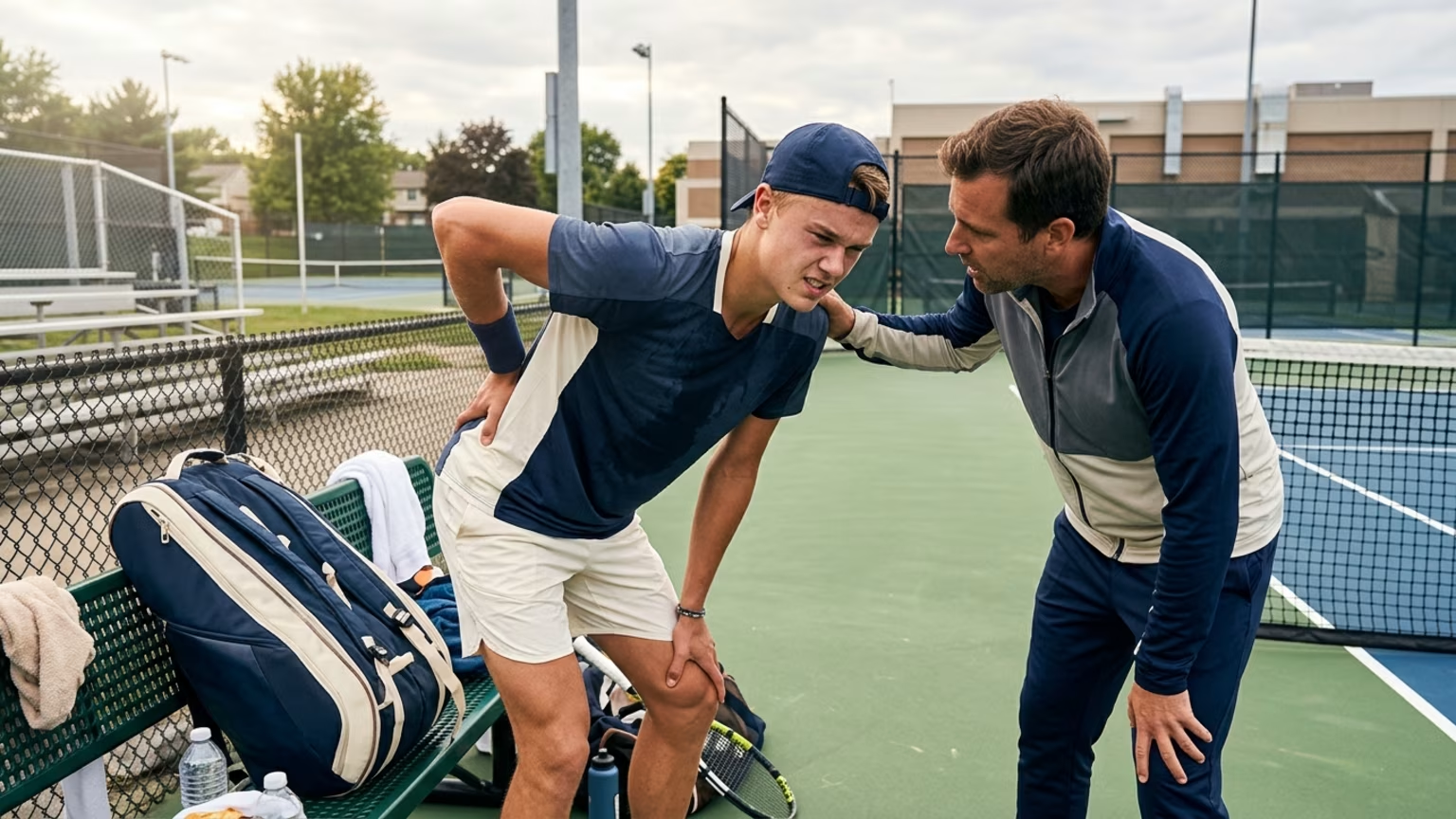
Holger Rune withdrew from the European Open with a back problem. The facts behind his decision and a grounded perspective for recreational players.

The Dink’s October 17 guide emphasizes deep returns, ball-height decisions and positioning against faster pickleball opponents.

A new report outlines padel and tennis gear trends. Learn how to assess adjustable rackets, sensor feedback and smart-court claims.
Read practical guidance for better movement, smarter preparation and a game that keeps working for you.
explore the Blog
