

A new tennis strength guide pairs rotational and single-leg work with in-season maintenance. Here's how recreational players should read it.




In October 2026, Fitness.ee published “Strength training for tennis players: how to improve performance,” pairing tennis-specific exercise choices with a proposed shift from preseason preparation to lower-volume in-season maintenance.
The guide recommends a broader approach than concentrating only on the upper body. Its central priorities are rotational strength, single-leg stability, explosive lower-body power and shoulder or rotator-cuff stabilization.
Those priorities provide the framework for its exercise selection:
The sample preseason plan also includes squats and barbell rows. The guide presents these exercises within a seasonal structure rather than as a workout intended to stay unchanged throughout competition.
Its proposed sequence moves from preseason base building to a specific-strength phase. The latter uses lower volume, higher intensity and more plyometric work. During the season, the guide recommends continuing strength training with a smaller workload.
The announcement is therefore about how a guide packages exercise selection and planning. Its most relevant editorial point is the change of emphasis across the season: preparation and maintenance are treated as different jobs.
Read as a planning model, the guide's structure offers an elite-oriented way to separate preparation from competition. For a weekend league player, the useful takeaway is not to recreate a professional training calendar. It is to distinguish building strength from keeping strength work manageable while matches continue.
The evidence boundary matters here. This is a practitioner-facing guide rather than a clinical guideline or an independently evaluated training intervention. It does not report a trial of its sample plan in adult recreational players or establish its effectiveness specifically for older players. Its tennis focus also does not establish that the same schedule applies to recreational pickleball or padel.
The guide does not provide an individualized progression accounting for training history, injuries, weekly match load or recovery capacity. Where those factors shape a personal training decision, a qualified coach or health professional can help interpret the options. That is particularly relevant when returning from injury or managing accumulated fatigue.
With that context established, the practical reading becomes straightforward: use the guide to understand training categories and seasonal priorities rather than to adopt every detail of the sample plan.
The exercise menu is more useful as a set of categories than as a mandatory circuit. The guide puts rotation and single-leg stability alongside basic strength, lower-body power and shoulder stabilization. That makes its central message broader than adding an isolated shoulder exercise or copying a collection of gym movements.
For a recreational player, a productive coaching conversation would ask how an existing program addresses those categories. The question is about the program's purpose rather than whether its exercise names exactly match the article. A sample plan can illustrate an approach without becoming the only acceptable version of it.
Evercourts' free guide to strength work on one side at a time provides related reading on the unilateral category. It is useful background for understanding that part of the discussion without turning this news update into a prescribed workout.
The guide's in-season recommendation is to continue strength work at reduced volume rather than stop altogether. The recreational interpretation is continuity with a different emphasis. Preparation does not have to remain the model for every part of the playing calendar.
That distinction is worth carrying into discussions about a training plan. The aim of a maintenance phase differs from the aim of a base-building phase. Judging both by the same amount of work would miss the organizing principle of the guide.
For adult players, the useful question is how the strength plan fits alongside competition. It is not whether a busy match period still contains everything listed in the preseason example. Evercourts' article on fitting strength work around court life offers related editorial context for that planning conversation.
Box jumps appear in the guide's sample plan, but the article also advises against introducing plyometrics before a base of strength and controlled movement is established. Both parts of that recommendation belong in the same reading. Selecting the explosive exercise while overlooking the guide's stated foundation would misrepresent its advice.
The adult recreational takeaway is a question for qualified support: how does power work fit the player's current preparation? The exercise's presence in a tennis guide is not itself a reason to place it into an individual program.
The guide's frequency statements vary across its sections. Its summary describes two or three weekly sessions, while its FAQ specifies three sessions in preseason. The sample preseason plan uses two weekly sessions.
For in-season maintenance, the guide proposes one or two lower-volume strength sessions per week. These are reported recommendations within the article rather than results from a tested recreational-player program.
The variation matters because a reader looking for a single definitive schedule will find different answers. The consistent message is the move toward lower-volume work during competition. The exact preseason frequency is less consistent within the article.
As an editorial judgment, the phase distinction is the clearer planning concept. Treating one session count as the headline would make the guide appear more uniform than it is. A better reading keeps the proposed seasonal structure separate from the details of its examples.
Next season, the development worth watching is whether tennis strength guidance becomes clearer about the audience behind its examples. Adult recreational players need to know whether a schedule is a general illustration or a program evaluated in players with comparable demands.
The next useful step would also be clearer explanations of how preseason work changes during competition. Consistent frequency guidance would help. So would a sharper distinction between exercise recommendations and demonstrated outcomes.
For now, this guide's strongest editorial contribution is its organizing idea: consider rotation, single-leg stability, lower-body power and shoulder stabilization together. Then distinguish preparation from maintenance instead of presenting one unchanged plan for the entire season. The standard to watch is whether future guidance makes that framework more usable for the adults who want to keep playing.
Follow Evercourts for practical insights on tennis, pickleball and padel performance, movement, recovery and healthy ageing. Stay connected for new articles, research-led guidance and ideas to help you play well and keep playing for years.


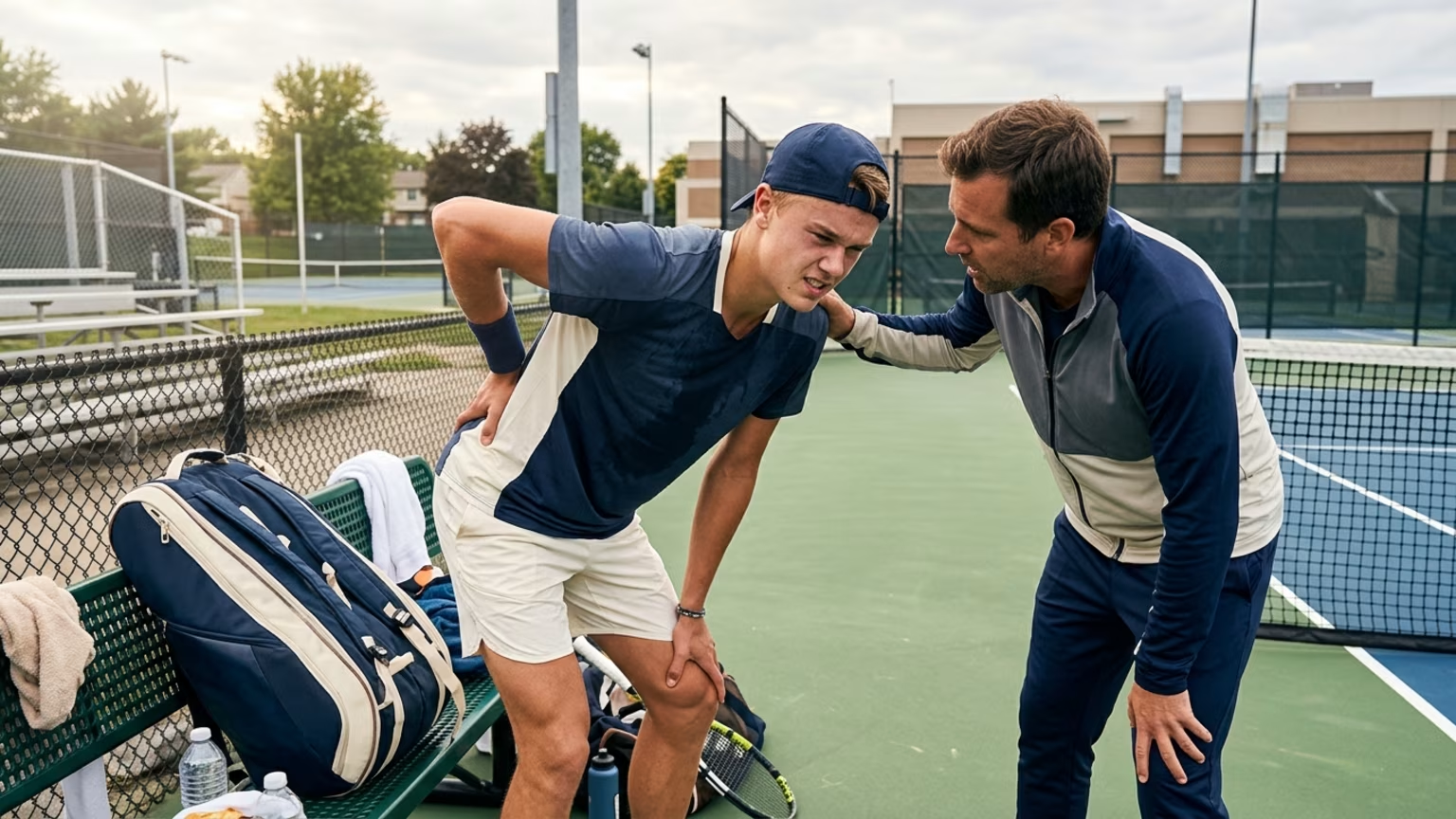
Holger Rune withdrew from the European Open with a back problem. The facts behind his decision and a grounded perspective for recreational players.

The Dink’s October 17 guide emphasizes deep returns, ball-height decisions and positioning against faster pickleball opponents.

A new report outlines padel and tennis gear trends. Learn how to assess adjustable rackets, sensor feedback and smart-court claims.
Read practical guidance for better movement, smarter preparation and a game that keeps working for you.
explore the Blog
