

Pablo Cardona played an Abu Dhabi exhibition during knee rehabilitation. His comments offer club players perspective on competition-return dates.




On October 22, 2026, MARCA reported that padel player Pablo Cardona had taken part in an Abu Dhabi exhibition organized by Hexagon World Series while continuing rehabilitation for a knee injury.
Cardona shared the court with Manu Castaño at the exhibition. According to MARCA, Hexagon World Series also used the occasion to present its 2027 calendar.
The appearance accompanied an encouraging but measured account of his recovery. Cardona told MARCA that he was improving and “seeing the light at the end of the tunnel.” He also said he still needed more work and additional training load to rebuild strength.
His position on competition was clear: he was not setting a return date and would wait until he felt physically strong enough. He hoped to be fit for the Hexagon World Series event in Madrid, scheduled to begin January 21, 2027. However, he did not know whether he would play.
That caution follows an interrupted return. MARCA reported that Cardona missed the end of 2025 before returning alongside Javi Leal and then suffering a recurrence.
The central news is therefore progress within rehabilitation rather than a confirmed competition comeback. Madrid is an event Cardona hopes to reach, not a commitment he has made.
The professional question is when Cardona will compete again. For an adult club player, the more useful question is how to distinguish an encouraging court appearance from a decision about returning to matches.
Cardona’s comments offer a practical example of keeping a hoped-for date separate from readiness. His account gives strength a place in the conversation without turning a particular event into a deadline he has promised to meet.
That distinction matters when interpreting sports news. An exhibition appearance and a competition entry describe different things. A player can report progress without announcing that every part of a return has been settled.
The useful distinction is between an activity and the conclusion drawn from it. MARCA reported that Cardona participated in an exhibition. Cardona separately described the work he still wanted to complete before returning to competition.
For recreational players, the same care with language is worthwhile. Hitting lightly, taking part in an exhibition and returning to league matches should remain distinct descriptions. They are not interchangeable evidence of readiness and should not be treated as a compulsory sequence for every injury.
A club player does not need to turn a professional’s appearance into a personal benchmark. The better editorial reading is narrower: Cardona was back on court in a particular setting while still describing himself as rebuilding.
This is also why elite comeback stories need their own context. They can help players understand how an athlete talks about recovery without supplying a standard that another player must meet.
A 2026 ACL rehabilitation review published by Springer describes return-to-play decisions as combining time from surgery with functional criteria and psychological readiness. It discusses strength, hopping and movement quality alongside readiness measures. Its framework gives time a role without making the calendar the only consideration.
The evidence has clear boundaries. MARCA’s interview does not identify Cardona’s diagnosis or procedure and provides no exhibition workload, symptom or clinical-testing details. The ACL review supplies general context rather than an assessment of his injury or a rehabilitation plan for other players. Neither source establishes the cause of his recurrence or a single timetable suitable for every knee problem.
The practical takeaway is not to copy the review’s assessment components or to decide that feeling stronger settles the question. It is to recognize that a return decision can involve several kinds of information. For an individual player, deciding which information matters belongs with a qualified clinician assessing the specific injury and intended activity.
That keeps Cardona’s words in their proper place. His account is useful as an athlete’s explanation of his priorities. It does not need to become a universal recovery rule to have value.
For an adult player managing a knee problem, the research supports a more precise conversation than simply asking which date to circle. Useful questions for a qualified clinician include:
These are discussion points rather than a self-clearance checklist. They keep the focus on the player’s own situation instead of the visibility of someone else’s comeback.
A club competition calendar that accounts for recovery can still contain goals. The distinction is between wanting to play an event and treating that event’s date as proof of readiness. Cardona’s hope of reaching Madrid illustrates how a target can remain provisional.
There is also no need to make the opposite mistake and conclude that dates have no place in rehabilitation. The ACL review explicitly includes time alongside other assessment domains. The clearer lesson is that a calendar provides context rather than the whole answer.
Madrid is the clearest event to watch because Cardona named it himself. As of MARCA’s October 22 report, his participation remained uncertain. A confirmed competition return would be a different development from the Abu Dhabi exhibition and should be reported as such.
The next useful update will be whether Cardona confirms a return and how he describes his progress toward it. It should not be judged simply by whether he meets the event he hoped to play. A changed target would need its own explanation rather than an assumption about what happened in rehabilitation.
Over the next season, the reporting standard worth supporting is straightforward: distinguish court appearances from competition returns and ambitions from commitments. For recreational players following the story, that is the lasting value of Cardona’s measured update: progress can be meaningful without becoming a promise about the calendar.
Follow Evercourts for practical insights on tennis, pickleball and padel performance, movement, recovery and healthy ageing. Stay connected for new articles, research-led guidance and ideas to help you play well and keep playing for years.


Practical answers on choosing tennis racquets, pickleball paddles and padel rackets by playing style, comfort and budget, with advice on demos.
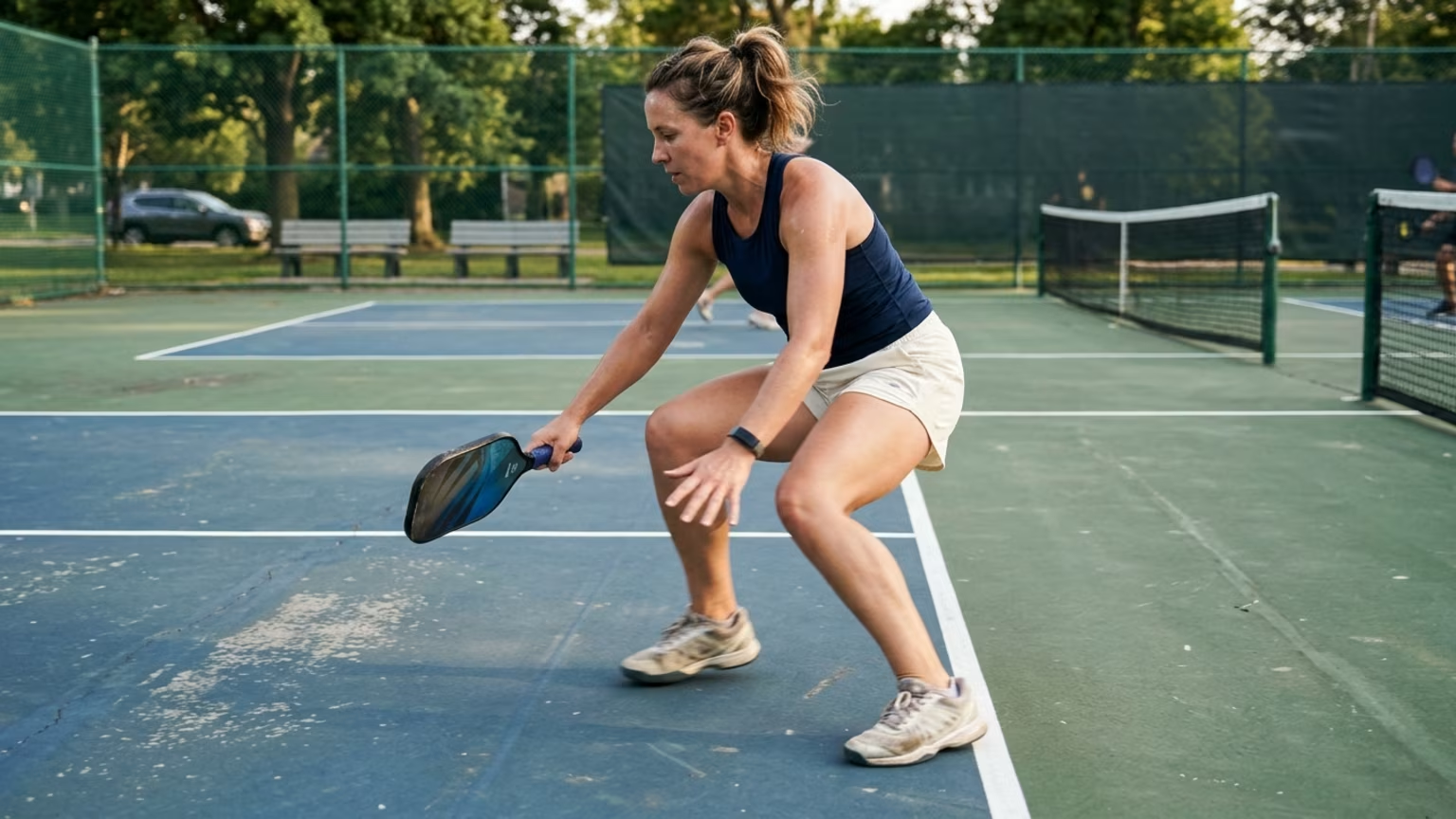
A practical look at pickleball balance, leg strength and controlled stopping, with exercise examples and clear limits on injury-prevention evidence.

Understand braking and recovery on court, how planned routes differ from reactive practice, and when movement concerns call for professional guidance.
Read practical guidance for better movement, smarter preparation and a game that keeps working for you.
explore the Blog
