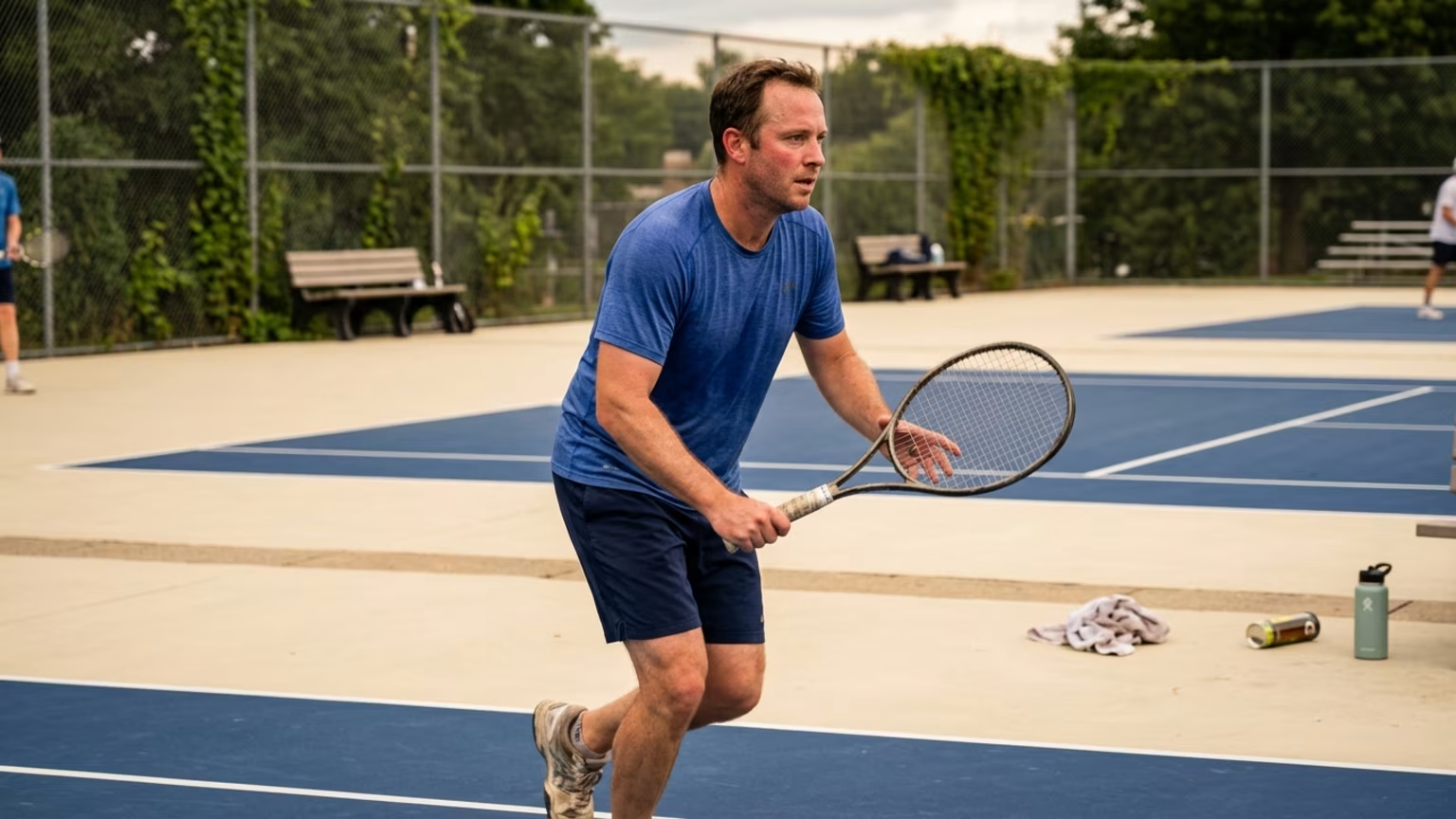

Learn how to build a balanced tournament calendar for tennis, pickleball, and padel. Discover how to match event demands to your physical recovery needs.




More tournament hours will not automatically build a stronger competitor. The United States Tennis Association divides adult tournaments into seven specific levels, scaling from beginner events to national championships. This exact structure proves that competitive volume must match a physical capacity and recovery window.
Playing multiple matches in a single weekend forces the body to endure intense and repetitive strain. Tournament organizers offer individual, team, elimination, and non-elimination formats. Each of these structures demands a completely different physical output from the athlete. The explosive movements required on the court deplete energy reserves and heavily tax the nervous system.
Players often ignore how this fatigue accumulates over consecutive days of play. Entering a single elimination draw creates high emotional pressure and physical intensity. Conversely, non-elimination formats allow players to accumulate steady court time without the exact same pressure. Both formats require careful consideration when planning a long term schedule.
A thoughtful competition calendar must account for these varying demands to maintain performance. Choosing the wrong format repeatedly can lead to chronic fatigue and diminished court speed. When players compete in team events, the social environment can mask the true physical cost of the weekend. Adrenaline helps athletes push through stiffness, but the muscular damage still accumulates with every sprint and sudden stop.
The cartilage in the knees and the tendons in the shoulders absorb massive amounts of force during competition. Without adequate rest between matches, these tissues become highly vulnerable to acute strains. Organizers explicitly list non-elimination formats among their adult tournament offerings to provide lower stress alternatives. These events encourage technical development because players can focus on execution rather than mere survival.
Adult recreational players face unique recovery challenges because they must return to work on Monday morning. Extended sitting at a desk immediately after a weekend of heavy competition exacerbates joint stiffness. The nervous system requires just as much time to recover as the physical muscles do. Planning a tournament schedule without blocking out recovery days is a guaranteed path to poor performance.
The duration of sanctioned events reveals exactly how much time players must commit to competition. Level 7 Express events are one day competitions designed specifically for busy adults, newer competitors, or those wanting match experience. Level 6 tournaments increase the physical requirement by lasting up to three days. Levels 5 and 4 push the physical boundaries further by lasting up to five days.
Some of these demanding events are even staged over non consecutive weekends. Players must also navigate strict eligibility rules to ensure safe and balanced matchups. The official NTRP system guides adult leagues and tournaments, generally covering ratings from 2.5 to 5.0. Entrants in these divisions can be no more than one rating level below the division limit and no higher than the division rating.
Entering a tournament with an NTRP rating between 2.5 and 5.0 sets clear expectations for the upcoming physical challenge. Players at the higher rating levels typically engage in longer rallies with much heavier ball strikes. This increased pace forces the body to absorb significantly more shock upon every single contact. Meanwhile, players at lower rating levels might experience shorter rallies but still suffer from movement inefficiencies that cause fatigue.
The national schedule accommodates healthy aging by offering age group divisions from 30 through 95. These parameters exist to keep matches competitive while protecting players from dangerous mismatches. The gap between a one day event and a five day championship is massive in terms of physical degradation. Playing for five days requires meticulous attention to sleep quality, hydration, and active recovery protocols.
The higher the tournament level, the more likely a player is to face grueling rallies. Adults balancing full time jobs simply cannot treat a five day Level 4 event like a casual afternoon match. National championships offer multiple age and rating divisions to ensure players compete against true peers. This age graded approach prevents older athletes from having to match the raw speed of much younger opponents.
Tennis, pickleball, and padel manage physical workloads through distinct scheduling and formatting choices. Tennis championship formats often demand a grueling mix of several singles and doubles matches. However, specific age categories adjust this load intentionally to protect athletes. Some 55-and-over tennis formats consist of just three doubles matches to reduce the physical toll.
This structural shift acknowledges how aging affects performance and helps keep older players active safely. Pickleball events take a slightly different organizational approach to manage player volume and safety. Pickleball tournaments commonly separate competitors by skill rating, age, and specific event type. Players typically choose between men’s doubles, women’s doubles, and mixed doubles.
Entering multiple pickleball divisions often leads to playing several matches in a single day. Padel players and pickleball competitors must carefully weigh these division choices to prevent severe overexertion. Tennis singles matches undoubtedly place the highest aerobic demand on a single athlete. Covering the entire court alone forces the heart rate to spike repeatedly over several hours.
Doubles play reduces the total court coverage, but the rapid lateral movements still challenge the lower body intensely. The combination of several singles and doubles matches in one tennis championship can exhaust even well conditioned athletes. Pickleball rallies often feature rapid, sustained exchanges at the net that heavily tax the reflexes and shoulders. Because the court is smaller, players experience less total running but endure frequent, sharp changes of direction.
When a pickleball player enters both gender doubles and mixed doubles, the match count skyrockets. This high match density leaves very little time for muscular recovery or proper fueling between rounds. The 55-and-over tennis formats using three doubles matches reflect a deep understanding of athletic longevity. Reducing the match count allows these players to compete intensely without requiring a week of total rest afterward.
The vast difference between a one day event and a five day championship requires a strategic approach. Build a sustainable competition framework by categorizing your season into distinct priority tiers. Choose one or two demanding, multi day tournaments to serve as your absolute physical peaks for the year. Surround these peak events with shorter, one day competitions to maintain sharpness without risking deep fatigue.
Never assume that entering more divisions will automatically accelerate your skill development. Use your exact rating and age group to find appropriate matches rather than chasing higher level draws prematurely. Schedule mandatory rest days immediately following any tournament that lasts three days or longer. More tournament hours do not automatically build a stronger competitor, but playing the right matches certainly will.
Follow Evercourts for practical insights on tennis, pickleball and padel performance, movement, recovery and healthy ageing. Stay connected for new articles, research-led guidance and ideas to help you play well and keep playing for years.


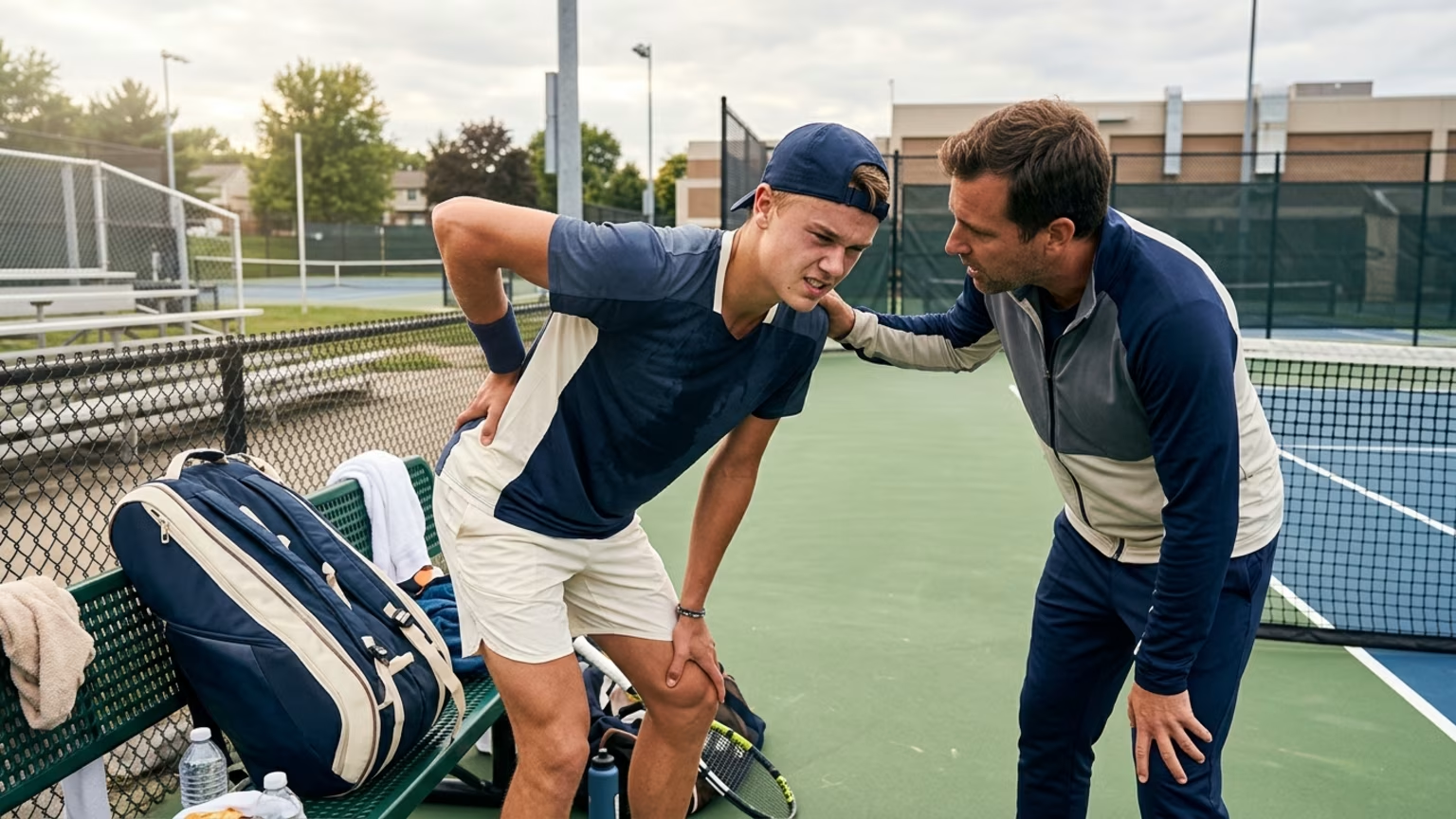
Holger Rune withdrew from the European Open with a back problem. The facts behind his decision and a grounded perspective for recreational players.

The Dink’s October 17 guide emphasizes deep returns, ball-height decisions and positioning against faster pickleball opponents.

A new report outlines padel and tennis gear trends. Learn how to assess adjustable rackets, sensor feedback and smart-court claims.
Read practical guidance for better movement, smarter preparation and a game that keeps working for you.
explore the Blog
