

Practical answers on choosing tennis racquets, pickleball paddles and padel rackets by playing style, comfort and budget, with advice on demos.




How do I choose my next racquet or paddle based on my game, comfort and budget rather than the latest model?
Start with what you want to keep or change about your current equipment, compare the relevant specifications for your sport and try shortlisted options in play where possible.
Begin with a description of your game rather than a product category. Your experience, preferred playing style and preferred feel belong in that description. So does a spending limit.
Most of the guidance here comes from retailer and specialist buying guides rather than independent equipment trials. Their descriptions are useful starting points, not proof that a specification improves performance or prevents arm, wrist or shoulder problems.
Make a short buying brief:
Describe playing style in terms you would use with a demo provider: more control, easier handling or a more power-oriented feel. Experience helps frame that conversation, but it does not need to become a rule that newer players buy one category and experienced players buy another. Keep the priority narrow enough that you can recognize a meaningful difference.
A specialist padel buying guide argues that shape and weight can matter more to feel than the logo or carbon count. The useful editorial lesson is to translate marketing language into something you can actually compare.
Your current equipment is a reference point, not a verdict on your ability. If you are still unsure what needs changing, reviewing what happens during your matches gives the buying question a clearer context. Our broader guide to matching equipment to your movement offers another starting point.
Try the shortlist in the sport and situations you actually play. A buying guide recommends testing a pickleball paddle in a game and notes that some clubs and pro shops offer demos. A padel buying guide similarly reports that some venues offer racket hire or demo days.
Ask about access locally rather than assuming a demo service exists everywhere. Borrowing can also be a practical way to compare options when it is available.
For a useful comparison, focus on observations you can describe:
Write down the trade-off in plain language. A note about preferring the feel but finding the option harder to handle is more useful than a note about how new it is. A demo can leave you preferring your current setup, which is a useful buying outcome too.
If a model is unavailable to try, ask what can be compared with the equipment you already know. Separate what you have actually felt from what you have only read. That distinction keeps a persuasive product description from becoming your own verdict before you have used the equipment.
A tennis retailer’s demo guide presents larger heads as more forgiving on off-centre hits and smaller heads as more precision-oriented. Use that distinction to shortlist options that match the feel you are seeking.
Keep the comparison specific: are you seeking more forgiving contact or a more precise feel? Use those aims when comparing head sizes instead of assuming that a smaller head is a reward for becoming more experienced.
Ask the demo provider to explain the listed specifications and describe what differs between the options you are trying. Our guide to thinking through tennis setup changes provides a separate place to consider customization.
A pickleball retailer’s buying guide identifies weight and grip size alongside shape and core thickness as comparison points. It describes wider shapes as offering a larger sweet spot. Elongated shapes are presented as adding reach and power, while thicker cores are described as softer and more forgiving.
A separate paddle buying guide lists 13, 14 and 16 mm among common retail core thicknesses.
Use these descriptions to identify contrasting options. Then compare which you prefer in play rather than choosing from the thickness number alone.
Include grip preference in the comparison instead of treating core thickness or shape as the whole decision. A paddle that interests you on paper still needs to feel right in your hand and in play.
A specialist guide to padel shape and weight describes round shapes as control-oriented, teardrop shapes as all-round options and diamond shapes as power-oriented. It also describes lighter rackets as easier to handle and heavier ones as more power-oriented.
For newer or social players, a venue-focused buying guide suggests a round shape with low or even balance and a softer core as a starting point. That gives a newcomer a sensible shortlist to try without turning shape into an ability ranking.
Keep the whole combination in view. A power-oriented description is a reason to compare the racket, not a reason to buy it automatically.
No price tag should substitute for a clear reason to choose that model. The useful buying question is not “Is this premium?” but “What am I paying for that fits my game?”
Set a spending limit before comparing models. Then apply the same priorities to every option rather than letting the most expensive choice define what you think you need.
Comfort is personal. If recurring discomfort is part of the buying decision, a qualified healthcare professional is the right person to discuss that individual situation.
Choosing equipment is a chance to support the game you enjoy, not a test of whether you own the newest model. Today’s practical takeaway is a written buying brief that names your priority, your preferred feel and your budget.
Follow Evercourts for practical insights on tennis, pickleball and padel performance, movement, recovery and healthy ageing. Stay connected for new articles, research-led guidance and ideas to help you play well and keep playing for years.


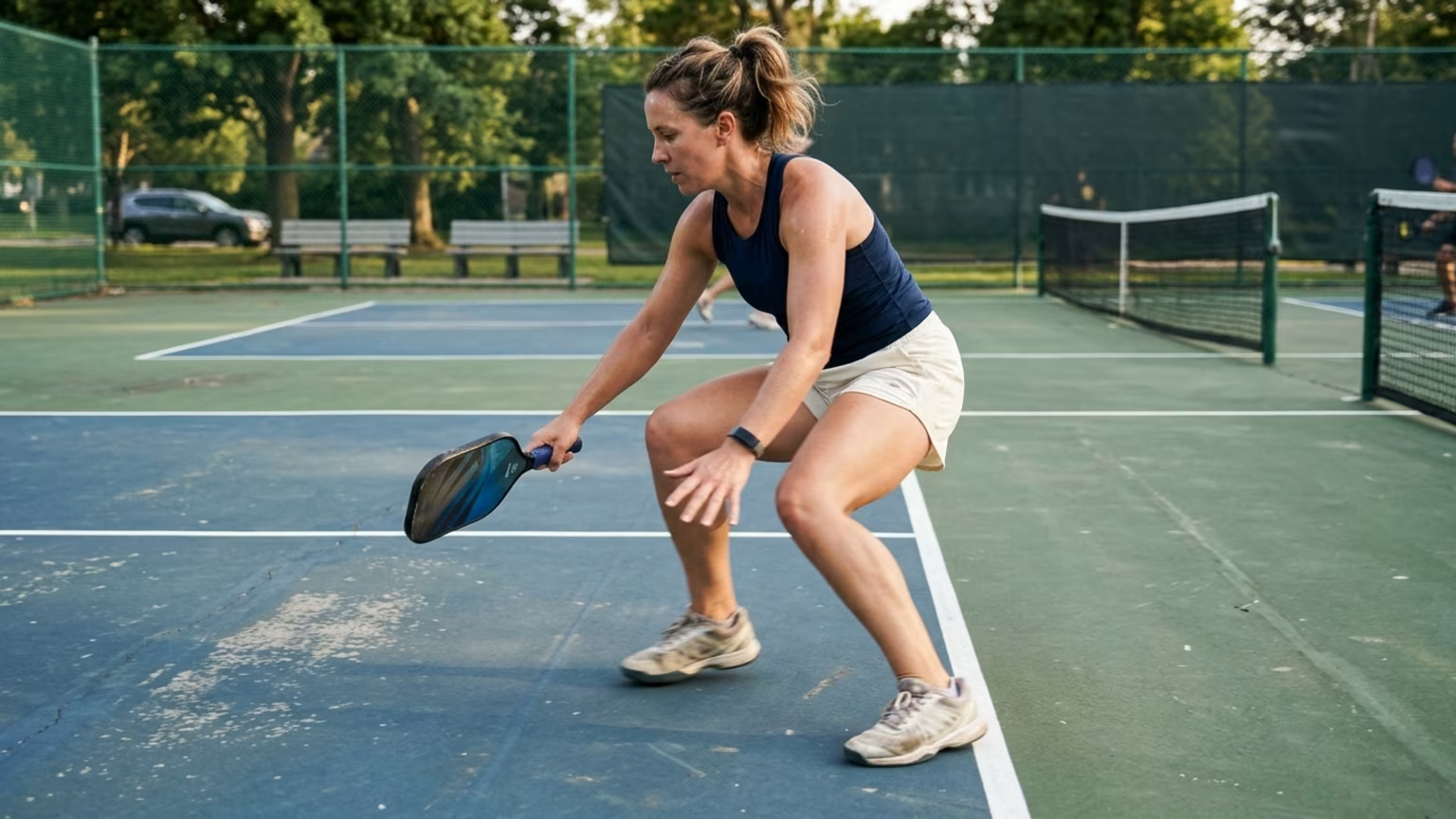
A practical look at pickleball balance, leg strength and controlled stopping, with exercise examples and clear limits on injury-prevention evidence.

Understand braking and recovery on court, how planned routes differ from reactive practice, and when movement concerns call for professional guidance.

Understand tennis shoulder demands, the role of whole-body preparation, the limits of prevention claims and when persistent pain needs professional attention.
Read practical guidance for better movement, smarter preparation and a game that keeps working for you.
explore the Blog
