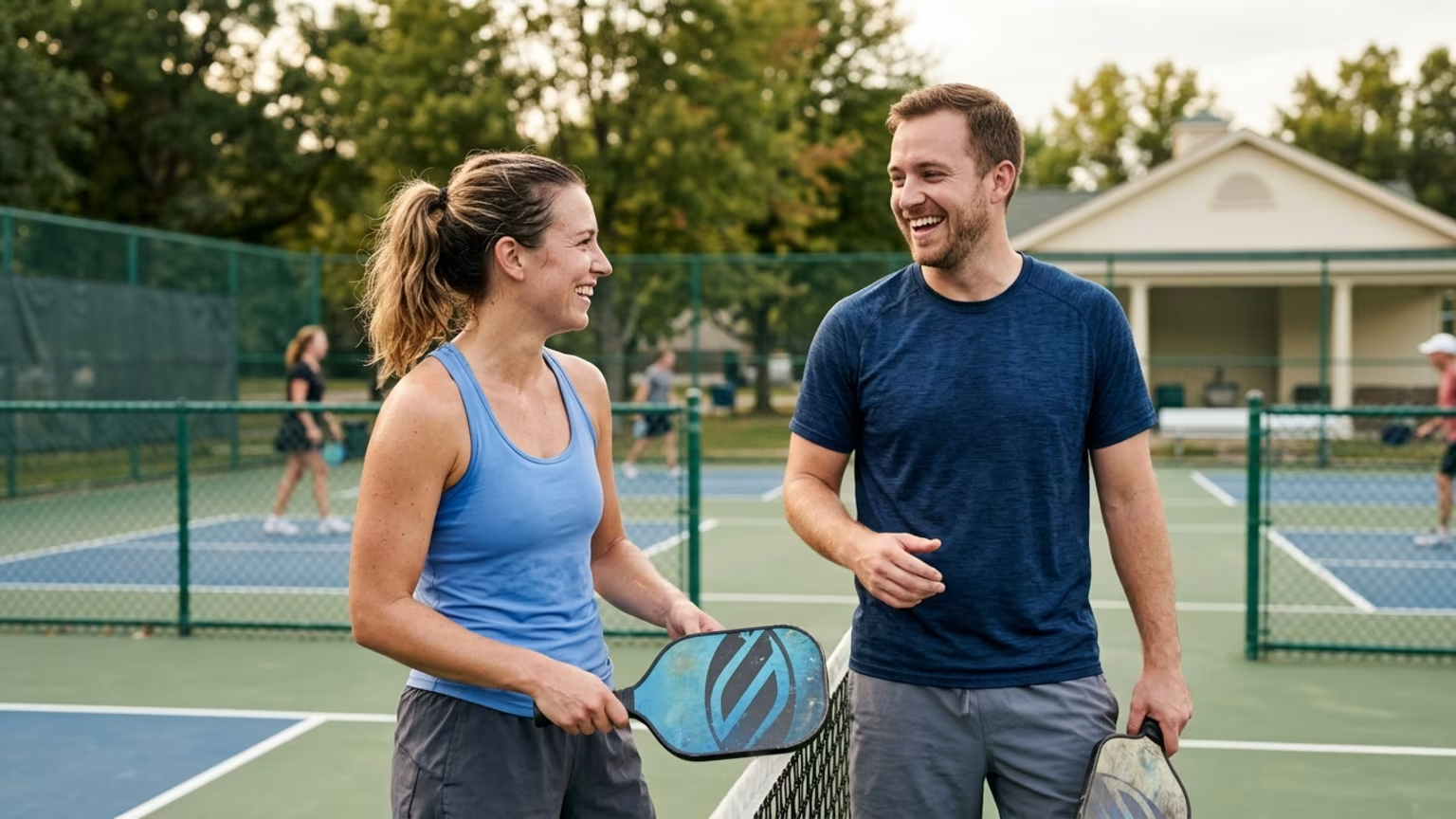

A new pickleball dating app highlights the growing demand for digital tools that help adult players match on-court compatibility, skill level, and scheduling.




In August 2026, Pickleball.com reported that a new platform called Pickleball Dating had reached the app store. The application aims to match suitors based on their shared interest in the sport and their specific on-court compatibility. Rather than relying solely on traditional profile metrics, the app introduces court-specific variables to help users find aligned partners. This development highlights a growing trend where players use digital tools to build reliable routines.
According to Pickleball.com, the new platform is available on both the Apple App Store and Google Play. The app expands standard matching systems by adding highly specific athletic information to user profiles. Players can list their skill level, playing frequency, and preferred court times alongside their location and relationship goals. The application is not strictly limited to romantic pursuits, as users can indicate whether they are looking for friendship, casual dating, or a long-term relationship.
The initial concept for the platform originated from a very common scheduling conflict among dedicated players. Founder Jyl Steinback told Pickleball.com that the idea took shape after she spoke with a friend who played pickleball six days a week. This friend explained that his heavy playing schedule made it very difficult to date someone who did not share a similar enthusiasm for the game. When one person organizes much of their schedule around the court, finding a partner with matching priorities becomes a practical necessity.
Steinback views the sport as a highly effective filter for personal interactions and early communication. She argues that playing a match together acts as a relationship in fast-forward. Court behavior quickly reveals how a person communicates, manages pressure, and reacts to mistakes. These shared athletic interactions provide immediate feedback on interpersonal dynamics that standard messaging often misses entirely.
For the adult recreational player, this launch highlights the very real challenge of managing court time and athletic commitment. A shared passion for racquet sports certainly makes it easier to coordinate schedules and sustain a regular routine. Players seeking reliable partners can use these profile fields as a practical screening tool. Knowing a potential partner's playing frequency and preferred court times removes much of the friction from organizing weekly matches.
It is important to separate a dependable doubles partner from a guaranteed relationship match. "Court compatibility" in this context refers strictly to aligning skill levels, availability, and competitive intensity. It is a useful measure for ensuring two players want the same type of experience during an afternoon match. It is not a scientifically validated metric for emotional compatibility, personal safety, or long-term relationship success.
Recreational players should treat these digital tools as a starting point for clear communication. Discussing whether a player prefers casual rallies or highly competitive scoring helps align expectations before anyone steps on the court. Establishing clear ground rules ensures that balancing match play and strength training remains a sustainable part of your weekly routine. Meeting in a public setting and confirming expectations are still necessary steps for any new partnership.
Finding someone who matches your preferred intensity is a great way to ensure both players get a solid physical workout. It helps adults maintain their physical capabilities without feeling pressured to overextend themselves for a highly competitive partner. Building a sensible routine that prioritizes athletic longevity is much easier when your hitting partner shares your approach to the game. For players meeting new partners, establishing a clear progressive court warmup strategy is a smart way to gauge a new partner's intensity level safely before full-speed play begins.
A shared commitment to proper preparation reduces the risk of sudden strains. It ensures both players are physically ready to compete safely. Establishing these habits early builds trust between partners who are just learning how to navigate the court together. Focusing on preparation helps keep players on the court consistently for years to come.
The launch of specialized social applications aligns with massive participation shifts across the United States. Pickleball.com cited Sports & Fitness Industry Association figures to provide context for this growing market demand. According to the cited reporting, 24.3 million Americans played pickleball in 2025. This represents a staggering increase from the 4.2 million total participants recorded in 2020.
More importantly for specialized platforms, the number of highly engaged players has also surged over this period. The coverage defines this core group as individuals who play at least eight times per year. In 2020, this core population sat at roughly 1.4 million players. By 2025, that number had grown to approximately 7.5 million core participants across the country.
This segment of 7.5 million frequent players represents a demographic that likely organizes a significant portion of their weekly calendar around court availability. When a sport transitions from an occasional weekend activity to a primary social outlet, the tools players use to organize their time naturally evolve. The sheer volume of dedicated participants creates a logical foundation for apps that prioritize athletic alignment alongside location and relationship goals.
Understanding how these numbers impact court availability is crucial for adult players trying to maintain a consistent routine. High participation rates often lead to crowded public courts, limited reservation slots, and tighter booking windows. Managing these logistics effectively is a vital part of structuring a competitive schedule around real match workload. Players who can coordinate their schedules efficiently avoid the frustration of missed opportunities and long wait times.
The rapid growth of the core player base changes the dynamics of local clubs and public parks. When millions of participants commit to playing eight or more times a year, community courts face unprecedented demand during peak hours. Finding a partner with matching availability becomes a strategic advantage for securing limited court space. Apps that address these specific logistical hurdles directly answer a growing operational problem for recreational players.
Moving into the next season, expect the racquet sports digital landscape to focus heavily on highly specific player alignment. Pickleball Dating is not an isolated concept, but rather part of a growing trend toward specialized connection tools. The App Store listing for CourtMate, for example, describes a service designed to help tennis and pickleball players find compatible people to play with nearby. These platforms show that developers are prioritizing practical variables like skill level and location over generic social matching algorithms.
This digital trend underscores the broader social and physical benefits of sustained athletic participation. A 2026 study record from Lakehead University Knowledge Commons highlights ongoing research examining the effects of a four-week pickleball intensity-coaching intervention. The study looks specifically at how the sport affects functional fitness and psychological well-being in older adults. While the research focuses on coaching interventions rather than dating outcomes, it reinforces the idea that regular, organized play offers significant health benefits.
As these specialized connection tools mature, they will likely become standard utilities for players looking to lock in regular weekly games. The most successful platforms will be those that reliably connect adults who share the same exact definition of a good time on the court. Whether a player wants a casual hitting session or a structured, competitive match, the ability to filter partners by athletic commitment will change how local communities organize their play.
Follow Evercourts for practical insights on tennis, pickleball and padel performance, movement, recovery and healthy ageing. Stay connected for new articles, research-led guidance and ideas to help you play well and keep playing for years.


A recent KeepActive directory update highlights a Melbourne-area padel program offering introductory coaching and social play for adults aged 65 and over.
Bhushan Akut won three 60+ gold medals at the 2026 Pickleball World Cup. Learn how sensible preparation and tactics inform recreational senior play.

Understand why racquet sports injuries spike after summer and how to safely return to the court using a phased approach to frequency and match intensity.
Read practical guidance for better movement, smarter preparation and a game that keeps working for you.
explore the Blog
