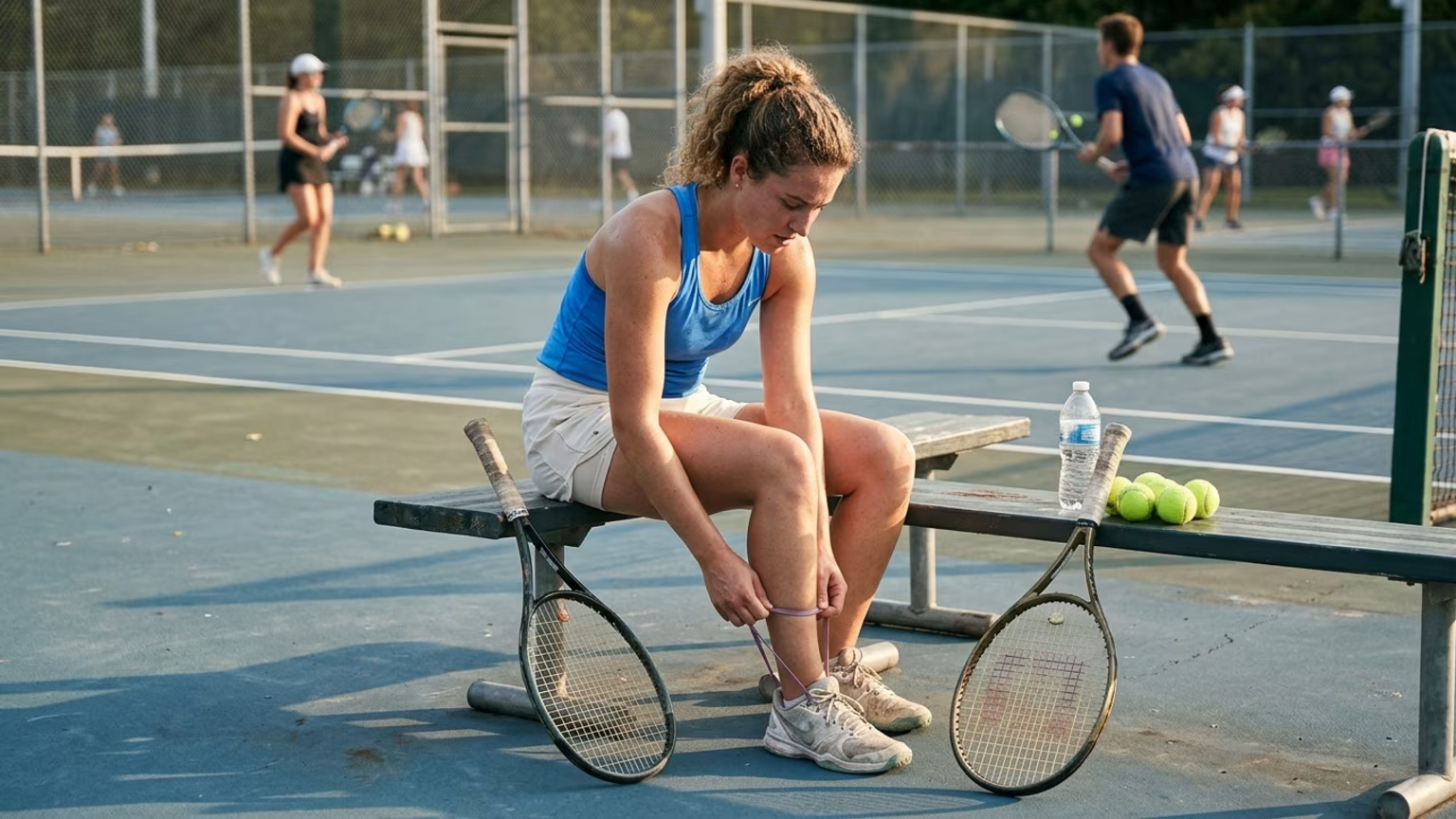

Build a weekly court-life routine that balances match play, strength training, and recovery to support healthy aging and long-term athletic longevity.




"How do I balance playing multiple times a week without constantly feeling sore?" You must treat your court time as actual training and build a flexible schedule that prioritizes recovery. A player needs roughly 48 hours to fully recover from a heavy lower-body match load. Ignoring that biological timeline is exactly why so many recreational athletes feel chronically fatigued.
When you view your weekly calendar as a complete physical ecosystem, you start making smarter choices. Managing your schedule effectively is the ultimate foundation for staying on the court all year long. Adult players who master this balance avoid the frustrating cycle of overplaying and breaking down. You simply cannot separate your athletic performance from your daily lifestyle habits.
The reality is that amateur sports demand serious planning if you want to avoid injury. Many enthusiastic players keep adding league nights until their bodies force them to stop. This reactive approach guarantees extended time away from the sport you love. The most successful adult players plan their rest days just as carefully as they plan their match strategies.
Adult players often drop their gym routines entirely when their match calendar fills up. This approach usually backfires over the course of a long playing season. Joondalup Sports Medicine points out that players should actively maintain their strength and mobility work when competition gets busy. A reliable baseline of physical capacity helps your body tolerate the ongoing workload.
One tennis-conditioning framework from Telos Fitness recommends counting your matches as real physical training. You should strictly plan your supplementary strength training and easy endurance work around your court schedule. The primary goal is to integrate these elements rather than treating them as entirely separate demands. When you have a demanding singles match on the calendar, you must adjust your supplementary work accordingly.
After a hard singles match, mobility or upper-body work may be more appropriate than another heavy lower-body session. A controlled full-body training block can also work well if the overall intensity remains manageable. Telos Fitness suggests placing your main strength session roughly 48 hours away from your hardest tennis when possible. This deliberate spacing allows your leg muscles to repair before you test them again.
Many players make the fatal mistake of pushing through intense weight sessions while deeply fatigued. This creates unnecessary physical stress that directly harms your movement on the court. If you want to maintain strength that transfers to the court, you must be highly strategic. Smarter scheduling always outperforms blind physical effort.
Rest days are frequently misunderstood by enthusiastic amateur athletes. One sports-medicine source stresses that recovery days need to be genuinely easy. Joondalup Sports Medicine firmly warns against sudden spikes in total weekly workload. If you schedule a light hit that turns into a grinding practice set, you have completely ruined your recovery window.
Instead of simply doing nothing, use your off days for targeted physical maintenance. Guidance for tennis injury prevention from Pliability highlights the rotator cuff, scapular stabilizers, hips and core. These specific areas may benefit greatly from progressive strength and motor-control work. You can maintain the exact physical qualities needed for court movement without exhausting your central nervous system.
At evercourts, we often see players try to cram extra high-intensity conditioning into their designated rest days. This is a fast track to physical burnout and long-term frustration. You should build a repeatable match-day routine that supports your schedule rather than fighting your natural fatigue. Consistent, moderate effort always wins out over occasional extreme training blocks.
True recovery means giving your body a chance to completely reset its stress levels. By sticking to genuinely low-intensity activities on your off days, your tissue prepares for the next match. Light walking or gentle stretching can stimulate blood flow without adding new fatigue. Protecting these quieter days fiercely is the absolute best way to maintain athletic longevity.
Every racquet sport demands sharp mental focus and quick physical reactions. However, we must clearly separate the specific energy demands of tennis, padel and pickleball. A three-hour tennis match depletes your central nervous system differently than an hour of recreational pickleball. Padel involves intense bursts of rotational power that rapidly drain your stored energy reserves.
Regardless of your chosen sport, your daily fueling strategy directly dictates your physical recovery speed. The United States Tennis Association recommends beginning your recovery with a carbohydrate-and-protein snack within 30 minutes of exercise. Following this initial snack, players should consume a balanced meal containing carbohydrates, protein and fat within two hours. Proper nutritional fueling ensures your muscles have the necessary resources to repair cellular tissue damage.
Sleep is arguably the most powerful biological recovery tool available to any athlete. A sports-neurology review in Practical Neurology recommends adjusting training schedules when necessary to maximize sleep opportunity. The review also advises aligning travel and activity with competition timing and natural circadian rhythms. Learning to prioritize consistent sleep is a critical step for healthy aging on court.
The USTA further advises reducing bright evening light and keeping your bedroom environment comfortably cool. Furthermore, they note that alcohol can severely disrupt later sleep stages that are heavily involved in memory and motor skills. I used to think a tough conditioning block was the only way to improve my court endurance. Then I started tracking my sleep.
I noticed that on days I slept less than six hours, my reaction time at the net was noticeably sluggish, and I felt gassed by the second set. Prioritizing consistent rest did more for my late match stamina than any extra sprints ever did. Recovery is the true foundation of performance. Good sleep hygiene literally protects your reaction time during crucial match points.
Clear communication is strictly essential when managing a busy sporting life as an adult. You should always discuss your total physical workload with a trusted coach or hitting partner. Joondalup Sports Medicine points out that your coach may not know about your extra matches or poor sleep. They might also be unaware of other sports and daily work stress.
It is your direct responsibility to provide them with the full picture of your week. If you are experiencing high work stress, your coach desperately needs to adjust the session intensity. Hiding your fatigue will only increase your overall risk of physical breakdown. A good instructor will gladly modify a demanding drill to properly protect your physical health.
Many players feel totally guilty asking for a lighter session during a paid tennis lesson. You must remember that technical skill acquisition actually drops significantly when you are heavily fatigued. Being honest about your energy levels ensures your training remains highly productive rather than destructive. Adapting the lesson plan based on daily readiness is a professional approach to amateur sports.
Building a sustainable weekly racquet sports schedule requires active, honest communication with everyone involved in your training. Your coach genuinely wants you to succeed, but they cannot possibly read your mind. Informing them about your sleep quality and overall muscular soreness leads to far better technical progress. Honesty transforms a rigid lesson into a highly customized development session.
When you finally build a weekly calendar that respects recovery, you stop worrying about waking up sore and start looking forward to every match. A sustainable routine ultimately adapts to your physical demands, keeping you capable and optimistic on the court for years to come.
Follow Evercourts for practical insights on tennis, pickleball and padel performance, movement, recovery and healthy ageing. Stay connected for new articles, research-led guidance and ideas to help you play well and keep playing for years.


Holger Rune withdrew from the European Open with a back problem. The facts behind his decision and a grounded perspective for recreational players.

The Dink’s October 17 guide emphasizes deep returns, ball-height decisions and positioning against faster pickleball opponents.

A new report outlines padel and tennis gear trends. Learn how to assess adjustable rackets, sensor feedback and smart-court claims.
Read practical guidance for better movement, smarter preparation and a game that keeps working for you.
explore the Blog
