

Understand why racquet sports injuries spike after summer and how to safely return to the court using a phased approach to frequency and match intensity.




In September 2026, health authorities including HealthXchange and Tennis Canada issued updated guidelines addressing the seasonal spike in racquet sports injuries. The new recommendations help players navigate the return to the courts safely after an extended summer break. This guidance addresses a common problem seen across sports facilities every single year where players resume physical activity at their exact pre-holiday intensity. That sudden return to high-impact play often leads to an entirely predictable wave of joint and muscle issues.
The core of the recent guidance focuses on the physiological mismatch between perceived readiness and actual physical conditioning. While cardiovascular capacity and muscle strength can drop during a break, tendons and cartilage lose their tolerance for impact even faster. Tennis Canada explicitly recommends that players avoid large, simultaneous increases in both the duration and intensity of their sessions. The guidelines insist that the human organism requires adequate time to adapt when increasing frequency, duration or intensity.
To combat these risks, Tennis Canada recommends incorporating resistance training to support muscles, bones and general resilience. They also advise utilizing dynamic movements before activity and reserving all static stretching for the recovery phase. For pickleball players specifically, experts recommend pre-match movements like leg swings, arm circles, a light jog and bodyweight squats. HealthXchange similarly advises checking your overall health status before significantly increasing your on-court activity levels.
Proper equipment choices also received specific attention in the recent seasonal safety reports. Cleveland.com notes that proper court shoes are designed to handle the specific lateral demands of the sport. In contrast, standard running shoes prioritize forward movement and offer significantly less lateral stability during side-to-side shuffling. In addition, experts strongly advise players to avoid wet court surfaces or physical obstacles that could trigger unexpected falls.
Professional players rarely stop training entirely, but the adult recreational player often takes several weeks off during the summer. This extended break creates a dangerous scenario where established muscle memory vastly outpaces the player's physical readiness. A veteran player easily remembers how to execute a heavy serve or a rapid split step without hesitation. However, their joints and soft tissues may no longer tolerate that immediate, highly repetitive mechanical load.
The adult player's brain remembers the correct tactical technique, but the tissues have temporarily lost their structural resilience. This creates a false sense of preparation where the player feels perfectly capable of pushing their physical limits. Winning a casual practice set does not mean the body is actually ready to chain several high-intensity sessions together. Utilizing an adaptable pre-match routine helps players accurately judge their true physical readiness before a match begins.
To support long-term athletic longevity, the adult player must systematically rebuild their tissue capacity from the ground up. The safest approach dictates progressing in a specific order by recovering frequency first, then volume, and finally match intensity. This means resisting the urge to jump directly into competitive weekend matches or a grueling local tournament. Returning safely involves recognizing that mild muscle fatigue is a normal response, but localized pain requires a completely different approach.
Tennis Canada strongly recommends not insisting on playing through persistent pain or continuing a session despite growing discomfort. Players must seek an early professional evaluation if a physical problem fails to improve over a short period. They should also stop immediately if they experience a sudden loss of strength or noticeable joint instability during play. Cleveland.com echoes this critical point for pickleball players by recommending that athletes never play with pain and always rest between matches.
Off the court, daily lifestyle factors heavily influence your baseline injury risk during this vulnerable physical return window. Experts warn that training after many hours without eating can accelerate early fatigue during intense or prolonged sessions. A proper meal before playing and macronutrients afterward help support the critical physical recovery process. Attempting to lose weight through a highly restrictive diet while simultaneously increasing court hours can severely compromise your tissue repair.
The broader guidelines from Tennis Canada emphasize that off-court habits act as the foundation for safe, consistent play. They highlight that prioritizing your sleep, hydration and overall recovery is just as vital as your dynamic physical warmup. Training does not happen in a vacuum, as the physical load of racquet sports stacks on top of daily life stress. When a player increases their court time while operating on minimal sleep, they combine higher mechanical stress with reduced biological recovery.
The recommended timeline for a safe return relies on highly specific, measurable guardrails to protect the body. Experts suggest planning a dedicated two-week reconditioning phase before attempting to return to your previous playing levels. During these crucial first two weeks, players should start with approximately half of their previous training load. This structured reduction allows the musculoskeletal system to rebuild its structural tolerance safely and highly effectively.
For baseline frequency, the guidelines propose playing just two or three sessions per week initially. Players must deliberately leave around 48 hours of recovery time between sessions that work the exact same muscle groups. Cleveland.com advises that individuals returning specifically to pickleball after a break should start their routine very slowly. They recommend beginning with just one or two weekly sessions and gradually increasing the total playing time from there.
As the fall season progresses, expect to see a growing emphasis on structured reconditioning across local racquet clubs. The concept of formal load management is rapidly filtering down from professional tours into everyday recreational play formats. Players are finally beginning to understand that staying healthy requires a strategic, highly phased progression of court time. This proactive approach aligns perfectly with our growing library of player health insights and injury prevention strategies.
The initial focus for club players will permanently shift toward building a sustainable routine rather than chasing immediate match results. Players will prioritize preparing with a better racquet sport warm-up and increasingly view resistance training as a standard requirement. By respecting the biological time their tissues need to adapt, court athletes can ensure a robust and highly active season. This patient, highly methodical approach will ultimately keep more players enjoying the court and completely out of the physical therapy clinic.
Follow Evercourts for practical insights on tennis, pickleball and padel performance, movement, recovery and healthy ageing. Stay connected for new articles, research-led guidance and ideas to help you play well and keep playing for years.


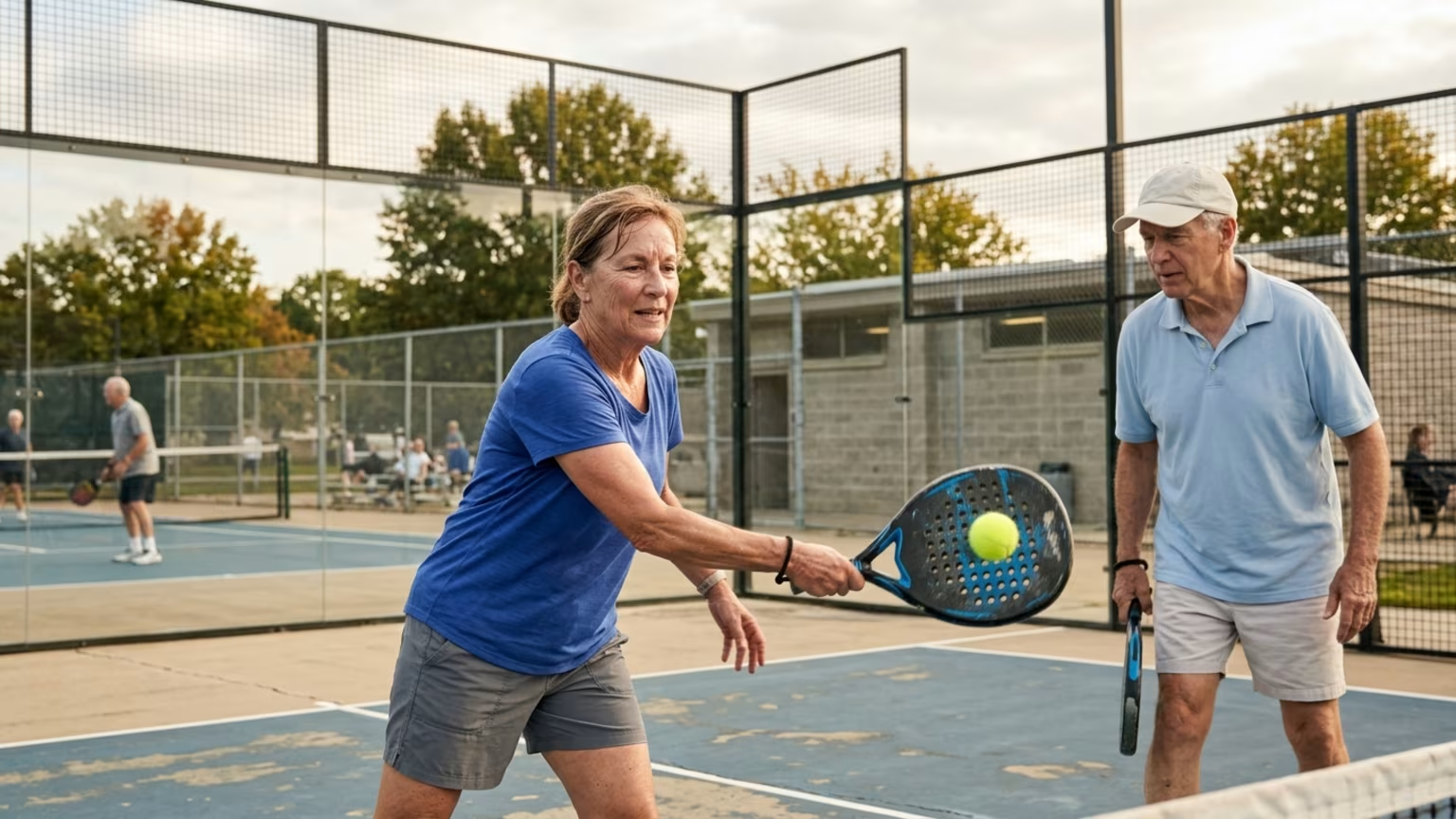
A recent KeepActive directory update highlights a Melbourne-area padel program offering introductory coaching and social play for adults aged 65 and over.
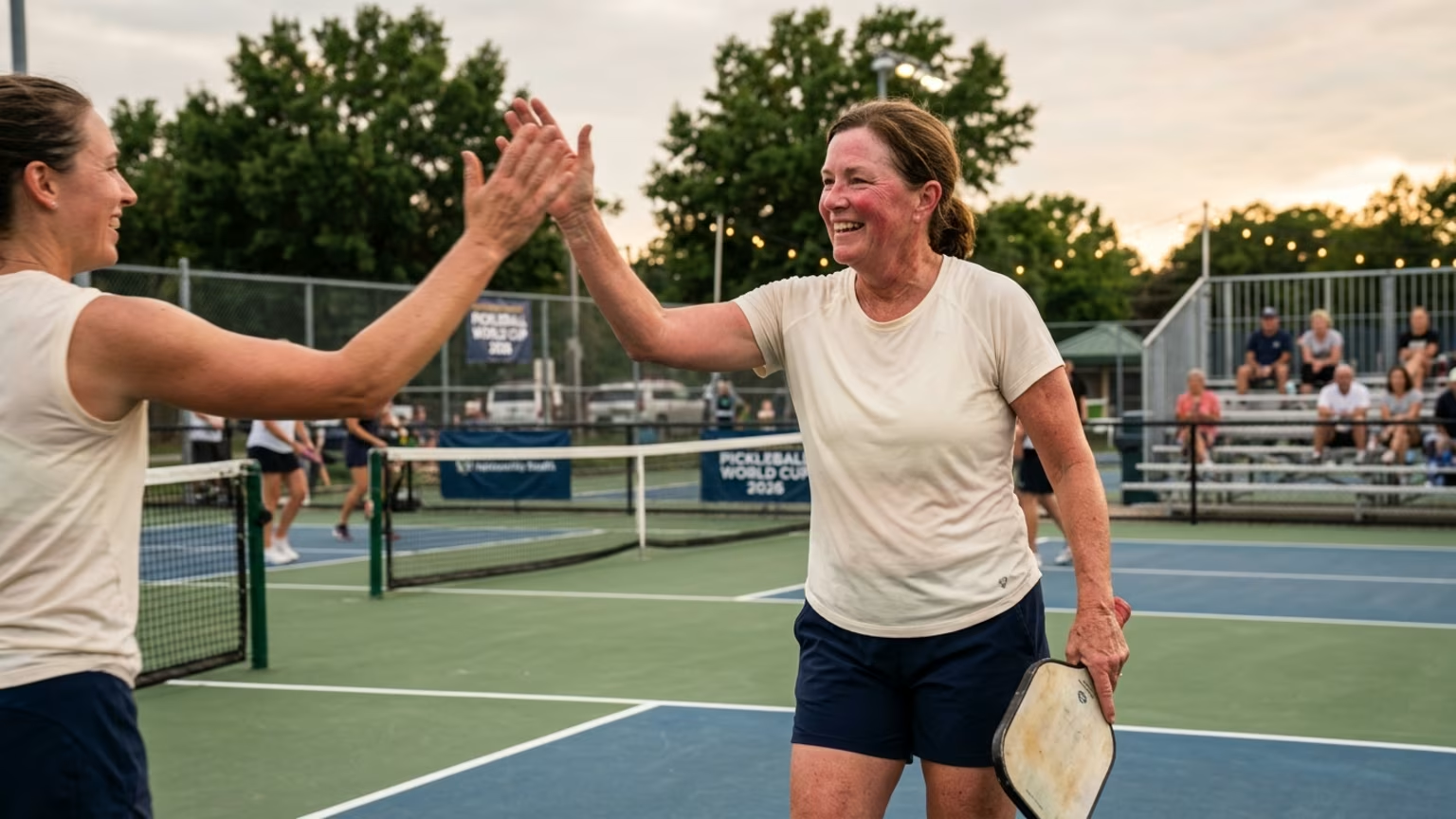
Bhushan Akut won three 60+ gold medals at the 2026 Pickleball World Cup. Learn how sensible preparation and tactics inform recreational senior play.
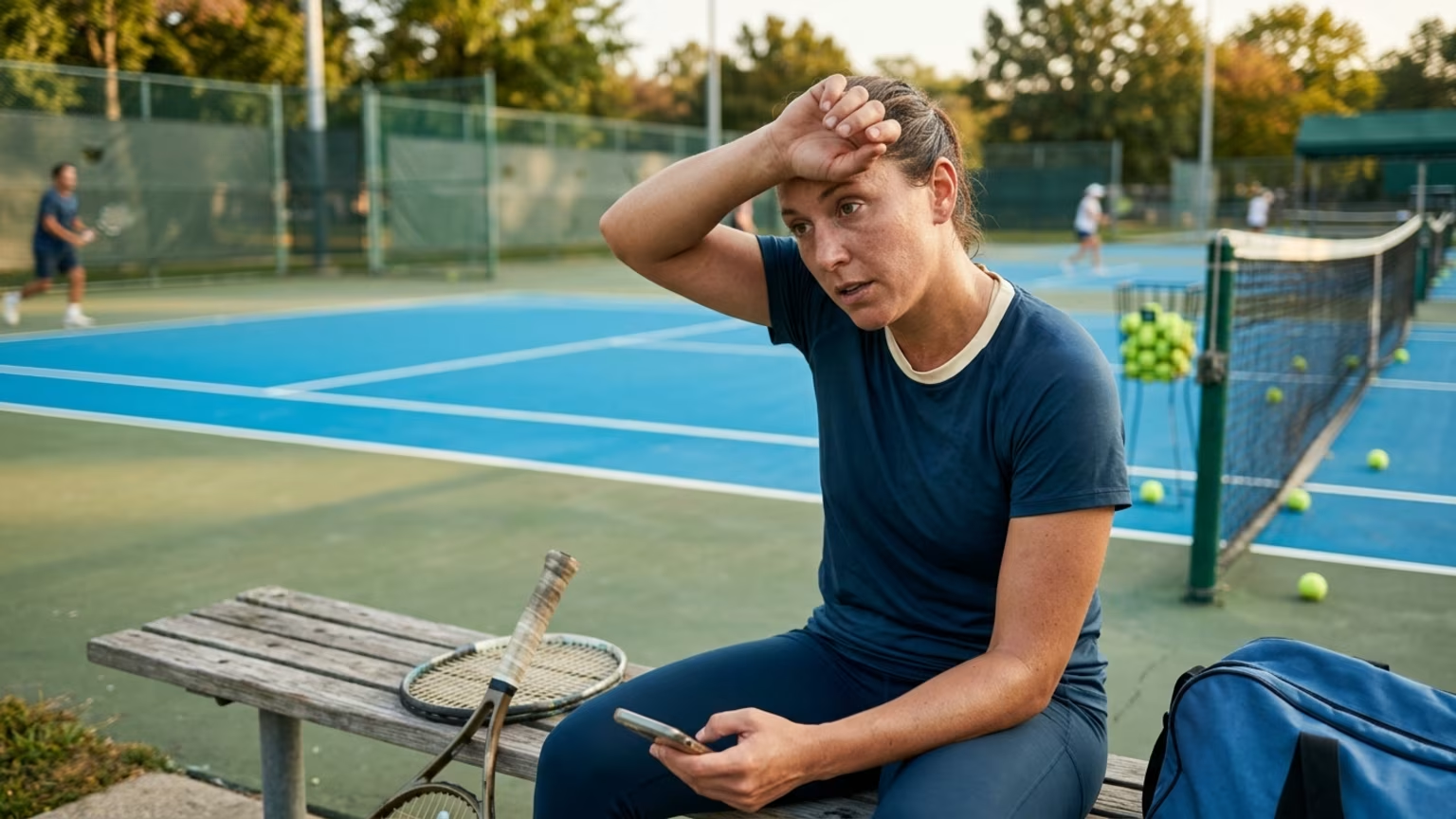
The 2026 US Open men's semifinals highlighted how "not before" start times create unpredictable preparation windows. Learn how adult racquet players can adapt.
Read practical guidance for better movement, smarter preparation and a game that keeps working for you.
explore the Blog
